| Clay type | CEC, meq/100g soil |
|---|---|
| Smectites | 50-80 |
| Illite | 20-40 |
| Kaolinite | 2-15 |
| Organic matter pH ~ 6.5 (Not a clay type) | 100-200 |
14.1 Soil Acidity
Soil acidity and pH are extremely important properties of soil and affect a lot of different chemical processes important to plant growth, soil acidity then can be both a soil health issue and a soil fertility issue. In North Dakota specifically, having a high soil pH alone is not a detriment to your soil productivity; a soil with a pH less than 5 can pose a serious problem for crop production, resulting in damage to the plants roots y due to toxic levels of aluminum ions and manganese ions, whose solubility greatly increases in very acidic soils.
14.2 The term ‘pH’.
The term ‘pH’ was first defined by a Danish chemist (Sorensen, 1909). The exact meaning of ‘p’ in the paper and in subsequent papers supporting the term pH is not completely clear, but its current meaning of p is “the negative decimal logarithm of concentration”; in the case of pH then, this would be the negative logarithm of the concentration of H+ in solution.
Every real number, positive and negative, can be expressed as a logarithm. The logarithm is the exponent of a base 10. The logarithm of 10 is 1, because \(10^1 = 10\). The logarithm of 10,000 is 4, because \(10^4 = 10,000\). Likewise, the logarithm of 1/10,000 (0.0001) is -4, because \(10^{-4} = 0.0001\).
The equation for pH: \[pH = -log_{10}(\alpha H^+) = log_{10} (1/\alpha H^+)\]
Activity does not necessarily equal concentration, but the pH meter used in laboratories measures concentration. Really, it is measuring activity, which is the most important quantity. The pH and the hydrogen ion activity it represents influence the solubility of plant nutrients.
A pH meter uses a standard electrode, usually with a silver chloride solution, and a hydrogen electrode. The equations used by the pH meter are based on the Nerst equation. A good reference for the use of the Nernst equation within the operation of a pH meter is Thomas (1996). Although the pH reliably measured using a laboratory pH meter ranges from 2.5 to 10.5, the range of pH that sustains crop productivity in North Dakota is more narrow, from 4.5 to 8.5. At either of the extremes of this pH range for the soils found in North Dakota, there are direct and indirect consequences that result in reduced productivity of some crops. For example, soil pH less than 5.5 reduces the ability of legumes to support nodulation. Soil pH less than 5.5 also increases the solubility of aluminum (Al) from clay chemistry sheets. Free Al accumulates in the root and precipitates, resulting in clogged xylem/phloem, decreasing water and nutrient movement in the plant. Soil pH less than 5 greatly increases manganese (Mn) solubility as well, disrupting the normal elemental balance in plants and can result in toxic Mn levels in plant cells. Soil pH greater than 8.5 is usually the result of sodium carbonate (\(Na^+_2CO_3\)) presence. Presence of sodium can lead to sodicity, which is explained in another section of this reference.
14.3 Sources of alkalinity in North Dakota soils
Most areas of North Dakota received some amount of ground limestone from Manitoba limestone beds during glaciation (Chapter 1). There are also some limestone formations within shale beds underlying parts of the state. In addition, since the climate tends to be cold in North Dakota, carbonate formation due to carbon dioxide dissolving in water more in colder water compared to warm water has also contributed to soils with a pH greater than 7 (alkaline soils). Although the immediate pH of water when \(CO_2\) dissolves in forming carbonic acid (\(H_2CO_3\)) is an acidic condition, carbonate tends to be stable in soil, and a buildup in carbonates, when combined with Ca, can develop. In North Dakota, evidence of this can be found in the Red River Valley. South of Hillsboro, the dominant soil series is the Fargo series (non-calcareous), with inclusions of Hegne (calcareous). North of Hillsboro, the dominant soil series becomes Hegne, with Fargo as an inclusion. The farther north in the Red River Valley one travels, the higher percent composition of soils with Hegne.
The solubility of calcium carbonate is relatively low (15 mg/L). Because of this, over time, calcium carbonate (lime) moves in response to long-term water movement, often from the subsoil up towards the soil surface to the level/depth of the historical capillary water movement as well as to other areas of the landscape where sideways or upward water movement deposits solutes upon drying. Examples of this are the lime deposits in a Barnes soil series subsurface horizon or the high-carbonate soils in the southern Red River Valley producing the ‘bumps’ of the landscape (Hegne soil series) while the depressional areas between consist of Fargo and related soil series, which tend to be more leached, neutral or slightly acidic in pH.
The presence of calcium carbonate and other carbonates in the soil is sometimes considered a negative property by farmers since iron deficiency chlorosis in soybeans only occurs when free lime is present in their soil . However, the presence of calcium carbonate serves as a ‘buffer’ (resists change) against sudden change in soil pH. Acids added to these soils are almost immediately neutralized. Therefore, soils with free carbonates do not tend to become very acidic under normal crop production. The more free lime that is available in a soil, the longer the soil can buffer against acidic pH.
14.4 Sources of acidity in soil
Growing crops tends to acidify the soil over time. One reason for this phenomenon is how plants uptake the positively charged nutrients (cations) like calcium (\(Ca^{2+}\)), magnesium (\(Mg^{2+}\)), and potassium (\(K^+\)). To absorb these nutrients more efficiently, roots actively release other cations—such as hydrogen ions (\(H^+\))—into the soil. This exchange helps balance the soils electrical charge allowing the desired nutrient cations to enter the root. Overtime however, this release of \(H^+\) contributes to soil acidification.. In a natural system nutrients are recycled back into the soil. The \(Ca^{2+}\), \(Mg^{2+}\) and \(K^+\) that were taken up by the plant are returned to the soil as the the plant residue breaks down and decomposes. These cations can then participate in cation exchange with the H+ adsorbed onto the soil exchange sites, resulting in an overall stable soil pH. In a grain/ hay cropping system (which accounts for the majority of cropland acreage in North Dakota)) the grain, oilseeds, hay, food crops are removed from the fields, meaning these base cations that were taken up by the plants are unable to replace the H+put into the soil by the crop resulting in the soil gradually becoming more acidic overtime.
Another process that contributes to soil acidity is when carbon dioxide dissolves into the soil water over time producing carbonic acid. More carbon dioxide is able to dissolve in the waters of North Dakota compared to water from other regions to the south, mostly due to water and soil temperature differentials. The immediate effect of this carbonic acid production is an increase in soil acidity , although over time, when sufficient \(Ca^{2+}\) is present, this carbonic acid may convert into lime.
The primary soil acidifying process however, is the addition of ammonium-based amendments. Ammonium-based amendments may include: ammonium-based fertilizers inputs, the natural decomposition of residues (called ammonification, or the mineralization of ammonium from crop residues), organic matter mineralization (resulting in release of ammonium-based compounds during decomposition), and the addition of manures and green manures. Any ammonium-based compound is susceptible to a process called nitrification. Nitrification is a bacterial process where ammonium is oxidized to nitrite, and then another group of bacteria further oxidizes that nitrite turning it into nitrate. The process is outlined here:
- Step 1- performed by primarily Nitrosomonas spp bacteria: \(NH_3 + O_2 \to NO_2^- + 3H^+ + 2e^-\)
- Step 2- performed by primarily Nitrobacter spp bacteria: \(NO_2^- + H_2O \to NO_3^- + 2H^+ + 2e^-\)
As the two above formulae indicate, H+ is released at each step resulting in a net soil acidification over time.
14.5 Effect of ammonium fertilizer, manure, residue and placement on soil acidification
Regardless of the tillage practices used, a similar amount of acidity is produced for every unit of ammonium added to the soil. However, As further discussed in Chapter 15, crops grown in fields in a long-term no-till management system (6 years or more continuous no-till) require a lower N rate. Despite this lower N requirement, due to the shallow placement of the ammonium fertilizer, and the lack of soil mixing in a no till system, acidification of soils, to date, has actually appeared more widespread in no-till systems compared to conventional till.
In a conventional tillage system, with multiple passes of tillage each year, fertilizer to some degree is mixed to the depth of tillage, to some degree. Using a plow typically thoroughly mixes fertilizer to the depth of plowing over time more than other implements, however, this does not take place within the first year. In the first year, much of the fertilizer goes towards the bottom of the plow depth along with the residue. In subsequent cropping years, of continual mixing the fertilizer at the bottom moves towards the top of the plow layer, and vice versa, thoroughly mixing the fertilizer within the whole tillage depth over time. Even a chisel plow, if set at 8 inches in depth, would place very little of the fertilizer at 8 inches. Rather, the majority of the mixing takes place in the top 4 inches. As time goes by, some residual fertilizer will find its way to the bottom of the depth, but there will still be more fertilizer in the top half of the tillage profile compared to the bottom half. In soil with shallow tillage, anywhere a finishing disk, field cultivator or vertical tillage tool may be used, much of the fertilizer will be located in the top 4 inches.
In a no-till soil, the acidification is concentrated at the depth of placement. If placed at the soil surface, the acidification will be localized at the surface or down an inch or two. If the ammonia was placed 6 inches below the soil surface, the acidification would be concentrated in the old ammonia bands about 6 inches below the surface, with an ‘aura’ from the gas expansion to a width of 3-inches ( the concentration radius of this aura decreases as you radiate out from the central point of injection). In a soil with free carbonates, the stratified acidification is neutralized soon after application. However, in a soil without free carbonates, the acidification will remain concentrated around the placement zone, and the subsequent effects on the crop as a result of the acidity increase will be experienced sooner.
14.6 Types of Soil Acidity
In soil, there are two sources of soil acidity, active acidity and reserve acidity. Active acidity is measured using a 1:1 water and soil mixture, or ‘paste’ as defined by a standard pH analysis. Using this method the resulting pH that is measured reflects the concentration of H+ found in the soil solution and represents only a small portion of the total acidity or concentration of H+ in the soil. It takes very little to neutralize this acidity.
The pH of the soil solution is in equilibrium with the H+ held on the clay and organic matter surfaces. This larger reserve of acidity represents the overall concentration of H+ in the soil, and is called reserve acidity. To neutralize this acidity, and effectively raise the pH of the soil, large amounts of liming amendment must be used.

The cation exchange capacity (CEC) is the dominating factor for determining the total quantity of lime required to increase the soil pH. It is also the dominating factor for determining the speed and degree of acidification when an acidifying compound, usually ammonium, is added to the soil. In terms of general CEC, the soils south and west of the Missouri River in North Dakota are particularly vulnerable to a great, and rapid change in pH due to the percentage of clay ratios in this region, as the amount of smectite tends to be lower relative to illite and kaolinite. The general CEC of the three clay types are listed in the following table (Table 14.1):
For the following example 50 meq/100g is used for smectite, 20 meq/100 g for illite, 2 meq/100g for kaolinite and 100 meq/100 g for organic matter. A soil with 80% smectite, 14% illite 1% kaolinite, and 5% organic matter, at pH 6.5 has a likely CEC of 40 + .02 + 2.8 + 10 = 52.82 Compared to a soil with 7% smectite, 30% illite, 60% kaolinite, , and 3% organic matter at pH 6.5 has a likely CEC = (1.2 + 6 + 3.5 + 3) = 13.7
The soil high in kaolinite would acidify about four times faster than the soil high in smectite. Conversely, if both started at the same acidic pH, it would take only one-fourth the liming amendment to correct the low CEC compared to the high CEC soil.
14.7 CEC in organic matter
The CEC of organic matter is pH dependent , because the sources of cation exchange sites are the organic side-chains comprised of SH, NH COOH and other R-H groups that have an equilibrium pH of some value. The side-chain R-Hs have different equilibrium pH values, but collectively, the higher the pH, the less H+ is on the R- groups and the more the overall negative charge of the organic matter. The lower the pH value, the more H+ is held onto by the R- groups and the lower overall negative charge of the organic matter. The pH-dependent charge approaches steady-state in terms of negativity at around 8.
14.8 Sources of liming amendment
A liming amendment has the ability to neutralize acid. The term “lime” comes from old English when people would catch birds by smearing burnt oyster shells over a tree limb, called lym, lim or lime. Today lime means calcium carbonate (\(Ca(CO_3)_2\)) or other compounds with similar properties, such as magnesium carbonate (\(Mg(CO_3)_2\)), calcium hydroxide (\(Ca(OH)_2\)) or calcium oxide (CaO). The neutralizing reaction of calcium carbonate with acid (H+) is:
\[Ca(CO_3)_2 + 2H^+ \to Ca^{2+} + CO_2 + H_2O\]
with the \(Ca^{2+}\) replacing H+ on the clay/organic matter exchange sites or leaching from the soil.
14.8.1 Limestone quarries
Limestone was deposited millions of years ago in shallow seas when soluble calcium and magnesium combined with dissolved carbonates and precipitated. They mixed with the shells of deceased mollusks and other organisms with carbonate shells and fell to the ocean floor. Millions of years of carbonate mineral deposition formed layers upon layers of limestone sedimentary rocks. In some states, limestone beds are thick and frequent, such as those underlying most of the surface of Illinois. The primary bedrock in North Dakota is shale, with only a small carbonate component resulting in no limestone quarries in North Dakota. The nearest limestone quarry in Montana is 70 miles south of Billings, MT, called the Montana Limestone Company, a subsidiary of Dakota Coal Company. In Minnesota, there are many limestone quarries from Minneapolis/St. Paul to the southeast.
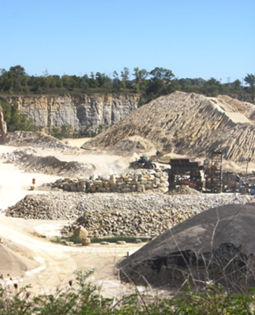
14.8.2 Sugarbeet waste lime
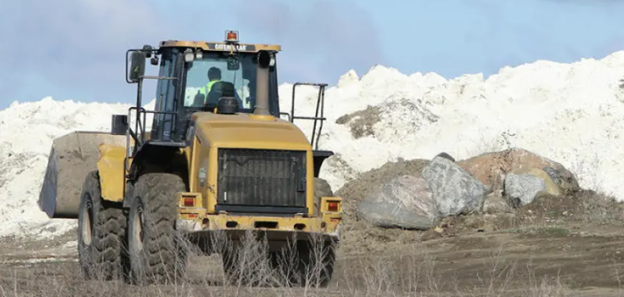
Sugarbeet processing utilizes finely ground calcium carbonate to feed into its sugar stream, which settles out impurities due to the flocculating properties of calcium. The waste lime is shunted to piles and stored outdoors near the sugarbeet processing factories. Over the past 20 years, the property of sugarbeet lime application to prevent Aphanomyces root rot has resulted in sugarbeet growers using up all of these large stockpiles. Hence, the annual source of sugarbeet waste lime is only from the current year of processing, at least for the sugarbeet factories in North Dakota. To date, the sugarbeet waste lime is still given away for free; however, transportation and application costs can be expensive.

14.8.3 Municipal water treatment plants
Major cities use finely ground calcium carbonate to settle out impurities in the water of their water treatment facilities, much like sugarbeet factories. The water treatment plants stockpile the waste lime or deposit it in a landfill.
14.9 Remediation of acid soils
A liming amendment must be applied at a sufficient rate to neutralize both active acidity and reserve acidity. Research is being done to develop confidence in a soil pH measurement that would reasonably predict the tons of lime required per acre to neutralize the total acidity of the soil. A soil with low CEC would require less lime than a soil with high CEC. The use of a buffer pH, such as the Sikora buffer pH, is currently the method being used by several Midwest Universities to calculate lime requirments (Gelderman & Mallarino, 2015). A Buffer pH differs from a water pH because the buffer solution contains cations (the Sikora buffer uses K+) that exchange with the reserve acidity (bound H+) on the CEC sites. A buffer method helps to allow for differences in CEC between samples within and outside of a particular region. In North Dakota, there are sometimes areas even within the same county that can vary in CEC by a factor of more than 5. The lower the buffer pH value, the more milliequivalents (meq) of H+ need to be neutralized.
| Pounds per acre Calcium Carbonate, 100% CCE to apply | ||||||
|---|---|---|---|---|---|---|
| Soil depth to be neutralized | ||||||
| Buffer pH | pH 6.0 (2") | pH 6.5 (2") | pH 6.0 (3") | pH 6.5 (3") | pH 6.0 (6") | pH 6.5 (6") |
| 7.0 | 0 | 0 | 0 | 0 | 0 | 0 |
| 6.9 | 0 | 0 | 0 | 0 | 0 | 0 |
| 6.8 | 0 | 200 | 0 | 300 | 0 | 600 |
| 6.7 | 0 | 400 | 0 | 700 | 0 | 1300 |
| 6.6 | 0 | 700 | 0 | 1100 | 0 | 2500 |
| 6.5 | 100 | 900 | 100 | 1400 | 200 | 2800 |
| 6.4 | 300 | 1200 | 400 | 1800 | 800 | 3500 |
| 6.3 | 500 | 1400 | 700 | 2100 | 1400 | 4200 |
| 6.2 | 700 | 1700 | 1000 | 2500 | 2000 | 5000 |
| 6.1 | 900 | 1900 | 1300 | 2900 | 2500 | 5700 |
| 6.0 | 1000 | 2200 | 1600 | 3200 | 3100 | 6400 |
| 5.9 | 1200 | 2400 | 1900 | 3600 | 3700 | 7100 |
| 5.8 | 1400 | 2600 | 2200 | 4000 | 4300 | 7900 |
| 5.7 | 1600 | 2900 | 2500 | 4300 | 4900 | 8600 |
\[\text{Formula to raise soil pH to 6 = [ 38619 – ( 5915 * Buffer pH ) * ( Depth * 0.167 ) ]}\]
\[\text{Formula to raise soil pH to 6.5 = [ 49886 – ( 7245 X Buffer pH ) X (Depth X 0.167 ) ]}\]
14.10 Avoiding use of liming products with high price and little value
According to above table of lime rates required to raise soil pH to a desired goal, rates range from hundreds of pounds to tons per acre. There is no product in the world, nor will there ever be one, that will neutralize acidity using only a few gallons or a few pounds per acre. These types of products are sometimes presented to an audience and show that adding a proportional rate to an acid solution neutralizes the vessel’s acidity. However, there is no ‘reserve acidity’ in these vessels of acidic solution. These demonstrations do not represent soil conditions but lead growers to believe a few pounds or gallons per acre of a product will neutralize their soil when it won’t.
Lime application in North Dakota has only been conducted at grand scale in the Red River Valley on land going into sugarbeets. Although there are efforts to build the capacity of the state to handle ag-lime sources, most areas, as of 2023, still lack the capacity to do so. Limestone application is difficult. Lime cannot be spread using a pneumatic dry fertilizer spreader, and there is no capacity to produce a stable slurry to apply with a spray applicator. Therefore, there is a tendency for growers and suppliers to look longingly at “pellet lime”, or crushed and pelletized lime, in order to apply it using their current equipment. There is no magic in pellet lime. Its strength is the ability to use it with pneumatic spreading equipment. However, it is also high-priced and it has no rate advantage over other lime sources. Use of a low rates of pellet lime will provide low results; one hundred pounds per acre has little chance of raising pH from a dangerously low pH to a pH where crops can hope to thrive.
14.11 Liming value of liming amendment
The liming value of a liming amendment is expressed as Calcium Carbonate Equivalence (CCE), not to be confused with cation exchange capacity (CEC).When calculating this value, the first consideration is the overall makeup of the lime amendment itself: Is it pure calcium carbonate? Does it contain water? Does it include magnesium carbonate? (referred to as dolomite—a natural limestone deposit with varying percentages of both calcium carbonate and magnesium carbonate) If the source is sugarbeet waste lime or municipal water treatment lime, almost all of the lime will be calcium carbonate.
The moisture content is taken into effect when calculating the CCE. For example, if the moisture content of the ag lime is 20%, then the CCE will be 0.80 X 100% = 80%.
If it is dry ag lime from a Minnesota quarry with a calcium carbonate makeup of 80% and magnesium carbonate makeup of 20% , then the CCE of the material will be calculated using 80% from the calcium carbonate and 24% from the magnesium carbonate. This is because it takes only 84 pounds of magnesium carbonate to neutralize the same acidity compared to 100 pounds of calcium carbonate. This is due to the difference in the atomic weight of magnesium of 24 Mg or 84 for \(Mg(CO_3)_2\), vs 40 for Ca or 100 for \(Ca(CO_3)_2\). Finally, the coarseness of grind is important to predict the rate of neutralization. Sugarbeet lime and municipal lime particles are very finely divided (>200 mesh) and their neutralizing effectiveness within the first year is 100%. Contrastingly, the grind of quarry ag lime varies greatly. Small particles are rated highly, and larger particles may have no immediate value.
A rating from Iowa follows: * 4-mesh 0.1 efficiency * 8-mesh 0.3 efficiency * 60-mesh 0.6 efficiency * 100-mesh 1.0 efficiency (Jones & Mallarino, 2018)
An Example: a limestone with 80% calcium carbonate and 20% magnesium carbonate has a grind of: * 100 % through an 8-mesh screen * 80 % through a 60-mesh screen * 20 % through a 100-mesh screen
That means that 20% of the limestone particles can pass through a 100 mesh, 60 % between 60-100 mesh and 20 % 8-60 mesh screen.
20% is considered to be 100% efficient, 60% is 60% efficient and 20% is 30 % efficient.
Another way to calculate the CCE then would be (20% + 36% + 6%), or 104% * .62 = 64.5% CCE
Therefore, if the lime recommendation was 2 tons per acre, then the amount of this lime to apply would need to be 2/64.5 = 3.1 tons per acre.
If sugarbeet lime was 30% moisture, and the recommendation is 2 tons per acre then the CCE is 70%, and the rate to apply would be \[ \text{2 / 0.7 = 2.9 tons per acre.}\]
14.12 Acidity depth and whether or not to till
In a long-term no-till soil with a history of shallow anhydrous ammonia (3-inch depth) or urea (surface to 2-inch depth), the acidity will be much greater in the top 0-3-inches. A surface lime application will only affect the surface inch the most. This is okay however because the first inch of soil is the most important for supporting surface roots and legume nodulation. In North Dakota experiments, surface application has proved sufficient in greatly increasing crop yields in the presence of very acidic surface soil conditions. If anhydrous ammonia has been applied to a 6-inch depth and the acidity is greatest at this depth in a long-term no-till soil, then a chisel plow might need to be used to thoroughly mix the lime. Any tillage done on a long-term no-till soil should disturb as little as possible.
14.13 Conventional tillage acidity
The same amount of acidity is formed under non-buffered (pH less than 7, no carbonates) soil as in long-term no-till fields; its effect, however, is delayed due to mixing. When it comes time to apply lime, two to three times the lime rate will be required to neutralize the tillage zone compared to the lime required to only treat the surface acidity of long-term no-till fields. The conventional till field should be tilled after application. A chisel plow with twisted shanks to mix the soil should be used.
14.14 References to soil acidity
Gelderman, R. H., & Mallarino, A. P. (Eds.). (2015). Recommended chemical soil test procedures for the North Central Region (SB1001; North Central Regional Research Publication No. 221, Revised). Missouri Agricultural Experiment Station. https://extension.missouri.edu/media/wysiwyg/Extensiondata/Pub/pdf/specialb/sb1001.pdf
Jones, J. D., & Mallarino, A. P. (2018). Influence of source and particle size on agricultural limestone efficiency at increasing soil pH. Soil Science Society of America Journal, 82(1), 271–282. https://doi.org/10.2136/sssaj2017.06.0207
Sørensen, S. P. L. (1909). Enzymstudien II: Über die Messung und die Bedeutung der Wasserstoffionenkonzentration bei enzymatischen Prozessen (Enzyme studies II: On the measurement and importance of hydrogen ion concentration in enzymatic processes). Biochemische Zeitschrift, 21, 131–304.
Thomas, G. W. (1996). Soil pH and soil acidity. In D. L. Sparks, A. L. Page, P. A. Helmke, R. H. Loeppert, P. N. Soltanpour, M. A. Tabatabai, C. T. Johnston, & M. E. Sumner (Eds.), Methods of soil analysis: Part 3. Chemical methods (SSSA Book Series, Vol. 5, pp. 475–490). Soil Science Society of America.