23.1 Zinc and crop nutrition
The zinc (Zn) in North Dakota soils originates from ferromagnesium minerals, the same ones that are also responsible for the presence of Fe and Mn in the soil. The DTPA soil test (Lindsay & Norvell, 1978) for Zn is diagnostic for predicting the possibility of a Zn deficiency in corn, potato, flax and dry edible bean. Other than these four susceptible crops however, no Zn deficiency has even been documented in any of the remaining crops in ND, despite considerable efforts to try to find one. The soil test for Zn can be misleading to many growers and their consultants, because it only indicates whether the soil test level is ‘Low, Medium, High’. However, these values are only useful for corn, potato, flax and dry edible bean. If any other crop is to be grown, even a soil test value in the ‘Low’ range is sufficient to produce a great crop. In addition to the Zn found in soil minerals and the Zn+2 associated with the CEC, there is also considerable soil Zn that originates from soil organic matter that can contribute to the overall Zn taken up by the crop following decomposition. Therefore, non-Zn-sensitive crops may have a greater ability to extract Zn from the soil, and a lower Zn demand, resulting in the crops Zn requirements being met regardless of the Zn soil test extraction values.
The solubility of Zn decreases with an increase in the soil pH. However, as discussed in the Fe nutrition narrative, plant roots exude acids, which result in greater Zn availability in the rhizosphere than in the soil solution. One study found that 60% of plant available Zn came from soluble organic complexes (Hodgson et al., 1966). In addition, crops that support mycorrhizae benefit from the relation because the mycorrhizal fungi have a special ability to mobilize Zn, as well as P.
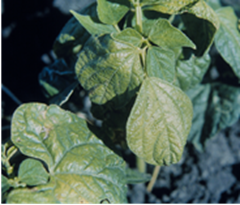
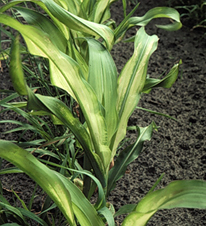
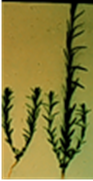
All of the different functions of Zn in the plant are all largely enzyme related. Like Mn+2 and Mg²⁺, Zn²⁺ acts to bind enzymes to their substrates. Several important enzymes also contain bound Zn²⁺ in their structure, including alcohol dehydrogenase, super-oxide dismutase, and RNA polymerase. Zinc is also related to N metabolism in plants and plays a critical role in plant-hormone balancing. Zinc deficiencies in crops can be caused by Zn immobility within the plant, and visual symptoms are often expressed as yellowing or bronzing in the younger plant tissue.
23.2 References for zinc nutrition in crops
Hodgson, J. F., Lindsay, W. L., & Trierweiler, J. F. (1966). Micronutrient cation complexing in soil solution: II. Complexing of zinc and copper in displacing solution from calcareous soils. Soil Science Society of America Proceedings, 30(5), 723–726. https://doi.org/10.2136/sssaj1966.03615995003000050028x
Lindsay, W. L., & Norvell, W. A. (1978). Development of a DTPA soil test for zinc, iron, manganese, and copper. Soil Science Society of America Journal, 42(3), 421–428. https://doi.org/10.2136/sssaj1978.03615995004200030009x