 |
|
|||||
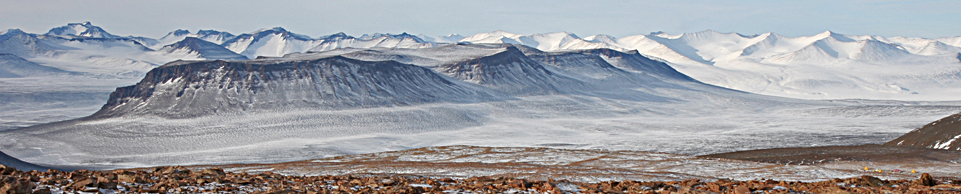
Research Activities 1. Neotoma Paleoecology Database http://www.neotomadb.org/. Ashworth is one of the five original co-PI’s. The database is a fully-searchable multiproxy database. Ashworth is responsible for the fossil insect data. The North American data is currently being uploaded and discussion with colleagues from around the world is ongoing for enlarging the scope of the insect database. Future research will focus on the development of tools for paleoclimatic and paleoecological analyses.2. The LGM climate of the Olympic Peninsula based on the study of insect assemblages from Kalaloch and the South Fork of the Hoh River. This research is in collaboration with Glenn Thackray, Idaho State Universitty and Dan Gavin, University of Oregon.3. The full-glacial insect fauna from the Chilean Lake Region. Coleoptera taxa from 6 sites are being analyzed for changes in faunal composition during the interval from 28,000 to 12,000 cal yr B.P. The fauna has no analogue and is a combination of taxa from higher elevations and those with broad ecological amplitudes. The fauna is especially sensitive to major climate change.4. The paleoecology of the Six-Mile Creek site, mid-Wisconsinan age, from the Finger Lakes Region, New York State. The project is in cooperation with Dan Karig, Cornell University, and Dorothy Peteet, Lamont Doherty Earth Observatory.5. The paleoecology of Miocene–aged sites from Antarctica. The sites in the Transantarctic Mountains, from 77° and 85° lat. S, have striking parallels with Quaternary-aged sites in the northern hemisphere. Many taxa, now cosmopolitan, probably evolved their adaptations to cold temperatures in Antarctica millions of years before the climate cooled during the Quaternary in the northern hemisphere. |
||||||

