| The Ammonia Color Palette | |||
|---|---|---|---|
| Name | Method of Manufacture | Carbon Intensity | Notes |
| Brown / Black | Coal gasification to produce H₂, CO & CO₂. H₂ separated | Very high CO₂ emitted; CO release, high energy use | Used by China, Dakota Gasification |
| Grey | Steam reforms natural gas into H₂ & CO₂ | High CO₂ emitted, high energy use | Most prevalent in NH₃ manufacture (~96% of world production) |
| Blue | Steam reforms natural gas into H₂ & CO₂, followed by CO₂ capture, storage or reuse | Potential for lower overall C; currently about 10–20% of CO₂ not captured | Carbon capture and sequestration value is uncertain |
| Green | Electrolysis of H₂O, producing H₂ and O₂, using renewable energy source | Low/no CO₂ emission, but higher energy use compared to grey | Most desirable |
| Yellow | Electrolysis of H₂O using exclusively solar power | Low/no CO₂ emission, higher energy use | Same as green, but energy is only solar |
| Turquoise | High-temperature methane (natural gas) pyrolysis into H₂ + solid C | Low/no CO₂ emission, high energy use | Experimental |
| Pink | Electrolysis of H₂O into H₂ + O₂ using nuclear power | Low/no CO₂ emission, higher energy use, hazardous nuclear waste | Nuclear not considered sustainable energy by some |
28.1 Fertilizers Intro
Fertilizers destined for market in the US and in North Dakota are required to have a ‘guaranteed analysis’. The guaranteed analysis is presented in a standard format, expressed as the percentage by weight of nitrogen (N), phosphorus as phosphate (P₂O₅), and potassium as potash (K₂O) followed sequentially with any other elements that may be present. It is commonly written as %N - %P - %K - % any other nutrients (until all guaranteed elements are presented). An example of this is a lawn fertilizer with a guaranteed analysis of 10-10-10 or 10% N, 10% P and 10% K by weight. If the fertilizer also contained 5% S by weight guaranteed by the manufacturers, then the guaranteed analysis would read 10-10-10-5S.
28.2 Organic fertilizers
Growing organic crops requires much more attention and management compared to growing crops for sale on the general commodity markets. It is important for organic grain, oilseed, and forage producers that want to sell to organic markets to be aware that these markets have stricter requirements for what fertilizers and amendments can and cannot be applied to both the soil and the crop. The following is a list of “possible” products that might be (and commonly are) on an approved list; however, checking with the buyer before application is always strongly advised.
28.3 Organic N sources
- Soil Test N value:
- A 2-foot soil test that takes into account all residual soil-N is one of the best management aids available to all farmers, including organic producers.
- Manures, and composts:
- Compared to thoroughly composted manures, fresh manures can contain a greater concentration of plant-usable N. Taking a manure source analysis prior to scheduling an application will help determine the actual N concentration. Only a portion of the manure’s N content will be plant-available within the first growing season; with portions of the remaining N mineralizing and becoming plant-available in subsequent seasons.
- Green manures, particularly legumes
- Blood meal
- Cover crop residue:
- If the cover crop residue contains any significant grass residue, it is unlikely the grower can rely on the N content of this residue to be released and taken up by the subsequent crop.
- Fish extracts and other seafood or seaweed extracts:
- Although these have their agricultural value, the volume/rate needed to amend the soil to ensure and maintain sustainable, acceptable, and profitable crop yields, is much greater than is typically listed on the labels. Also, compared to manures and other N containing fertilizers, these products are not any more efficient of a N source.
28.4 Organic P sources
- Soil test P values:
- A soil sample from 0-6 inches in depth analyzed using the Olsen P soil test is just as useful to help direct organic growers on how to manage their soil P fertility as it is to non-organic producers.
- Topsoil:
- Compared to the subsoil, the topsoil profile has a much higher concentration of plant available P (and other nutrients). One of the challenges of an organic cropping production system however, is protecting the topsoil from wind and water erosion. Tillage, which includes plowing, out of necessity is commonly used by organic growers to help with weed control. Plowing however, even the ‘pony-plow’ system used to this day by some growers, can result in large topsoil losses. Using tree shelter belts or strips of taller residue stalks left standing after harvest can help reduce wind erosion. Choosing fields that do not have severe slopes can also help reduce possible water erosion losses. Similarly strip cropping across the slope and not tilling up and down a slope can also reduce water erosion. Loss of the topsoil means loss of the built-up legacy P, along with most other plant nutrients.
- Manures, composts:
- Phosphate is more concentrated in composts compared to fresh manure sources. A manure analysis will provide guidance on what rates need to be applied. In some areas, the rate of P applied to soils from a manure source may be regulated and the amount that can be applied to soils restricted to prevent the possibility of runoff into streams, ponds and other surface water bodies.
- Bone meal
- Increased available P supply following buckwheat:
- NDSU research (Teboh et. al., 2011) has demonstrated that more plant-available P is present in the topsoil following a buckwheat crop. It is hypothesized that the buckwheat has a greater ability to take up Ca-held P, and thus in the process. In order for the subsequent crop to use this additional liberated P, the buckwheat needs to be used as a green manure or harvested for seed.
- Struvite:
- Struvite (Ammonium, magnesium phosphate) is manufactured by extracting P from the wastewater streams of municipalities. It then is sold as a number of different commercial products. An organic grower needs to check and determine whether or not struvite meets the criteria of an organic amendment, even though typically its use is seen as a sustainable P source/amendment. It is important to understand though that due to the supply limitations of waste water, some manufacturers will produce struvite from synthetic fertilizers, such as monoammonium phosphate (MAP) in order to meet buyer demand. It is unlikely that these struvite suppliers would meet organic standards even if the “idea” of struvite was generally accepted by the production buyer.
- Sugarbeet waste lime:
- Sugarbeet waste lime contains varying amounts of P. However, checking with organic production buyers to see waste lime is an acceptable source would be a prudent, and strongly advised first step. Analyzing the waste lime for P content would also be wise, as the P content of sugarbeet waste lime can vary widely and will not be consistent between different loads.
28.5 Organic K sources
- Soil test K
- Soil test K levels sampled to a 0-6-inch depth, combined with the knowledge of the ratio of clay species in your field, are useful in guiding organic producers, and non-organic crop producers as well, on determining the ideal K amendment rate.
- Manures and composts:
- Manures and composts can have a very high K composition. Some studies have even shown that K from a manure source, may be a more effective source of K for the crop than commercial K fertilizers, particularly potassium chloride (0-0-60).
- Crop residues
- Finely ground granite:
- Granite contains feldspars and mica minerals, both which have a high K content. The release rate of K from these minerals, particularly if they are finely ground, is far greater than the rate that has been indicated in older soil fertility textbooks.
28.6 Organic S sources
- A soil test is an extremely poor predictor of crop S requirement, and should not be used as a basis for supplemental S application.
- Elemental S:
- Use about 4 times the normal recommended rate; However, if the year is dry, this still may not be enough. Elemental S is a strong soil-acidifying fertilizer, and if soils already have a pH less than 7, then the soil pH needs to be monitored every 4 years, to ensure that the pH does not fall below 5.6, where legume growth will suffer.
- Gypsum:
- Gypsum is about 20% S, and when applied prior to adequate rainfall, it can successfully dissolve and be taken up and used by the crop. Applying gypsum as a fertilizer does not result in soil-acidification. It’s advised that one checks with their organic crop buyer to make sure that their gypsum source is acceptable, since it is possible that gypsum from industry S scrubbing might not be considered an acceptable organic-S source to some suppliers. Many organic suppliers prefer that their produce/grain suppliers use a mined gypsum product instead.
- KMag (Potassium magnesium sulfate) or Potassium sulfate:
- These products contain guaranteed S analysis as sulfate, and are mined in evaporation ponds near the Great Salt Lake as evaporites from the lake water.
28.7 Organic micronutrients
Micronutrient deficiencies, or the possibility of a micronutrient deficiency, should be determined before an application of micronutrients may be considered acceptable to some organic production buyers. If there is a deficiency, organic production buyers should be able to provide the grower with a list of acceptable amendments.
28.8 Synthetic fertilizers for non-organic crop producers
28.8.1 Synthetic nitrogen fertilizers
Anhydrous ammonia
Anhydrous ammonia is the 2nd most used fertilizer in North Dakota behind urea. The guaranteed analysis of anhydrous ammonia 82-0-0. Anhydrous is normally the least expensive N source for farmers. This, in spite of the high related costs associated with its use at the dealer level, including high business insurance rates due to its health hazard, and the costs of equipment, its storage, and transport/delivery to the field. Anhydrous ammonia is manufactured using a modified version of the Haber-Bosch process developed in Germany at the beginning of the 20th Century. Its development, which now contributes to over half of the N used in crop production across the world, and is considered by some to be both one of the greatest scientific, and engineering achievements in human history. The process uses natural gas as the main ingredient, combining it with N₂ gas from the atmosphere to produce ammonia and carbon dioxide. In the most simplified terms, the flow process is:
Natural gas + N₂ (atmosphere) + H₂O (under pressure as steam) in the presence of a catalyst = NH₃ + CO₂
Producing ammonia, traditionally is a very energy-intensive process, and results in the production of significant amounts of carbon dioxide (CO₂) emissions; which is contrary to the current global goals and policy measures aimed at reducing (or eliminating wherever possible) the ‘carbon footprint’ of such manufacturing processes. In order to reduce this direct generation of CO₂, different methods of NH₃ production have been developed. To distinguish between the different production methods and their different environmental impacts, a classification system has been developed that separates the methods into different ‘colors’, based on their carbon footprint and the energy sources used, rather than the physical color of the fertilizer product itself. These color methods have appeared in numerous popular articles and both industry and the manufacturing facilities frequently promote and tout their “color” as the superior production method (Table 28.1).
Table 28.1 produced from information provided by (Blaylock, 2022).
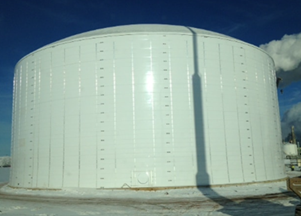
Storing and applying anhydrous ammonia (NH₃) can be difficult due to the fact that its boiling point is -28F degrees (Figure 28.1). Storage of NH₃ after it has been manufactured typically follows one of two strategies; either a) the ammonia is cooled to -28F, or b) it is stored in tanks that are able to withstand pressures of at least 250 psi. At large storage facilities, which serve as distribution points for transfer to retail destinations, since such a large volume of tanks are needed only the cooling option is the only practical storage method (Figure 28.2 and Figure 28.3).

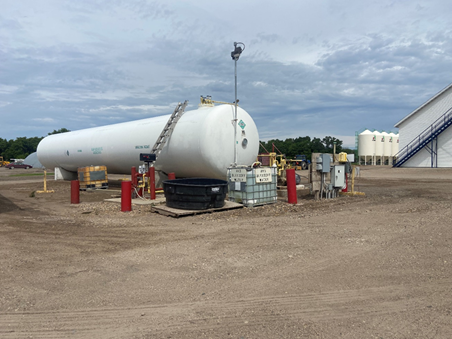
Retail storage tanks (Figure 28.2) and nurse tanks for farm delivery (Figure 28.4) are both designed to be filled to a maximum of 85% of volume to enable the expansion of the gas within the tank. However, inevitably and unfortunately, oftentimes during the busiest times of the year, the tanks may be filled past this maximum. If overfilled, the tanks have automatic, spring-loaded pressure relief values that open up to relieve the excess pressure to bring it down to a safer level.
Delivery to the farm is made using nurse tanks on wagon running gears. The nurse tanks are able to withstand internal ammonia pressures of at least 250 psi (Figure 28.4). These tanks can commonly hold anywhere from 1,000 to 1,450 gallons. The most common method of ammonia application is to simply pull one of these wagon gear tanks, called ‘nurse tanks’ behind the applicator.
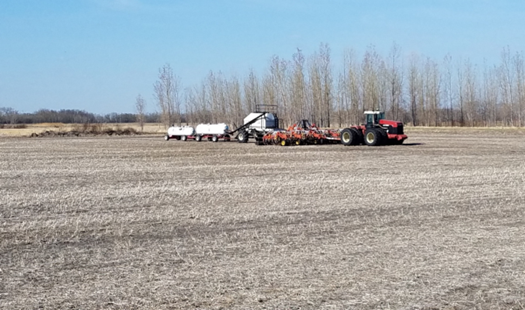
Anhydrous ammonia is used by farmers not only because it typically costs less per pound of N compared to other commercial N fertilizers, but also has a comparatively superior ability to over-winter following a fall application.
The guidelines for application of N as anhydrous ammonia in the fall in North Dakota are as follows:
- No ammonia should be applied before October 1. The possibility of warm autumn temperatures up through November would make an earlier application of N, in any form, very inefficient.
- After October 1, In the mornings between 6 AM and 8 AM check the soil temperature at the 4-inch depth . When the soil temperature at this depth dips to 50F or less, the risk of significant N losses following anhydrous ammonia is low enough for application to begin.
- Regardless of what the soil temperatures read following this date, continue application until finished.
- Remember, winter will come! Nitrapyrin for anhydrous ammonia is the nitrification inhibitor most effective at slowing nitrification. However, a nitrification inhibitor cannot stop the overwhelming ability of the microbes to change the ammonium to nitrate, the inhibitor can only slow its rate. Therefore, application ammonia at an earlier date than recommended because it is combined with a nitrification inhibitor, is poor N management.
- A nitrification inhibitor, nitrapyrin or DCD, may help if the soil freeze arrives later than normal.
Some of the main drawbacks to using Anhydrous ammonia as an N fertilizer are
- The health hazard risks involved
- The need for specialized equipment
- The need for the application trench to be sealed
- The depth that needs to be met in order to minimize application loss
- Insurance and liability costs to the retailer.
Although most of the ammonia in a nurse tank is liquid, when the ammonia enters the application hoses, it immediately starts to boil, and continues to boil until it enters the soil and completes vaporization. The mixture of gas and liquid in the ammonia distribution hoses can make controlling the ammonia application rate difficult. The addition of an expansion chamber, originally introduced by US Steel as the ‘Cold-Flo’ system, and now added to most ammonia equipment as a more provincial cold-flo chamber, allows the ammonia to expand, filling the chamber, and thus cooling it allowing it to be flow controlled by a remote controller rather than using an ‘iffy’ analog regulator used in the past (Figure 28.5).
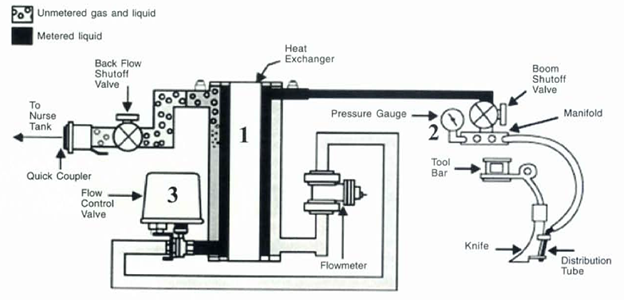
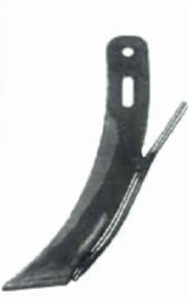
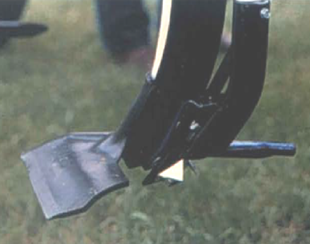
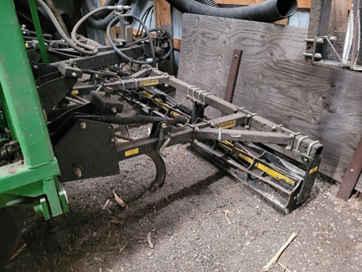
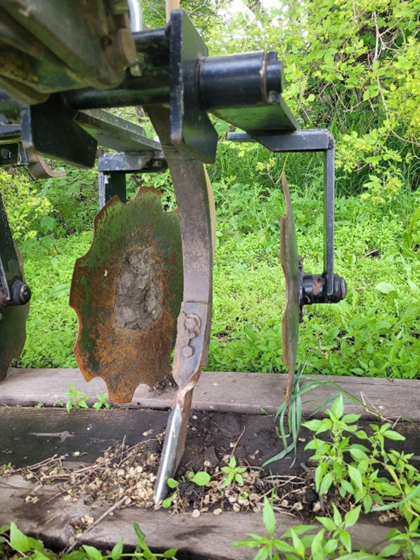
Anhydrous ammonia should be injected to a depth of at least 3 inches, so that the gas produced as it boils (which happens regardless of whether the ammonia has been mostly liquified due to a cold-flo process on the applicator or not) will not reach the surface. Anhydrous ammonia is commonly introduced into the soil behind a field cultivator shovel or by using an anhydrous knife (Figure 28.6). Any covering devices placed behind the applicator are intended to seal the ammonia trench, and greatly help to capture any escaping ammonia, especially if any of the application conditions are not ideal (Figures 28.8 and 28.9). For reasons which escape me (Franzen), covering discs or other devices on ammonia applicators are a rare sight in North Dakota. If one travels to Iowa or Illinois, it is nearly impossible to find an anhydrous ammonia applicator without them. The few farmers that do have covers on their anhydrous ammonia applicators in North Dakota, find them extremely helpful.
Exposure to ammonia kills seeds, and most seeds are very sensitive to ammonia, even at low concentrations. Proper ammonia placement therefore, ensures that the germinating seed is protected. Ammonia should be placed at least 3 inches deeper than seed will be placed, and if placed to the side, it should be at least 3 inches to the side of the seed. The risk of plant stand loss by reducing the distance between the seed and ammonia band is too great to warrant any adjustments.
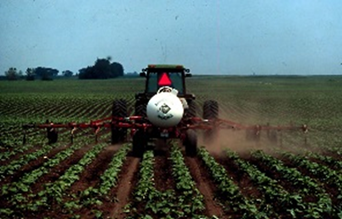
Compared to other nitrogen fertilizers, Anhydrous ammonia allows producers greater flexibility in determining application timing. In North Dakota Anhydrous is commonly applied in the Fall, preplant, at-planting and as a side-dress application (Figure 28.10).
The health hazards from exposure to anhydrous ammonia are real and can be severe. It is important to have eye-wash water on ones’ person for emergency use if any gas comes in contact with the eyes. A larger reservoir of water, at least 5 gallons, should also be placed on the ammonia tank or tractor, or both, in case the ammonia comes into contact with the skin. Time is a critical factor when it comes to ammonia exposure. The sooner the exposed area of the body receives water, the less severe the damage will be.
Low-pressure nitrogen solutions
Low-pressure N solutions are not utilized or as readily available in North Dakota; however, they are used in other areas of the US. Because of this, for reference, they will be described here. The reaction of anhydrous ammonia with water is a violent, and heated (exothermic) reaction, and produces aqua ammonia, with a typical N concentration/ guaranteed analysis as great as 20-0-0. The aqua ammonia product is typically delivered to the farm in a low-pressure tank on running gears, and applied similarly to anhydrous ammonia. Low-pressure N solutions do not build up as large a pressure as anhydrous ammonia does, meaning the fertilizer would not spray out as far if a hose breaks or equipment fails; so, in that way they are safer than anhydrous ammonia. However, the aqua ammonia can still pose similar risks to eye injury and skin burns as anhydrous, and thus it too requires the user or handler to always have the necessary personal protective equipment and some water close by and easily accessible in the case that they are exposed. The aqua ammonia needs to be placed within the soil to a depth of at least 3-inches Aqua Ammonia should never be placed with the seed, sprayed onto the soil surface, and especially never applied to living crops. The greatest drawback to using low-pressure N solutions/aqua ammonia’s fertilizer is both the requirement for large amounts of water and the lower guaranteed analysis compared to other N fertilizers.
Urea
Urea [CO(NH₂)₂] is the most commonly used N fertilizer in North Dakota. Urea is manufactured by combining CO₂ with ammonia, and has a guaranteed analysis of 46-0-0. Urea is used as a dry granule/prill; the prill is white, and an has an irregular spherical shape. The density of fertilizer urea can range from 48 to 52 pounds per cubic foot. This is much lighter compared to the heavier MAP phosphate fertilizers ranging from 60 to 65 pounds per cubic foot and potash which has a density of 68-72 pounds per cubic foot.
Over the past 30 years, urea has outpaced ammonia use in North Dakota, largely because it is easy and comparatively safe to handle, all of the equipment to ship, store, and apply it are largely already in place, and it does not necessarily need to be placed deeply into the soil. Wet springs, can result in a delayed anhydrous ammonia application, and may subsequently delay planting, resulting in lower crop yields. By surface applying urea, (made possible if the NBPT urease inhibitor is impregnated on the urea pellets) farmers can avoid such delays under wet conditions. As described in another ND Soil and Fertilizer Resource section, NBPT completely inhibits urease enzyme activity and thus ammonia volatility from any fertilizer applied on the surface or near surface, for about 10 days. In rare years of spring droughts, the 10-day period is not enough to ensure full protection of the urea from the risk of ammonia volatilization, but in most years 10 days of protection is enough. In order to minimize ammonia volatility from urea, the urea should be placed at a depth greater than 2 inches (Table 28.2). Ammonia volatilization increases with an increase in pH (Table 28.3).
Table 28.2 Loss of urea applied to the soil surface or placed at 1, 2 or 3 inches in depth in an incubation study (Rochette et al., 2013).
| Period-Hours | Surface (% loss) | 1 inch | 2 inch | 3 inch |
|---|---|---|---|---|
| 0-1 week | 2.2 | 18.4 | 2.6 | 0.0 |
| 1-2 weeks | 29.5 | 15.2 | 3.2 | 0.1 |
| 2-3 weeks | 15.2 | 3.8 | 1.8 | 0.3 |
| 3-4 weeks | 3.4 | 1.0 | 1.0 | 0.0 |
| Total | 50.3 | 38.4 | 8.6 | 0.4 |
Table 28.3 Influence of soil pH on ammonia volatilization from urea (Overdahl et al., 1987).
| Percent of Added Nitrogen Volatilized Over Time | |||||
|---|---|---|---|---|---|
| Effect of soil pH | |||||
| Days After Application |
Soil pH
|
||||
| pH 5.5 | pH 6.0 | pH 6.5 | pH 7.0 | pH 7.5 | |
| 0 | 0 | 0 | 0 | 0 | 0 |
| 2 | 0 | 0 | 0 | 1 | 5 |
| 4 | 2 | 5 | 10 | 18 | 20 |
| 6 | 5 | 7 | 11 | 23 | 30 |
| 8 | 9 | 12 | 18 | 30 | 33 |
| 10 | 10 | 13 | 22 | 40 | 44 |
| Values expressed as percent of added N volatilized | |||||
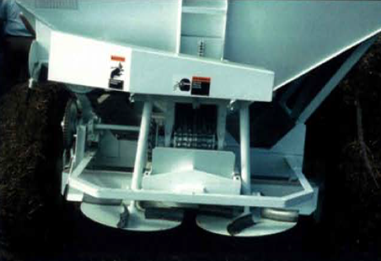
Most fertilizer retail outlets in North Dakota utilize pneumatic fertilizer applicators. Urea blends, (or other bulk blends of N, P, K, and other dry fertilizer products) applied with a pneumatic fertilizer applicator ensures that the urea can be applied in strips as wide as the width of the application boom, and significantly reduces the risk of overlaps or skips; unless the DGPS connection is bad or the fertilizer applicator driver makes an error in their calibration or driving.
Ammonium nitrate (33-0-0)
Ammonium nitrate is not used very much as a fertilizer in North Dakota. It has several drawbacks, including its inherent risks, regulation, and storage. Ammonium nitrate has the potential to be used as an ingredient in explosives, because of this it is under heavy regulations. When it is stored in the same bulk warehouse as urea, the urea dust can react with the Ammonium nitrate in the bin, forming a liquid sludge product, and vice versa. The potential for N-losses from ammonia volatility are very low for ammonium nitrate when it is surface applied. However, its negatives far outweigh any of its potential agronomic benefits. In the fertilizer industry it can be used to produce urea-ammonium nitrate liquid fertilizer (UAN). However, even at the manufacturing level the use of ammonium nitrate can still be very risky, and has resulted in several serious and significant explosions, including the 1994 Terra, Int. Port Neal Complex explosion near Sioux City, IA, that resulted in thousands of evacuations across a wide area, 18 injuries, and 4 total deaths.
Urea-ammonium nitrate liquid fertilizer (28 to 32-0-0)
Urea-ammonium nitrate liquid fertilizer (UAN) is the most-used liquid fertilizer in North Dakota. Although a few fertilizer outlets make a foliar fertilizer urea solution using urea and heated water, because the urea dissolution is an endothermic process, UAN is far more convenient and requires little special handling equipment. The UAN product used across the region has a guaranteed analysis of 28-0-0. This is because 28-0-0 does not crystallize above a temperature of 0F. Manufacturers do produce UAN with an analysis of 32-0-0, but it is more commonly used in southern states, because of transportation savings.
Its flexibility of use is one reason main reasons UAN is so popular as a fertilizer. It is commonly used as a coulter applied side-dress fertilizer to corn in the heavy clay areas of the Red River Valley, where after rainfall, when the soil surface is wet, there is a greater risk for severe denitrification losses, and an application of anhydrous ammonia is considered impractical. Applying UAN along with preplant herbicides is becoming more popular, especially when the producer plans on incorporating it later. Surface banding of UAN is also used when top-dressing winter wheat and other small grains. One half of the UAN N fraction does not volatilize, meaning that surface banding results in less ammonia volatilization compared to a broadcast application. Also, since half of UAN does not result in free ammonia it can also improve crop safety, and reduce the risk of stand loss.
However, since the other N fraction can still volatilize, the use of NBPT as a urease inhibitor is still advised.
Ammonium sulfate (21-0-0-24S)
Ammonium sulfate is the most used S fertilizer in North Dakota. The sulfate part of ammonium sulfate is immediately available for plant uptake. As a S source, however, it has two challenging features. First, since sulfate is an anion, it is not recommended as a fall fertilizer due to its leaching potential. This presents logistic challenges for growers, making it practical only for application during the busy (and short) spring planting season. However, since the ammonium in the ammonium sulfate has a lower volatilization risk and the sulfate is nonvolatile, ammonium sulfate can still be applied post-planting if necessary to avoid potential planting delays. It is important to note that when comparing the NH₄⁺ component of the ammonium sulfate to the NH₃ of ammonia, the soil acidification potential produced from the nitrification of ammonium sulfate is twice that of ammonia. The simplified formulas for the nitrification of both ammonia and ammonium sulfate are:
Ammonia
\[ NH₃ + 3/2 O₂ → NO₂⁻ + H⁺ + H₂O \]
Ammonium
\[ NH₄⁺ + 3/2 O₂ → NO₂⁻ + 2H⁺ + H₂O \]
Diammonium phosphate (DAP, 18-46-0) and monoammonium phosphate (MAP, 11-52-0)**
DAP fertilizer consists of two ammonium (diammonium) molecules ionically bound to a phosphate. (NH₄)₂HPO₄Map is a phosphate bound to only one ammonium (monoammonium) or (NH₄)₂H₂PO₄. Although these fertilizers are used primarily as a P source for crops, they include N which is also available to crops and should be accounted for when calculating N rates for the growing season. The fertilizers are near 100% water soluble, so the ammonium will dissociate and be held however briefly to the soil CEC complex until nitrified similar to the process in ammonium sulfate.
28.8.2 Manufactured phosphate fertilizers**
Monoammonium phosphate (MAP) and diammonium phosphate (DAP)**
The most common phosphate fertilizer sources used in North Dakota are monoammonium phosphate (MAP, 11-52-0, NH₄H₂PO₄) and to a lesser extent diammonium phosphate (DAP, 18-46-0, (NH₄)₂HPO₄). These two P fertilizers are nearly 100% water soluble and the phosphate fractions are called ‘ortho-phosphates’, meaning that they exist as separate entities in solution. The phosphate anions are highly susceptible to precipitation as calcium phosphates and iron phosphates, depending on the soil solution pH. Crop P uptake efficiency is generally 5-10% for broadcast P sources, compared to 30-35% for banded P sources near or with the seed (Preston et al., 2019).
Struvite
Struvite (MgNH₄PO₄•6H₂O) fertilizer was originally wholly a byproduct of the P recovery processes associated with municipal waste water and manures; however demand exhausted the supply, and some struvite is now manufactured from synthetic fertilizers such as MAP (see section 28.1.2). Its solubility in water is very low (<3%); however, research into blended rates of P with MAP and DAP indicate that crop P uptake and crop yield is unaffected by its low water solubility. The low water solubility results in reduced evidence of its presence in Mehlich 3 extracting solutions, indicating that P losses from excessive rainfall/snowmelt runoff may be less than those experienced with strictly soluble P fertilizers (Hertzberge et al., 2021) There is no work that has been done looking at applying struvite as a starter fertilizer, mostly because of its low solubility. Instead, it is considered more suited to replace portions the broadcast P fertilizer rate. In addition, using a non-water-soluble product as a fertilizer source, hearkens back to the time of rock phosphate, which was used as the original P fertilizer source during the 1950’s and 1960’s in the US. The Bray P2 soil extraction was utilized to estimate the P-supplying potential of rock phosphate in the soil (in acid conditions), since it has a greater concentration of acid compared to the Bray P1 extractant, enabling it to extract a greater portion of the less soluble rock phosphate. The key to using any extraction method however, is to relate the amount of soil-extracted P using a given method to a yield change correlated to the rate of fertilizer and the P test value associated with it. Contrary to some misguided marketing entities, the Bray P2 test does not reveal total soil P.
Liquid phosphate-based fertilizers
The TVA (Tennessee Valley Authority) was at the forefront of fertilizer development after WWII. Its factories, which manufactured phosphorus-based munitions during wartimes, were afterwards converted to fertilizer research and development sites, with the TVA’s fertilizer-headquarters located in Muscle Shoals, AL. One of the TVA’s most important fertilizer-related technological advancements was the development of super phosphoric acid (0-68-0). Super phosphoric acid was then used to produce liquid polyphosphate fertilizers. Polyphosphates are produced through condensation reactions where water is removed from orthophosphate molecules, resulting in direct linkage of the orthophosphate components together into multiple phosphate chains, called ‘polyphosphates’. The most common polyphosphate fertilizer is the liquid fertilizer 10-34-0, or ammonium polyphosphate. A polyphosphate fertilizer product usually comes at a reduced cost compared to orthophosphate liquid products because they have a greater guaranteed analysis, which can mean overall reduced freight costs per pound of P as well as the raw materials from which it is manufactured. Polyphosphate fertilizers are synthesized from phosphoric acid, which itself was produced by reacting sulfuric acid with rock phosphate. This is a less energy intensive process than the production method for most orthophosphate liquid starters which are produced by ‘cooking’ phosphate rock in an electric oven at high temperatures; a very energy demanding and expensive process.
Considerable research was conducted on the comparative efficiency of polyphosphate fertilizers for crop production when they were first introduced to farmers and to the ag-supply industry. Researchers concluded that crops can take up the polyphosphate chains themselves without having to break them up, resulting in both yields and total crop P uptakes that were at least as great as when an orthophosphate was used.
Polyphosphate chains very quickly break apart in the soil through a process called ‘hydrolysis’. In the soil, some hydrolysis reactions are a result of simple physical chemistry, and others are accelerated through the biological activity of crop roots and other soil microorganisms. Studies have shown that the hydrolysis and resulting conversion of polyphosphates to orthophosphates begins within 24 hours, and most of the conversion is completed within the first 2 weeks of application.
One advantage of using polyphosphates as a starter fertilizer is their ability to loosely chelate Zn and other metal ions, while orthophosphates have no ability to do so. The chelating ability of polyphosphates tends to increase the inherent efficiency of chelated metal ion fertilizers applied.
28.8.3 Potassium fertilizers
Potassium chloride (KCl, muriate of potash, usually a guaranteed analysis of 0-0-60)
By far the most commonly used K fertilizer globally is muriate of potash (KCl, 0-0-60). Almost all KCl originates in deep mines scattered throughout the world, with the largest deposits located in Canada and Russia. To purify the KCl from the NaCl, or other impurities, in the ore several methods are used. In Canada, however, the raw ore has significant quantities of NaCl intimately mixed with the KCl in, and therefore a floatation separation method is required. Commonly used additives to enable floatation separation are sulphonated aliphatic alcohols. When the alcohols are added to a mixture of finely ground ore brine, air is then introduced, producing bubbles that the NaCl clings to, but KCl does not. Using a paddle across the tank in which the solution resides, the bubbles with the attached NaCl are skimmed off the surface. At the end of the process, everything but KCl has been removed, and the KCl is then dried and granulated for sale. The KCl fertilizer is 100% water soluble, and therefore must be both stored and shipped indoors to prevent the material running off-site. The KCl fertilizer destined for bulk blending is mixed with an anti-caking agent that enables the smooth flow of the fertilizer from transport to storage to mixing and finally onto the field. A common anti-caking agent is MgOHCO₃ (magnesium hydroxidecarbonate) added at a rate of about 1% the total fertilizer weight. The guaranteed analysis of KCl fertilizer is usually 0-0-60. However, ultra-purified KCl that is mostly used in the liquid fertilizer industry can be as high as 0-0-63.
Potassium sulfate
The majority of the potassium sulfate (K₂SO₄) used across the North Central Region comes from evaporation ponds in the Great Salt Lake basin of Utah. Over 300,000 tons of potassium sulfate are produced in the Great Salt Lake region annually, or about 80% of world supply (Utah Geological Survey, n.d.). Potassium sulfate is used across the region mostly in potato production to avoid the potential negative effects on yield and potato quality the chloride in KCL could have if applied on soil with high chloride levels. The guaranteed analysis of potassium sulfate is about 0-0-50-18S. There is growing interest in the potential of potassium sulfate as a substitute for KCl in certain areas of Minnesota where there might be a history of lake water with elevated levels of chloride. Sulphates reduce to both dimethysulfide and hydrogen sulfide gasses in water, and typically sulfates levels over time do not increase in closed water bodies like chlorides do. Before using potassium sulfate, a farmer would need to understand and accept the higher price per pound of K compared to KCL.
Potassium magnesium sulfate
Potassium magnesium sulfate [K₂Mg₂(SO₄)₃] is a mined mineral, langbeinite, which is only found in a few locations worldwide. In the USA, mines near Carlsbad, NM provide the majority of the domestic supply. Its guaranteed analysis can vary anywhere from 0-0-21 to 0-0-22 K with 10 to 11% Mg and 21 to 22 % S. Since Mg is not a nutrient that is typically lacking in abundance in soils across North Dakota, its use would be factored based on price per pound of K₂O, or its commercial availability relative to potassium sulfate.
Potassium thiosulfate
Potassium thiosulfate (KTS) is a clear liquid fertilizer containing K₂S₂O₃, with a guaranteed analysis of 0-0-25-17S. Some irrigated soils in the region are very sandy, and require frequent need for K application. For these soils, a KTS fertilizer can be injected into the irrigation stream for both an in-season K and S application. If applied foliar without irrigation water, rates are restricted and the fertilizer should be further diluted with water so that ‘burn’ is not severe. Rates to certain crops (see labels) are restricted to 5-10 liters per application, which is roughly 1 to 2.5 gallons per acre. I (Franzen) have seen one label that stated not to apply that if daytime temperatures exceed 30C (about 86F), and never to apply it early in the morning. The same label indicates that a small amount of KTS might be applied with starter fertilizer, but not to legumes or small-seeded crops. Communicating with the manufacturer/supplier before applying KTS as a foliar or starter fertilizer would be wise.
28.8.4 Sulfur fertilizers
Ammonium sulfate
The most commonly applied S fertilizer in North Dakota is ammonium sulfate (21-0-0-24S). Ammonium sulfate is water soluble and 100% plant available. The uptake of S through the roots is far greater than through leaves, so its water solubility is very important. How much ammonium sulfate is used across the region depends heavily on its availability on the market. A portion of the ammonium sulfate used within ND comes from the Dakota Gasification Company in Beulah, ND. Ammonium sulfate is either a granule or a large crystal and it can be blended with other dry fertilizer products for multi-nutrient applications. The weakness of ammonium sulfate and all sulfate/thiosulfate fertilizers is the risk of S (or N) loss over winter from a fall application. Therefore, they should be applied exclusively in the spring to minimize the risk of loss.
Elemental sulfur
Elemental sulfur as a fertilizer is almost always formulated with a bentonite clay to produce a granule. When moist, this granule expands, allowing the fine S particles in its make-up to be dispersed. Although the dispersal of these fine particles of S (<200 mesh) is important for bacterial/fungal activity that produces sulfuric acid (H₂SO₄) and thus turn it into plant-available S, it is not its only barrier to plant availability. The speed of conversion of S to H₂SO₄ is of primary importance in this region, with many regional studies of elemental S transformation to sulfate showing that the reaction is very slow. The most efficient S oxidizing bacteria are obligate autotrophs, meaning that the S to SO₄ transformation is a major part of their metabolism. These bacteria operate at highest efficiency at pH values in the 4’s. Due to the neutral to alkaline pH of most the soils in North Dakota. In these soil conditions not only is the presence and populations of Thiobacillus very low, but the activity of any Thiobacillus present will most certainly be reduced. Heterotrophs, including S-oxidizing fungi present in regional soils, are not obligated to oxidize S, but only oxidize it ‘when they feel like it’. A survey of all the S-oxidizers in the soils of Saskatchewan indicated that few obligate autotrophs were present at all, and that the soils were largely dominated by heterotrophic S oxidizers; which might explain the slow oxidation seen across the North Central region (Lawrence and Germida, 1991). It would be a useless effort in some years to apply elemental S the year before, or the fall before, the S was to be taken-up by the crop, because any winter/spring rainfall and snowmelt would likely leach any sulfate produced below the root zone, leaving only recalcitrant elemental S behind. The S source and rate studies by Halley (2000) showed that 10 to 20 pounds S per acre as ammonium sulfate yielded far more canola compared to equal rates of S as bentonite infused elemental S.
Ammonium thiosulfate (ATS)
Ammonium thiosulfate is a clear liquid fertilizer used mostly in irrigated crops to supply in-season S through irrigation pivots. The chemical formula of ammonium thiosulfate is (NH₄)₂S₂O₃ , and it has a guaranteed analysis as a liquid fertilizer of 12-0-0-26S. One gallon of ATS supplies about 3 pounds of S.
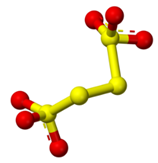
Ammonium thiosulfate reacts quickly in the soil to form tetrathionate. Tetrathionate is then rapidly converted into sulfate, with the total conversion happening withing anywhere from one to several weeks (the total conversion typically occurs within the shorter timespan) (Camberato, 2019). Ammonium thiosulfate has a high foliage/root burn potential, so it should not be applied as a foliar broadcast spray nor in an in-furrow starter fertilizer application. ATS can be successfully used as a starter application only if placed at least 1.5 inches from the seed. ATS has measurable values of both urease inhibition and nitrification inhibition activity; however, NBPT is a far better urease inhibitor, and either nitrapyrin or DCD are superior nitrification inhibitors (Franzen, 2017).
Potassium sulfate
See section 28.2.3.2.
Potassium magnesium sulfate
See section 28.2.3.3.
Potassium thiosulfate
See section 28.2.3.4.
Gypsum
Gypsum is the common name for calcium sulfate (CaSO₄). Left open to air, the molecule has a high affinity for water, so the formula is often expressed as CaSO₄•2H₂O, which is the hydrated form most used as a fertilizer and soil amendment. Its guaranteed analysis varies with the manufacturer and source, but most commonly is around 0-0-0-22Ca-17S. Gypsum does not act as a liming material or a soil acidifier since it is the salt of a strong acid. Compared to ammonium sulfate, gypsum is significantly less soluble (2-2.5 g/l gypsum in water vs 76.4 g/l ammonium sulfate or about 35 times less soluble). Therefore, if a recommendation is for 20 pounds S per acre, then applying at least twice that rate as gypsum would be warranted. If the spring is abnormally dry, even the double rate, however, might not be adequate enough to supply the early season S to the crop. Gypsum should not be used to ‘balance’ the ratio of Ca, Mg and K in soils. The balanced ratio concept was an ill-conceived creation spawned by inadequate understanding of N nutrition and soil pH by researchers in the 1940’s and early 1950’s. The cation ratio concept is not seriously considered by most soil scientists (Kopittke and Menzies, 2007) (see section 17.5).
28.8.5 Calcium fertilizers
If regional soils are properly buffered to an ideal soil pH with applications of agricultural limestone, water treatment lime, or sugarbeet waste lime, then there is no need for further Ca amendments. As indicated in several sections of this work, there is no need to ‘balance’ cations to produce an ‘ideal soil’ (Kopittke and Menzies, 2007) (see section 17.5; section 28.2.4.7).
Most P fertilizers also contain significant Ca. Gypsum is a source of Ca if it is being used for its S value.
28.8.6 Magnesium fertilizers
Currently, there have been no reported Mg deficiencies in any ND soil. It is possible that one of the reasons for this is because many soils in the area have been treated with dolomitic (Ca and Mg carbonates) ag-lime in order to neutralize any soil acidity. Ag-lime treated soils would most likely not be Mg deficiency, hence a possible reason why Mg fertility has largely been ignored. However, soils treated, or that will be treated with high Ca containing lime (either as water treatment lime or sugarbeet waste lime) without the Mg component, in the future may develop Mg deficiencies. Common Mg fertilizers to rectify a deficiency would be MgSO₄ (Epsom salts) and KMag (potassium magnesium sulfate). An over application of Mg may result in some clay dispersion, but not nearly as great as an application of Na would.
28.8.7 Zinc fertilizers
Mineral zinc fertilizers
Zinc fertilizers are formulated and manufactured as both inorganic and chelated/complexed forms. The most widely used Zn fertilizer is ZnSO4, which is most commonly available in its monohydrate form ZnSO₄•H₂O, with a guaranteed analysis of about 0-0-0-17S-35.5Zn. Zinc sulfate is nearly 100 percent water soluble. Zinc sulfate should be broadcast-applied at rates of at least 30 pounds of product per acre to ensure a good distribution on the soil. Zinc oxide (ZnO, guaranteed analysis ~ 0-0-0-78 to 80% Zn), a granular product, is very insoluble and is not recommended for use as a broadcast fertilizer. Interestingly, the Mosaic MESZ product contains zinc oxide as the zinc component, but because the Zn is added prior to the heating reaction part of the pellet manufacturing process, NDSU has measured water soluble Zn in the final MESZ product (Franzen, Unpublished Data). Manure can also be a common zinc source, although a manure analysis is necessary to determine how much might be available to the subsequent crops.
Zinc-chelates
There are several chelating agents that have been developed, with the goal of preventing metal ions (Zn, Cu, Mn, Fe) in the soil from being tied up or precipitated, and thus, becoming unavailable for plant uptake. Examples are EDTA, HEDTA, HBED and EDDHA. The chelates all have the ability to hold metal ions tightly enough to prevent their precipitation into insoluble forms in the soil solution, yet not too tightly to prevent its release when the chelate comes in close proximity to plant roots by way of rhizosphere chemistry/microbiology processes. Their binding ability stems from the chelates molecular structure, where the partial negative charges of their hydroxyl (OH), amine (NH₂⁻), and/or carboxyl (COO⁻) groups, are what allows the chelate to hold the metal ions in place. An example of the binding is the EDTA image below (Figure 28.13), where 2 amine groups and 4 carboxyl groups retain the metal ion.
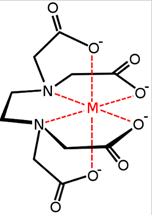
Of the chelating agents, ZnEDTA tends to be more stable in a wide range of soil pH’s compared to other chelated Zn materials.
Zinc complexes
A metal complex does not hold as tightly to the metal as a true chelate. A common complexing agent is acetic acid, which has a carboxyl group, thus enabling it to hold onto the metal cation. However, the metal ion is only loosely held on, allowing it to be released much more easily than a chelate, potentially allowing for a comparatively greater proportion of the metal ions to precipitate into forms unavailable for plant uptake. There is, however, no indication from field studies (Rehm and Schmitt, 1997) that Zn complexes perform more poorly than true chelates in the North Central region. Another type of complex is the ammoniated Zn complex. When using an ammoniated Zn complex, it is important for the user to read the label and make sure that the product is safe for its intended use since the manufacturing processes, and active ingredients, can be very different between products.
Fertilizers for foliar Zn application
In experiments using both ZnSO₄ and chelated forms, absorption of Zn by leaves was low; however, use of both inorganic and chelated forms increased Zn concentrations in deficient tissues and were shown to be equally as effective as foliar Zn products (Doolette et al., 2018).
28.8.8 Manganese fertilizers
There has been no need for the application of Mn fertilizer in the North Central region. The most common Mn fertilizers are MnSO4 followed by various Mn chelated/complexed fertilizers.
28.8.9 Copper fertilizers
Copper fertilizers used in Canada and the Northern Plains include copper sulfate (CuSO₄), also called ‘blue stone’, and copper chelates, particularly CuEDTA. A review of many Canadian studies (Malhi and Karamanos, 2006)), found that anywhere from 2.5 to 5 pounds Cu per acre as copper sulfate pentahydrate, was sufficient to prevent Cu deficiency in wheat, while improving both seed yield and seed quality. At lower rates (<1.7 pounds Cu per acre) surface sprayed and broadcast Cu-chelates were much more effective than a broadcast Cu granule in increasing seed yield of wheat in the first year of application. An in-season foliar application of 0.2-0.25 pounds of Cu per acre was also sufficient enough to increase seed yield of wheat. Any surface applications without incorporation, and seed-row granular Cu were not shown to be as effective as incorporated rates. Copper sulfate, typically copper sulfate pentahydrate (CuSO₄•5H₂O) has a guaranteed analysis about 0-0-0-12.5S-25.2Cu. Copper sulfate pentahydrate is 100 percent water soluble.
28.8.10 Iron fertilizers
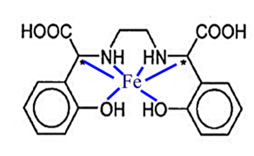
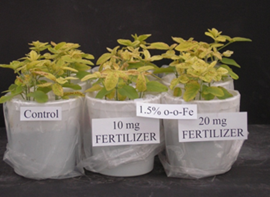
In North Dakota, the crop most likely to benefit from Fe application is soybean, especially when the soil pH is greater than 7 (which is typically a good indicator that there are also free carbonates present in the soil). Studies have also shown that yield loss due to iron deficiency chlorosis of soybean (IDC) is more likely in eastern than western North Dakota, because of the history of greater soil moisture and greater seasonal rainfall totals. Even though a soil pH may be greater than 7, and there are significant free carbonates present in any soil found in western North Dakota, the appearance of IDC on soybean in this region is rare. In eastern North Dakota, IDC is experienced nearly every year and it results in a large yield decrease on soybean, which increases along with the severity of the IDC. Soybean IDC symptoms have been decreased with an in-furrow application of ortho-ortho-Fe-EDDHA in many North Dakota experiments, both in the greenhouse and in the field. All Fe-EDDHA chelates have both an ortho-ortho- component and an ortho-para component (Figure 28.14). The greater the ortho-ortho component, the less fertilizer can be applied and still have the greatest effect, and the greater the effect will be compared to a fertilizer with a relatively low ortho-ortho percentage composition (Figure 28.15). In recent studies, FE-HBED chelate has also been effective in reducing the severity of IDC in soybean, with equal Fe rates being a little less effective than a high ortho-ortho FE-EDDHA, but still much greater than an ortho-para Fe-EDDHA isomer.
28.8.11 Boron fertilizers
Boron is not a nutrient that is commonly found to be deficient in soils across North Dakota. Even crops grown in soils that with a low hot-water B test value, often will be B deficient. The nearest reported B deficiencies are on the irrigated sands east of North Dakota, about 50-100 miles into Minnesota. In North Dakota even applying B on sensitive crops —sugarbeet, alfalfa, and sunflower has not been shown to result in an increase in profits. Boron deficiencies have been observed in sugarbeets, but only during very dry periods or very wet periods. These deficiencies are more of a consequence of the environment, then the level of B in the soil. When there is either no water to pull upwards into the plant because of drought conditions, or no transpiration-pull through the leaves due to very high humidity, B cannot be translocated into the plant or move inside with the transpiration flow. Therefore, in these situations, the solution is not a B application, but a change in the field moisture status (which is typically out of grower’s control).
The most common B fertilizers are dry granular fertilizer borate or fine-granular borate formulated for use in liquid applications. The ingredient in all ‘borate’ fertilizers is disodium octaborate tetrahydrate (Na₂O·4B₂O₃). Fertilizer borate is 100 percent water soluble and has a typical guaranteed analysis of around 10% B; however, the label on each B source should be consulted. Overapplication of B can be as much a problem as an underapplication in North Dakota.
28.8.12 Chloride fertilizers
Chloride supplements are sometimes used on small grains, particularly barley, if the soil test values are low. The most common Cl fertilizer is KCl (muriate of potash, 0-0-60). The guaranteed analysis of KCl considering the Cl portion is 0-0-60K₂O-50Cl or 50% Cl by weight. Other Cl fertilizers that could be used include: CaCl₂, MgCl₂, and K₂ONH₄Cl. By a huge margin however, KCl is the preferred fertilizer due to it being readily available at most of the retail fertilizer locations in the region.
28.9 References for fertilizers
Blaylock, A. (2022). The ammonia rainbow. In Proceedings of the 2022 North Central Extension-Industry Soil Fertility Conference. North Central Extension-Industry Soil Fertility Conference. https://northcentralfertility.com/proceedings/?action=abstract&id=9394&title=The+Ammonia+Rainbow&search=authors
Camberato, J. (2019). What we know and don’t know about ammonium thiosulfate. Pest & Crop Newsletter. https://extension.entm.purdue.edu/newsletters/pestandcrop/article/what-we-know-and-dont-know-about-ammonium-thiosulfate/
Doolette, C. L., Read, T. L., Li, C., Scheckel, K. G., Donner, E., Kipittke, P. M., Schjoerring, J. K., & Lombi, E. (2018). Foliar application of zinc sulphate and zinc EDTA to wheat leaves: differences in mobility, distribution and speciation. Journal of Experimental Botany, 69, 4469–4481.
Halley, S. A. (2000). Canola and spring wheat response to sulfur fertilizer, tillage, and landscape position. North Dakota State University.
Hertzberg, A. J., Cusick, R. D., & Margenot, A. J. (2021). Maize and soybean response to phosphorus fertilization with blends of struvite and monoammonium phosphate. Plant and Soil, 461(1–2), 547–563. https://doi.org/10.1007/s11104-021-04830-2
Rehm, G. (2007). Mighty Micronutrients. https://www.sciencesocieties.org/files/certifications/certified/education/self-study/exam-pdfs/160.pdf
Kopittke, P. M., & Menzies, N. W. (2007). A review of the use of the basic cation saturation ratio and the “ideal” soil. Soil Science Society of America Journal, 71(2), 259–265. https://doi.org/10.2136/sssaj2006.0186
Lawrence, J. R., & Germida, J. J. (1991). Enumeration of sulfur-oxidizing populations in Saskatchewan agricultural soils. Canadian Journal of Soil Science, 71(1), 127–136. https://doi.org/10.4141/cjss91-011
Malhi, S. S., & Karamanos, R. E. (2006). A review of copper fertilizer management for optimum yield and quality of crops in the Canadian Prairie provinces. Canadian Journal of Plant Science, 86(3), 605–619. https://doi.org/10.4141/P05-148
Overdahl, C. J., Rehm, G. W., & Meredith, H. L. (1987). Fertilizer Urea. University of Minnesota Extension Service. https://conservancy.umn.edu/bitstream/handle/11299/207292/MN2500_AGFO_0635_revised1987.pdf?sequence=1&isAllowed=y
Preston, C. L., Ruiz-Diaz, D. A., & Mengel, D. B. (2019). Corn response to long-term phosphorus fertilizer application rate and placement with strip-tillage. Agronomy Journal, 111(2), 841–850. https://doi.org/10.2134/agronj2018.07.0460
Rehm, G., & Schmitt, M. (1997). Zinc for crop production. University of Minnesota Extension publication FO-00720-GO. http://www.extension.umn.edu/distribution/cropsystems/DC0720.htm
Rochette, P., Angers, D. A., Chantigny, M. H., Gasser, M.-O., MacDonald, J. D., Pelster, D. E., & Bertrand, N. (2013). Ammonia volatilization and nitrogen retention: How deep to incorporate urea? Journal of Environmental Quality, 42(6), 1710–1717. https://doi.org/10.2134/jeq2013.05.0192
Teboh, J. M., & Franzen, D. W. (2011). Buckwheat (Fagopyrum esculentum Moench) potential to contribute solubilized soil phosphorus to subsequent crops. Communications in Soil Science and Plant Analysis, 1544–1550. https://doi.org/10.1080/00103624.2011.581724
Utah Geological Survey. (n.d.). Utah’s potash resources and activity. Utah Department of Natural Resources. Retrieved September 23, 2025, from https://geology.utah.gov/map-pub/survey-notes/utahs-potash-resources-and-activity/