8.1 Sodium Soil Nomenclature
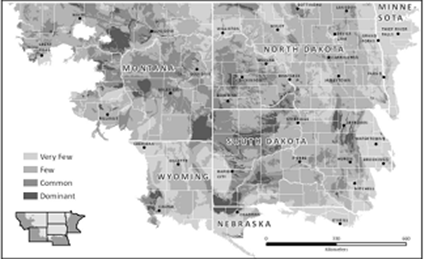
Sodic soils, alkali soils, natric and solonetz soils; it can be confusing at times to determine what exactly is a sodicity and what is not. Aside from varying terminologies, salinity and sodicity can often occur together or be mistaken for each other when working with soils. Soil sodicity means the degree to which sodium has affected the soil. A sodic soil, then, is a soil where the exchange sites on the clay particles are dominated by excessive levels of adsorbed sodiumSodium (Na) is an ion, Na⁺, that forms crystals with SO₄²⁻, CO₃²⁻ or Cl⁻ when the soil is dry. However, its effect on soil condition goes beyond its ion contribution to general soil salinity. Large areas of North Dakota are affected by sodicity (Figure 8.1).
The Sodium Adsorption Ratio (SAR) is the overall measure of soil sodicity. The formula for SAR is:
\[ SAR = \frac{[Na^+]}{\sqrt{\bigl([Ca^{2+}] + [Mg^{2+}]\bigr)/2}} \]
The units of the concentration values of the cations in the formula are mmolc/L.
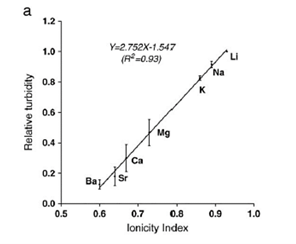
The classic SAR formula assumes that dispersion is controlled in the numerator by Na⁺ alone, while the combination of Ca²⁺ and Mg²⁺ ions are considered as equals in the denominator. Recently, this notion has been challenged. New experimental data has demonstrated the differences between the relative contributions of dispersion, as represented by turbidity (Figure 8.1). The Marchuk and Rengasamy (2011) experiments indicate that ionicity index of K⁺ (0.86) and Na⁺ (0.89) are similar, while the ionicity index of Ca²⁺ (0.67) is less than that of Mg²⁺ (0.73).
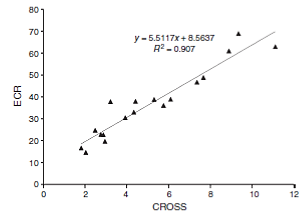
The differences of the ions in both their relative dispersion effects (as measured by relative turbidity) and their ionicity, a new SAR method was proposed to determine both the SAR and the ionicity of K⁺ related to Na⁺. The equation calculates the cations ratio of soil structural stability (CROSS) and is as follows: (Rengasamy & Marchuk, 2011).
\[ \mathrm{CROSS} = \frac{\mathrm{Na}^+ + 0.56\,\mathrm{K}^+}{\sqrt{\bigl(\mathrm{Ca}^{2+} + 0.6\,\mathrm{Mg}^{2+}\bigr)/2}} \]
Table 8.1. Correlation of SAR and CROSS with % dispersed clay in 29 Australian soils that were previously irrigated with waters containing proportions of cations (Rengasamy & Marchuk, 2011).
| Correlation | Coefficient of determination (r²) | Regression Equation |
|---|---|---|
| SAR with % dispersed clay | 0.70 | Y = 1.01 X − 0.98 |
| CROSS with % dispersed clay | 0.95 | Y = 0.46 X − 0.58 |
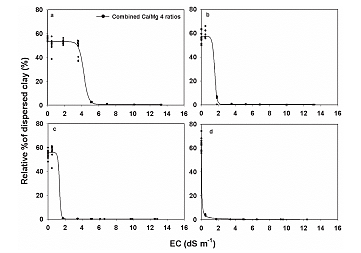
Despite evidence that the flocculation power of Mg (its ability to bind finer particles together and thus “aggregating” the soil) is about 60% that of Ca, the relative percentage of dispersion in montmorillonite and kaolinite showed little variation across Ca:Mg ratios of 1:0, 2:1, 1:2, and 0:1. In illite, however, the 0:1 ratio at an EC of 12 resulted in the greatest percentage of dispersion, while the other ratios had minimal effect (Figure 8.3, He et al., 2013). The study concluded that Ca to Mg ratios had little influence on percent dispersion. Even at a 0:1 Ca:Mg ratio, most clays showed limited dispersion. Sodium Adsorption Ratio (SAR) was found to be the most important factor influencing dispersion across all ratios tested.
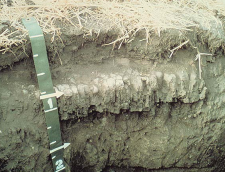
Although the term sodic is used for soil management, the term natric is more frequently used in soil classification. The Natural Resources Conservation Service provides a more complete definition of sodic conditions in the USDA’s official reference publication Keys to Soil Taxonomy (Soil Survey Staff, 2022). However, the term natric is based on a classical definition found in the much older USDA’s salinity manual Agriculture Handbook No. 60 (Soil Salinity Staff, 1954). A natric soil is a soil with an argillic horizon that contains excessive – typically with a SAR greater than 15 and/or pH greater than 8.2 – and features a natric horizon characterized by distinct columns (Figure 8.2). Natric soils are further classified into three different subgroups, depending on their characteristics.
In North Dakota, the most common are:
- Glossic soil – A soil in which the natric horizon has degraded through time.
- Leptic soil – A sodic soil with gypsum crystals present within 16 cm of the surface.
- Typic soil – A sodic soil with properties between Glossic and Leptic.
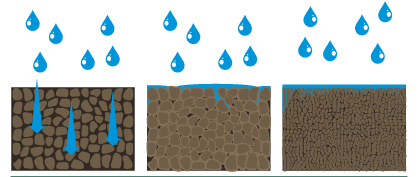
In North Dakota, dispersion and soil swelling can be problematic for plant growth in a soil with a SAR greater than 5 and an EC less than 1 dS/m (a ratio of 5:1). The swelling and dispersion in Figure 8.6 is controlled by one, SAR or percent Na; two, soil EC; and three, clay mineralogy. For example, a soil in North Dakota that is dominated by illite or kaolinite clays may have an SAR of 10 to 20, and despite having a low soil EC, the soil may never show signs of swelling or dispersion. However, if the soil is dominated by montmorillonite clay, an has a SAR of 7 with an EC of 1, swelling and/or dispersion are likely. Therefore, in North Dakota, sodic soils are defined as having an SAR greater than 5 when the EC is less than 1. Thus, the properties of sodic soils that limit plant growth, t may be reduced with an increase in the overall soil EC, the increase should not be so great as to induce salinity stress in the plants.
8.2 Influence of Sodium on Soil Condition
When Na is added to a soil clay, most notably to 2:1 shrink-swell clays like montmorillonite, the large hydrated radius of the Na⁺ ion held on to the clay surface exchange sites by the clays negative charge, leads to a decrease of the the soils ability to aggregate; resulting in randomization of the clay particles, preventing water infiltration and root penetration (Figure 8.3). More detailed information is provided in the NDSU extension article Sodicity and Remediation of Sodic Soils in North Dakota (Franzen et al., 2024).
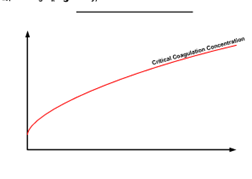
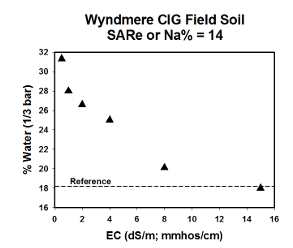
When soil Na is high, some soluble salt activity is desirable because soluble salts, or ionic strength of the solution, influences dispersion (Figure 8.7).
Using the information above in Figure 8.2 Ca²⁺ is the most effective ion to replace Na⁺ with, since Ca²⁺ is a flocculant, or aggregating agent. Thus, the application of soluble calcium amendments improves the overall physical properties of the soil by:
- increasing the overall electrolyte concentration (EC)
- displacing the Na⁺ ions with Ca²⁺ on the cation exchange sites.
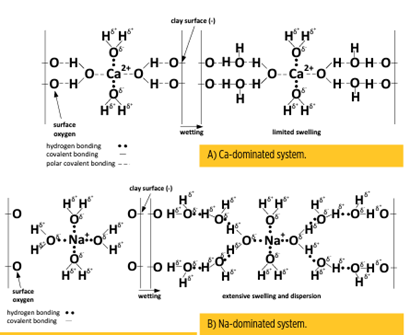
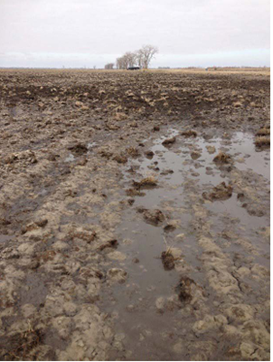
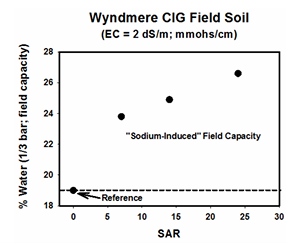
The most critical of the two previously listed factors that affect the structural stability of the soil is EC. This is caused by the size of the hydrated Na ion. The Na ions are “satisfied” when they have a full array of water surrounding each ion (Figure 8.8). The large hydrated shell of an Na ion results in a swelling and dispersion of the clay particles. The polar nature of water attracts positively charged cations. Although the size of the sodium ion relative to its charge is small, the hydrated radius of the Na ion is still much larger than that of calcium. The larger hydrated radius of Na ions results in greater distance between clay particles, and decrease in clay aggregation (Figure 8.6). The term for a lack of aggregation due to presence of Na ions is dispersion. Dispersion produces wet soils with very slow water infiltration. Greater Na in the soil results in a greater soil water content at field capacity compared to a non-Na-enriched soil (Figure 8.9).
Soluble salts actually improve soil characteristics when high soil Na is present (Figures 8.10, 8.11). When a soil is leached of salts, but still has a high Na content, the dispersion effect of Na is actually increased. Adding salts or leaving some salts in the soil is needed to have at least some crop productivity in soils dominated by Na.
8.3 Mitigation of Sodium-Degraded Soils
For any mitigation method to be effective, internal drainage is required. This is particularly true when talking about tile drainage. Effective tile drainage requires sufficient precipitation to enable the leaching of Na ions, after being replaced, or bumped off, the cation exchange sites on the clay particles. If no tile drainage is present, or there is insufficient precipitation, the soil will remain with some Na effects into the future.
To reduce the effect of sodium in the soil, start with soil sampling. This provides the initial values required for a successful remediation strategy. If several areas in a field are affected, sample each area independently from the other areas. In the soil survey, do not rely on polygons of the same sodic soil series, as each polygon may not have the same value as the series name might infer. The sample core should be to the depth of rooting, usually at least down to four feet. Divide the cores into one-foot increments to enable separate analyses to be run on each depth. Then analyze each depth for SAR, EC, pH, CEC, bulk density and calcium carbonate equivalence (CCE). For the CEC, use the replacement method to determine the real CEC as opposed to summation. The percent Na in the base exchange is a good proxy for SAR up to aSAR of 20.
The amendment usually used to replace Na with Ca on the clay exchange sites is gypsum (commonly known as calcium sulfate, CaSO₄). Calcium nitrate and calcium chloride are much more soluble than gypsum; however, they are also much more expensive to use making them less practical (Table 8.2). In North Dakota, lignite coal power plants are required to scrub the sulfur (S) out of their gas emissions following the EPA Clean Air Act of 1990 and its subsequent amendments. The common method of scrubbing out S is through the generation of gypsum, called flue-gas gypsum. Research trials have determined flue-gas gypsum effectiveness in remediating S-deficient soils. Results support land-application of flue-gas gypsum as a soil S fertilizer (Table 8.3).
Incorporate the amendment to the depth of the problem area. If not done, the soil from depth of incorporation to the surface will improve with amendment, but water movement and leaching will stop at the incorporation boundary. This was shown in a gypsum application study near Delamere, ND. (DeSutter et al., 2020). In the study, even after high rates of application were incorporated into the top 4 inches of soil, the effects of the gypsum application were not detectable below the 6-inch soil depth, even after four years. If native gypsum is found below a sodic soil layer, there might be an opportunity to mix both layers together (Figure 8.13).
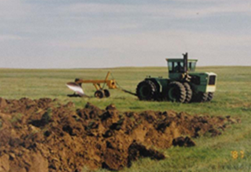
Table 8.2. Solubility of possible calcium amendments for sodic soil remediation.
| Amendment | Solubility (g/L) |
|---|---|
| Calcium nitrate | 1 212.00 |
| Calcium chloride | 750.00 |
| Calcium sulfate (gypsum) | 2.55 |
| Calcium carbonate (lime) | 0.0062 |
8.3.1 Table 8.3. Effect of flue-gas gypsum (CaSO₄) with and without tile drainage (DeSutter et al., 2020)
Soil sample values are from the 0- to 6-inch depth.
| Drainage | Treatment | Tons/acre | Na (%) | EC (mmhos/cm) |
|---|---|---|---|---|
| Tiled | Control | 0 | 4.9 | 1.0 |
| Flue gas gypsum | 5 | 4.0 | 1.1 | |
| Flue gas gypsum | 15 | 3.1 | 1.4 | |
| Flue gas gypsum | 30 | 2.7 | 1.5 | |
| Non-tiled | Control | 0 | 9.9 | 2.3 |
| Flue gas gypsum | 5 | 10.3 | 2.4 | |
| Flue gas gypsum | 15 | 8.4 | 2.3 | |
| Flue gas gypsum | 30 | 6.9 | 2.3 |
8.4 Remediation Equation for Gypsum Application
The rate of gypsum required for sodic soil remediation (gypsum requirement) is determined using the following formula:
\[ GR = 0.86\,F \times D \times \rho_b \times (SAR_i - SAR_f) \times \frac{100}{\text{Gypsum Purity (\%)}} \]
Where:
- 0.86 is mass of gypsum (CaSO₄·2H₂O) required to replace one Na⁺
- GR is gypsum requirement in Mg (megagrams) per ha (hectare) (1 Mg/ha = 0.45 tons per acre)
- F is the Ca to Na exchange efficiency; 1.1 for SAR of 15 or greater, 1.3 for SAR of 5 to 14.9
- D is depth of soil intended for remediation in meters (1 meter ≈ 3.3 feet)
- ρb is bulk density of soil, grams per cubic centimeter (g/cm³, usually between 1.1 and 1.6; 1 g/cm³ = 1 Mg/m³)
- CEC is the real CEC in mmolc/kg
- SARi is the SAR (or proxy %Na from base saturation) existing now
- SARf is the goal SAR (or proxy %Na from base saturation)
- Gypsum purity is necessary because gypsum is rarely pure unless laboratory grade
A gypsum requirement calculator is available on the NDSU website:
https://www.ndsu.edu/pubweb/soils/GypsumRequirementWebApp/
8.5 Brine Spills and Remediation
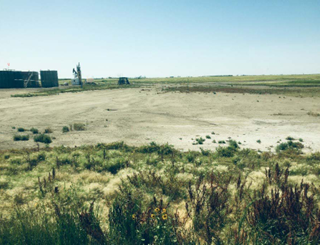
Brine is a byproduct from oil and natural gas extraction. In the Williston Basin, from Bakken and Three Forks formations, the ratio of oil produced to brine that comes with it varies from 2:1 to 1:4. In older formations, the ration can be 1:2 to 1:100. Generally, the chemistry of brine is NaCl, with brine having EC and a SAR value exceeding 200 mmhos/cm and 200 respectively. Brine spills usually occur as a result of a pipeline rupture, failure of internal components or accidents. Brine spills can quickly result in large areas where no plants can grow (Figure 8.14), especially if these spills migrate or occur off of a well pad.
The most common brine spill remediation method is dig and haul, which removes the contaminated soil to an approved landfill and replaces it with non-contaminated soil. Other remediation methods include calcium amendments, with their application resulting in both successes and failures. Gypsum is quite insoluble so it does take a lot of soil water or precipitation to solubilize the gypsum. Contrastingly, other amendments, such as calcium nitrate or calcium acetate, are highly soluble and can be more effective in dryland conditions. With any amendment, drain tile is still required, and needs to be installed below the affected area so that risks of the brine to groundwater sources are minimized or eliminated. Using a risk-based approach can assist in which amendment can be used (North Dakota Department of Environmental Quality, n.d.).
8.6 References for Soil Sodicity
- DeSutter, T. M., Breker, M., Chatterjee, A., O’Brien, P. L., & Wick, A. (2020). Influences of soil amendments on alfalfa production and soil properties. Crop, Forage & Turfgrass Management, 6(1), e20043. https://doi.org/10.1002/cft2.20043
- DeSutter, T. M., & Cihacek, L. J. (2009). Potential agricultural uses of flue gas desulfurization gypsum in the Northern Great Plains. Agronomy Journal, 101(4), 817–825. https://doi.org/10.2134/agronj2008.0142
- DeSutter, R., Franzen, D., He, Y., Wick, A., Deutsch, B., & Lee, J. (2015). Relating percent sodium to sodium adsorption ratio and its utility in the Northern Great Plains. Soil Science Society of America Journal, 79(4), 1261–1264. https://doi.org/10.2136/sssaj2015.01.0032
- Franzen, D., Kalwar, N., Goettl, B., & DeSutter, T. (2024). Sodicity and remediation of sodic soils in North Dakota (Publication No. SF-1941). North Dakota State University Extension. https://www.ndsu.edu/agriculture/extension/publications/sodicity-and-remediation-sodic-soils-north-dakota
- He, Y., DeSutter, T., Casey, F., Clay, D., Franzen, D., & Steele, D. (2005). Field capacity water as influenced by Na and EC: Implications for subsurface drainage. Geoderma, 245–246, 83–88. https://doi.org/10.1016/j.geoderma.2008.02.015
- He, Y., DeSutter, T. M., & Clay, D. E. (2013). Dispersion of pure clay minerals as influenced by calcium/magnesium ratios, sodium adsorption ratio, and electrical conductivity. Soil Science Society of America Journal, 77(6), 2014–2019. https://doi.org/10.2136/sssaj2013.02.0063
- Marchuk, A., & Rengasamy, P. (2011). Clay behaviour in suspension is related to the ionicity of clay-cation bonds. Applied Clay Science, 53(4), 754–759. https://doi.org/10.1016/j.clay.2011.06.015
- North Dakota Department of Environmental Quality. (n.d.). North Dakota Risk Based Correction Action (NDRBCA). Retrieved 2023, from https://deq.nd.gov/NDRBCA/
- Oster, J. D., & Frenkel, H. (1980). The chemistry of the reclamation of sodic soils with gypsum and lime. Soil Science Society of America Journal, 44(1), 41–45. https://doi.org/10.2136/sssaj1980.03615995004400010008x
- Oster, J. D., Shainberg, I., & Abrol, I. P. (1999). Reclamation of salt-affected soils. In R. W. Skaggs & J. van Schilfgaarde (Eds.), Agricultural drainage (Agronomy Monograph No. 38, pp. 659–691). ASA, CSSA, SSSA.
- Quirk, J. P., & Schofield, R. K. (1955). The effect of electrolyte concentration on soil permeability. Journal of Soil Science, 6(1), 163–178. https://doi.org/10.1111/j.1365-2389.1955.tb00841.x
- Rasmussen, W. W., Moore, D. P., & Alban, L. A. (1972). Improvement of a solonetzic (slick spot) soil by deep plowing, subsoiling, and amendments. Soil Science Society of America Journal, 36(1), 137–142. https://doi.org/10.2136/sssaj1972.03615995003600010037x
- Rengasamy, P., & Sumner, M. E. (1998). Processes involved in sodic behavior. In M. E. Sumner & R. Naidu (Eds.), Sodic soils: Distribution, properties, management, and environmental consequences (pp. 35–50). Oxford University Press.
- Rengasamy, P., & Marchuk, A. (2011). Cation ratio of soil structural stability (CROSS). Soil Research, 49(3), 280–285. https://doi.org/10.1071/SR11114
- Sharma, A. K., Fehrenbacher, J. B., & Jones, B. A., Jr. (1974). Effect of gypsum, soil disturbance, and tile spacing on the amelioration of Huey silt loam, a natric soil in Illinois. Soil Science Society of America Journal, 46(1), 113–117. https://doi.org/10.2136/sssaj1974.03615995003800010028x
- Soil Salinity Laboratory Staff. (1954). Diagnosis and improvement of saline and alkali soils (Agriculture Handbook No. 60). U.S. Department of Agriculture.
- Soil Survey Staff. (2022). Keys to soil taxonomy (13th ed.). U.S. Department of Agriculture, Natural Resources Conservation Service. https://www.nrcs.usda.gov/sites/default/files/2022-09/Keys-to-Soil-Taxonomy.pdf
- Webster, G. R., & Nyborg, M. (1986). Effects of tillage and amendments on yields and selected soil properties of two solonetzic soils. Canadian Journal of Soil Science, 66(2), 455–470. https://doi.org/10.4141/cjss86-045