
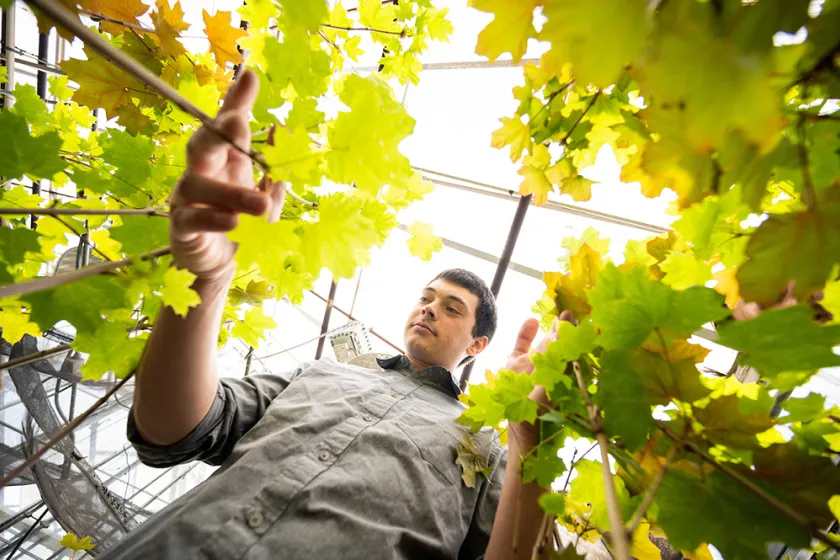
Woody Plant Improvement Project helps nursery trade and increases Great Plains diversity
The mission of North Dakota State University’s Woody Plant Improvement Project is to introduce new trees and shrubs for the nursery trade. Since introducing its first plant variety in 1986, WPIP has introduced 63 plants with 45 U.S. Patent and Trademark Office trademarks.
“The NDSU WPIP has become a national leader in cold-climate horticulture,” says Todd West, NDSU professor and WPIP program director.
“The program delivers an exceptional return on investment by expanding the palette of hardy, disease- and insect-resistant woody plants available to the nursery industry and by strengthening the resilience, biodiversity and long-term sustainability of landscapes throughout the broader northern region.”
The NDSU WPIP began researching, developing and patenting new plant varieties in 1954; the project started introducing plants in 1986.
The WPIP has three primary aims:
- evaluating unreleased and released cultivars from the nursery trade to determine usability in the region
- selecting and breeding and eventually introducing new cultivars for the region
- increasing diversity in woody plant availability
The WPIP process for developing a new woody plant is “long, methodical and heavily driven by field performance,” says West. He adds that woody plants have long juvenile periods, and traits like hardness require multiple winters to test and verify.
With a climate like North Dakota’s, developing a breed can take 15 to 30 years: the first five are for crossing and seedling establishment, the next decade is for harsh field testing and heavy selection, the next decade is for propagation and nursery trials, and the final decade is for release and industry adoption.
“The WPIP functions less like a quick breeding pipeline and more like a long-term survival trial system,” says West. “By the time a plant reaches the nursery trade, it has essentially ‘proven’ that it can handle the toughest conditions that the northern Great Plains can deliver, which is exactly why these cultivars are so valuable and respected throughout the region.”
“NDSU’s WPIP helps North Dakotans by creating tough, reliable plants for a tough climate, while boosting the economy, improving landscapes and supporting environmental resilience across the state,” says West.
FOR MORE INFORMATION
Todd West, 701-231-6476, todd.p.west@ndsu.edu
