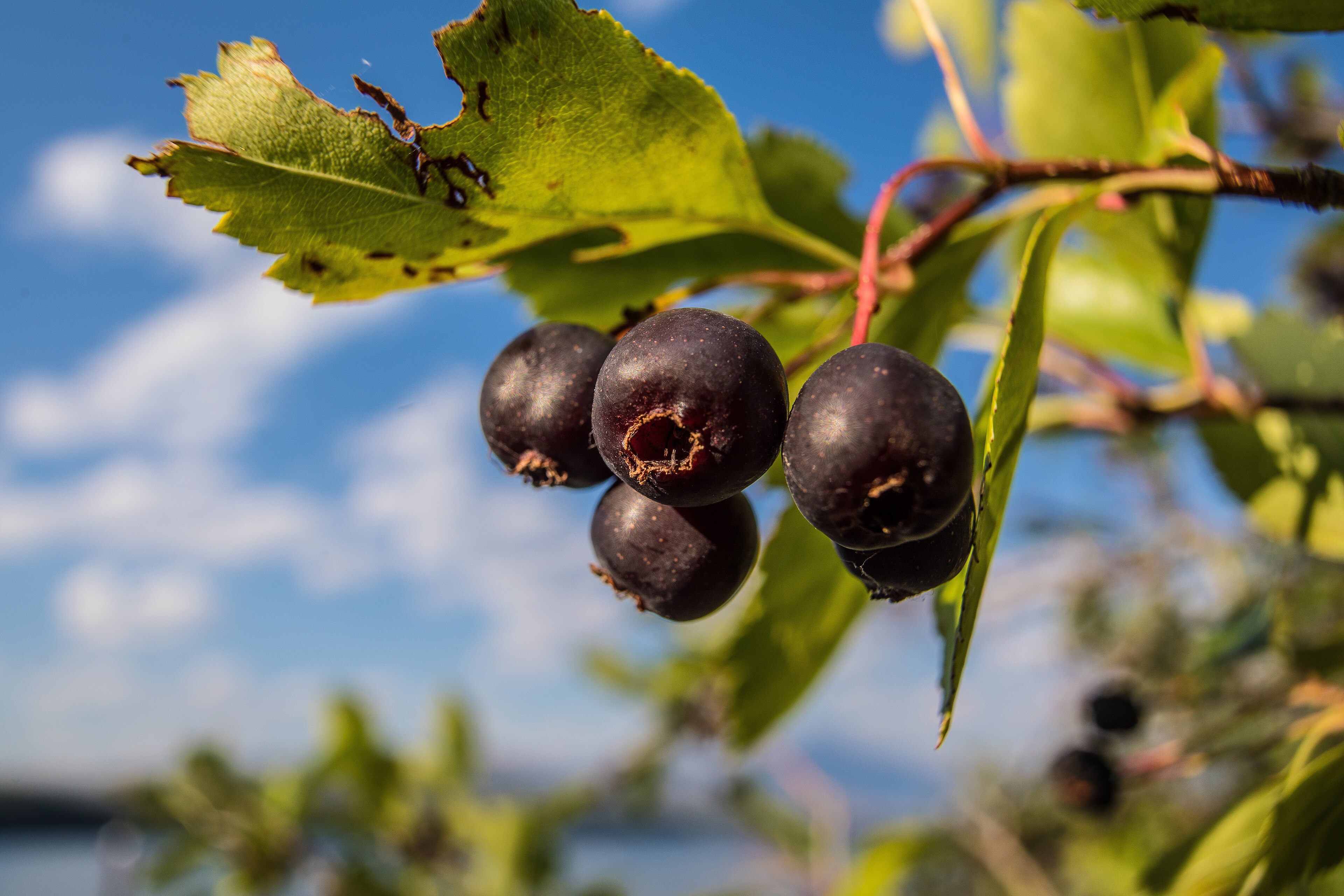
Dakota Gardener: Growing Juneberries in the backyard
By Tom Kalb, Horticulturist
NDSU Extension
Have you ever eaten a Juneberry?
They are absolutely delicious. Imagine a blueberry that is sweet and mild, not tangy, with rich undertones of cherries, apples and almonds. The fruits are soft, and their juices explode in your mouth when bitten. Yummy!
A slice of Juneberry pie is a treasure. A spoonful of Juneberry jam on toast is a pleasing way to start the day.
Juneberries are delicious and an important part of our Dakota heritage. Native tribes mixed Juneberry with dried meat and fat to make pemmican. The food was flavorful and full of calories, which provided energy and warmth.
The first settlers from Europe were also delighted with Juneberries. Families in communities would go out to the fields together to harvest ripe fruit and then celebrate their bounty at local festivals.
I discovered Juneberry shrubs while living in Wisconsin. We called them serviceberry. The shrubs were very popular in landscapes for their all-season beauty. They displayed pure white blossoms in spring, purple fruits in summer, blazing orange leaves in fall and silver bark in winter. Popular varieties then and now include Autumn Brilliance and Princess Diana.
We never thought about eating the berries, and we enjoyed watching the birds eat them.
Then I came to the Dakotas. Here, we don’t let birds eat the fruits. Instead, we battle the birds for them.
For those of us who fight for Juneberries, it makes sense to grow varieties that produce larger fruits and higher yields. North Dakota State University's Carrington Research Extension Center has tested Juneberry varieties for several years. Recommended varieties include Honeywood, Northline, Thiessen and Martin.
Grow at least two different varieties for better yields. You can do a Google search to find nurseries that sell these shrubs.
Looking at the big picture of growing berries in backyards, we need to find a blue-colored berry that grows well in the Dakotas. Blueberries won’t work because they cannot tolerate our alkaline prairie soils.
Aronia is an option. Aronia shrubs thrive in our prairie soils, and they are beautiful landscape plants. But aronia fruits taste terrible. Even birds don’t want to eat them.
Haskaps have potential. Haskap fruits are truly delicious, but many gardeners are disappointed with their low yields. As landscape plants, haskaps have flowers and fall colors that are not showy.
Juneberries show promise as a backyard fruit. The shrubs are just as beautiful as aronia shrubs in landscapes and produce higher yields than haskaps. As a bonus, these woodland shrubs tolerate partial sun conditions, which are common in home landscapes.
When I visit NDSU’s Carrington Research Extension Center in summer for their field day, I am impressed by the high yields of Juneberries. The fruit clusters on the shrubs are abundant and flavorful. You just want to gobble them up!
Juneberries are hardy and easy to grow. They would do well as a hedge or as a background shrub. Most varieties reach a mature height of 12 feet, but they can be trimmed to grow lower. Mulch the shrubs with shredded bark. Prune them every winter to remove old, unproductive wood. Netting is helpful to deter birds.
I invite you to grow Juneberries in your yard. Whether you grow the berries to feed your family or the birds, you will be delighted with their all-season beauty.
For more information about gardening, contact your local NDSU Extension agent.
NDSU Agriculture Communication – Oct. 21, 2026
Source: Tom Kalb, 701-877-2585, tom.kalb@ndsu.edu
Editor: Dominic Erickson, 701-231-4435, dominic.erickson@ndsu.edu