
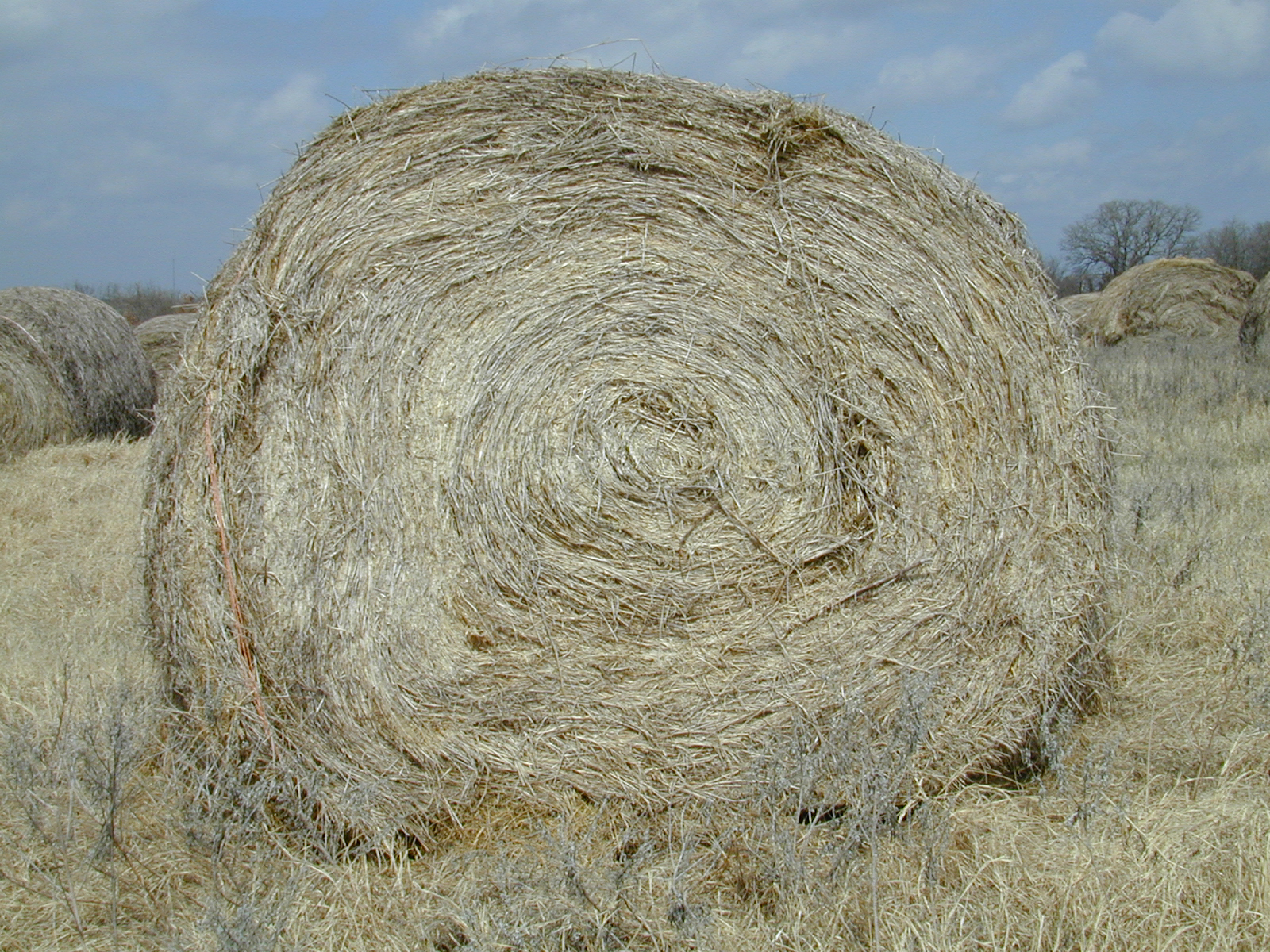
NDSU Extension provides guidance for ammoniation of low-quality roughages
When good or medium-quality hay is not available, livestock producers may consider feeding ammoniated low-quality hays or crop residues.
North Dakota State University Extension specialists offer insight to producers who may be considering ammoniation.
Ammoniation works by breaking down the lignin-cellulose bonds in the plant fiber, which increases hay intake by 15%-20%, explains James Rogers, NDSU Extension forage crops production specialist. Ammoniation also adds nitrogen that feeds the rumen microbes and improves fiber digestibility.
“Crude protein can be increased by at least double, and digestibility increased by 10%-30% in crop residues such as straw and corn stalks, making them equivalent to prairie hay in feed value,” says Rogers.
Ammonia treatment prevents heating and is an effective fungicide in forages with moisture content up to 30%.
“A balanced mineral and vitamin A should be added to the diet whenever ammoniated residues are fed,” says Vinicius de Souza Izquierdo, NDSU Extension beef cattle specialist.
Research has shown that mature cows fed ammoniated residues will maintain weight and condition during gestation until 50 days before calving. Late-gestation cows, thin cows, growing heifers and first-calf cows may require additional energy and protein.
Ammoniation is best used to treat low-quality forages, including wheat, barley and oat straws; corn stover; and very mature, low-quality grass hay. Forages with less than 6% crude protein and 48% total digestible nutrient on a dry matter basis are candidates for ammoniation. Best results are achieved when the forage has greater than 10% moisture, with 15%-20% being ideal.
Treatment of immature medium- to high-quality forages with anhydrous ammonia results in only small changes in digestibility and intake and may cause toxicity problems when fed.
“If issues occur, remove cattle from ammoniated forage for several days, and avoid working or exciting them,” says Izquierdo.
Karl Hoppe, NDSU Extension livestock systems specialist, says the ammoniation process is relatively simple: Forage is stacked, covered and sealed with 6-8-millimeter plastic to make an airtight environment.
Bale shape is not important, but average bale weight is important.
Anhydrous ammonia is added through a pipe into the sealed stack at a rate of 60 pounds per ton of dry forage or 3% of dry matter weight.
“For example, if you are ammoniating 72 bales weighing 1,000 pounds, you would need 2,160 pounds of anhydrous ammonia,” says Hoppe.
Temperature affects the time required for optimal results. Temperatures of 86 to 95 degrees Fahrenheit will need to remain sealed for at least one week, 59 to 85 degrees for one to four weeks, and below 50 degrees requires four to eight weeks. Do not treat when the temperature is above 95 degrees, as the forage will absorb too much ammonia. Open one end of the stack three to seven days before feeding to let the excess ammonia gas escape.
Ammoniation of forages should be considered when prices of medium- or high-quality roughages are high. The estimated cost of anhydrous ammonia and plastic is $30-$40 per ton of forage, excluding labor and any additional equipment costs. Ammonia-treated hay should be tested for quality before feeding.
Hoppe suggests labeling samples “ammonia treated” so the correct analysis can be conducted.
Anhydrous ammonia is extremely hazardous and must be handled with appropriate personal protective equipment, equipment training and emergency procedures. Anhydrous ammonia has a strong affinity for water and rapidly reacts with moisture in the body to form ammonium hydroxide, a highly caustic substance that can cause severe chemical burns.
“Because body tissues contain moisture, anhydrous ammonia can damage the eyes, skin, nose, throat and respiratory system on contact,” says Angie Johnson, NDSU Extension farm and ranch safety specialist.
Exposure can quickly destroy living tissue, and serious injuries may be permanent.
Be sure to follow all personnel safety precautions when working with this chemical. Review the NDSU Extension publication “Anhydrous Ammonia: Managing the Risks.” If you have come in contact with anhydrous ammonia, seek medical assistance immediately. A full list of safety precautions is available at ndsu.ag/anhy-ammonia-26.
NDSU Agriculture Communication – Sept. 14, 2026
Source: James Rogers, 701-857-7682, james.rogers.1@ndsu.edu
Source: Vinicius de Souza Izquierdo, 701-231-7542, v.desouzaizquierdo@ndsu.edu
Source: Karl Hoppe, 701-652-2951, karl.hoppe@ndsu.edu
Source: Angie Johnson, 701-231-1873, angela.b.johnson@ndsu.edu
Editor: Dominic Erickson, 701-231-5546, dominic.erickson@ndsu.edu
