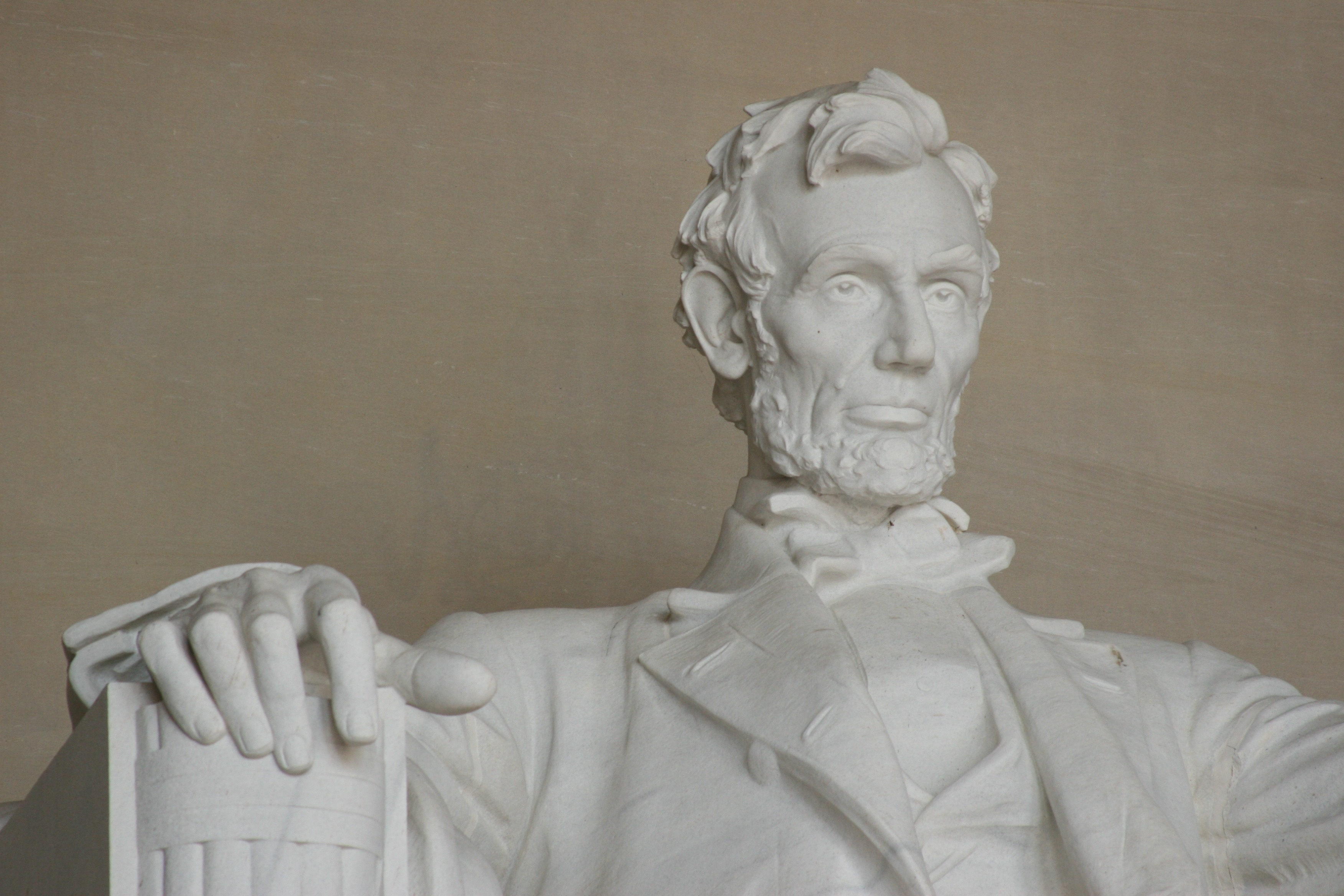
Prairie Fare: Abraham Lincoln’s legacy and Mary Todd’s almond cake
“Where do you live?” the tall gentleman asked me.
“I am here from North Dakota,” I replied.
He looked as though he had never heard of such a place.
I was having breakfast with Abe Lincoln that morning at a conference near his presidential library in Springfield, Illinois.
I am not a time traveler. He was a convincing actor who closely resembled Lincoln.
In the 1860s, North Dakota was not a state, which explains his perplexity. Before being admitted to the Union in 1889, North Dakota was part of Dakota Territory, along with South Dakota and part of Montana and Wyoming.
As I reflected on history, I recognized I was attending a national Extension conference because Lincoln signed the Morrill Act in 1862, laying the foundation for our nation's land-grant universities. Before then, higher education was mainly for the wealthy.
With the Morrill Act, colleges specializing in agriculture, mechanic arts and, later, military science, were established. Home economics and numerous other disciplines arrived later.
Lincoln signed the Homestead Act in 1862, which granted 160 acres of land to eligible settlers who would improve the land – like many of our ancestors who left Norway, Sweden, Germany and numerous other countries for an opportunity in America.
In a monumental change, Lincoln signed the Emancipation Proclamation in 1863.
In 1890, a second Morrill Act established historically Black colleges, and in 1994, tribal colleges and universities were established.
As I explored the interactive presidential library, I thought about what I might be doing if it weren’t for Lincoln. My ancestors probably would not have crossed the Atlantic Ocean from Norway to arrive in America.
Lincoln’s signing of the Morrill Act led to further innovations. The Hatch Act of 1887 established agricultural research programs at experiment stations in every state.
In 1914, the Cooperative Extension Service was established to bring research beyond colleges. Extension became the “people’s university” throughout the United States and our territories. In 1914, 4-H programming (standing for head, hands, heart and health) expanded and became part of Extension nationwide as children were immersed in hands-on learning.
Many girls became part of “tomato clubs,” and the boys were part of “corn clubs,” where they learned aspects of growing, processing or preserving and selling products.
Early Extension educators, called “home demonstration agents,” brought the advancements in agricultural practices, such as crop and animal production and pest control, directly to their homes. Early educators taught people how to use innovations from indoor plumbing to electric appliances.
The home demonstration agents rode in trains, buggies or even Model Ts to reach the public to demonstrate innovations in farming, ranching, gardening and nutrition. They helped people get through wars and the Great Depression by stretching their dollars with “victory gardens.”
During World War I, my Extension predecessors were teaching canning and drying techniques. However, for safety, I must caution you not to follow 110-year-old methods for canning foods.
I want to thank Mr. Lincoln for sparking all of these innovations beginning in 1862. You can explore our website offerings at https://www.ndsu.edu/agriculture/extension or your state’s Extension website. Extension continues to evolve in modern times.
To celebrate him, I found a cake recipe that his future wife, Mary Todd, used to make for him before they were married. This cake, which was served in the White House, is adapted from “Lincoln’s Table: A President’s Culinary Journey from Cabin to Cosmopolitan” by historian Donna McCreary and adapted for modern-day cooking by Janice Cooke Newman. Back then, grinding the almonds would not have been done in an electric food processor, and I doubt Bundt pans existed.
As I looked at reproductions of Mary Todd Lincoln's dresses, with their tiny waistlines, and considered Mr. Lincoln's lanky build, I doubt this rich cake was an everyday treat. I hope you'll enjoy this taste of history. I've included the nutrition analysis for a small portion.
Mary Todd Lincoln’s White Almond Cake
1 cup butter, softened
2 cups granulated sugar
3 cups flour
3 teaspoons baking powder
1 cup milk
1 cup blanched almonds, chopped to resemble a coarse flour
6 egg whites, beaten until stiff
1 teaspoon almond or vanilla extract
Powdered sugar
Preheat oven to 350 F. Grease and flour a Bundt cake pan. Cream butter and sugar. Sift flour and baking powder three times. Add to creamed butter-sugar mixture, alternating with milk.
Chop almonds in a food processor or other food grinder, then stir into the butter-sugar-milk mixture. Beat egg whites until stiff, and gently fold into batter. Stir in almond or vanilla extract. Pour into prepared pan and bake about 1 hour or until a toothpick comes out clean. Cool 20 minutes in the pan, then remove carefully onto a wire rack. Allow to cool completely. Sift powdered sugar on top.
Makes 24 servings. Each serving has 250 calories, 13 grams (g) fat, 5 g protein, 31 g carbohydrate, 1 g fiber and 80 milligrams sodium.
(Julie Garden-Robinson, Ph.D., R.D., L.R.D., is a North Dakota State University Extension food and nutrition specialist and professor in the Department of Health, Nutrition and Exercise Sciences.)
NDSU Agriculture Communication – Oct. 22, 2026
Source: Julie Garden-Robinson, 701-231-7187, julie.garden-robinson@ndsu.edu
Editor: Dominic Erickson, 701-231-5546, dominic.erickson@ndsu.edu