

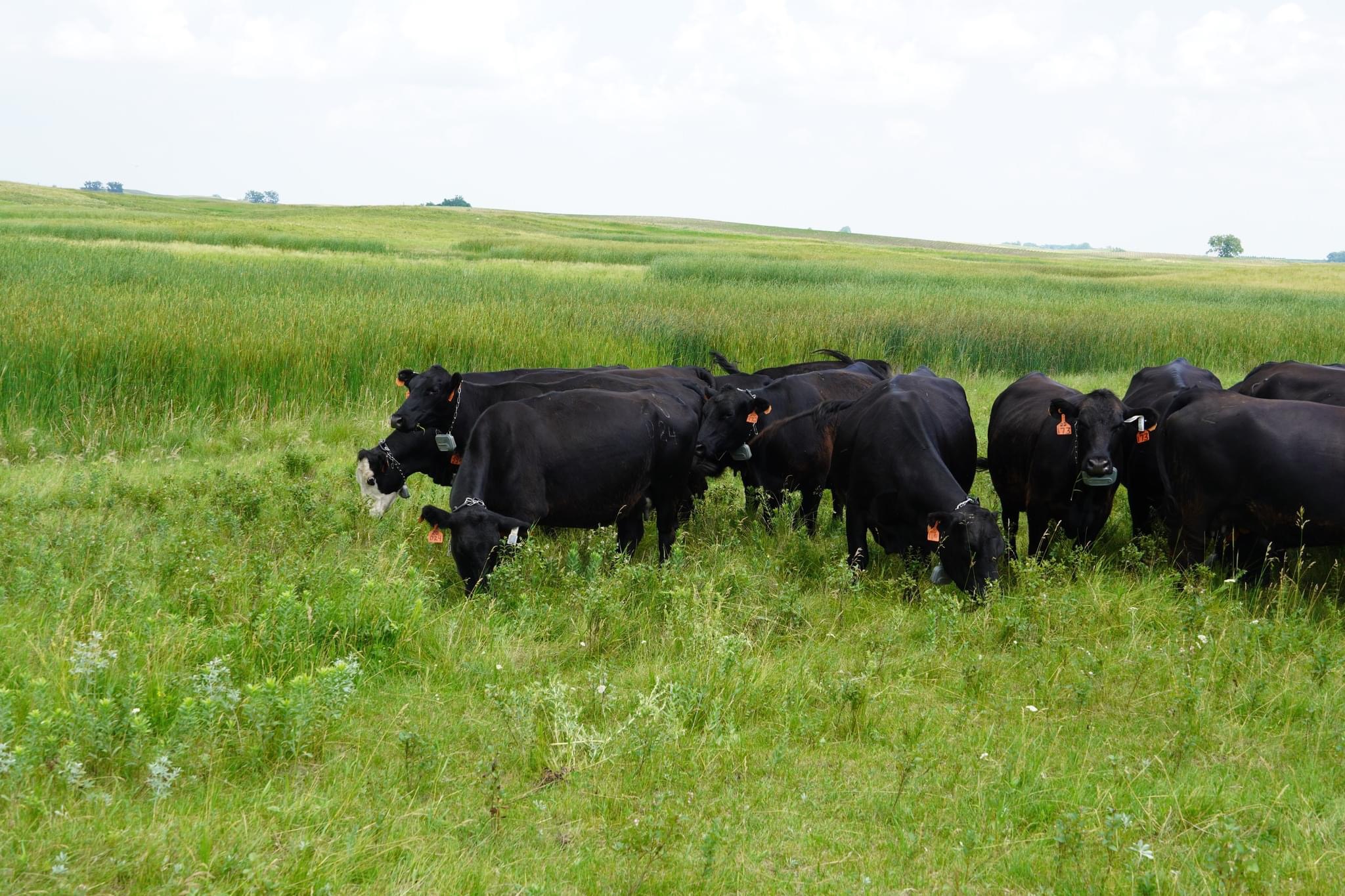
NDSU research showing benefits of virtual fencing for livestock grazing
North Dakota State University Extension researchers have studied how virtual fencing works for livestock grazing, and they are seeing several potential benefits for ranchers.
“NDSU’s research and outreach on virtual fencing is helping ranchers discover ways to apply the technology in grazing systems across North Dakota,” says Miranda Meehan, NDSU Extension livestock environmental stewardship specialist and associate professor.
“Our research is vetting this technology in different grazing systems to help ranchers better understand, first, if it works and then how it can be leveraged in their production system to provide the greatest return on investment,” adds Meehan.
Virtual fencing systems use digital-fence boundaries with GPS-enabled collars or ear tags worn on grazing animals to manage their movements. The devices communicate livestock positions to an online management platform via a tower, cellular or satellite.
“The collars use a combination of long-range wide-area network towers and cellular towers to relay information between the operating platform and the collars,” says Meehan.
An obvious benefit of using virtual fencing is the elimination of physical fences, thus reducing labor and materials costs. But researchers are finding that the use of virtual fencing goes beyond that and includes safe grazing for livestock, improved natural habitat, improved grazing efficiency and monitoring of animal behavior.
Meehan points to two NDSU projects studying the effectiveness of virtual fencing: an annual forages project funded by the North Central Region Sustainable Agriculture Research and Education (NCR-SARE) and a patch-grazing project funded by the North Dakota Agricultural Research Funds and Natural Resource Conservation Service Conservation Innovation Grant program. Funding from NDSU’s Food, Energy and Water Security program helped purchase the hardware and software used in the virtual fencing livestock management system.
The annual forage project was developed in response to rancher concerns about the labor and wildlife damage associated with temporary electric fencing for strip grazing. The project compares strip and continuous grazing while assessing the effectiveness, grazing efficiency, animal behavior and performance, as well as soil health impacts of virtual fencing, automatic gates and temporary electric fencing.
The impetus of the patch-grazing project, which began at NDSU’s Central Grasslands Research Extension Center in 2023, came from a visit by Kevin Sedivec, NDSU professor of range sciences, to a South Dakota ranch to see virtual fencing technology in action.
“After my visit, I knew virtual fencing was going to be the future of rotational grazing, especially in big country, due to the high costs associated with building new and fixing old fence,” says Sedivec.
NDSU researchers are evaluating virtual fencing at Schnell Ranch near Richardson, North Dakota, Black Leg Ranch near McKenzie, North Dakota, and NDSU locations in Fargo and NDSU’s Carrington Research Extension Center.
Another patch grazing virtual fencing project, in its third year at NDSU’s Dickinson Research Extension Center, examines livestock production and the conservation of grassland wildlife and invertebrates. There are also project sites at NDSU’s Hettinger Research Extension Center. Bison Guard, an AI-driven shepherding system for bison herds, is also being developed through a partnership between NDSU and the nonprofit WOZU on the Standing Rock Reservation in Cannon Ball, North Dakota.
“Ranching is dynamic, and staying adaptable or making adjustments on the fly helps us better manage rangelands and improve animal care,” says Chris Augustin, director of NDSU’s Dickinson Research Extension Center. “Virtual fencing is a powerful tool that enables this flexibility. With the click of a mouse, we can quickly move fence lines and adjust pastures as needed in real time.”
For farmers, it also allows grazing livestock on cropland, which can, in turn, reduce fertilizer costs.
Sedivec also gives another benefit of virtual fencing: improved habitat for wildlife. While this efficiency translates into more dollars per grazed acre, it also provides additional habitat for bees and better structure for more nesting birds.
Meehan says that the technology eliminates the physical barriers to wildlife movement created by traditional fences.
“It provides many wildlife conservation benefits,” adds Meehan. “In the patch graze study, we have been able to use the technology to increase the plant and structural diversity of rangelands, which has benefited grassland bird and pollinator populations in the study area.”
NDSU Extension has used several versions of collars currently on the market. The most common challenges for ranchers in implementing virtual fencing are cost and learning how to use the various technological platforms. But the benefits – including saving time and labor, and being able to monitor the fencing on a mobile device – outweigh the challenges, according to Sedivec.
The product has been refined to improve collar retention throughout the grazing season and extend battery life.
“Similar to any technology, there is a learning curve when implementing, regardless of scale,” says Meehan. “We’ve learned several things over the past few years, including the optimal size and shape of the training pastures, the importance of designing the system around water, and how the class of livestock can influence containment rates – all on top of how to successfully use the management platform.”
Sedivec predicts that virtual fencing use will grow in the future, especially on large ranches and public grazing lands, where land managers can eliminate interior fences that are dangerous to wildlife such as sage grouse and pronghorn antelope.
“The greatest benefits are the ability to enhance grazing management through increased flexibility and with reduced labor,” says Meehan. “This technology allows for a cross-fence or exclusion to be created and assigned to a herd in minutes. It can also be used to move animals within the grazing system. Based on our research, the technology is effective in managing grazing animals, with containment varying by animal type and grazing system. We have been able to use it to achieve grazing use and conservation goals set for our grazing system.”
