Prairie Fare: A welcoming holiday table starts with thoughtful planning
“Will you have vegan options?”
“I can’t have foods containing gluten. Will there be gluten-free options?”
“My son is allergic to nuts. He can’t even be near nuts, or he could have a reaction.”
“My daughter has lactose intolerance. Will you have food without milk products?”
“I can bring my own food.”
People have shared these comments when hosting a dinner. People may have medical, cultural, religious, ethical or personal preference reasons for skipping certain foods.
As a host, I would feel kind of bad if my guests felt they had to bring their own food to my party.
Take it all seriously. In some cases, food allergies can have life-threatening effects.
Planning menus can be a little complicated if people have allergies, intolerances or medical issues related to food. Accommodations for special diets can be made with some thought.
A special diet includes or avoids certain food components. A diet is considered “therapeutic” when it is used to manage or help treat a health condition.
What can you do to provide safe, delicious food to help everyone enjoy a holiday meal?
- Be sure to gather information from family and friends ahead of the event so you can plan menus that provide everyone an enjoyable experience.
- Read the labels on food packages to find out which, if any, food allergens are present. Food manufacturers are required to inform consumers of the presence of any of the nine allergens: peanuts, tree nuts (almonds, walnuts, pecans, pine nuts, pistachios), dairy milk, wheat, eggs, soy, fish, shellfish and sesame.
- When preparing food for someone with food allergies, be sure to clean food preparation surfaces and utensils carefully. Think of the allergen like a germ; you could cross-contaminate other foods if you use the same spoon to dish an allergen-containing food and another food.
For example, people with celiac disease must exclude gluten-containing foods from their diet. Gluten is not an “allergen,” but it is found in wheat, barley and rye. Eating any amount of gluten can trigger an immune response that causes damage to the small intestine.
Gluten can be easy to identify in foods such as bread and pastas made from wheat, but there are many other foods that contain gluten that may be less obvious. Commercial soups, sauces and gravies, seasonings and flavorings may have gluten-containing ingredients as well. Look for “gluten free” on the packaging of food products.
Consider these tips and the additional resources as you plan memorable gatherings.
- Label the foods with the name of the recipe and any of the allergens that are present. If it is a boxed food, have the box available for people to examine.
- Provide separate utensils for all the foods on the buffet line.
- Provide a variety of vegetables and fruits with any dips or sauces on the side.
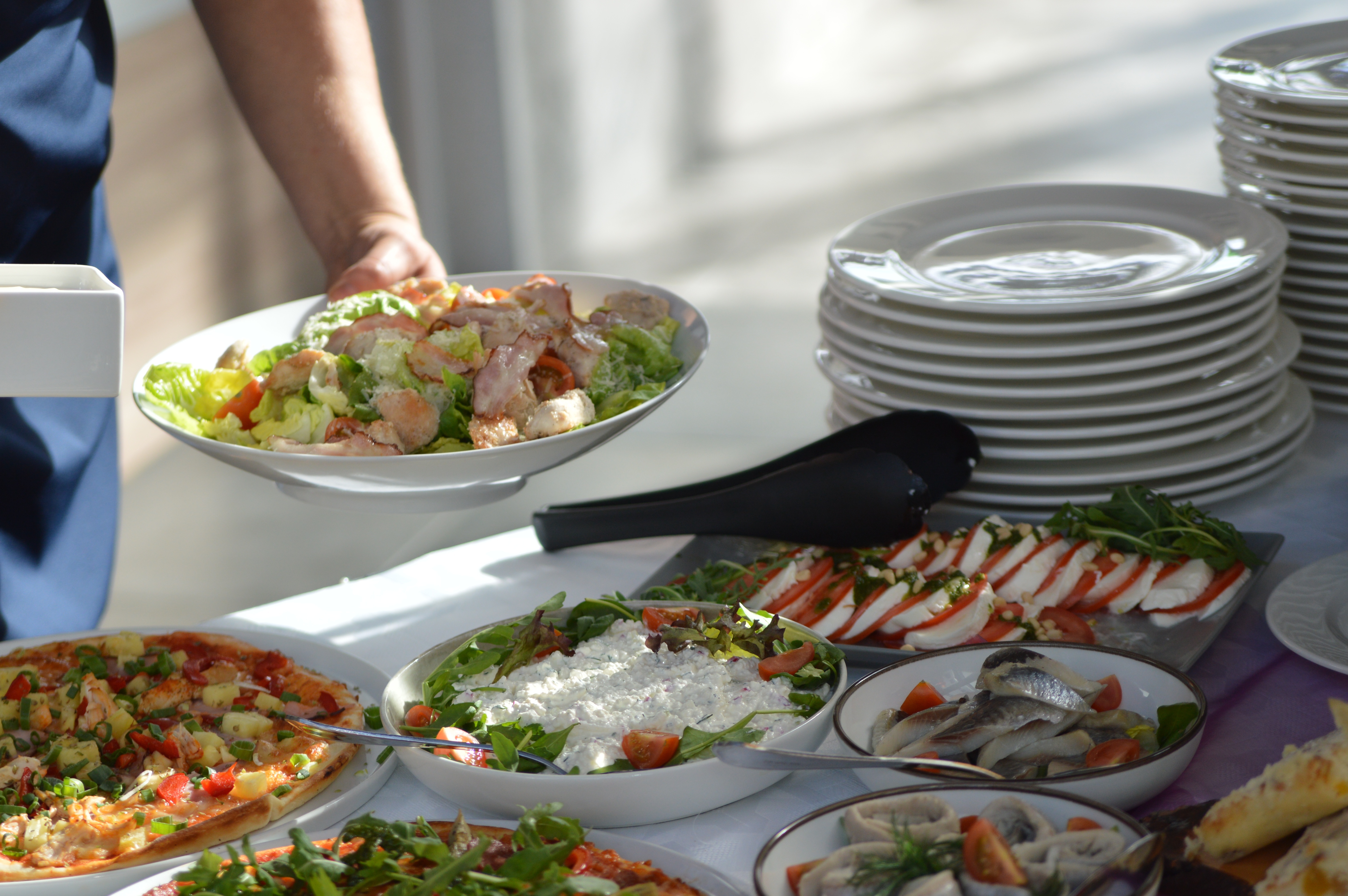
- If you have allergen-containing foods, such as shrimp cocktail or assorted nuts, consider placing them on a separate table to help deter cross-contamination.
- Learn more about food safety, including allergens, and preparing food for groups on www.ag.ndsu.edu/food. Click on “food safety” for information about cooking for groups and allergens.
Here’s a nutrient-rich colorful salad courtesy of Iowa State University Extension. Check the labels for any allergens present.
Broccoli Salad
1 bunch broccoli
3 tablespoons sugar
¼ teaspoon salt
1 teaspoon mustard
⅓ cup light mayonnaise or salad dressing
3 tablespoons cider or white vinegar
½ cup red onion, diced (about ½ medium onion)
½ cup dried cranberries or raisins
Cut the bottoms from the broccoli stem and discard. Peel the outer layer of the stem, then chop the tender inner portion of the broccoli and florets. Mix sugar, salt, mustard and mayonnaise in a large bowl. Add vinegar and stir well. Combine remaining ingredients and stir until the mixture is coated. Serve immediately or store in a tightly covered container in the refrigerator for up to four days.
Makes seven servings. Each serving has 130 calories, 3 grams (g) fat, 3 g protein, 22 g carbohydrate, 3 g fiber and 210 milligrams sodium.
(Julie Garden-Robinson, Ph.D., R.D., L.R.D., is a North Dakota State University Extension food and nutrition specialist and professor in the Department of Health, Nutrition and Exercise Sciences.)
NDSU Agriculture Communication – Nov. 25, 2026
Source: Julie Garden-Robinson, 701-231-7187, julie.garden-robinson@ndsu.edu
Editor: Dominic Erickson, 701-231-5546, dominic.erickson@ndsu.edu