

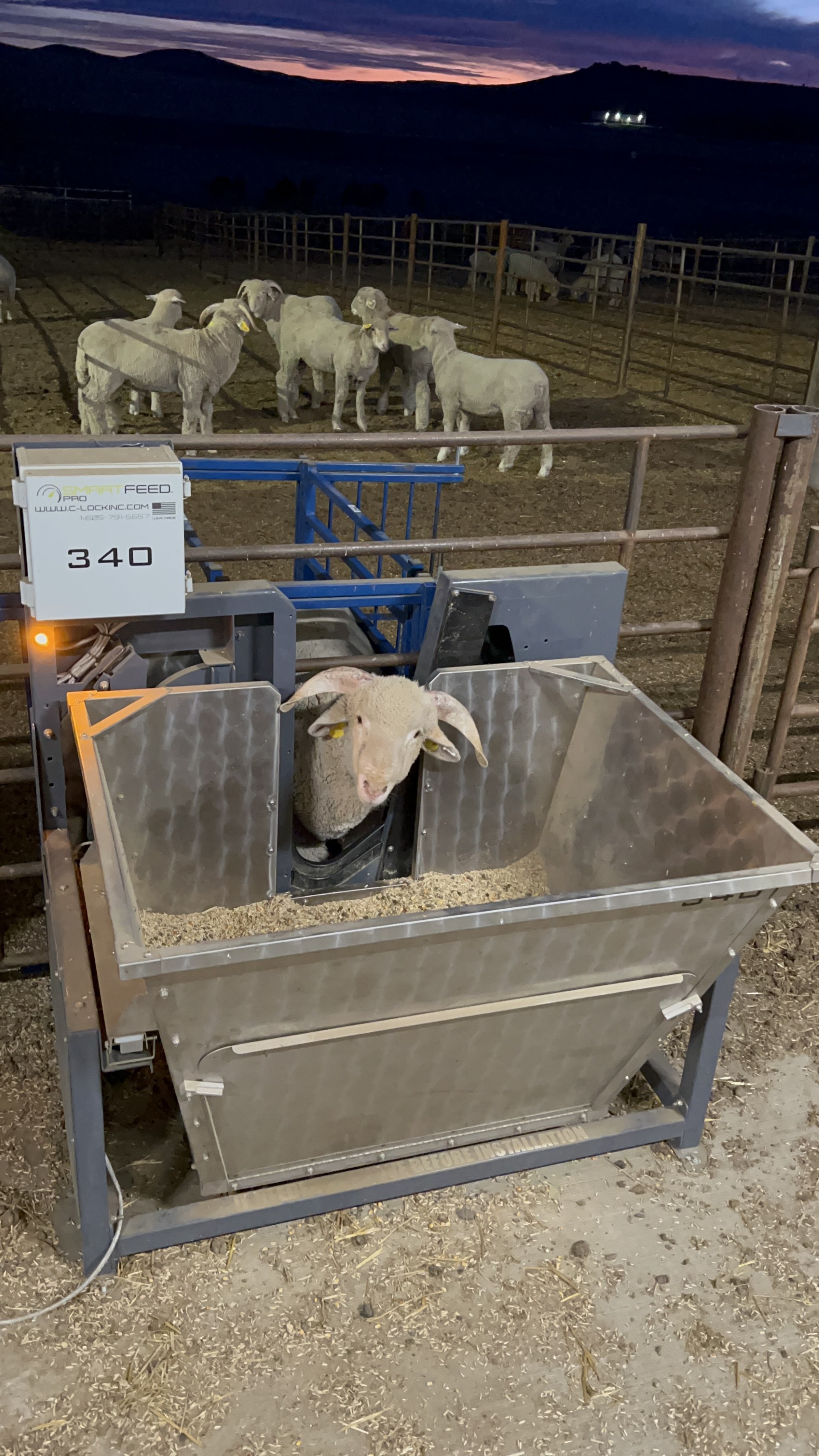
NDSU researchers utilizing benefits of precision livestock feeding
Precision agriculture doesn’t just involve growing crops in the field. It is also changing how livestock are fed.
Precision livestock feeding is the process of supplying animals with nutrients that closely match their individual requirements, using real-time sensor data to adjust feed levels and improve efficiency. NDSU researchers are using this technology at several locations throughout the state, including NDSU’s main campus and its Research Extension Centers.
It improves efficiency and helps monitor how much animals eat and the impact on their health and weight.
The development of the Smart Feedlot at Hettinger has expanded the ability to measure feed efficiency at the individual-animal level using technologies such as automated feed intake monitoring systems, radio-frequency identification (RFID) and real-time behavior monitoring.
“These systems allow us to precisely measure how much each animal consumes, how they behave at the feeder, and how those patterns relate to growth performance, efficiency, and overall productivity,” said Rachel Gibbs, NDSU Extension ruminant systems management specialist.
Visual data further advances the development of artificial intelligence and machine learning models that can quickly detect changes in health status, growth or stress.
“By combining feed intake data with video-based monitoring, we can begin to build precision livestock systems that not only measure performance but also predict and respond to changes in animal condition,” Gibbs said. “Together, these technologies create a comprehensive, data-driven approach to improving efficiency, productivity, and decision-making in small ruminant production systems.”
A preliminary finding has shown that the grain-to-roughage ratio in feeder lamb diets has a significant impact on the efficiency of how lambs convert feed into meat.
“These findings highlight an important takeaway for producers: increasing dietary energy density through greater grain inclusion can improve feed efficiency compared to high-roughage diets, which has direct implications for reducing feed costs per unit of gain,” Gibbs said. “These results provide a foundation for optimizing diet formulation in finishing systems and inform future work on selecting animals that perform efficiently across varying nutritional environments.
This research will provide practical, data-driven management tools that can optimize feeding, reduce input costs and boost consistency in lamb and kid production, Gibbs said.
“We are working to develop systems that are not only scientifically robust but also scalable and relevant to extensive production environments common across the Northern Great Plains,” Gibbs said. “A major next step is to determine at what level feed efficiency is heritable in sheep and goats and, ultimately, whether it can be incorporated into practical genetic selection programs for producers.”
The North Dakota Legislature funded the Smart Feedlot in 2022. Construction was completed in 2023, and precision agriculture equipment was installed in 2024. As of the spring of 2026, researchers at Hettinger have conducted four research trials and four producer trials in sheep and goats with funding from livestock producers, private industry, and the Agriculture Research Fund grant program administered by North Dakota State Board of Agriculture Research and Education.
The NDSU Beef Cattle Research Complex in Fargo uses the Insentec Feed System, developed in the Netherlands. The precision feeders track cattle intake and feeding behavior using electronic IDs.
Facility manager Sarah Underdahl said the system uses ear sensors that provide real-time monitoring of cattle health, including a cow’s activity (steps), estrous, rumination and other health activity.
Researchers at the Carrington Research Extension Center are conducting their first study with the new feeders. The study focuses on the use of soybean by-product inclusion rates in addition to feeding whole soybeans.
The primary feeding program technology is the C-Lock Smartfeeders, which identify animals, log time in the bunk and weigh feed changes in the bunk.
“We could always measure individual animal weight gain and similar, but this technology lets us track how often, how much, and for how long each animal is eating,” said Mike Ostlie, Carrington Research Extension Center director. “It adds a whole new dimension to the type of information that is gathered.
“Not only does this open up more options to study how feeding habits affect growth, but it also allows you to gain a better understanding of the genetic factors that may play a role in the growth and development of animals,” Ostlie added.
Ostlie said Carrington REC works with several producers with varied sets of genetics. Precision feeding research will help provide them with valuable data to determine feeding needs.
“When you have animals eating the same ration, it helps you understand why there are differences in weight gain between them. Are they eating less frequently than the rest, or less quantity, or are they eating the same but simply gaining less? The answer to that question should matter a lot to producers, and presents a chance to select for things like feed efficiency in a herd,” Ostlie said.
