
Title

Stop the Bleed | Logan County
Date(s)
- CST
AddToCalendar
Add to Calendar 2026-03-10 18:30:00 2026-03-10 20:00:00 Stop the Bleed | Logan County Minutes count! Did you know? 40% of trauma-related deaths worldwide are due to bleeding. Average bleed out time is 3-5 minutes; average response time for 1st responders to arrive is 7-10 minutes. NDSU Extension and the NDSU School of Nursing are partnering to offer STOP THE BLEED® training for rural residents wanting to learn how to reduce deaths caused by unintentional injury. Nursing faculty will travel to counties throughout the state and work with Extension Agents to provide this 90-minute training.Training sessions are limited to 10-12 participants per location. Personal Stop the Bleed kits will be provided to participants on a first-come, first-served basis.What You'll LearnWhat stops bleeding? In a STOP THE BLEED® course, you’ll learn three quick hands-on techniques to help save a life before someone bleeds out:  How to use your hands to apply pressure to a woundHow to pack a wound to control bleedingHow to correctly apply a tourniquet.These three techniques will empower you to assist in an emergency and potentially save a life.Who: Rural residents/community members, farm/ranch families, farm employees/seasonal laborers, emergency response personnel, youth (ages 13+)Emergency management personnel may qualify for National Continuing Competency Requirement (NCCR) and Local Continuing Competency Requirement (LCCR) units through this training - and also may be eligible to become a certified Stop the Bleed instructor in their community.When: Tuesday, March 10, 6:30 - 8:00 PM CSTWhere: Napoleon Fire & Ambulance Hall, 105 3rd St W, Napoleon ND 58561Cost: Free This is a hands-on training. Since trainers will be travelling from outside the area, RSVPs help us guarantee that we reach the minimum program enrollment and that we have enough practice kits on hand. Napoleon Fire & Ambulance Hall, 105 3rd St W, Napoleon, ND 58561 NDSU Agriculture no-reply@ndsu.edu America/Chicago public
Location
Location:
Napoleon Fire & Ambulance Hall, 105 3rd St W, Napoleon, ND 58561
Registration
Body
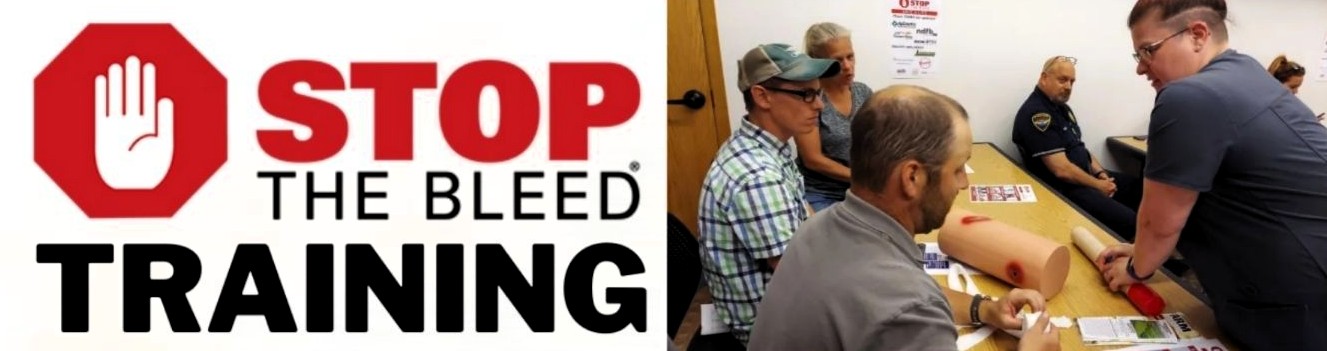
Stop the Bleed Training

Minutes count! Did you know? 40% of trauma-related deaths worldwide are due to bleeding. Average bleed out time is 3-5 minutes; average response time for 1st responders to arrive is 7-10 minutes.

NDSU Extension and the NDSU School of Nursing are partnering to offer STOP THE BLEED® training for rural residents wanting to learn how to reduce deaths caused by unintentional injury. Nursing faculty will travel to counties throughout the state and work with Extension Agents to provide this 90-minute training.

Training sessions are limited to 10-12 participants per location. Personal Stop the Bleed kits will be provided to participants on a first-come, first-served basis.


What You'll Learn

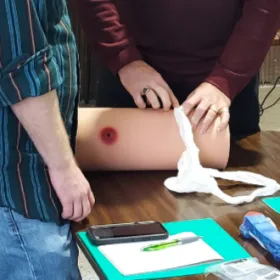
What stops bleeding? In a STOP THE BLEED® course, you’ll learn three quick hands-on techniques to help save a life before someone bleeds out: 

Stop the Bleed Close-up Photo
  1. How to use your hands to apply pressure to a wound

  1. How to pack a wound to control bleeding

  1. How to correctly apply a tourniquet.

These three techniques will empower you to assist in an emergency and potentially save a life.


Who: Rural residents/community members, farm/ranch families, farm employees/seasonal laborers, emergency response personnel, youth (ages 13+)

Emergency management personnel may qualify for National Continuing Competency Requirement (NCCR) and Local Continuing Competency Requirement (LCCR) units through this training - and also may be eligible to become a certified Stop the Bleed instructor in their community.

When: Tuesday, March 10, 6:30 - 8:00 PM CST

Where: Napoleon Fire & Ambulance Hall, 105 3rd St W, Napoleon ND 58561

Cost: Free


RSVP Icon

This is a hands-on training. Since trainers will be travelling from outside the area, RSVPs help us guarantee that we reach the minimum program enrollment and that we have enough practice kits on hand.

Contact Information

Contact Information

Josh Becker

Requests for accommodations related to disability should be made to the event contact person at least two weeks in advance of the event.