
Leading at the National Level: RLND Class XI Explores Policy and Leadership in Washington, D.C.
RLND Class XI Visits Washington, D.C.
March 22, 2026 - March 28, 2026
By RLND Class XI Members: Molly Fern, Amberrae McLeod, and Haley Vollmer
RLND Class XI traveled to Washington, D.C. for Seminar Four, exploring how leadership operates at a national level and how decisions made far from home directly impact rural communities. Through historical reflection, engagement with federal agencies, and conversations with national organizations, class members examined how policy, advocacy, and global systems influence agriculture and rural life in North Dakota.
Day 1: Travel Day
Class XI traveled to Gettysburg, PA, preparing to engage with leaders, institutions, and systems that shape rural communities across the country.
Day 2: Leadership in Moments That Define a Nation
Class XI began the seminar in Gettysburg, Pennsylvania, where history provided a powerful lens for understanding leadership. Starting with a video and the cyclorama painting that outlined the series of battles, the experience quickly shifted from learning about history to feeling the weight of it while walking the battlefield.
Exploring the terrain made leadership challenges tangible. The environment, timing, and limited information available to leaders at the time highlighted how decisions were made under pressure and uncertainty. Class members observed that few leaders operated with certainty, and outcomes often depended on adaptability, accountability, and the ability to act without complete information. The setting invited reflection, not only on what happened there in 1863, but on how leadership decisions, made under immense pressure and uncertainty, can permanently shape communities and the future.
Several leadership themes emerged throughout the day. Decision-making with incomplete information stood out as a critical skill, reinforcing the importance of judgment, timing, and ownership. The experience also highlighted the cost of leadership, where strong leadership required personal sacrifice, while poor communication, ego, and inflexibility intensified consequences for others. Trust, awareness, and clarity of purpose strengthened leadership effectiveness in moments of uncertainty.
The experience led to Class XI drawing parallels between the lessons at Gettysburg and leadership in North Dakota and rural communities. Rural leaders also work with limited resources, close relationships, and high visibility. Decisions are often personal, and their impacts are felt immediately by neighbors, families, and entire communities. This experience reinforced why ethical leadership, trust‑building, and long‑term thinking matter so deeply in rural settings. Leadership choices, especially in challenging or uncertain moments, can leave lasting marks, just as decisions made here continue to shape our national narrative.
The day continued with a visit to Canton Stevedoring at the Port of Baltimore, where Class XI examined leadership within complex global systems. As one of the farthest East Coast ports in the country, the location underscored the importance of geography in trade and infrastructure decisions. Entering the city with that awareness set the tone for understanding the port not just as a local operation, but as a critical gateway connecting global systems.
Historically, the Port of Baltimore has been known as the largest roll‑on/roll‑off port, a distinction that highlighted its importance to industries and communities far beyond Maryland. While that status has shifted following the Key Bridge collapse, the change itself became an important leadership lesson, demonstrating how quickly conditions can change and how resilient, adaptive leadership is required when systems are disrupted.
Patrick Rodgers, VP, Director of Operations at Canton Port Services (LEAD Maryland Class III Fellow), shared his insight on the collapse and the events that morning. What sounded like and felt like a regular day turned into a year of changes, redirecting traffic on the water and off the water. Class XI left the day reflecting on how leadership often operates behind the scenes and how decisions made within systems like this directly impact rural communities, including those back home in North Dakota.
This experience reinforced how leadership often operates behind the scenes and how decisions made within large systems have direct impacts on rural communities, including those in North Dakota.
Day 3: Leadership in Action Through Engaging Federal Policy and Advancing Rural Voices
Day three of the program centered on the vital role commodity organizations and federal agencies play in shaping national agricultural policy. Through direct engagement with key stakeholders, Class XI gained a deeper understanding of how effective leadership operates at the intersection of government, advocacy, and global markets.
The day began with visits to the U.S. Grains and Bioproducts Council and the National Corn Growers Association, where discussions emphasized that agricultural leadership extends far beyond domestic policy. Leaders in this space must navigate international trade, foster global partnerships, and support market development efforts that ensure long-term industry sustainability. Class members explored how strategic engagement and informed advocacy can elevate rural perspectives within complex policy environments.
Building on these themes, the class met with the American Soybean Association to examine the future of U.S. soy within an increasingly competitive global market. Conversations highlighted the critical role commodity organizations play as a bridge between producers and policymakers. Effective leadership within these organizations ensures that the voices of farmers are not only heard, but meaningfully integrated into national economic and agricultural policy discussions.
The afternoon concluded with a visit to the United States Department of Agriculture (USDA), in collaboration with the South Dakota Ag and Rural Leadership (SDARL) Class XIII. Discussions focused on the federal government’s role in supporting rural communities through trade policy, farm programs, and risk management tools. These conversations reinforced the importance of strong partnerships between federal agencies and local leaders to address the evolving challenges facing rural America.
Throughout the day, several key leadership principles consistently emerged:
- Engagement is essential: meaningful change begins with active participation.
- Advocacy requires presence, not volume: influence is built through relationships and credibility.
- Collaboration drives progress: effective leaders build bridges and seek common ground.
- Patience is critical in policymaking: progress within government systems requires persistence, listening, and long-term commitment.
As Class XI continues to engage with national leaders and institutions, these lessons serve as a foundation for developing thoughtful, effective leadership that strengthens both rural communities and the broader agricultural landscape.
Day 4: Leadership, Institutions, and the Responsibility of a Nation
Day four expanded the leadership lens to national institutions and the responsibilities that come with influence and decision-making.
Class XI started with a visit to the U.S. Department of the Interior in Washington, D.C., where the focus shifted to stewardship, responsibility, and leadership at a national scale. Being in the building where decisions are made about public lands, natural resources, and trust responsibilities highlighted how leadership here directly shapes communities, economies, and landscapes across the country. The setting reinforced how policy decisions made far from home still have real and lasting impacts at the local level.
The visit emphasized the role of long‑term thinking, balance, and accountability in leadership. Class XI learned how the Department of Interior’s responsibilities require leaders to weigh conservation, use, and competing interests while honoring commitments to Tribal nations and future generations. This experience reinforced how leadership is expressed through careful decision‑making and stewardship, not just authority. The class reflected on how these same principles apply back home in North Dakota, where leadership often means protecting what matters today while planning responsibly for what comes next.
At USDA and DOI, Class XI saw how science, policy, and public service intersect, requiring leaders to understand multiple perspectives, use resources intentionally, and work across agencies. These environments require balancing trade-offs and making decisions even when information is incomplete.
The National Cattlemen’s Beef Association (NCBA) focuses on advocacy, representation, and leadership for rural producers at the national level, and the visit highlighted how NCBA serves as a unified voice for cattle producers by translating local, grassroots concerns into policy discussions in Washington, D.C. Being in this space reinforced how leadership can bridge the gap between rural communities and federal decision‑making.
NCBA’s model relies on producers themselves to shape priorities, reinforcing that effective advocacy starts with listening and trust. The experience is connected directly to North Dakota, where agriculture plays a central role in community and economic stability. The class reflected on how leadership in rural spaces often means speaking for more than just yourself—and ensuring those voices are heard in places far removed from where the work actually happens.
Class XI ended Wednesday with a visit to the United States Holocaust Memorial Museum, an experience that immediately slowed the pace of the day and demanded deep reflection. As the class moved through the exhibits, confronted with not only with the scale of human suffering but with the lasting consequences of choices made by individuals, institutions, and governments, the museum created space to reflect on how ordinary decisions, when unchecked or left unchallenged, can lead to extraordinary harm.
Class XI was guided through this powerful experience by Dr. Sam Aronson, whose approach challenged the class to engage civically and to first understand the museum’s architecture before entering the narrative itself. Learning why the memorial was built in a specific direction and how its placement and use of space fit within the city of Washington, D.C., added meaningful context. That framing reshaped how we experienced the exhibits and reinforced that the museum itself is an intentional act of leadership and remembrance.
The visit reinforced the critical roles of leadership and responsibility. Class XI reflected on how often the absence of action, rather than overt cruelty alone, contributed to the outcomes we studied. This experience challenged the class to think about leadership not just as authority or influence, but as moral responsibility, especially in moments when speaking up carries risk. We left reflecting on how these lessons apply in present‑day communities, including rural North Dakota, where leadership, courage, and accountability matter deeply, even when the stakes may appear smaller.
Day 5: Democracy in Practice
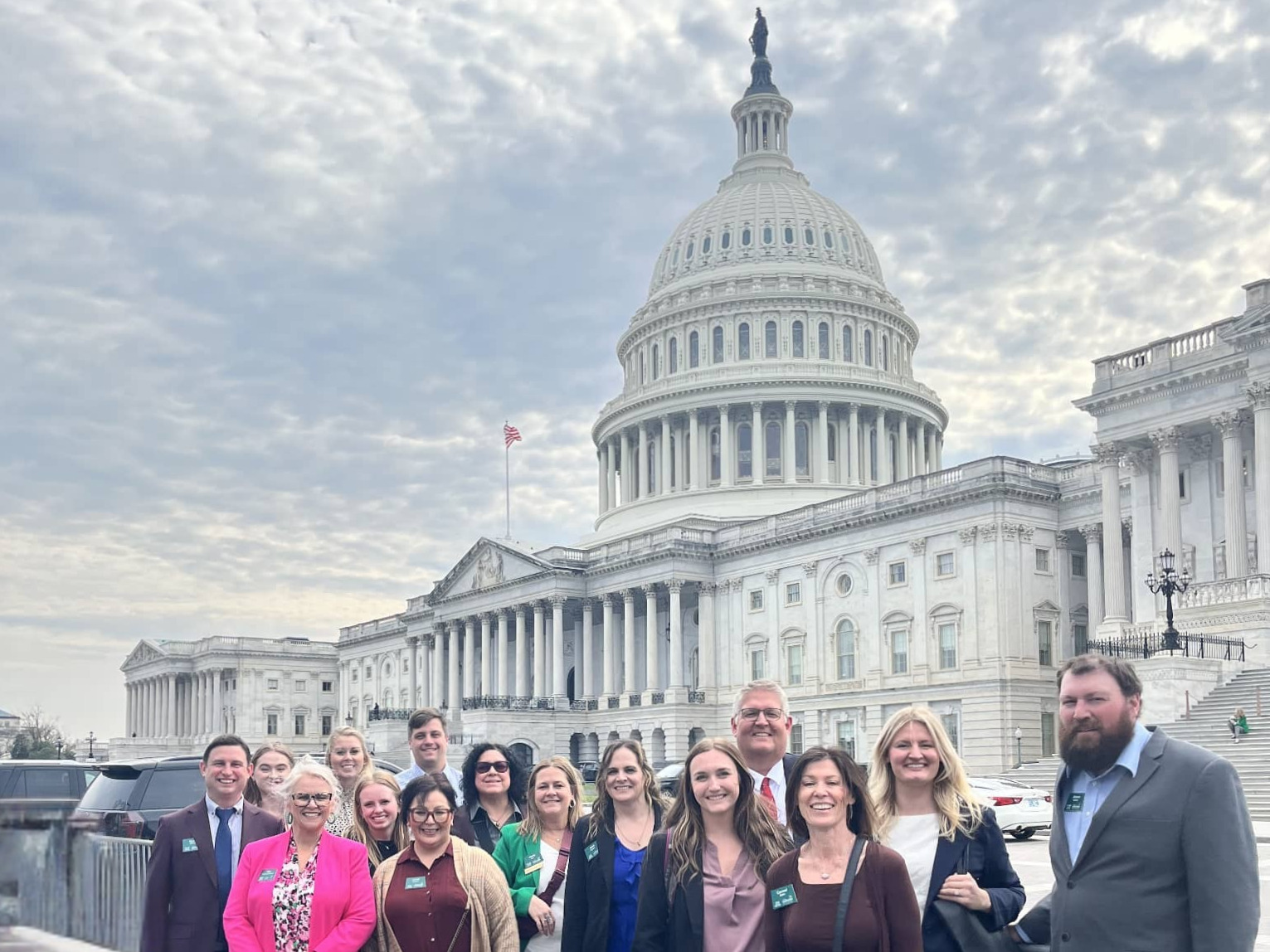
Class XI spent the day on Capitol Hill, where class members had the opportunity to meet with Congressional Offices and build relationships. The class first met with Representative Fedorchak whose staff gave us a tour of the United States Capitol Building. Class members then took part in a “Java with Julie,” and viewed the House of Representatives session in the gallery. Later, the class had the opportunity to meet and speak with Senator Hoeven and meet with Senator Cramer’s staff. Our busy day on the Hill ended with meeting with staff members of both the Senate and House Agriculture Committees.
The experience reinforced the importance of showing up, sharing personal and community stories, and advocating with clarity and intention. Class members were encouraged to ask thoughtful questions, remain informed on legislation, and continue engaging in policy conversations that impact rural communities.
The opportunity to hear from the Senate and House Agriculture Committees showed Class XI an in-depth view of agriculture policy from what it includes to how it is shaped in committees. We saw firsthand the bipartisanship and care the staff had for agriculture which was found encouraging.
A key takeaway from the day was the interconnected nature of rural issues. Class XI has a diverse set of careers and backgrounds, and a highlight of the day was seeing them all connect in the conversations. Whether it was agriculture, healthcare, or education, class members brought forward concerns that connected to the same goal of making rural America stronger.
Day 6: Future Systems Shaping Energy, Health, Natural Resources, and Global Leadership
Day six focused on how emerging systems in communication, healthcare, conservation, and global leadership will continue to shape rural communities and leadership moving forward.
Class XI started the day with JPA Health CEO, Carrie Jones, who helped the class explore leadership in communication and innovation. Discussions on artificial intelligence and messaging emphasized the importance of adapting to new tools and approaches. While JPA Health was started in a basement, it has grown to be a healthcare marketing agency which has adapted alongside AI and uses these tools in its everyday work. Leaders must be willing to evolve, embrace change, and use storytelling to effectively communicate impact.
Class XI then split and visited either the National Rural Health Association or the Theodore Roosevelt Conservation Partnership and Ducks Unlimited where we learned about the current policies they are working on. These conversations highlighted the need to translate policy into meaningful outcomes for rural communities and to lead with humility and credibility.
At the National Rural Health Association (NRHA), the focus centered on leadership, advocacy, and health equity for rural communities across the country. The visit highlighted how NRHA serves as a national voice for rural health providers by bringing community‑level realities into federal policy conversations. Being in this space reinforced how leadership at the national level can elevate rural stories that might otherwise go unheard. The experience reinforced that sharing real experiences from rural communities is essential to shaping effective policy. NRHA’s work demonstrated how advocacy is most powerful when rooted in trust, lived experience, and collective action. The visit connected directly to North Dakota, where access to healthcare is closely tied to community stability. Senior State Government Affairs Manager Zil Joyce Dixon Romero demonstrated how to directly approach leadership, demand answers, and redirect conversations by staying on topic, knowing the audience, and finding aligned voices.
At the Theodore Roosevelt Conservation Partnership and Ducks Unlimited, the conversation focused on conservation policy. After hearing from many commodity organizations this week, Class XI members continued the conversations around the Farm Bill, the different titles within this legislation, and how each group prioritizes and focuses on various titles. This further highlighted to the class the importance of a Farm Bill and all the pieces and people working behind the scenes for such a large piece of legislation. Both organizations taught Class XI members that in policy you will fail more than win and it takes a lot to make an idea happen, but advocacy, educating, and sharing your expertise is key to executing ideas and creating policy that has a positive impact on our communities.
The seminar concluded with a visit to the Japan Information and Cultural Center, where Class XI began preparing for its upcoming international study seminar in February 2027. The experience introduced agricultural systems and the role of agriculture in Japan's national economy. The class then moved into learning about Japan’s culture, food, and even practiced a few new words. This visit reinforced the importance of observing, adapting, and reflecting when engaging beyond local communities.
Day 7: Travel Day
Class XI returned home with new perspectives on leadership, policy, and the interconnected systems shaping rural North Dakota.
Conclusion
Seminar Four expanded Class XI’s understanding of leadership by connecting local experiences to national and global systems. Through historical reflection, policy engagement, and conversations with leaders across sectors, class members examined how decisions made at every level influence communities, industries, and rural life.
The experience reinforced that leadership requires awareness, adaptability, and responsibility, particularly when navigating complex systems and competing priorities. Class XI leaves Washington, D.C. with a deeper understanding of advocacy, a stronger commitment to engagement, and a clearer sense of how leadership can shape the future of rural North Dakota.
Thank You to Our Generous Sponsors
Leader Corps
Member ($1,000+)
Bank of North Dakota
North Dakota Corn Utilization Council
North Dakota Ducks Unlimited
Program Sponsors
($500+)
Erica Johnsrud, Class VII
North Dakota Farmers Union
North Dakota Pork Council
($200+)
Kasey Bitz, Class VIII
Matt Danuser, Class V
Vollmer Angus Ranch
