Title

Bee Lawns: From Backyard Food Desert to Oasis

(E2287 January 2026)
Lead Author
Lead Author:
Esther E. McGinnis Associate Professor and Extension Horticulturist
Other Authors

April Johnson Extension Pollinator Program Coordinator

Alan Zuk Associate Professor

Janet Knodel Professor and Extension Entomologist

Patrick Beauzay State IPM Coordinator and Research Specialist

Availability
Availability:
Web only
Publication Sections

Lawns and sports turfgrass occupy a surprisingly large area of the United States. The total of all residential, commercial and public property lawns is approximately 25 million acres. Sports turfgrass, including golf courses and athletic fields, accounts for an additional 25 million acres. In total, these grassy areas occupy almost 2% of the U.S. land area and are the largest irrigated crop. This extensive acreage presents a significant opportunity to support pollinator biodiversity; however, current practices often result in the opposite effect. While this publication focuses on lawns, some of the recommendations can be integrated into peripheral areas of golf courses and athletic fields.

Many bee species are in decline, a trend driven by habitat loss, pesticide exposure and diseases. While honeybee colony losses over the last 15 years have garnered attention, scientists are particularly concerned about native bee populations. The rusty-patched bumble bee (Bombus affinis) was listed on the U.S. Fish and Wildlife Service Endangered Species List in 2017 and is believed to be extinct in North Dakota. The yellow-banded bumble bee (Bombus terricola) is also in decline. These species, along with countless others, rely on diverse flowering plants that are increasingly scarce in modern landscapes.

Unfortunately, the American lawn contributes to this problem by favoring a monoculture of closely mowed turfgrasses that provides little to no habitat or food for pollinators. Community aesthetic standards often dictate the eradication of flowering plants through herbicides, preserving an uninterrupted green carpet but rendering lawns food deserts for pollinators (Figure 1). A landscape without flowers deprives bees of the necessary food sources to complete their life cycle. Flower nectar provides carbohydrates for energy, and pollen serves as a protein source for reproduction.

The American lawn, which uses fewer than a dozen turfgrass species, is a relatively recent phenomenon (See the Great American Lawn), and most people have not experienced growing other plants for lawns. Some countries are less obsessed with having the perfect, weed-free lawn. For example, the British welcome English daisies (Bellis perennis) (Figure 2) as volunteer pollinator plants within the lawn, and do not seek to eradicate them. While English daisy is not hardy to the northern U.S., the principle of integrating short, flowering species that can tolerate regular mowing into the lawn and provide food for pollinators is the basis for bee lawns.

Bee lawns help create healthier, more sustainable ecosystems without violating community aesthetic standards. The publication aims to educate and empower homeowners and others to install bee lawns as a simple yet impactful way to contribute to pollinator conservation efforts.
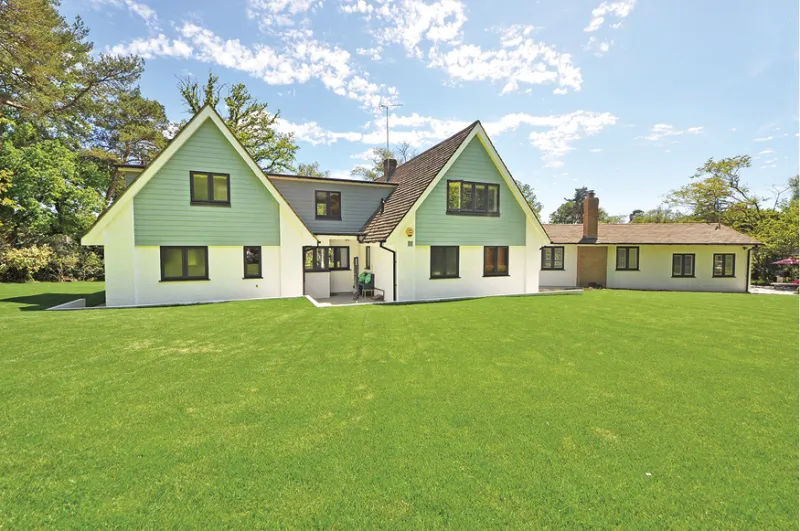
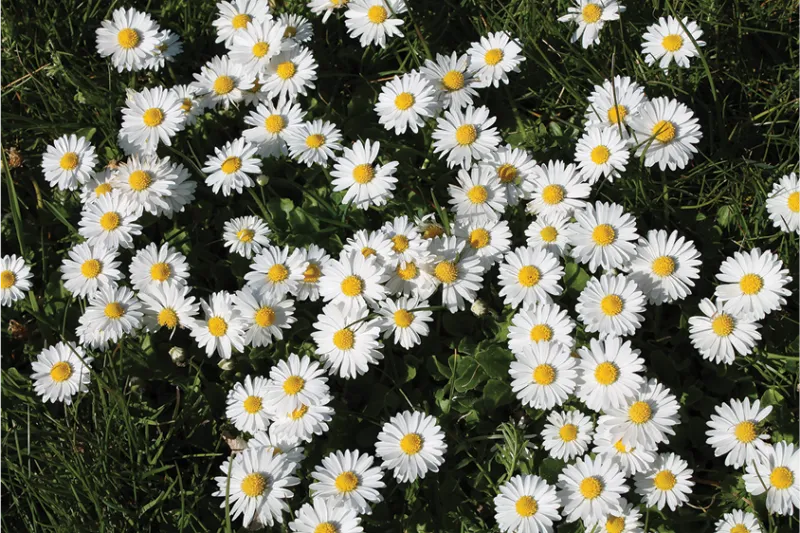
Figure 1
Photo Credit:
Public domain photo.
This flower-free yard fails to provide the nutrition necessary for pollinators.
Figure 2
Photo Credit:
Joost J. Bakker, CC BY 2.0.
English daisy is a common fixture of British lawns.

The Great American Lawn

How did the high-maintenance American lawn become an accepted way of life? Surprisingly, manicured lawns originated in Europe. Elite French and English estates in the 1700s featured large expanses of lawns as a status symbol. Armies of servants with scythes kept the lawn clipped uniformly to create formal landscapes to complement elegant manor houses. Grazing animals were kept away from the front lawn to prevent the accumulation of manure. In the late 1700s, George Washington and Thomas Jefferson were inspired to create similar landscapes for Mount Vernon and Monticello, respectively.

Lawns became feasible for more individuals when Edwin Budding patented the first lawn mower design in England in 1830. A factory carpet-cutting device inspired Budding. Connecticut’s Amariah Hills improved upon Budding’s invention and created the reel mower, which was patented in 1868. In 1871, Joseph Lessler of Buffalo, New York, introduced the first lawn sprinkler attached to a garden hose, thus eliminating the need to carry buckets of water to irrigate the lawn.

While these inventions made it easier to maintain a lawn, the fledgling lawn industry needed individuals to champion the cause. Frederick Law Olmsted, a famous landscape architect, designed New York City’s Central Park to feature lawn areas amidst tree groves and artificial lakes. The spacious park was completed in 1876, and its green spaces were a paradise to urban inhabitants. Olmsted and his partner, Calvert Vaux, further enhanced the role of lawns in American life by designing the first planned suburban community in Riverside, Illinois, in 1869. A unique design element placed each house 30 feet from the street to incorporate front lawns for a more pastoral feel.

Another landscape architect, Frank Jesup Scott, helped popularize lawns by publishing “The Art of Beautifying Suburban Home Grounds of Small Extent” in 1870. In his book, he wrote, “A smooth closely shaven surface of green is by far the most essential element of beauty on the grounds of a suburban house.” Scott’s book was so well-received that it was reprinted four times between 1872 and 1886.

America’s first golf course was constructed in 1888 in New York, and interest exploded in this lawn-based sport. To further this American pastime, the U.S. Department of Agriculture began selecting and testing native and imported turfgrasses to improve their quality and decrease the maintenance required. During this time, Knud Jacobsen and his son, Oscar, invented the gas-powered reel mower, which enabled the maintenance of large areas. Gas-powered rotary lawnmowers became popular after World War ll.

While the concept of lawns was imported from Europe, the U.S. wholeheartedly adopted lawn culture and made it distinctly American. After World War II, returning soldiers started families and settled in newly built suburbs to live the American dream. The development of lawn fertilizers, elite turfgrass cultivars, selective herbicide combinations and irrigation advancements further cemented the traditional lawn as a standard of homeownership. Innovation continued over the decades to make lawncare easier and to enable the perfect, weed-free lawn.

Bee Lawn Components

Bee lawns are a landscaping practice that integrates compact, perennial flowering plants into a new or existing lawn to support and nourish foraging pollinators. These flowering plants must bloom at a low height, tolerate routine mowing and foot traffic and grow vigorously enough to compete with the turfgrass. Most importantly, the flowers must provide a balanced diet of carbohydrates and protein-rich pollen for the bees.

Flowering Components

Common flowering groundcover plants that are integrated into lawns include Dutch white clover (Trifolium repens), self-heal (Prunella vulgaris ssp. lanceolata), creeping thyme (Thymus praecox ssp. articus) and Yaak yarrow (Achillea millefolium var. yaak). Of these four species, only Dutch white clover and Yaak yarrow establish well in North Dakota.

Dutch white clover is northern bee lawns’ most common flowering species (Figure 3). This low-growing plant, recognizable by its three leaflets often marked with a faint watermark (Figure 4), can form dense colonies in the lawn. As a legume, it has the unique ability to form a symbiotic relationship with soil bacteria, fixing atmospheric nitrogen (N2) and converting it into a form usable by the lawn —
a significant benefit for maintaining nitrogen levels naturally.

Blooming heavily in June and then sporadically through early fall, Dutch white clover is an abundant nectar source. Its pollen is particularly valuable for bees, as it contains all essential amino acids — protein building blocks — they need. A Minnesota study showed that Dutch white clover supports 55 species of bees, including bumble bees and other native bees. In contrast, not all flowering species provide balanced nutrition. For example, dandelions (Taraxcum officinale) are deficient in amino acids such as valine, isoleucine, leucine and arginine.

Historically, Dutch white clover has been considered a non-native lawn weed managed with selective broadleaf herbicides. A reimagining of this species as a low-maintenance, pollinator-friendly plant is underway, with the trend of adding clover to lawns as a food source for bees growing in popularity.

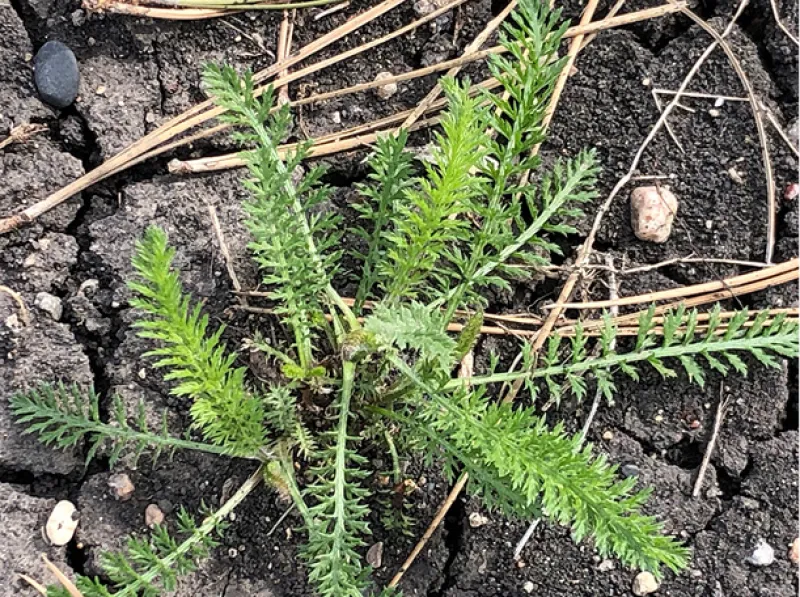
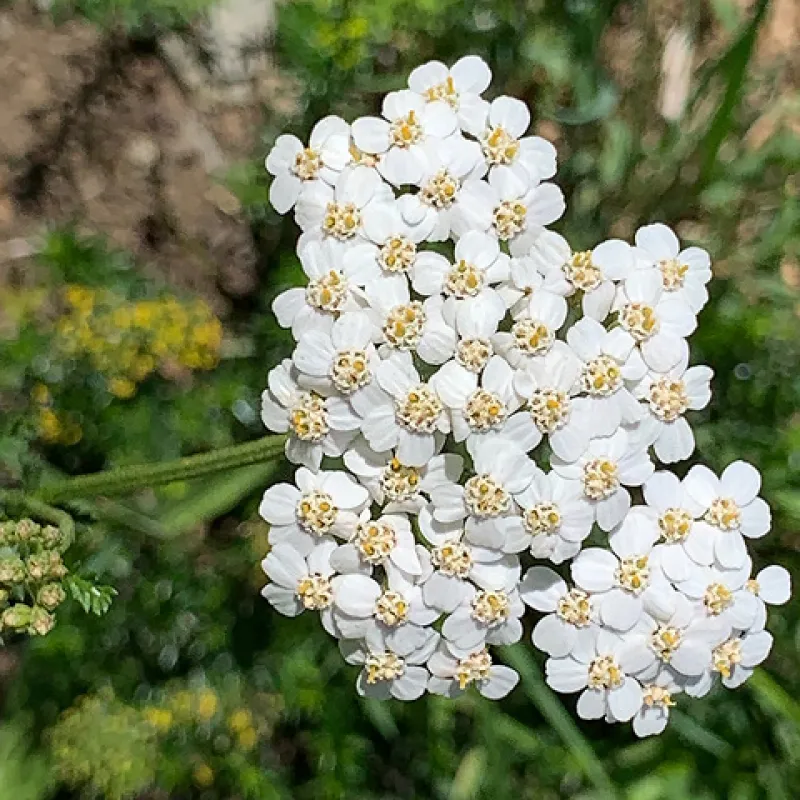
Yaak yarrow has been an essential component in eco-lawn mixes for many years because of its ability to form a dense ground cover and suppress weeds. This low-growing yarrow variety is native to the Yaak valley in northwestern Montana and is drought-tolerant. Yarrow has soft, fernlike foliage (Figure 5) and clusters of small white flowers (Figure 6). The tiny yarrow flowers attract a diversity of smaller native bees, such as sweat bees. Butterflies also use the broad flower clusters as landing pads while they forage for nectar.

Regional bee lawn mixes may contain Dutch white clover mixed with self-heal and creeping thyme. Self-heal is a member of the mint family and strongly attracts bees with its nectar. This species is better suited for moist soils and will not do well in drought-prone areas. Creeping thyme is a relative of culinary thyme and is not sufficiently hardy to survive winters with little snow cover.

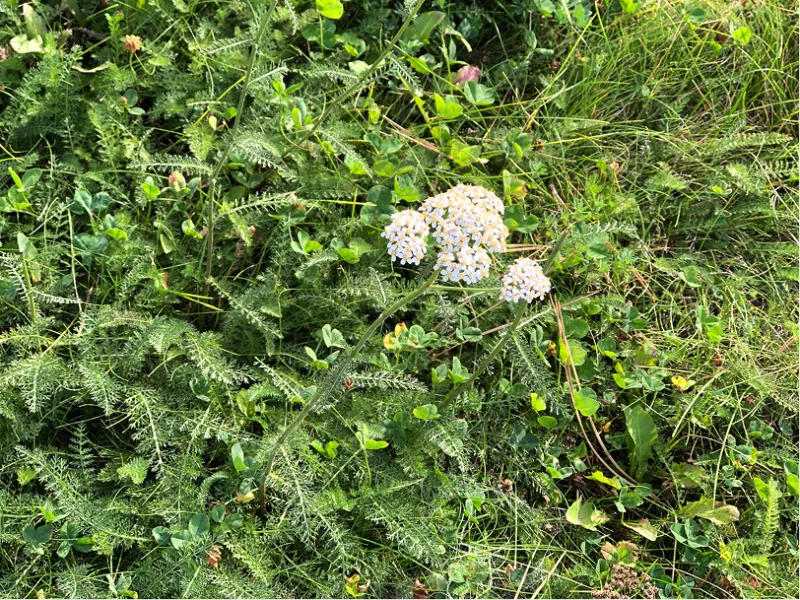
Newer bee lawn mixes include both Dutch white clover and Yaak yarrow (Figure 7). This mix of species caters to a variety of pollinators. However, some people may dislike yarrow’s fernlike texture or its propensity to spread by rhizomes. If that is the case, a different mix should be chosen.
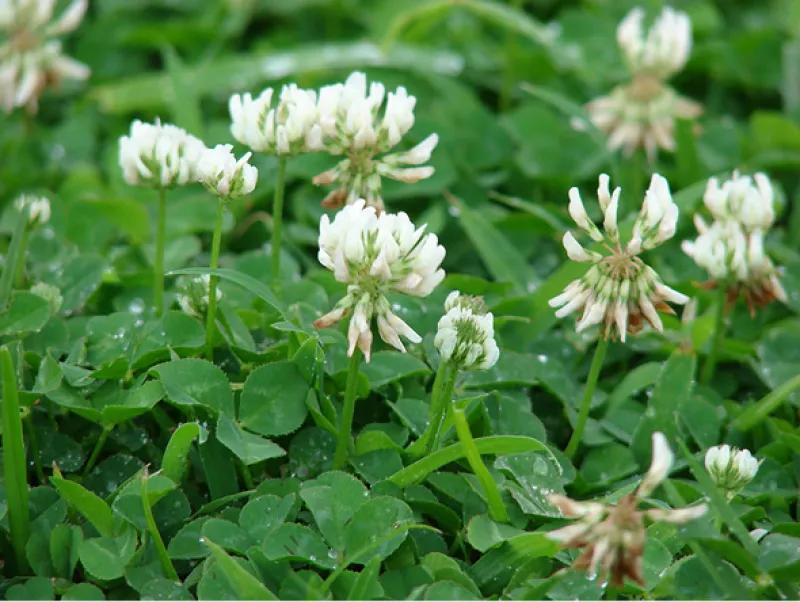
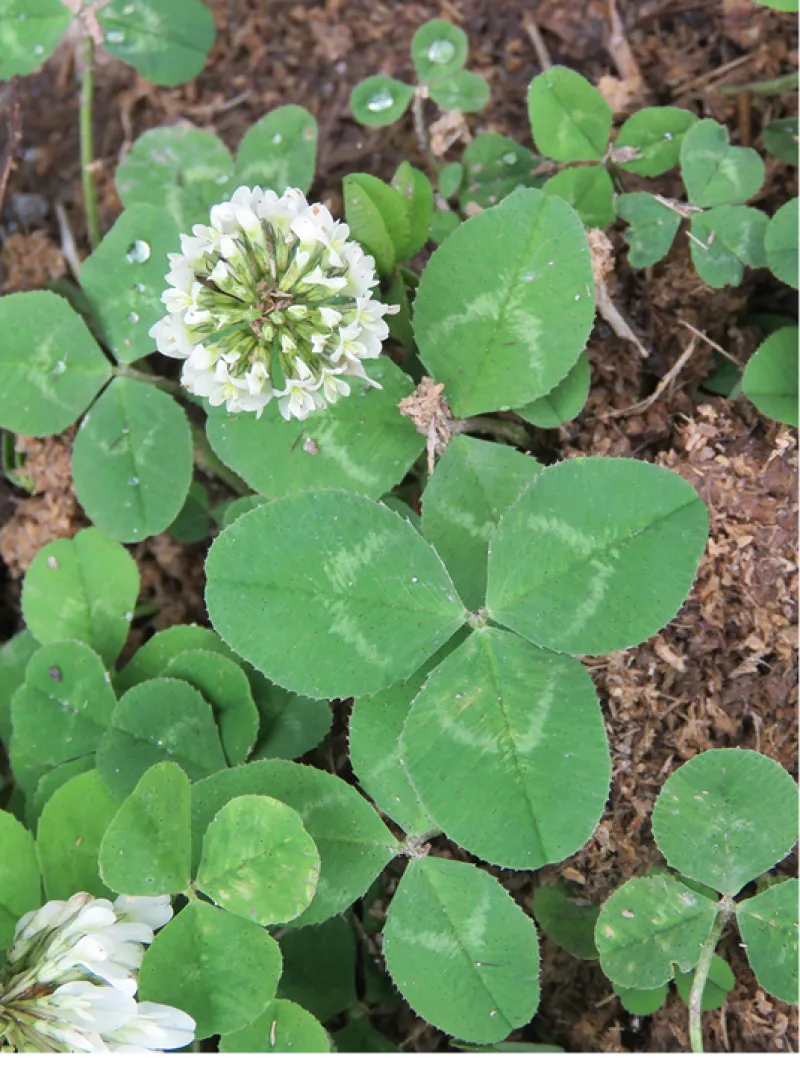
Figure 3
Photo Credit:
Forest & Kim Starr, CC by 3.0, via Wikimedia
Dutch white clover has distinctive white flowers that are attractive to bees.
Figure 4
Photo Credit:
Vinayaraj, CC BY-SA 4.0, via Wikimedia Commons
Dutch white clover leaflets frequently have a watermark.
Figure 5
Photo Credit:
Esther McGinnis, NDSU
Yarrow foliage is fernlike.
Figure 6
Photo Credit:
Daniel Fillafruela, CC BY-SA 4.0, via Wikimedia Commons
Yarrow flowers are borne in clusters.
Figure 7
Photo Credit:
Esther McGinnis, NDSU
A lawn mix containing both Dutch white clover and Yaak yarrow.

Turfgrass Components

As with any lawn mix, the turfgrass component is essential. Unlike most traditional lawns, bee lawn mixes avoid Kentucky bluegrass (Poa pratensis) as their predominant species. Kentucky bluegrass is resource-intensive and requires regular inputs of water and fertilizer to remain dark green throughout the growing season. During drought, these lawns require one inch or more of water per week to stay green. In addition, the standard nitrogen fertilizer regimen is three applications per year.

Most bee lawn mixes begin with two or more fine fescue species as the foundation. Fine fescues are lower-maintenance than Kentucky bluegrass and require less frequent irrigation, fertilizer applications and mowing. Fine fescues can be differentiated from Kentucky bluegrass by their thinner, wirelike leaf blade.

Fine fescues that are well adapted for our region include strong creeping red fescue (Festuca rubra ssp. rubra), chewings fescue (F. rubra ssp. commutata), hard fescue (F. brevipila) and sheep fescue (F. ovina). These four species have complementary characteristics and are frequently found in the same lawn mix. Chewings, hard and sheep fescues lack rhizomes and are bunch grasses. In contrast, strong creeping red fescue has rhizomes and is used to “knit” the mix together. Chewings and strong creeping red fescue do well in shady lawn areas. Hard and sheep fescue are best for sunny areas and can tolerate more drought. The mix of fescue species ensures good coverage in different microclimates and sun exposures.

Starting a Bee Lawn

Starting a bee lawn involves careful consideration of the plot size, plot characteristics and neighborhood receptivity. Other factors include the timing of the seeding and maintenance plans.

Start Small

Before committing to a bee lawn on a large scale, it is advisable to start small. Even a 5-by-10-foot plot can provide ecosystem benefits for area pollinators. Some people experiment by planting a bee lawn in the boulevard area between the sidewalk and the street. This provides a defined area in which to experiment and prevents the spread of bee lawn plants into other managed areas.

Location

To maximize flowering, bee lawns should be planted in locations that receive at least six hours of sunlight daily. Plants naturally flower more in full sun locations and less in the shade. Bee lawns should also be sited in low foot traffic areas away from small children to prevent the bees from being stepped on and the children from potentially being stung. For the most part, bees will leave people alone but will sting if they feel threatened. Bees are pretty docile and should not be confused with yellowjackets, an aggressive social wasp that appears in late summer to disrupt picnics (Figure 8).
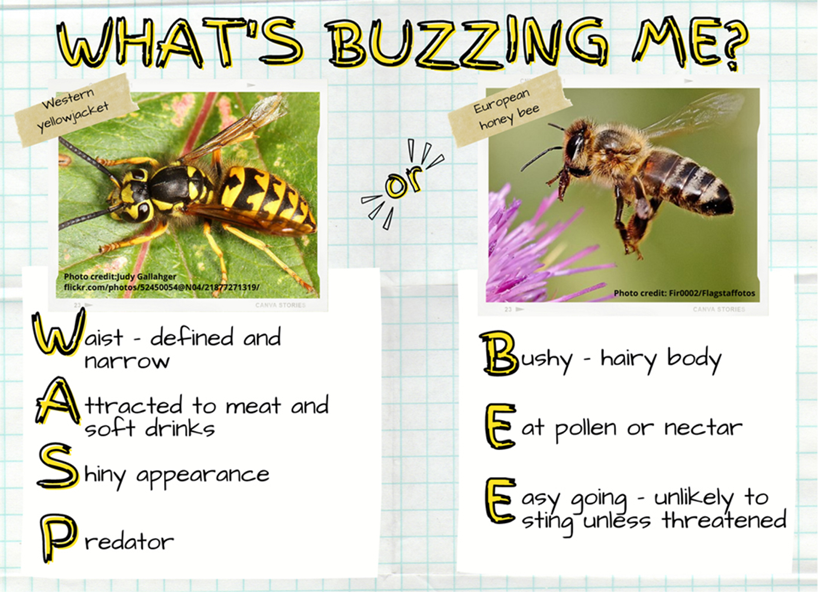
Figure 8
Photo Credit:
NDSU Extension Master Gardener, Caitlin Stegmiller
How to differentiate wasps from bees.

Maintaining Good Neighborhood Relations

Starting a bee lawn is counter-cultural because it departs from the American lawn model. If there are neighborhood expectations for formal lawns, planting in the backyard rather than the front yard may be a good place to start. Remember that Dutch white clover and Yaak yarrow can spread to neighboring yards. Planting away from the property line can help maintain good neighborhood relations.

Good communication is also essential. Explaining the purpose and maintenance process of the bee lawn to your neighbors can help prevent conflict and potentially encourage the adoption of this sustainable practice. A key point is to reassure neighbors that bee lawns are regularly maintained and mowed. In contrast, No Mow May practices (See The Controversial Science Behind No Mow May) may result in 12-inch-tall lawns with many dandelions. The bee lawn maintenance steps outlined in this publication are designed to comply with city ordinances that prohibit excessive lawn height and adhere to community aesthetic standards.

Many people post bee lawn or pollinator lawn signs to indicate that the appearance of short flowering plants in their yard is intentional. The North Dakota State University Extension Master Gardener Program offers a free Certified Bee Lawn sign to qualifying applicants in North Dakota, South Dakota, Montana and Minnesota (See Apply for a Certified Bee Lawn Sign).

Timing of Seeding

A great time to start a bee lawn from scratch or overseed an existing lawn with flower seed is late summer (August to mid-September). Temperatures are beginning to cool, and the soil stays moist for longer, which improves seed establishment. Fewer weed seeds germinate at this time of year. Residents in the northern half of North Dakota should seed in August rather than September to prevent potential damage from early freezes.

Surprisingly, another good time to seed is during the dormant season from late October to November, depending on soil temperatures. The premise behind dormant seeding is to sow the seed before the soil has frozen (soil temperatures between 35 and 45 degrees Fahrenheit) but after the temperature has dipped low enough to prevent fall germination. The seeds are then covered and protected by snow over the winter. In spring, the melting snow provides moisture for seed germination. The major advantage is that the seeds germinate before the weeds in the spring, thus ensuring a jump on the competition. Furthermore, little to no irrigation is required. As for a disadvantage, germination may be low in years with late snows or little snow cover. If seed germination is patchy, additional spring seeding may be necessary to fill the gaps.

Spring seeding is another option, but the major drawback is the prevalence of weed seeds germinating as the soil warms, thus necessitating hand weeding. Furthermore, spring lawn seeding is incompatible with the application of pre-emergent herbicides to control crabgrass and other annual grassy weeds.

The Controversial Science Behind no mow may

No Mow May is a popular conservation movement that encourages people to abstain from mowing their lawns throughout May. The purpose is to allow weeds to grow and flower in the lawn to provide nectar and pollen to nourish early-season pollinators such as bees and butterflies. NDSU Extension does not promote this practice because No Mow May lacks scientific support and is even considered controversial.

No Mow May is a British pollinator movement embraced by the town of Appleton, Wisconsin, where residents pledged to forego spring mowing. Seeing an opportunity to research the subject, Lawrence University scientists decided to study this phenomenon. The researchers compared the diversity and abundance of pollinator species between unmowed residential lawns and mowed parkland. They published a study showing unmowed residential lawns attracted more bee species and larger quantities than mowed parkland. The Lawrence University research study was published and received much national press coverage. Consequently, many communities across the country adopted No Mow May.

Then, something unexpected happened. On Nov. 18, 2022, the original research study was retracted due to “several potential inconsistencies in data handling and reporting.” Scientific journals rarely retract articles that have been published unless there is a severe deficiency. In this case, the scientific basis for No Mow May has been undermined.

No Mow May is problematic for many reasons. Foregoing mowing for an entire month is damaging to lawns right before summer. One important rule of thumb for growing healthy lawns is to never trim off more than one-third the height of your turfgrass at one time. For example, if you allow your lawn to grow 4.5 inches tall, the maximum length that should be removed at one time is 1.5 inches, leaving a 3-inch-tall lawn. No Mow May violates this rule because lawns may grow 12 inches or more monthly. Trimming a 15-inch lawn down to 3 inches on June 1 shocks the health of the turfgrass plants. Even worse, this stress is imposed right before summer, and therefore, the lawn is less able to handle heat and drought.

A second concern is that few homeowners have mower equipment that can efficiently mow and collect tall grass. Consequently, deep swaths of “hay” will be left on the lawn when homeowners mow in June. Excessively long clippings may smother the lawn and will likely cause thatch accumulation. The excessive plant residue will need to be raked up, depriving the lawn of nutrients from the clippings.

Allowing the grass to grow too tall may also hurt pollinators. A Massachusetts study examined bee abundance and richness of suburban lawns mowed once a week, once every two weeks and once every three weeks. The lawns mowed every three weeks had the most flowers, but the lawns mowed every two weeks attracted more bees. How could this be? One possibility is that turfgrass grows faster than flowering weeds. Consequently, the tall grass may hide the flowers and make them harder for bees to find.

A final concern is that No Mow May mainly results in blooming dandelions. Yes, many pollinator species visit dandelions for their nectar, and it can be an important early food source in the absence of other pollen-rich plants. However, recent research has shown that dandelion pollen is deficient in several critical amino acids necessary for bees.

If you want to support pollinator conservation in spring, there are better methods than No Mow May. Consider installing a pollinator garden with spring-blooming plants. Spring flowering trees and shrubs can also be an essential source of nutrition until Dutch white clover blooms in June.

Adapted from McGinnis, E. Dakota Gardener: The messy and controversial science behind No Mow May, May 24, 2023.

Retraction Notice. 2022. PeerJ. https://peerj.com/articles/10021/retraction/

Apply for a Certified Bee Lawn Sign

The NDSU Extension Master Gardener Program promotes the installation of bee lawns as a sustainable landscaping practice. To encourage individuals and groups to plant bee lawns, the NDSU EMG Program will send a free certified bee lawn sign to North Dakota, Minnesota, South Dakota and Montana residents who meet specific requirements. To apply for a free sign, please use the following QR code:
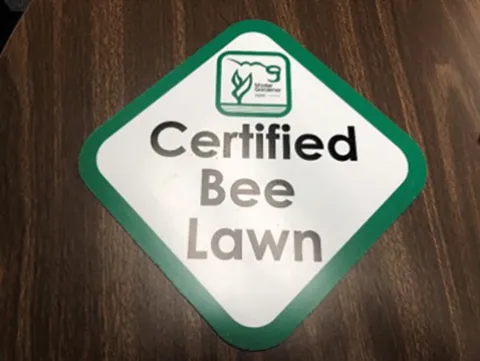

Figure 10
Photo Credit:
Esther McGinnis, NDSU
Figure QR Code
Photo Credit:
NDSU Photo

Establishing a New Bee Lawn

Starting a new bee lawn is similar to seeding a conventional lawn. The area to be planted should be carefully prepared to form a good seed bed. This entails removing any existing vegetation with a nonselective herbicide containing glyphosate. After the first herbicide application, a new flush of weeds may appear, necessitating a second application. The vegetation can be smothered with cardboard or black tarps for those who want to refrain from herbicide use.

Next, the soil should be carefully raked to form a level surface. The seeds can be sown by hand or using a drop spreader at the rate specified on the seed label. If using a drop spreader, apply half the seed going in one direction and the remaining half in a perpendicular direction to ensure good seed coverage. The seeds should be lightly raked into the soil to provide good seed-to-soil contact but not buried more than ½ inch deep. Alternatively, the seeds can be sown using a professional slit seeder.

Irrigate the soil to keep the seeds moist. The time of year, temperature and rainfall will affect irrigation frequency. If temperatures are high and no precipitation is forecasted, two or three light irrigations per day may be necessary. After the seeds have germinated, gradually reduce irrigation frequency. At this stage, focus on water infiltration to encourage deep root growth.

The bee lawn should be mowed for the first time when it is 5 to 6 inches tall. This allows the lawn to be established before seasonal mowing begins. The mower deck should be set to a height between 3 and 4 inches. A lower mowing height may damage the planting.

Despite best efforts, weed seeds will germinate even in the fall. The best way to manage weeds at this early stage is to hand-weed until the lawn is established. Do not apply any herbicides because they may have detrimental effects to the flowering plants in the bee lawn mix.

Bee lawns take time to establish. The lawn will be patchy during the first year (Figure 9). Turfgrass will be more prevalent than flowering plants. By the second and third years, the flowering plants will become more apparent (Figure 10).
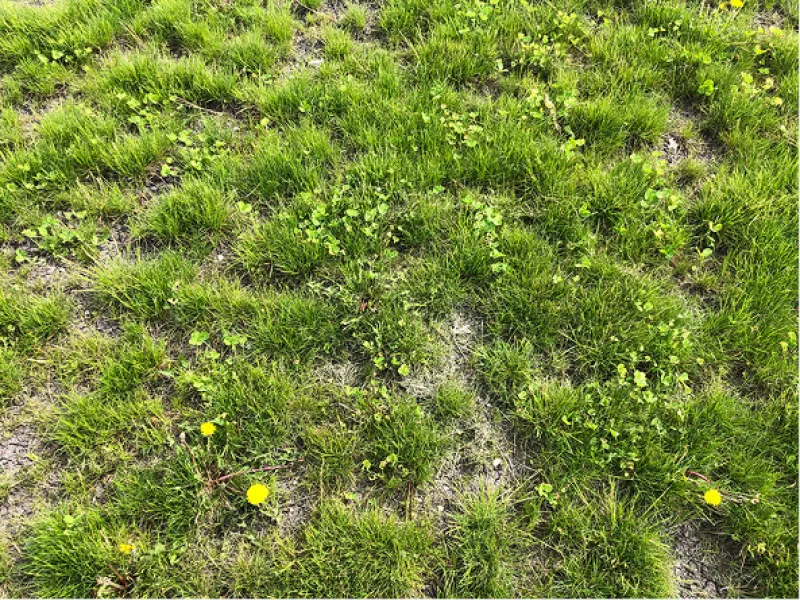
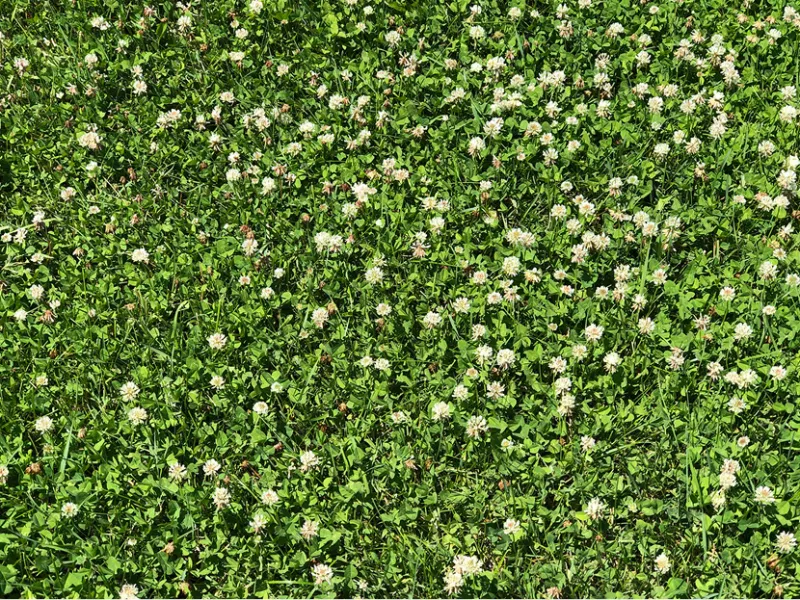
Figure 9
Photo Credit:
Esther McGinnis, NDSU
A bee lawn may appear patchy in the first year.
Figure 10
Photo Credit:
Esther McGinnis, NDSU
An established bee lawn.

Overseeding an Existing Lawn

Sowing bee-friendly flower seeds into an existing lawn is possible but requires a different process. To prevent the established grass from outcompeting the germinating flower seeds, the existing lawn must be injured to slow grass growth. An easy way to do this is by scalping the lawn to 1.5 inches with a lawn mower. The short height also allows sunlight to reach the newly germinated seedlings. To provide good seed-to-soil contact, a core aerator can be rented to pull soil cores out of the lawn before seeding. Alternatively, a slit seeder can be used to sow the seed. Watering practices should be similar to seeding a new lawn.

Maintenance for Established Bee Lawns

Mowing

One bee lawn advantage is that it does not need to be mowed as frequently as a standard lawn, particularly if a fine fescue mix is planted. When mowing a bee lawn, the general rule of thumb is to reduce mowing frequency to once every two to three weeks, but this also depends on the weather and rainfall. Mowing should also be delayed if a flowering species is just coming into bloom. Frequent mowing is discouraged because it will cut off the flowers, thus defeating the nutritional purpose of the bee lawn. Furthermore, the height of the mower deck should be raised to its highest setting to preserve flowers. The top setting for most mowers is usually between 3 and 4 inches. To check the mower height, park the mower on a level surface and measure the distance between the ground and the bottom of the mower deck. Finally, the mower clippings should not be bagged; instead, allow the clippings to drop back to the ground to return water and nutrients to the soil.

Watering

One bee lawn advantage is that it does not need to be mowed as frequently as a standard lawn, particularly if a fine fescue mix is planted. When mowing a bee lawn, the general rule of thumb is to reduce mowing frequency to once every two to three weeks, but this also depends on the weather and rainfall. Mowing should also be delayed if a flowering species is just coming into bloom. Frequent mowing is discouraged because it will cut off the flowers, thus defeating the nutritional purpose of the bee lawn. Furthermore, the height of the mower deck should be raised to its highest setting to preserve flowers. The top setting for most mowers is usually between 3 and 4 inches. To check the mower height, park the mower on a level surface and measure the distance between the ground and the bottom of the mower deck. Finally, the mower clippings should not be bagged; instead, allow the clippings to drop back to the ground to return water and nutrients to the soil.

Fertilizing

Once established, bee lawns require less water than conventional lawns because of the use of drought-tolerant plants. However, summer drought may necessitate irrigation. The need to irrigate may be minimal in an average precipitation year.

Weed management

Dutch white clover is a legume and fixes its own nitrogen. Additionally, fewer fertilizer applications are necessary if lawn clippings are not bagged. Conventional lawns require two to three fertilizer applications per year. In contrast, a bee lawn requires no fertilizer or one application at most. If fertilizer is applied, the timing should be late August or early September and consist of one pound of nitrogen per 1,000 square feet. Fertilizer applications in late summer tend to promote more root growth rather than canopy growth.

Sources

Anderson, A.G., L. Costner, L. Best and G.A. Langellotto. 2022. The bee fauna associated with Pacific Northwest (USA) native plants for gardens. Conservation Science and Practice. 4(10):e12801.

Lerman, S.B., A.R. Contosta, J. Milam, and C. Bang. 2018. To mow or to mow less: Lawn mowing frequency affects bee abundance and diversity in suburban yards. Biological Conservation 221: 160-174.

Milesi, C., S.W. Running, C.D. Elvidge, J.B. Dietz, B.T. Tuttle & R.R. Nemani. 2005. Mapping and modeling the biochemical cycling of turf grasses in the United States. Environmental Management 36: 426-38.

Moncada, K., M. Reiter, J. Wolfin. 2023. Planting and maintaining a bee lawn. https://extension.umn.edu/landscape-design/planting-and-maintaining-bee-lawn (last accessed December 9, 2024).

New York Times. The Great American Lawn: How the Dream was Manufactured. https://www.nytimes.com/2022/04/07/learning/film-club-the-great-american-lawn-how-the-dream-was-manufactured.html?searchResultPosition=3

Wolfin, J., E. Watkins, I. Lane, Z.M. Portman, and M. Spivak. 2023. Floral enhancement of turfgrass lawns benefits wild bees and honey bees (Apis mellifera). Urban Ecosystems. 26:361-75

Other Pollinator Resources

Pollinators play a vital role in maintaining healthy ecosystems and supporting agricultural productivity, making their conservation essential for environmental and economic sustainability. To help individuals and communities take action, we’ve created a comprehensive digital library of resources dedicated to pollinator conservation. This collection includes practical guides on butterfly habitat, developing and maintaining pollinator gardens, native bees in North Dakota and much more.

Whether you’re looking to transform your lawn into a pollinator haven, learn more about the diverse species of bees in our region or design a garden that attracts and supports butterflies, these resources provide the tools and knowledge to foster biodiversity and ensure pollinator populations thrive in our land.

https://ndsuhorticulture.com/

Printing support was received from the North Dakota Department of Agriculture.