

Title
Black Cherry
(F2136, June 2024)File
Publication File:
F2136 Black Cherry
Availability
Availability:
Web only
Publication Sections
Comments
Native Americans prepared decoctions of inner bark for cough medicines and tea-like cold remedies. Hard, reddish-brown wood takes a fine polish and is commercially valued for use in a large number of products such as furniture, veneers, cabinets, interior paneling, gun stocks, instrument/tool handles and musical instruments. Species name comes from the Latin word for “late” in reference to the late flowering and fruiting in comparison to other cherry varieties. Potentially susceptible to black rot canker.
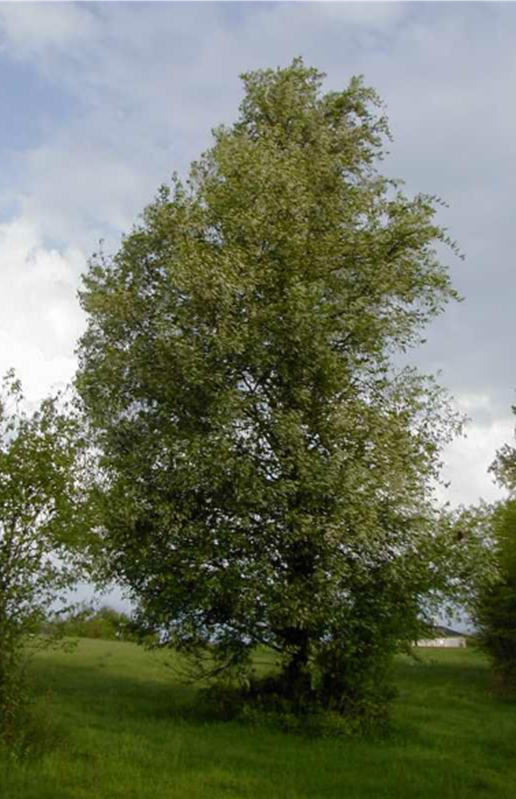
Photo Credit:
Joseph Zeleznik, Ph.D., Extension Forester
Black Cherry
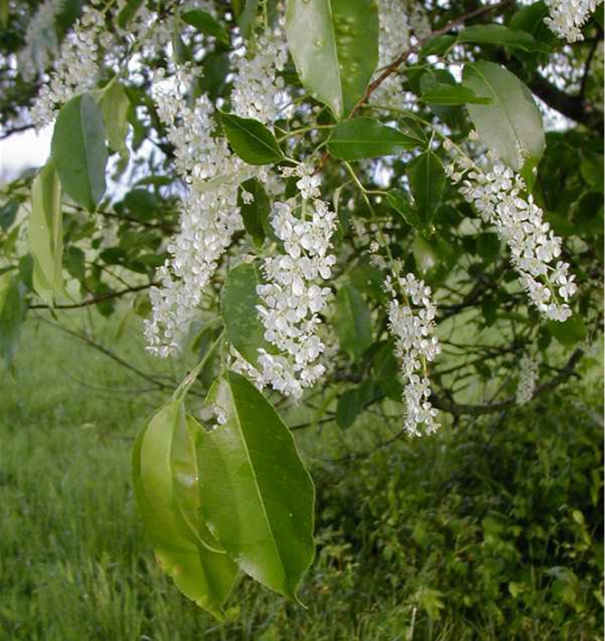
Photo Credit:
Joseph Zeleznik, Ph.D., Extension Forester
Black Cherry
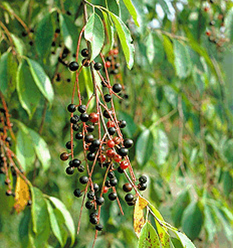
Photo Credit:
Joseph Zeleznik, Ph.D., Extension Forester
Black Cherry
