Title

Cyanobacteria Poisoning (Blue-green Algae)

(V1136, Reviewed June 2026)
Summary

Drinking water from stagnant ponds and dugouts during hot, dry weather can cause sudden death in animals. This water can contain certain species of cyanobacteria, widely known as blue-green algae.

Lead Author
Lead Author:
Miranda A. Meehan Extension Livestock Environmental Stewardship Specialist
Other Authors

Jake Galbreath, Extension Veterinarian

Michelle Mostrom, Veterinary Toxicologist

Availability
Availability:
Available in print from the NDSU Distribution Center.

Contact your county NDSU Extension office to request a printed copy.
NDSU staff can order copies online (login required).
Publication Sections
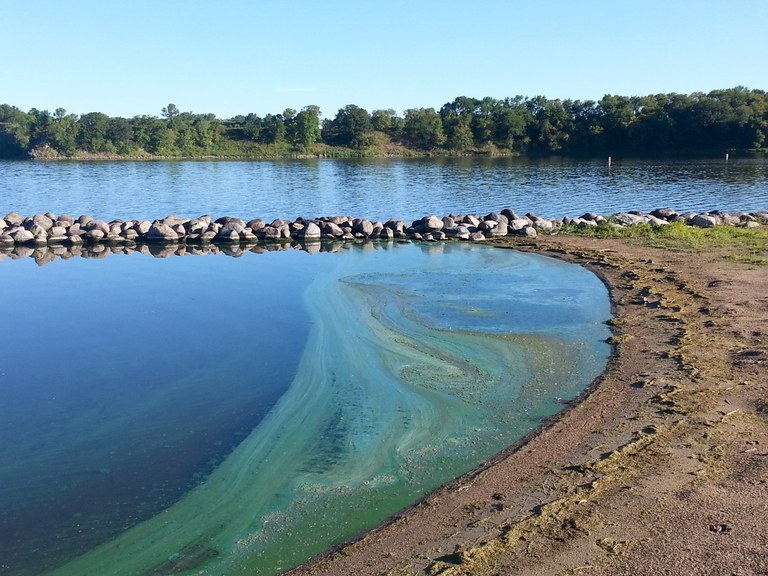
cyanobacteria, widely known as blue-green algae
Photo Credit:
Walsh County Soil Conservation District

Cyanobacteria blooms are caused by excess levels of nutrients, specifically nitrogen and phosphorus. The most common sources of excess nutrients in North Dakota are runoff or soil erosion from fertilizer and manure. Learn more from the NDSU Extension “Environmental Implications of Excess Fertilizer and Manure on Water Quality” publication.

The presence of excess nutrients, combined with hot, sunny days, can result in toxic cyanobacterial blooms. The blooms commonly occur in late summer and early autumn. Under favorable conditions, bacterial numbers multiply rapidly, doubling in one day or less. The formation of toxic blooms is unpredictable.

Blooms usually do not last long. Rain, heavy winds or cooler temperatures often inhibit growth or break up the blooms, mixing the bacteria into the water body within a few days. However, under continuing favorable conditions, blooms may last for several weeks. Cyanobacteria can survive under ice and throughout winter conditions.

Blue-green algae often occurs in stagnant ponds or dugouts with elevated nutrient levels, forming large colonies that appear as scum on or just below the water surface. Live cyanobacterial blooms can be green but also red or yellow, and they often turn blue after the bloom dies and dries on the surface or shoreline.

Live cyanobacteria is typically green and turns blue after it dies and dries on the surface or shoreline. The presence of bacteria often may be determined by a bluish tinge to the water. Concentrations of bacteria often are bluish green but may vary from dark green to brownish green, depending on the total bacterial population.

Following the production of cyanobacteria, sustained gentle winds will concentrate the bacteria on the leeward (downwind) side of the water body. Livestock and other animals usually are poisoned when they consume water containing high concentrations of the bacteria or the toxins generated by the bacteria.

Toxicity is dependent on the species consuming the water, as well as the concentration and the amount of water ingested. Ingestion of approximately 1 quart of heavily contaminated water has been fatal in cattle. Concentrations lethal to livestock usually do not occur on small water bodies that do not have enough wave action to concentrate the bacteria on shore.

Cyanobacteria has many different species; some species are harmless, and others produce poisonous toxins. Several types of potentially poisonous cyanobacteria are known to occur in North Dakota: Microcystis spp., Anabaena spp., Dolichospermum spp., Aphanizomenon spp, Oscillatoria spp., Planktothris spp., Nodularias pp. and Cylindrospermopsis spp. (synonym Raphidiopsis spp.).

However, not all cyanobacteria are poisonous, and the cyanobacteria that generate toxins do not always do so. Toxins from these bacteria, termed cyanotoxins, are poisonous to nearly all livestock and wildlife, including cattle, horses, sheep, pigs, chickens, ducks, pigeons, geese, herons, songbirds, dogs, rabbits, small wild and domestic animals, and even frogs, fish and snakes. Cyanobacterial toxins are primarily neurotoxic (affect the nervous system) and hepatotoxic (affect the liver); although, multiorgan damage of liver and kidney and skin irritation can occur. These toxins are also poisonous to humans.

Symptoms of Cyanobacterial Poisoning

Signs of neurotoxin poisoning usually appear within 20 minutes of ingestion. In animals, symptoms include weakness, staggering, difficulty in breathing, tremors, convulsions and, ultimately, death. Animals affected by liver toxins may exhibit weakness, pale-colored mucous membranes, mental derangement, bloody diarrhea and, ultimately, death. Typically, livestock are found dead before producers observe symptoms.

Livestock that do survive cyanobacterial poisoning may lose weight and, in some cases, develop photosensitivity. Livestock that develop photosensitivity are prone to sunburns affecting lighter areas of skin, including the muzzle, udder, vulva/anus and areas with white hide. Affected skin will dry out, turn black and peel, exposing fresh, new skin.

No known antidotes are available for poisoning resulting from cyanobacteria. The best solution is to be aware of conditions that spawn cyanobacterial blooms. Under those conditions, keep cattle from drinking in areas having accumulated bacterial concentrations.

For human drinking water, the World Health Organization (WHO) issued a guideline value for microcystin-LR of 1 µg/L. Many countries have developed human drinking water guidelines for microcystins between 1 and 1.5 µg/L, based on lifetime exposures. For recreational water with possible exposure through contact, ingestion and inhalation, the WHO guidance values for microcystin-LR are higher (from less than 10 to greater than 2,000 µg/L) and associated with a relative probability of acute health effects.

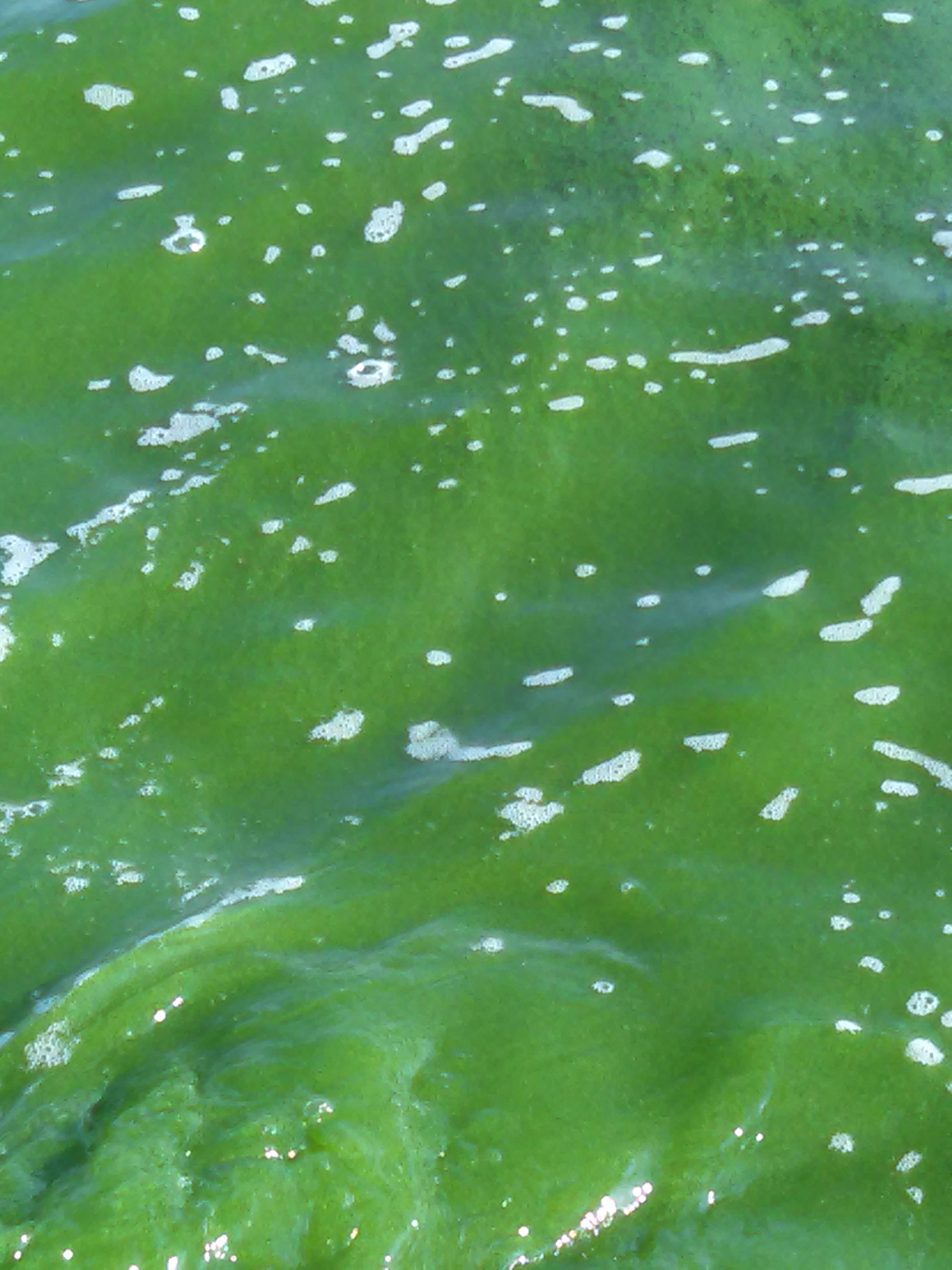
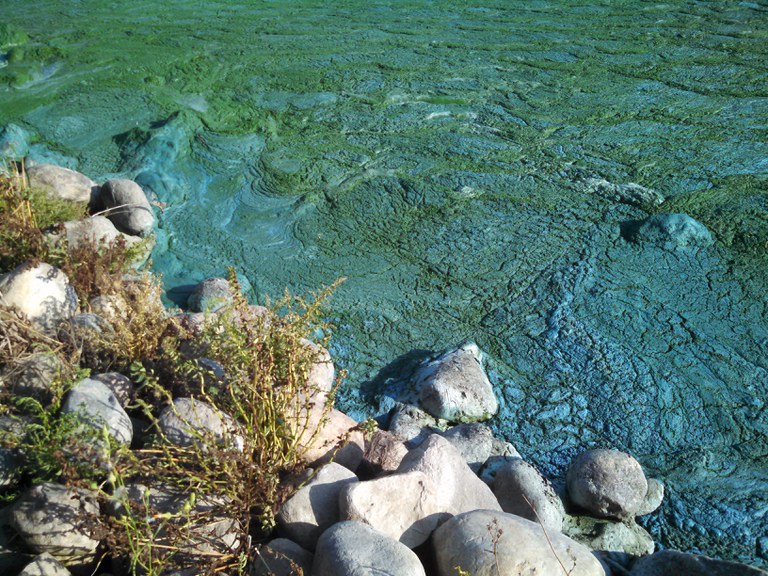
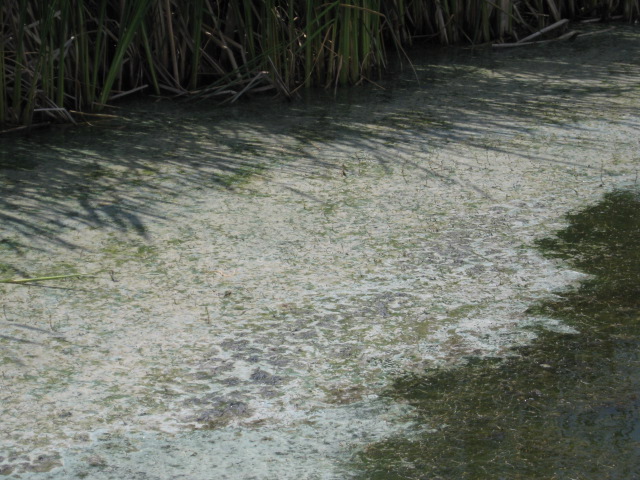
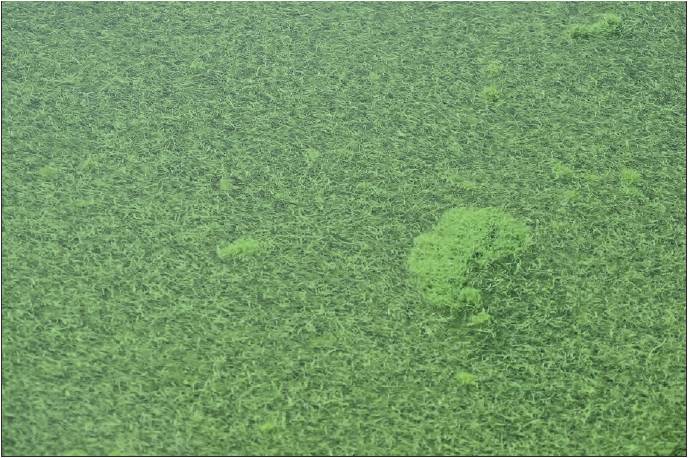
Appearance of cyanobacteria blooms observed in North Dakota
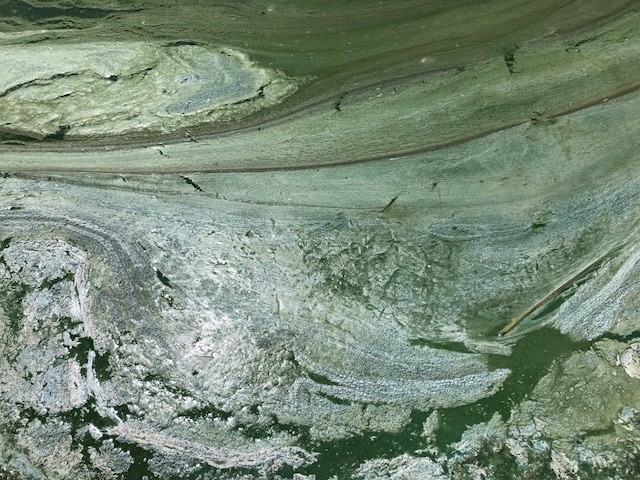
Blue-green paint
Photo Credit:
Miranda Meehan, NDSU
Blue-green paint

spilled green paint
Photo Credit:
Jim Collins, North Dakota Department of Environmental Quality
spilled green paint
crusty blue-green surface
Photo Credit:
Jim Collins
crusty blue-green surface
Blue-green algae scum
Photo Credit:
Peter Wax, North Dakota Department of Environmental Quality
Blue-green algae scum
grass clippings
Photo Credit:
Jacob Kannus, United States Geological Survey
grass clippings

Diagnosis

You can determine the presence of cyanobacteria in a number of ways. If you suspect concentrations of cyanobacteria in a water body, walk around to the leeward side of the water body. If any dead animals such as mice, muskrats, birds, snakes or fish are present, assume a poisonous condition exists.

A veterinarian should conduct a necropsy on deceased livestock to rule out other causes of death. If you suspect cyanobacteria, contact your veterinarian to determine which samples would be appropriate for your situation. As with any sudden death, producers should avoid moving dead stock until a veterinarian has been consulted.

Microscopic examination is one way to determine the presence of potentially poisonous cyanobacteria, but the presence of the bacteria does not mean the water is toxic. Testing the water with laboratory analysis is the most accurate method of determining whether poisonous toxins are present; contact the NDSU Veterinary Diagnostic Lab for preferred water containers of amber glass used for cyanotoxic analysis. A water sample of at least 500 ml should be collected from the suspected water source after the discovery of death. Water testing only will determine if the water source contains cyanobacteria, not cause of death.

When collecting a water sample, follow NDSU Extension’s Livestock Water Testing Guidelines (https://tinyurl.com/NDSU-LivestockWaterTesting). Be sure to wear gloves, as cyanobacteria can be toxic to humans. Collect a sample of the suspected cyanobacterial bloom from the surface of the water and deeper in the water. The sample should be kept cool but not frozen. Water samples should be submitted to the NDSU Veterinary Diagnostic Lab or a commercial laboratory. For more information on how to submit samples, contact the lab at (701) 231-8307 or visit its website at http://www.vdl.ndsu.edu/.

Prevention and Control

The following practices can reduce nutrient levels, lowering the risk of cyanobacteria blooms in the future and enhancing water quality:

  • Apply and manage fertilizer and manure properly.
  • Reduce the amount of soil lost through runoff from agricultural fields through crop selection and soil conservation practices, such as reduced tillage and cover crops.
  • Incorporate surface-applied phosphorus sources below the soil surface in a manner that does not increase soil erosion.
  • Implement a nutrient management plan or grazing management system that reduces the levels of nutrients entering the water source.
  • Establish or maintain buffer strips of perennial species to reduce nutrients entering the water that contribute to bacteria and algae growth, specifically nitrogen and phosphorus.
  • Hay or graze buffer strips in the fall to reduce the vegetation that might release nutrients into surface water in the spring when it decomposes.
  • Prevent livestock from loitering in surface water by installing alternate water sources and/or fencing to reduce access.
  • Create a designated drinking area where the risk of cyanobacteria is minimal. If wind concentrates the bacteria on one corner of a water body, fence that corner. Force the cattle to the windward side of the water body, where the bacteria cannot concentrate.
  • Pump water from the center of the water body, well below the surface, where the bacteria are unlikely to concentrate, to a water tank.
  • Construct drinking ponds so they are 20 feet wide by 80 feet long and 10 feet (water depth) deep. This decreases the surface area needed for multiplication of the cyanobacteria, maintains an adequate supply of water for the livestock and decreases the effect of wind on the surface of the pond.

The risk of repeated blooms is likely when conditions support the growth of bacteria. Water can be treated to prevent repeated blooms. However, products used to treat water are regulated and can be toxic to plants and wildlife. If used improperly treatments may even be toxic to livestock. Please consult your veterinarian to discuss treatment options. For long-term prevention of blooms, management practices that reduce nutrient loads need to be implemented.

This publication was authored by Charlie Stoltenow, former NDSU Extension assistant director for agriculture and natural resources and former Extension veterinarian, 1997.