

Livestock Water Requirements
(AS1763, Revised February 2026)Water is an important, but often overlooked, nutrient. Livestock water requirements are affected by many factors including, size, productivity, diet and environmental conditions. Limited access or reduced water consumption can result in dehydration, which can be fatal to livestock.
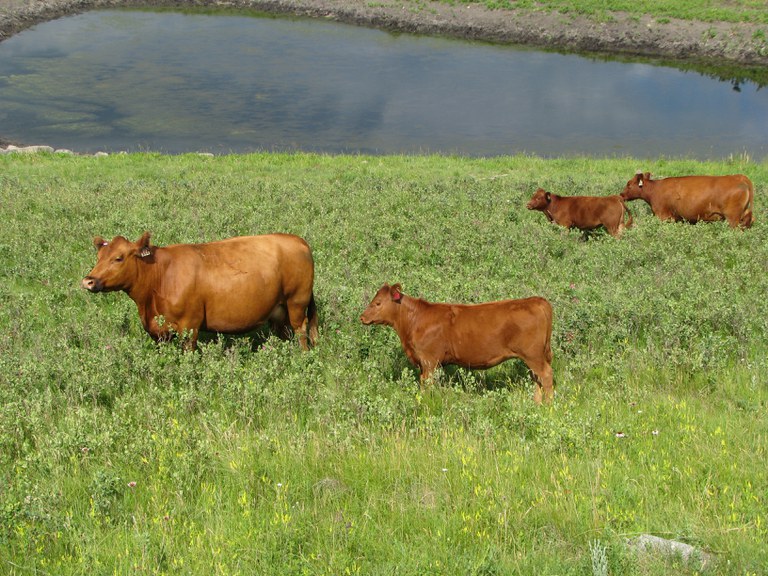
Providing adequate water to livestock is critical for animal health and production. A 10% loss of body water is fatal to most species of domestic livestock.
Water accounts for more than 98% of all molecules in the body and between 50% and 81% of an animal’s total body weight at maturity. Water is required for regulation of body temperature, growth, reproduction, lactation, digestion, lubrication of joints and eyesight.
Livestock water requirements vary significantly depending on the species. Water consumption is influenced by a number of factors, including age, rate of gain, pregnancy, lactation, activity, type of diet, feed intake, environmental temperature and humidity. Livestock obtain water to meet their requirements from wells, fountains, surface water and moisture found in feedstuffs.
