

Sustainable Farming Provides Food for Today and Tomorrow
(SF2260 June 2025)Sustainability means using resources wisely today so that future generations may also meet their needs. Farmers and ranchers use sustainable farming practices to produce food in ways that benefit people, animals, the environment and the economy. These practices focus on providing healthy food for everyone while ensuring vital resources like soil, water and air are available for the needs of future generations. Sustainable agricultural practices help support all living and nonliving things on the planet, ensuring that farming remains successful for many years to come.
Healthy Soils are Required for Sustainable Food Production
Farmers and ranchers care deeply about soil because soil is the foundation of their entire agricultural operation. Soil is essential for everything we do. Soil is necessary for producing the food we eat, the clothes we wear and the fuel that powers our vehicles. It’s the foundation on which we build homes, roads and other structures. Healthy soil supports plant growth and provides water and nutrients for crops and feed for livestock. Feed includes grasslands, grains and many byproducts from human food production and other industries such as biofuel production. Byproducts allow products not used during primary food or fuel production to be repurposed for other secondary uses. Healthy soil is the foundation for all these things.
About 99% of our food production depends on soil. About one acre of land — roughly the size of a football field — is used to supply food for each person in the world.
Many foods we eat on a daily basis are made from North Dakota-grown cereal grains.
Fruits and vegetables require soil to grow the plants from which they are harvested.
Milk and meat production rely on our livestock’s plant-based diet, primarily of plants that humans can’t digest, like plant parts (grass leaves and stems) and byproducts that are high in cellulose.
There are many plant-based proteins grown, including nuts, seeds and legumes like beans.

“A cereal grain is a type of grass that produces edible seeds commonly used as food. Some of the most well-known cereal grains are wheat, rice, corn, barley, oats, rye and millet. These grains are staples in many diets worldwide and are important sources of carbohydrates, fiber and other nutrients.”
“A legume is a plant that grows pods with seeds inside and includes all types of beans, peas, pulses and even peanuts. Pulses are a group of legumes that includes lentils, chickpeas, dry beans and dry peas.”
Sustainable Management to Build Healthy Soils
All healthy soils have one important common component: organic matter, the heart of soil health.
Organic matter in the soil plays a key role in holding onto water and plant nutrients, reducing fertilizer runoff and creating a home for helpful microbes that are important for breaking down nutrients and keeping the soil healthy.
About 58% of organic matter in the soil is made up of carbon — the same carbon found in the atmosphere in the form of carbon dioxide (CO2).
By increasing organic matter in the soil through sustainable crop and grazing management, farmers and ranchers are trapping carbon in the soil to help reduce carbon in the air and stabilize the climate. See below (Table 1) for some of the benefits of organic matter in the soil.
Table 1. Benefits of Organic Matter in the Soil
| Chemical Benefits | Physical Benefits | Biological Benefits |
Improves soil conditions to help plants absorb nutrients Holds carbon in the soil | Helps water retention and movement through the soil Resists compaction Reduces surface crusting | Provides food for living microorganisms in the soil Accelerates nutrient availability |
While the ideal organic matter content in soil is around 5%, it can be difficult for farmers to reach or maintain this level. In some cases, the organic matter content can be as low as 1%. To improve soil health, farmers are increasingly adopting sustainable agricultural practices that focus on rebuilding soil organic matter. There are four key principles for building soil health, which, in turn, enhance the soil’s ability to produce food and support long-term agricultural productivity.
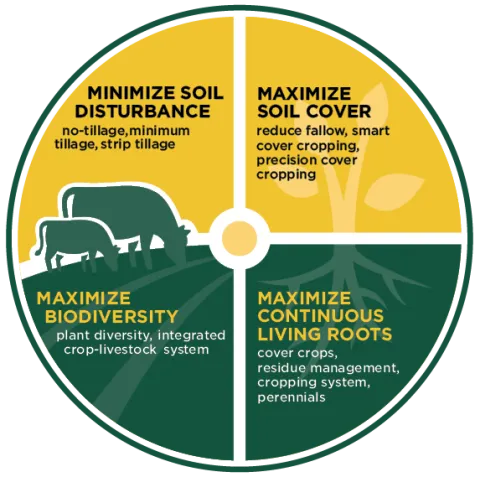
1. Minimize soil disturbance
Disturbing soil as little as possible in cropland and grassland is important to keeping it healthy. Cropland is the land specifically dedicated to growing and harvesting crops like grains, vegetables and fruits, which all require fertile soil. By tilling less, farmers improve soil health, save money and benefit the environment.
In grasslands, ranchers manage grazing to avoid overgrazing, which harms plants, reduces plant variety and causes soil erosion. Overgrazing also reduces the soil’s ability to hold water, harming both crops and wildlife. Responsible grazing maintains healthy soil and supports the environment and farming systems while producing high-protein food.


winds and soil tillage. Minimizing soil disturbance helps reduce this problem.
2. Maximize soil cover
Keeping the soil covered is crucial for its health. Plants and leftover crop residue serve as protective armor, preventing erosion from wind and water and reducing soil compaction. This protection helps maintain soil structure, retain moisture and preserve nutrients, ensuring the soil remains healthy and sustainable. Rather than leaving the soil bare, using cover crops is a strategic way to improve organic matter content over time.
Cover crops are plants farmers grow between their main crops to improve soil health and keep the ground covered, thereby reducing erosion. (see Figure 3)
As farmers and ranchers adopt cover crops, they improve
soil health, boost biodiversity (the number of different living organisms), manage pests that can be harmful to plants, weeds and diseases and improve water availability. Farmers often begin implementing these practices at an economic loss because they care about conserving their natural resources. In the long term, farmers can recoup the expenses associated with cover crops with increased yields and cost savings over time with more consistent yields in wet and dry years, even extending the grazing season for livestock. This approach contributes to more resilient, productive and sustainable farming systems.
On grasslands, ranchers manage grazing to keep grasslands healthy and productive. One key practice is preventing overgrazing, which can harm the land. Many ranchers rotate grazing, allowing plants time to recover and regrow after being grazed. Grazing can actually help some plants grow better; many native plants thrive from grazing because it encourages them to sprout more. To protect the soil, ranchers ensure enough plant material is left on the ground after grazing. This leftover plant matter helps prevent soil erosion and traps snow in the winter. When the snow melts, the water can be absorbed into the soil, providing moisture for the plants in the spring.

3. Maximize continuous living roots
Roots play a vital role in soil health. Roots are key to supporting soil microbes, which break down plant material and return nutrients to the soil, keeping it fertile. This ongoing process improves soil health, supports plant growth and boosts food production. Roots also help hold the soil together, improving its structure, water absorption and moisture retention. The channels created by the roots allow water to penetrate deeper into the soil.
Different plants have various root structures that benefit the soil (see Figure 4). For instance, turnips have deep roots that break through compacted soil, while grasses, with their fine roots, can reach depths of up to 15 feet. Some grass species develop large root systems, which help to create soil aggregates and capture and store more carbon from the atmosphere. Native grasses like western wheatgrass and big bluestem have deeper roots than introduced species like Kentucky bluegrass.
Grazing management impacts both plant growth and soil health. Proper grazing leaves enough plant material for sunlight capture, while overgrazing depletes roots, weakening plant recovery. Research shows that well-managed grazing results in higher soil carbon levels, benefiting the environment. Conversely, overgrazing or no grazing reduces soil carbon and encourages harmful plants. Moderately grazed areas help keep plants growing, retain carbon in the soil and ensure a healthy ecosystem.

4. Maximize Biodiversity
Biodiversity, the variety of living organisms, is crucial for healthy soils for sustainable long-term food production. Practices like crop rotation, cover cropping, manure application, grazing management and using the same land for livestock and crops help increase soil and the surrounding environment’s biodiversity. There are many benefits of biodiversity in agriculture. It helps break plant disease cycles, supports a wide range of microorganisms and provides homes for various organisms that aid soil health. Breaking the disease cycle means a more sustainable way of preventing detrimental impacts on the production of crops for food.
Grazing also supports natural ecosystems by helping maintain plant and wildlife diversity in grasslands. Naturally occurring plants in these areas evolved with grazing, and when grazing is removed, non-native plants with shallow roots can take over. These non-native plants reduce carbon storage and make grasslands less resilient to drought. Diverse, natural grasslands have plants that grow at different times of the year, helping them survive droughts. Non-native plants rely on spring rain and can’t use stored water effectively, which increases the risk for livestock producers who depend on these areas for forage.
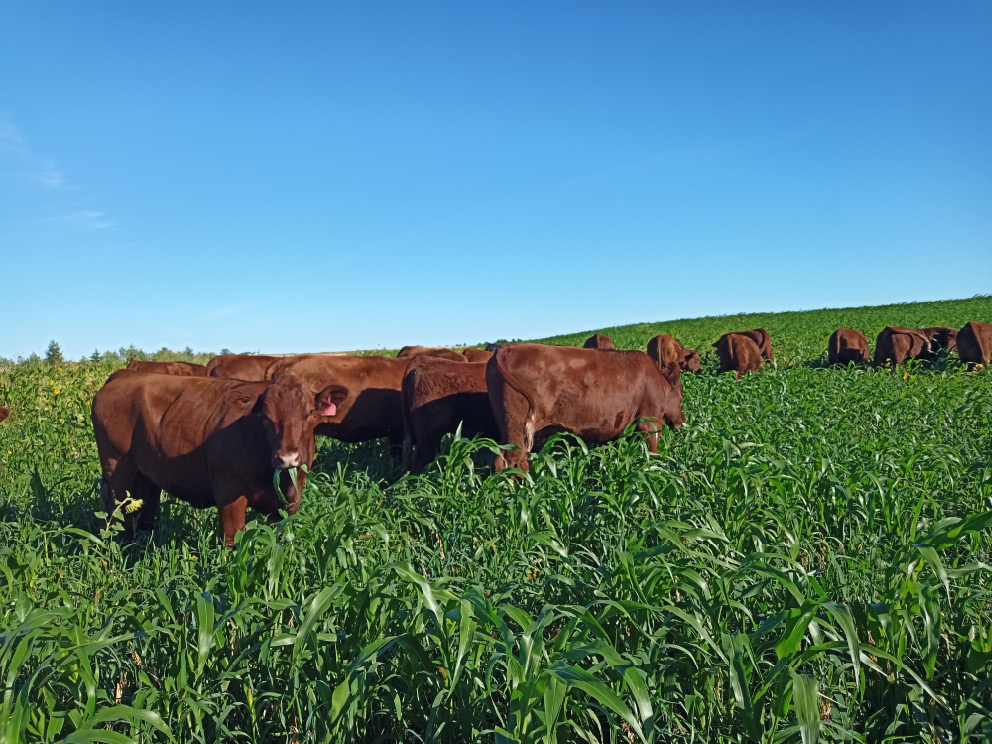
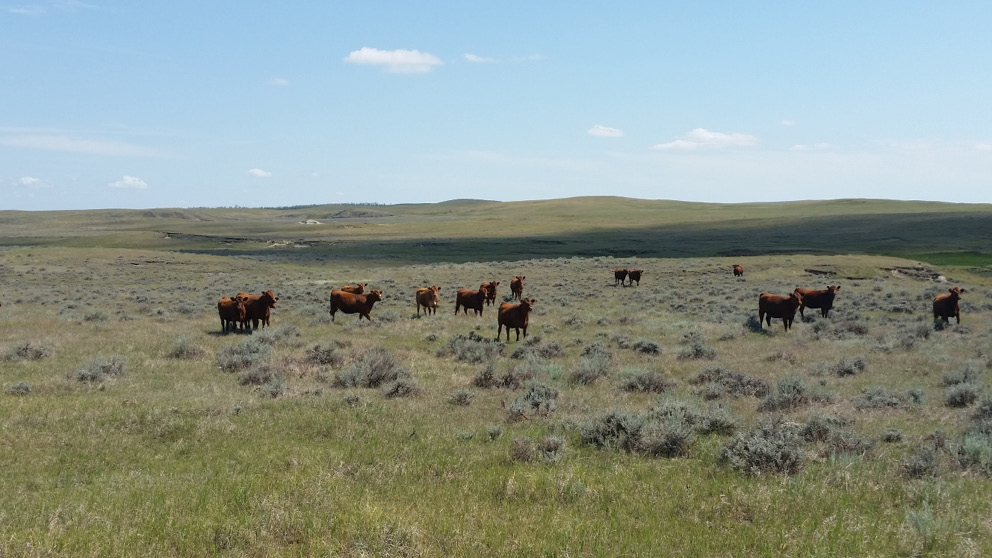
Farmers and ranchers adopt sustainable practices to produce healthy and adequate quantities of food for people, animals, the environment and the economy.
