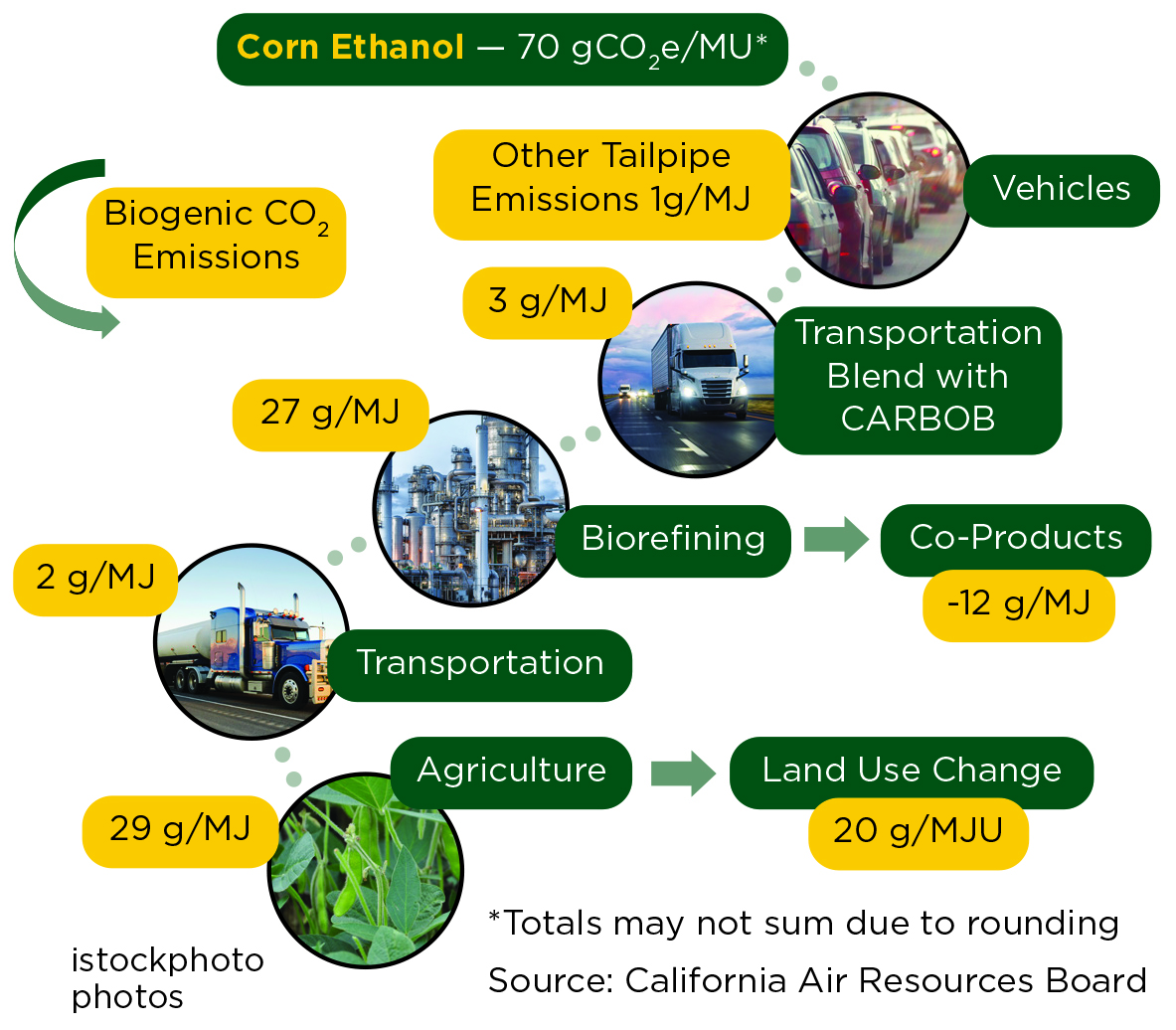
Typically estimated using lifecycle assessment (LCA) models:
- GREET model (used by California LCFS, DOE, and USDA)
- GHGenius (common in Canada)
- Cool Farm Tool (used by Unilever, PepsiCo and other multinationals)
- COMET-Planner (developed by USDA NRCS)
These tools combine farm-specific activity data — such as fertilizer rates, fuel use and tillage practices — with standardized emissions factors to estimate greenhouse gas emissions. Modeling assumptions, including regional energy mixes, land-use impacts and co-product treatment, are used to fill in gaps and ensure consistency across systems. The result is a CI score that expresses total emissions per unit of output, such as per bushel or per megajoule, enabling comparison across farms, practices and supply chains.
NDSU Extension does not endorse commercial products or companies even though reference may be made to tradenames, trademarks or service names.
For more information on this and other topics, see www.ndsu.edu/extension
County commissions, North Dakota State University and U.S. Department of Agriculture cooperating. NDSU does not discriminate in its programs and activities on the basis of age, color, gender expression/identity, genetic information, marital status, national origin, participation in lawful off-campus activity, physical or mental disability, pregnancy, public assistance status, race, religion, sex, sexual orientation, spousal relationship to current employee, or veteran status, as applicable. Direct inquiries to Vice Provost, Title IX/ADA Coordinator, Old Main 100, 701-231-7708, ndsu.eoaa@ndsu.edu. This publication will be made available in alternative formats for people with disabilities upon request, 701-231-7881.