What is Carbon and Why Do We Care
(SF2265 June 2025)Carbon, abbreviated as C, is a chemical element that serves as the backbone of all life on Earth. All living organisms contain carbon! Beyond being essential for life, carbon plays a vital role in the environment and is a major component of fossil fuels like coal, oil and natural gas. Like other basic elements, carbon has its own cycle that moves it through the Earth’s systems.
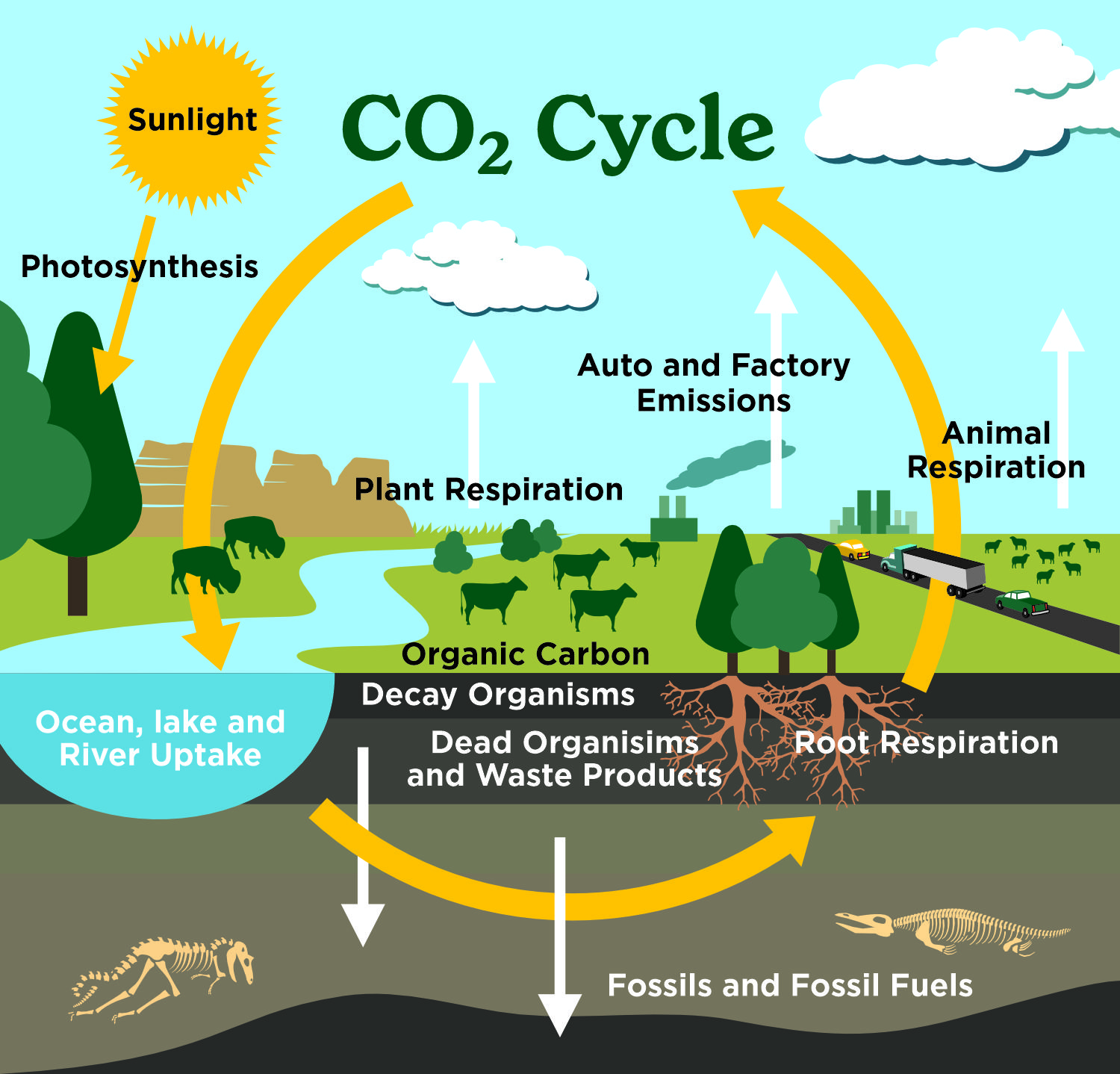
The carbon cycle is the natural process by which carbon moves between the atmosphere, living organisms, oceans and the Earth’s surface. During the C cycle, plants absorb carbon dioxide (CO₂) from the air via photosynthesis to produce biomass, such as roots, stems and leaves. These plants are then consumed by animals, who subsequently release CO₂ back into the atmosphere through respiration. When plants and animals die, decomposers (like microbes and insects) break down plant biomass. This decomposition results in C moving into the soil or back to the atmosphere as CO2 (so plants can continue to absorb it to make new biomass). These processes keep Earth’s C cycle balanced.
In some instances, the C moving into the soil becomes buried and, over millions of years, forms fossil fuels such as oil. When humans burn these fuels (auto and industries), C is released back into the air as CO₂. Because it takes millions of years for fossil fuels to form, the speed at which humans are using fossil fuels creates an imbalance in the C cycle – more C is lost to the atmosphere as CO2 than is being moved back into the soil. One of the effects of the increased CO2 in the atmosphere is the irregular weather patterns that we are experiencing today (for example, earlier springs, higher temperatures and increased durations and intensities of drought).
Agriculture plays a dual role when it comes to carbon. It can both release and remove C from the atmosphere. On one hand, conventional farming practices, such as soil tillage, the excessive use of fertilizers and the operation of heavy machinery, can contribute to carbon loss by disrupting natural carbon storage in the soil and burning fossil fuels. On the other hand, agriculture holds enormous potential to maintain carbon in the soil, as practices such as no-till farming, planting cover crops and integrating crops with livestock can promote increases in soil carbon. These approaches not only enhance soil health but also contribute to more resilient crops and healthier ecosystems. Due to the complex interactions between carbon, soil, plants, animals and the atmosphere, research on carbon is essential.