Title

Managing Kentucky Bluegrass in Mixed Grass Prairie: A Long-term Commitment

(R2270, August 2025)
Summary

Kentucky bluegrass (Poa pratensis) is a widespread, invasive perennial grass that negatively impact rangelands throughout the Northern Great Plains. Kentucky bluegrass provides low quality forage that loses its palatability during dry summers and drought. Kentucky bluegrass invasion reduces the native component of mixed grass prairies and negatively impacts habitat suitability for pollinators, birds, and other wildlife.

Other Authors

Zachary Johnson, Private Lands Biologist, ND Game and Fish Department
Rakhi Palit, Research Assistant Professor, NDSU
Breanna Paradeis-Kobiela, Assistant Professor, NDSU
Edward DeKeyser, Professor, NDSU
Cami Dixon, USDI – U.S. Fish and Wildlife Service
Kevin Sedivec, Rangeland Management Specialist, NDSU

Availability
Availability:
Available in print from the NDSU Distribution Center.

Contact your county NDSU Extension office to request a printed copy.
NDSU staff can order copies online (login required).

Publication Sections

Why Care?

Kentucky bluegrass (Poa pratensis) is a widespread, invasive perennial grass that negatively impacts rangelands throughout the Northern Great Plains. Kentucky bluegrass provides low-quality forage that loses palatability during dry summers and drought. Kentucky bluegrass invasion reduces the native component of mixed grass prairies and negatively impacts habitat suitability for pollinators, birds and other wildlife.

Causes of Kentucky Bluegrass Invasion

  • Figure 1
    Photo Credit:
    Cami Dixon, USDI–U.S. Fish and Wildlife Service
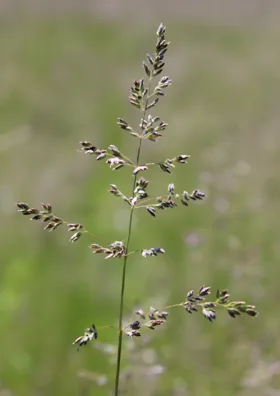
  • It’s everywhere! Kentucky bluegrass is commonly used in lawns and turf — its widespread use and grazing tolerance allow it to spread and persist.
  • Excellent competitor! Kentucky bluegrass outcompetes native plants and creates conditions that favor itself.
  • Early spring growth! Kentucky bluegrass resumes growth earlier in the spring than many native cool-season grasses, allowing it to take advantage of available resources (e.g., spring moisture).
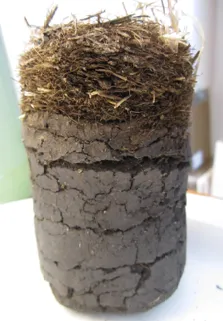
  • Extensive litter and thatch! Kentucky bluegrass produces abundant growth. In time, this growth becomes litter, which may eventually be compressed into thatch. Thick litter and thatch layers impact local hydrology and inhibit growth of desirable species.

Management

Once established, Kentucky bluegrass is challenging to reduce. Various management techniques, including grazing, prescribed fire, mowing (when grazing and prescribed fire are not possible) and herbicides can be employed to target Kentucky bluegrass. When designing a management plan, two key considerations are how to 1) reduce Kentucky bluegrass and 2) promote native species. Promoting native species may naturally help reduce Kentucky bluegrass! In addition, these management techniques can increase native plant diversity even with little to no decrease in Kentucky bluegrass, and improve conditions.

Combining properly managed grazing and prescribed fire (to limit thatch formation) can reduce Kentucky bluegrass and improve native plant species and forage quality in mixed-grass prairies. Because Kentucky bluegrass grows at similar times as native cool-season grasses, it can be challenging to target Kentucky bluegrass without harming desirable species. However, Kentucky bluegrass’s early spring growth and late fall regrowth may provide an opportunity to graze and burn prior to the emergence of native plants, especially warm-season plants. You can use management to favor native species over Kentucky bluegrass by integrating prescribed burns into properly managed grazing, but you will need to keep an eye on your rangelands and potentially adjust management actions in response to your observations.

Takeaways

Figure 1
Photo Credit:
NDSU Photo

It is important to consider how management actions will affect litter and thatch to reduce Kentucky bluegrass. Developing a long-term management plan to target Kentucky bluegrass should focus on shifting dynamics to favor native species. However, reducing Kentucky bluegrass is a long-term commitment! Plan on monitoring your mixed grass prairies. Keep an eye on desirable species and adjust your management plans to promote desirable plants while reducing Kentucky bluegrass.

Questions?

For more information, contact:

Do:Don’t:
Prescribed Fire

Implement prescribed burns according to a burn plan.

Why? Prescribed burning can improve forage. A complete fire that consumes the above-ground plant material and litter will reduce Kentucky bluegrass and thatch formation.

Skip prescribed burns altogether.

Why? Without burning, Kentucky bluegrass can outcompete desirable species, and its thatch formation can even alter nutrient cycling.

Grazing

Time grazing to coincide with Kentucky bluegrass’s growth across seasons.

Why? Spring grazing may be most effective to reduce litter and thatch formation, especially when prescribed burning is not feasible.

Graze all season long.

Why? Kentucky bluegrass thrives despite continuous grazing and will outcompete other native species.

Exclude fire from grazing strategies.

Why? Fire removes litter and may reduce thatch formation.

Monitoring

Monitor your rangeland plant community and adjust your management actions and timing to meet your goals.

Why? If your goal is to target Kentucky bluegrass and improve your native plant abundance, you will need to keep an eye on how your management practices are meeting your goals.

Develop a plan based on calendar dates and stick to it from year to year.

Why? If you are not matching management actions to conditions in real time, Kentucky bluegrass is likely to outcompete more desirable species.