Bee Lawns: From Backyard Food Desert to Oasis
(E2287 January 2026)Bees rely on diverse flowering plants that are increasingly scarce in modern landscapes.
Contact your county NDSU Extension office to request a printed copy.
NDSU staff can order copies online (login required).
Lawns and sports turfgrass occupy a surprisingly large area of the United States. The total of all residential, commercial and public property lawns is approximately 25 million acres. Sports turfgrass, including golf courses and athletic fields, accounts for an additional 25 million acres. In total, these grassy areas occupy almost 2% of the U.S. land area and are the largest irrigated crop. This extensive acreage presents a significant opportunity to support pollinator biodiversity; however, current practices often result in the opposite effect. While this publication focuses on lawns, some of the recommendations can be integrated into peripheral areas of golf courses and athletic fields.
Many bee species are in decline, a trend driven by habitat loss, pesticide exposure and diseases. While honeybee colony losses over the last 15 years have garnered attention, scientists are particularly concerned about native bee populations. The rusty-patched bumble bee (Bombus affinis) was listed on the U.S. Fish and Wildlife Service Endangered Species List in 2017 and is believed to be extinct in North Dakota. The yellow-banded bumble bee (Bombus terricola) is also in decline. These species, along with countless others, rely on diverse flowering plants that are increasingly scarce in modern landscapes.
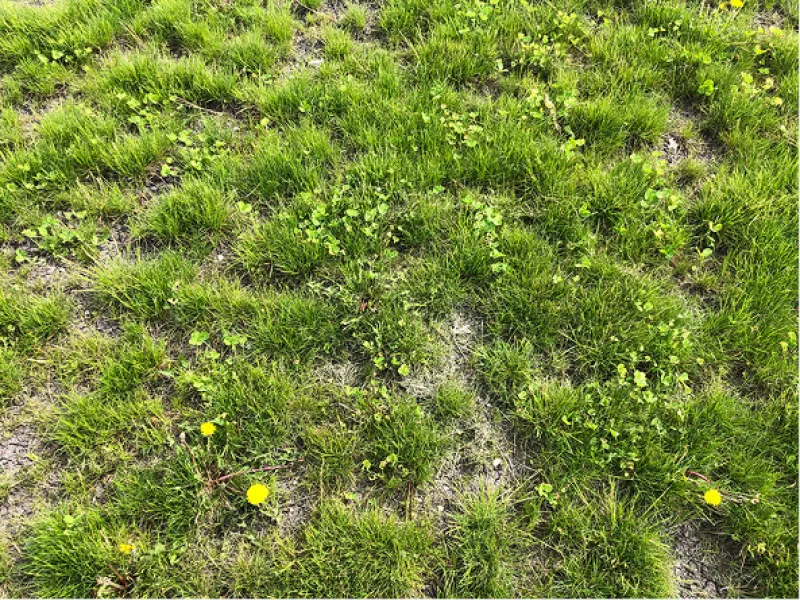
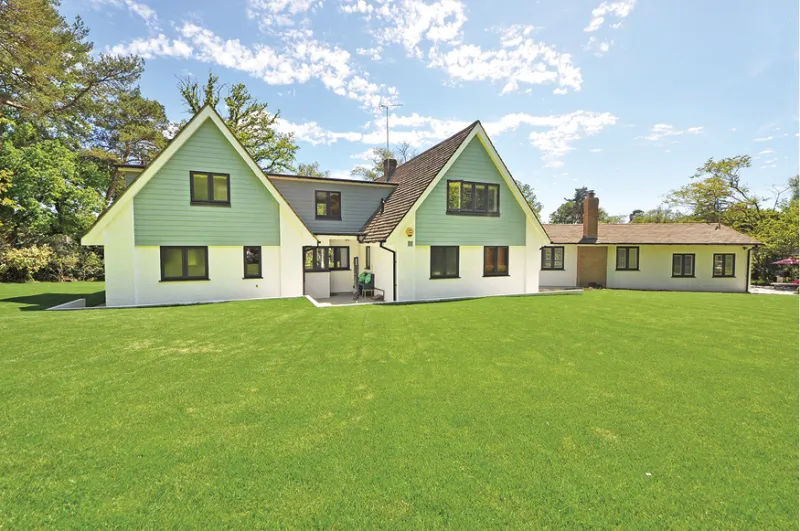
Unfortunately, the American lawn contributes to this problem by favoring a monoculture of closely mowed turfgrasses that provides little to no habitat or food for pollinators. Community aesthetic standards often dictate the eradication of flowering plants through herbicides, preserving an uninterrupted green carpet but rendering lawns food deserts for pollinators (Figure 1). A landscape without flowers deprives bees of the necessary food sources to complete their life cycle. Flower nectar provides carbohydrates for energy, and pollen serves as a protein source for reproduction.
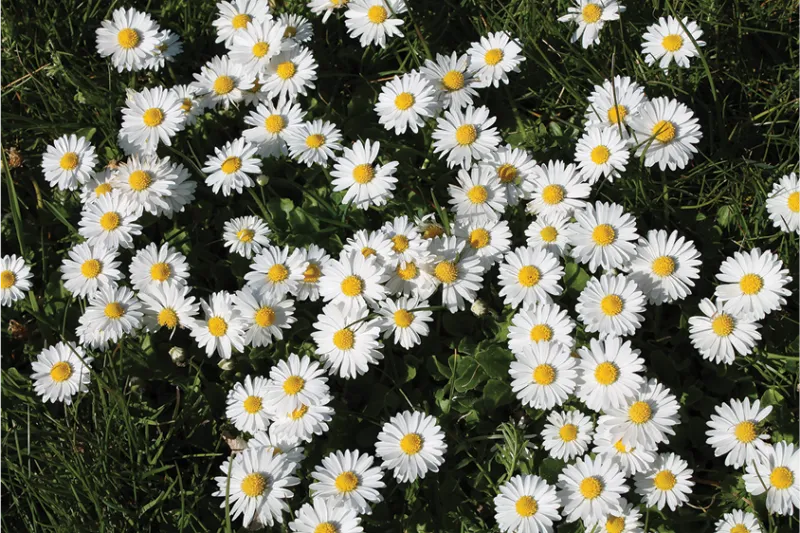
The American lawn, which uses fewer than a dozen turfgrass species, is a relatively recent phenomenon (See the Great American Lawn), and most people have not experienced growing other plants for lawns. Some countries are less obsessed with having the perfect, weed-free lawn. For example, the British welcome English daisies (Bellis perennis) (Figure 2) as volunteer pollinator plants within the lawn, and do not seek to eradicate them. While English daisy is not hardy to the northern U.S., the principle of integrating short, flowering species that can tolerate regular mowing into the lawn and provide food for pollinators is the basis for bee lawns.
Bee lawns help create healthier, more sustainable ecosystems without violating community aesthetic standards. The publication aims to educate and empower homeowners and others to install bee lawns as a simple yet impactful way to contribute to pollinator conservation efforts.
Bee Lawn Components
Flowering Components
Common flowering groundcover plants that are integrated into lawns include Dutch white clover (Trifolium repens), self-heal (Prunella vulgaris ssp. lanceolata), creeping thyme (Thymus praecox ssp. articus) and Yaak yarrow (Achillea millefolium var. yaak). Of these four species, only Dutch white clover and Yaak yarrow establish well in North Dakota.
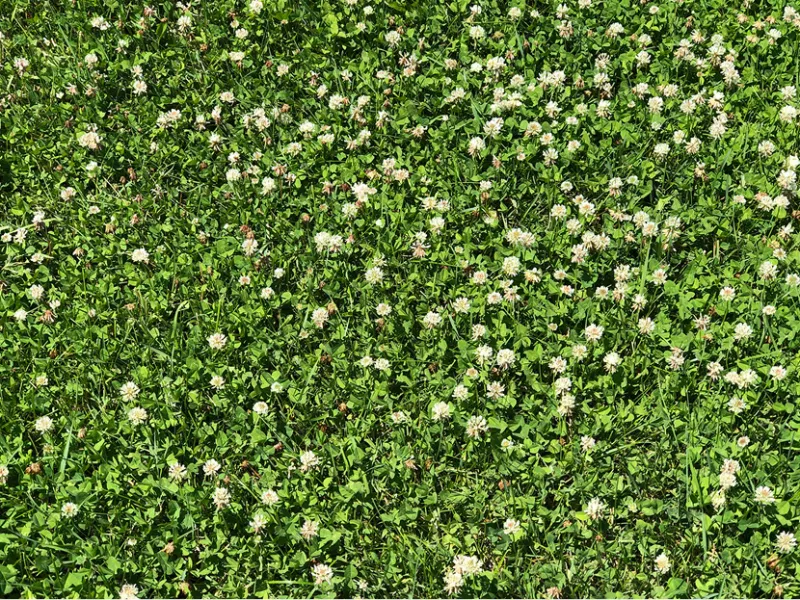
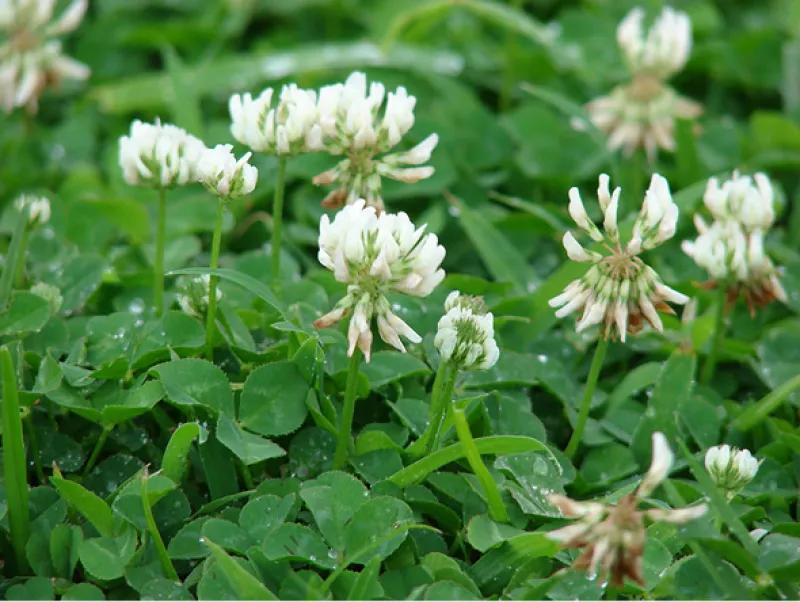
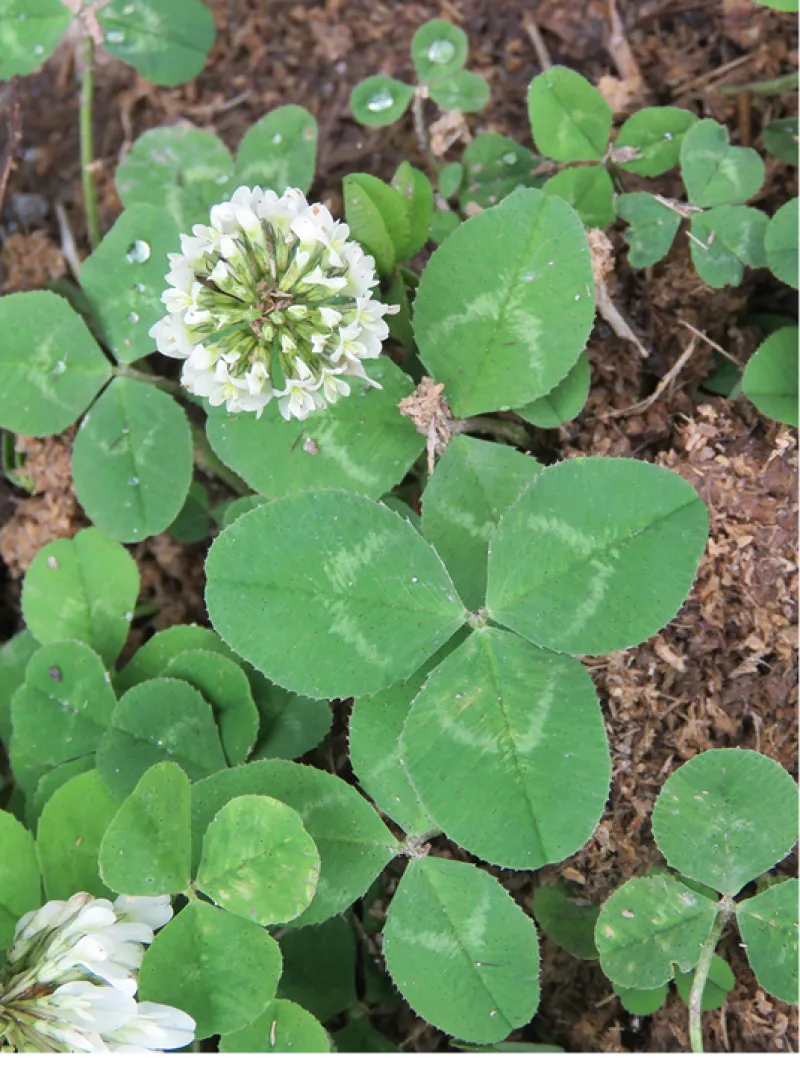
Dutch white clover is northern bee lawns’ most common flowering species (Figure 3). This low-growing plant, recognizable by its three leaflets often marked with a faint watermark (Figure 4), can form dense colonies in the lawn. As a legume, it has the unique ability to form a symbiotic relationship with soil bacteria, fixing atmospheric nitrogen (N2) and converting it into a form usable by the lawn —
a significant benefit for maintaining nitrogen levels naturally.
Blooming heavily in June and then sporadically through early fall, Dutch white clover is an abundant nectar source. Its pollen is particularly valuable for bees, as it contains all essential amino acids — protein building blocks — they need. A Minnesota study showed that Dutch white clover supports 55 species of bees, including bumble bees and other native bees. In contrast, not all flowering species provide balanced nutrition. For example, dandelions (Taraxcum officinale) are deficient in amino acids such as valine, isoleucine, leucine and arginine.
Historically, Dutch white clover has been considered a non-native lawn weed managed with selective broadleaf herbicides. A reimagining of this species as a low-maintenance, pollinator-friendly plant is underway, with the trend of adding clover to lawns as a food source for bees growing in popularity.
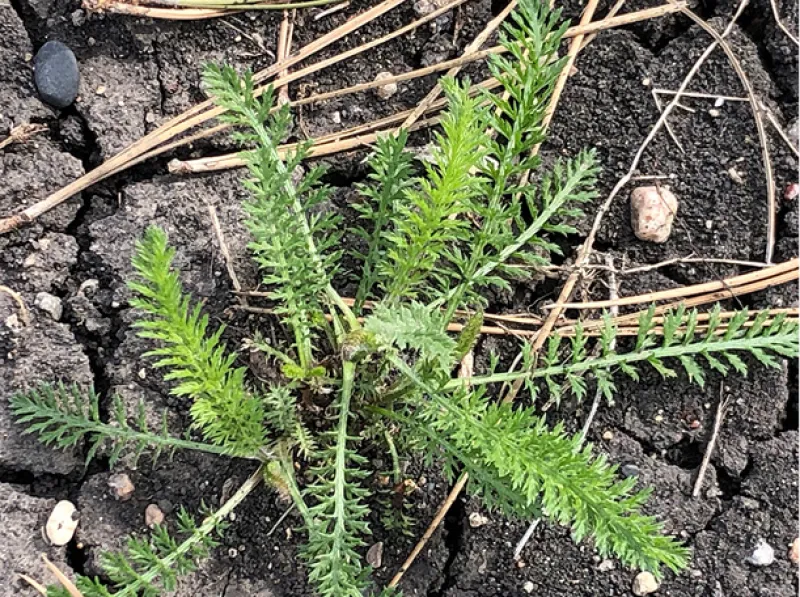
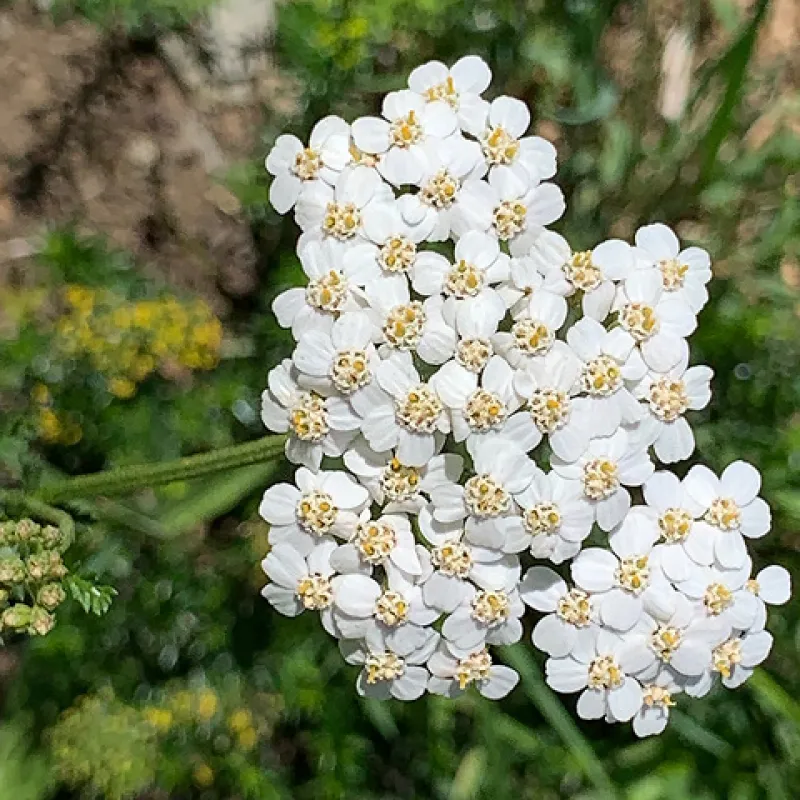
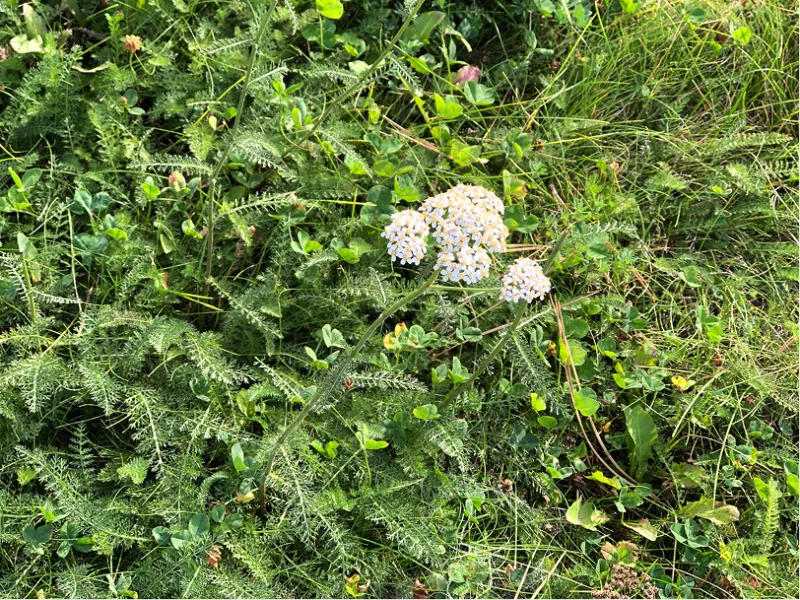
Yaak yarrow has been an essential component in eco-lawn mixes for many years because of its ability to form a dense ground cover and suppress weeds. This low-growing yarrow variety is native to the Yaak valley in northwestern Montana and is drought-tolerant. Yarrow has soft, fernlike foliage (Figure 5) and clusters of small white flowers (Figure 6). The tiny yarrow flowers attract a diversity of smaller native bees, such as sweat bees. Butterflies also use the broad flower clusters as landing pads while they forage for nectar.
Regional bee lawn mixes may contain Dutch white clover mixed with self-heal and creeping thyme. Self-heal is a member of the mint family and strongly attracts bees with its nectar. This species is better suited for moist soils and will not do well in drought-prone areas. Creeping thyme is a relative of culinary thyme and is not sufficiently hardy to survive winters with little snow cover.
Newer bee lawn mixes include both Dutch white clover and Yaak yarrow (Figure 7). This mix of species caters to a variety of pollinators. However, some people may dislike yarrow’s fernlike texture or its propensity to spread by rhizomes. If that is the case, a different mix should be chosen.
Starting a Bee Lawn
Location
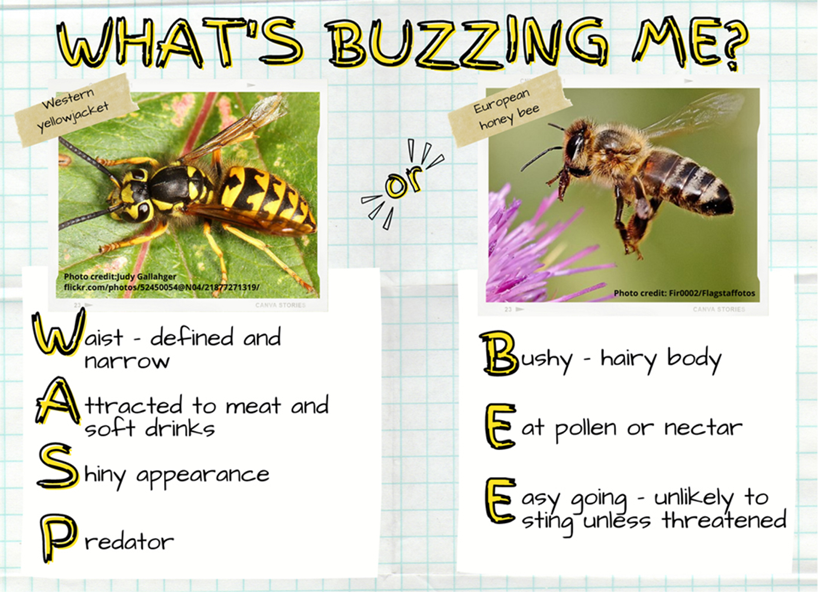
To maximize flowering, bee lawns should be planted in locations that receive at least six hours of sunlight daily. Plants naturally flower more in full sun locations and less in the shade. Bee lawns should also be sited in low foot traffic areas away from small children to prevent the bees from being stepped on and the children from potentially being stung. For the most part, bees will leave people alone but will sting if they feel threatened. Bees are pretty docile and should not be confused with yellowjackets, an aggressive social wasp that appears in late summer to disrupt picnics (Figure 8).
The Controversial Science Behind no mow may
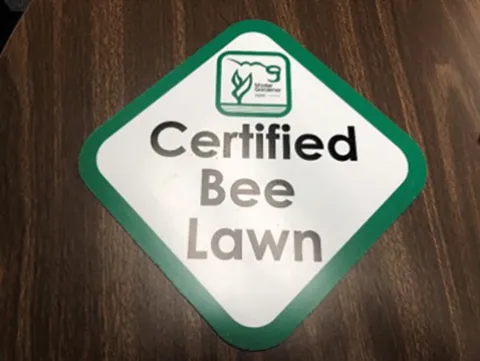
Apply for a Certified Bee Lawn Sign
The NDSU Extension Master Gardener Program promotes the installation of bee lawns as a sustainable landscaping practice. To encourage individuals and groups to plant bee lawns, the NDSU EMG Program will send a free certified bee lawn sign to North Dakota, Minnesota, South Dakota and Montana residents who meet specific requirements. To apply for a free sign, please use the following QR code:

Establishing a New Bee Lawn
Starting a new bee lawn is similar to seeding a conventional lawn. The area to be planted should be carefully prepared to form a good seed bed. This entails removing any existing vegetation with a nonselective herbicide containing glyphosate. After the first herbicide application, a new flush of weeds may appear, necessitating a second application. The vegetation can be smothered with cardboard or black tarps for those who want to refrain from herbicide use.
Next, the soil should be carefully raked to form a level surface. The seeds can be sown by hand or using a drop spreader at the rate specified on the seed label. If using a drop spreader, apply half the seed going in one direction and the remaining half in a perpendicular direction to ensure good seed coverage. The seeds should be lightly raked into the soil to provide good seed-to-soil contact but not buried more than ½ inch deep. Alternatively, the seeds can be sown using a professional slit seeder.
Irrigate the soil to keep the seeds moist. The time of year, temperature and rainfall will affect irrigation frequency. If temperatures are high and no precipitation is forecasted, two or three light irrigations per day may be necessary. After the seeds have germinated, gradually reduce irrigation frequency. At this stage, focus on water infiltration to encourage deep root growth.
The bee lawn should be mowed for the first time when it is 5 to 6 inches tall. This allows the lawn to be established before seasonal mowing begins. The mower deck should be set to a height between 3 and 4 inches. A lower mowing height may damage the planting.
Despite best efforts, weed seeds will germinate even in the fall. The best way to manage weeds at this early stage is to hand-weed until the lawn is established. Do not apply any herbicides because they may have detrimental effects to the flowering plants in the bee lawn mix.
Bee lawns take time to establish. The lawn will be patchy during the first year (Figure 9). Turfgrass will be more prevalent than flowering plants. By the second and third years, the flowering plants will become more apparent (Figure 10).