
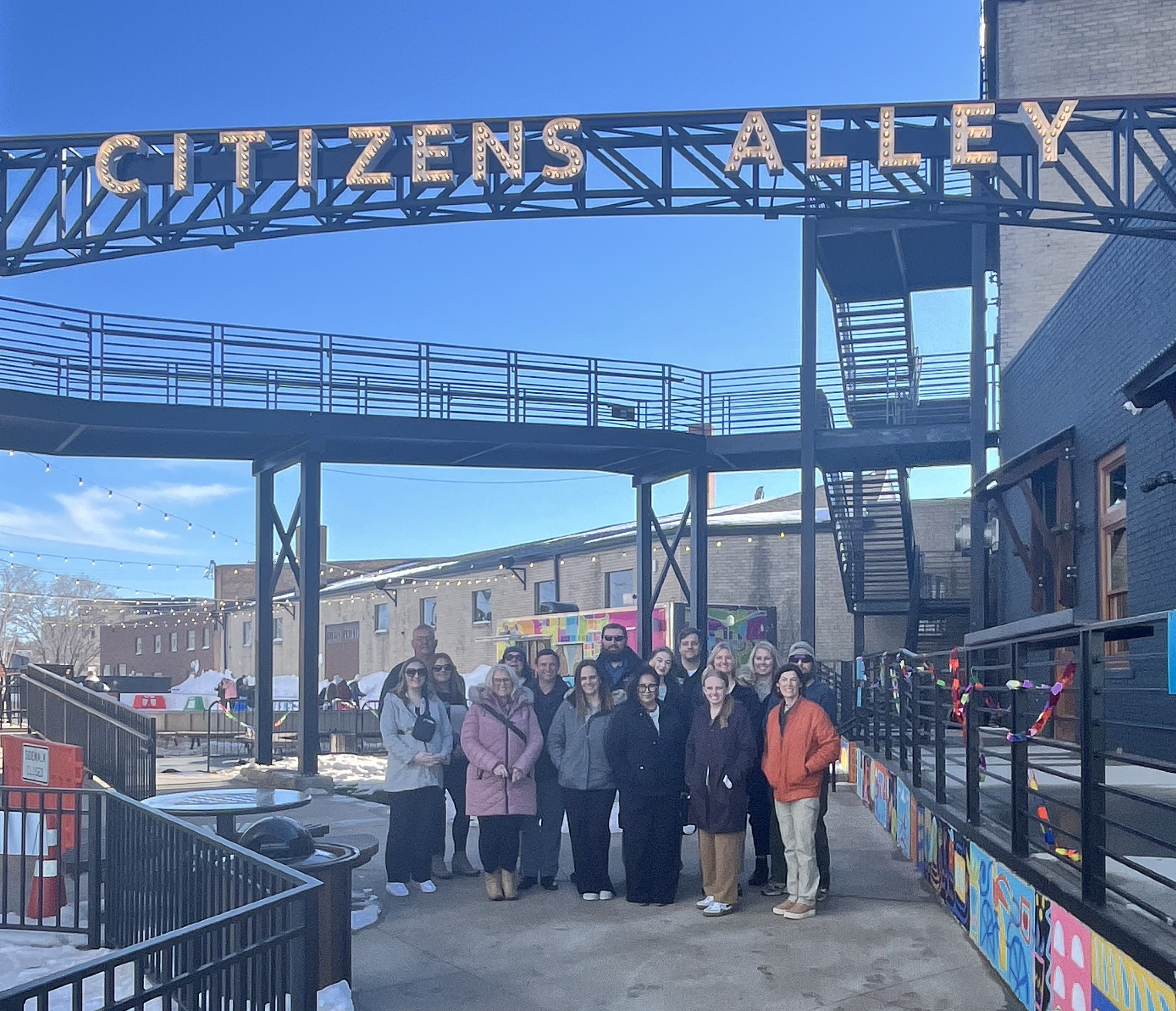
Finding the Magic in Systems: RLND Class XI Explores Rural Leadership and Interconnected Systems in Minot and Velva
Minot & Velva, ND
By RLND Class XI Members: Taylor Kittelson, Jonnah Lee Backman & Brian Palmer
Over three days, RLND Class XI explored Minot and Velva, examining how interconnected systems shape rural communities. Through leadership conversations, industry tours, and community anchor visits, the cohort explored how agriculture, energy, infrastructure, food access, healthcare, military presence, and cooperative models intersect to influence rural vitality.
Seminar Three focused on applying The Leadership Challenge practice of “Inspire a Shared Vision,” exploring ethical decision-making and accountability, introducing systems thinking through the Community Capitals Framework, and analyzing how major economic drivers contribute to rural resilience.
Day One: Vision, Ethics, and Systems Thinking
Class XI began Seminar Three with a Community Leadership Conversation focused on shaping the Magic City region. Regional leaders discussed the realities of growth, economic development, and long-term sustainability. Rather than offering simplified success stories, the panel explored the tensions leaders navigate between economic expansion, infrastructure capacity, community identity, and strategic planning.
The conversation challenged class members to think critically about how leaders inspire shared vision while aligning diverse stakeholders around common goals. Participants reflected on how vision must be grounded in shared values and communicated in ways that motivate collective action.
The cohort then strengthened its systems-thinking skills through the Community Capitals Framework. By mapping social, human, financial, built, natural, political, and cultural capital, participants examined how communities function as interconnected systems. The framework provided a shared language for identifying assets, understanding interdependencies, and evaluating how changes in one sector influence others.
Ethical decision-making and personal accountability were explored during a session with the ND Consensus Council. Through real-world dilemmas, Class XI analyzed decision-making frameworks and discussed how transparency, trust, and integrity shape leadership credibility. The session reinforced that ethical leadership requires intentional reflection and a commitment to consistent values-based action.
A visit to the Magic City Discovery Center highlighted the importance of community anchors in fostering belonging and engagement. Participants were reminded that leadership is not only about policy or strategy, but also about cultivating environments where curiosity and connection thrive.
The day concluded with a visit to Prairie Sky Breads, a locally owned bakery and community gathering place in Minot that reflects the entrepreneurial spirit and cultural vibrancy of the region. As class members shared conversation and connection over fresh homemade pizza, the evening also included the announcement of Class XI’s upcoming international study seminar. Class XI cannot wait to explore JAPAN!
Day Two: Agriculture, Energy, Military Leadership, and Infrastructure
Day Two focused on the economic and infrastructure systems that sustain rural North Dakota.
At the North Central Research Extension Center, participants explored applied agricultural research and its impact on producers and regional economies. Conversations centered on innovation in agronomy, data-driven decision-making, and the role policy plays in shaping agricultural value chains. The visit reinforced agriculture’s central role in rural resilience and long-term economic vitality.
The cohort then engaged in powerful conversations with Minot Air Force Base leaders, describing operating within a mission-critical environment defined by accountability, precision, and constant transition. Class XI examined how military leadership influences local demographics, workforce trends, and economic stability while reflecting on how shared values guide decisions in high-stakes systems.
Transportation and logistics were explored during a visit to Rail Modal Group. Participants analyzed rural logistics barriers and discussed how rail infrastructure connects agricultural producers to national and global markets. The conversation emphasized innovation, partnership, and infrastructure investment as key factors in maintaining economic competitiveness.
Energy leadership came into focus at Creedence Energy Services. Discussions highlighted how agriculture and energy, two primary economic drivers in North Dakota, are shaped by market volatility, regulatory frameworks, and resource stewardship. Class XI evaluated how leadership decisions in these sectors ripple across communities and influence long-term sustainability.
The day concluded with a leadership dinner featuring Craig Larson, CEO and Chairman of the Board of Starion Bank. Larson emphasized the importance of mentorship, relationship-building, and cultural stewardship. His reflections underscored that inspiring a shared vision requires trust, humility, and long-term commitment to community, earning him the RLND Champion Award!
Day Three: Cooperative Power, Food Systems, and Rural Healthcare
The final day in Velva focused on essential services and community-level resilience.
At Verendrye Electric Cooperative, participants examined the historic role of rural electric cooperatives in transforming communities across the state. Leaders discussed balancing reliability with modernization, meeting emerging infrastructure demands, and stewarding cooperative principles into the future.
The cohort then explored the North Central Regional Grocery and Food Hub Initiative, a collaborative effort designed to strengthen rural grocery stores and improve access to fresh, affordable food. Participants assessed how shared distribution systems and cooperative purchasing models can stabilize local businesses, reduce costs, and keep economic value circulating within rural communities. The session emphasized coordination and long-term leadership commitment as essential to sustaining food access in small towns.
A final Community Leadership Conversation over lunch brought local leaders and class members together to synthesize lessons from the seminar. Dialogue centered on vision, ethics, community assets, and the interconnected systems shaping rural resilience.
The seminar concluded with Douglas Panchot, administrator of Souris Valley Care Center, discussing the realities of leading in rural long-term care. The conversation addressed workforce pressures, financial challenges, and the broader economic and social impact of healthcare facilities in small communities. Participants reflected on the courage and adaptability required to sustain essential services.
Conclusion
Seminar Three deepened Class XI’s understanding of rural leadership through a systems-based lens. By applying practices from The Leadership Challenge, exploring ethical decision-making frameworks, and analyzing agriculture, energy, infrastructure, and community anchors, the cohort strengthened its ability to lead with clarity and responsibility.
The experience in Minot and Velva reinforced that thriving rural communities are sustained not by one sector alone, but by leaders who understand complexity, communicate shared vision, and steward interconnected systems with intention.
Seminar Three challenged Class XI to see the whole system — and to lead accordingly — as they continue their leadership journey across North Dakota.
Thank You to Our Generous Sponsors
Leader Corps
Member Level ($1,000+):
- Artz Insurance
- Gooseneck Implement
- Velva Aggie Foundation
Program Sponsors
$500+:
- AGT Foods
- North Star Community Credit Union
- RDO Equipment
- Souris Basin Planning Council
- Starion Bank – Bottineau
- Verendrye Electrical Cooperative
$200+:
- Magic City Discovery Center
- Prairie Sky Breads
$99 and under:
- Velva Fresh Foods
This is the prefooter section
