Turn data into decisions with NDSU’s business analytics degree

Data is shaping the future of business, leading organizations to need professionals who know how to turn that complex data into smart decisions.
NDSU’s business analytics degree program combines business knowledge with technology, data analysis, artificial intelligence and strategic decision-making. You’ll learn how to analyze data, use modern tools and solve real-world problems while developing the business skills to understand what the numbers mean and how they can drive an organization forward.
For Madison Vincent, a junior business analytics major, that combination is exactly what drew her to the program.
“If you’re looking for a strong program and you’re interested in both business and technology, NDSU’s Business Analytics degree is a great option,” Vincent said. “It gives you a strong foundation while also opening the door to a lot of different career paths. You’re not just learning concepts from a textbook; you get opportunities to work with actual data, technology, and business problems.”
Where business meets technology
Vincent has always been interested in both the technology and business sides of organizations, and NDSU’s business analytics program was an obvious choice to help her achieve her career goals.
“Business Analytics felt like the perfect middle ground because it allows me to use data to help organizations better understand their business and make better decisions,” she said. “I chose NDSU because of the wide range of majors and programs it offers. I knew that wherever my interests eventually led me, NDSU would likely have a program that fits those interests, especially with its strong business program.”
That versatility is one of the strengths of the degree. Whether you’re interested in finance, healthcare, hospitality, or another industry, analytics skills can help you make an impact. Throughout the program, you’ll develop a well-rounded foundation in data analysis, visualization, SQL, Excel, databases and much more.
Take what you learn beyond the classroom
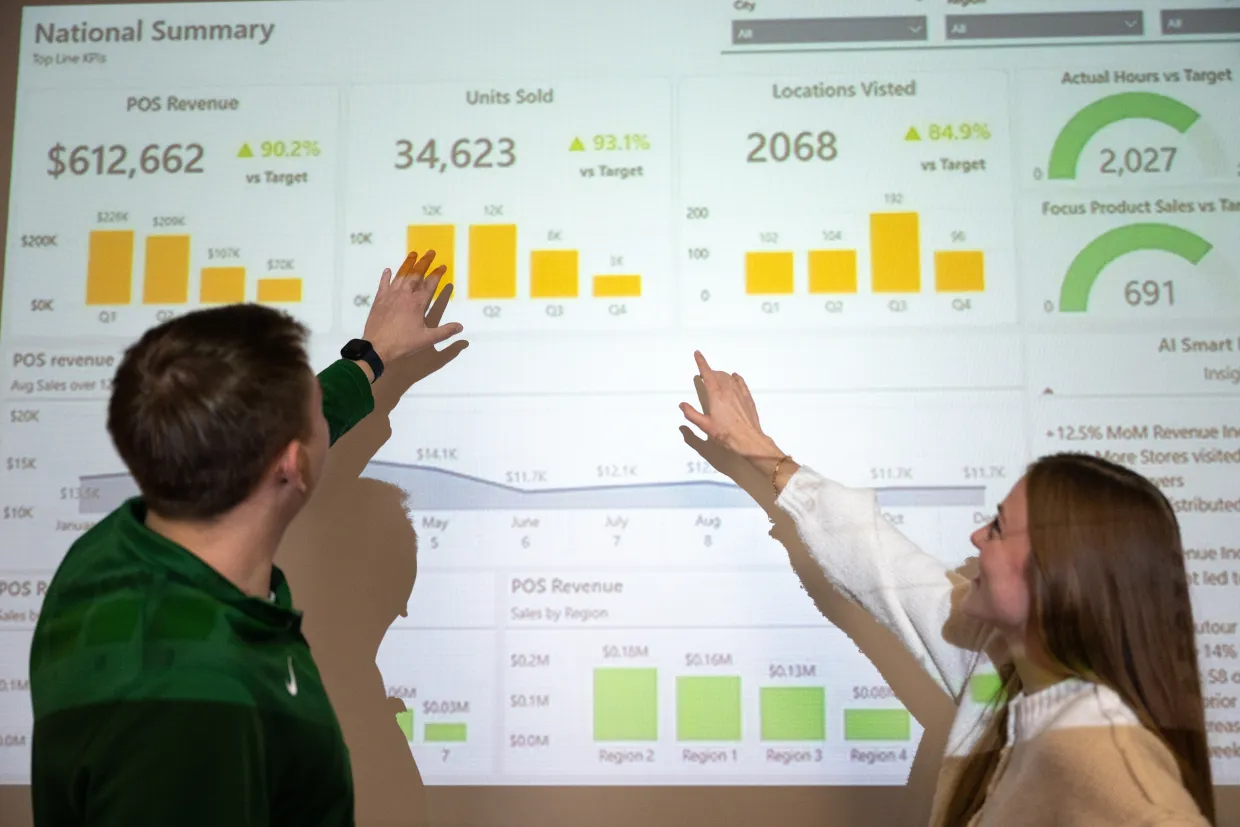
Hands-on learning is at the heart of the business analytics program. In addition to learning from expert faculty, you’ll have opportunities to apply your skills to real-world business challenges and work with actual data and technology.
“One project that really stood out to me was designing a database from scratch and building an entire hospital database system, including the different types of information and relationships that would need to be managed,” Vincent recalls.
Experiences like these give you the chance to directly see how the concepts you’re learning can be applied to the workplace. The program also connects you with industry professionals through guest speakers, networking opportunities and career-focused events.
For Vincent, those experiences have helped her feel ready for what’s next.
“Through my classes, internships and student organizations, I’ve been able to take what I learn in the classroom and apply it to real situations, which has made me much more confident about entering the workforce after graduation,” she said.
Prepare to lead in a data-driven future
A business analytics degree can open the door to a wide range of careers, including business analyst, data analyst, data scientist, artificial intelligence engineer and much more. According to the U.S. Bureau of Labor Statistics, the job outlook for this field is growing, with a 9% job increase estimated between 2024-34.
As she looks toward her future, Vincent wants to enter a career field where she can combine her expertise in business, technology and data.
“I think the degree will help set me apart because I’ll have experience not only analyzing data but also understanding the business behind it,” she said. “NDSU has also given me real-world experience and networking opportunities, and the people you meet through NDSU can open so many doors and create opportunities for your future.”
Your future is full of possibilities. Start building it at NDSU. Apply today or schedule a visit.
NDSU Marketing and Communications
Source: Madison Vincent
Writer: Meghan Arbegast
Photos: Justin Eiler/NDSU