
Connecting Communities: RLND Class XI Explores Leadership Through Collaboration and Service
RLND Class XI Visits Fargo and Minneapolis
June 22 - June 26, 2026
By RLND Class XI Members: Anya Hondel, Janell Jerome, and Cassie Mellmer
RLND Class XI traveled through eastern North Dakota and the Twin Cities for Seminar Five, exploring how cooperative businesses, nonprofits, and communities work together to strengthen regions and create opportunities for future generations. Through conversations with cooperative leaders, community champions, entrepreneurs, nonprofit organizations, and industry experts, class members discovered that leadership is built through relationships, collaboration, and service. The seminar challenged Class XI to think beyond individual organizations and consider how communities thrive when leaders intentionally connect people, ideas, and resources.
Day One: Building Connections from Rural Communities to Global Markets
Class XI kicked off its regional leadership journey with a visit to SB&B, where participants learned about food-grade soybean manufacturing and international trade with Japan, a fitting introduction ahead of the class's international seminar trip to Japan next February. For many class members, it was an eye-opening experience to see how products grown in rural communities become part of a global marketplace and how leadership helps connect local producers to customers around the world.
The group then traveled to Casselton Public Schools, where they met with community leaders and champions, including Mayor Mike Faught and Economic Developer Adrienne Olson. Through a panel discussion moderated by Bernie Sinner, participants explored the leadership needs of rural communities, strategies for local development, and the opportunities and challenges that come with proximity to an urban center such as Fargo, a theme that would continue throughout the week's seminar. The discussion emphasized that successful communities are built through partnerships, intentional planning, and leaders who are willing to work together toward a shared vision.
From there, Class XI hit the road for Minneapolis, fueled by plenty of snacks and card games along the way. The day concluded at Way Cool Cooking School in Eden Prairie, where participants competed in an international cooking challenge. Congratulations to the Asian cuisine team for taking home the chef's hat and claiming victory!
Day Two: Leadership Across Scales, From Global Cooperatives to Community Conversations
Day two of Seminar 5 challenged RLND Class XI to think about leadership at multiple scales, from a global agricultural cooperative to the relationships that shape local communities. While each experience looked very different, a common thread emerged throughout the day: leadership is ultimately about people. Whether leading an international organization or navigating community challenges, effective leaders build trust, remain curious, and create space for meaningful dialogue.
The morning began at CHS Headquarters, where Class XI explored how one of the nation's largest farmer-owned cooperatives serves its member-owners while operating within an increasingly interconnected global marketplace. Through conversations with CEO Jay Debertin and members of the CHS leadership team, class members gained a deeper understanding of how strategic leadership, government affairs, global markets, and philanthropic investment all contribute to strengthening rural communities.
Jay reminded the class that successful leaders surround themselves with talented people whose strengths complement their own, establish clear expectations, and lead by example rather than striving for perfection. Additional discussions reinforced the importance of remaining agile in today's changing policy environment, embracing continuous learning, and seeking constructive feedback. As Class XI prepares for its international seminar to Japan, Bryce Banfield's discussion of global grain markets further illustrated how decisions made around the world directly influence agriculture and rural communities here in North Dakota. The morning concluded with Terra Stoddard sharing how the CHS Foundation invests in communities across the cooperative's trade territory, demonstrating that leadership also means investing in the people and places that make long-term success possible.
The afternoon shifted from organizational leadership to civic leadership during a visit to the University of Minnesota. Rather than focusing on finding the "right" answer, the session invited class members to engage thoughtfully with difficult questions surrounding immigration, community resilience, and civic response during times of disruption. Conversations challenged participants to consider multiple perspectives while practicing the Four Agreements from the Courageous Conversation Compass: stay engaged, experience discomfort, speak your truth, and expect and accept non-closure.
The discussion encouraged class members to examine not only what they believed, but why they believed it. While differing viewpoints remained, the experience reinforced that leadership is not about avoiding difficult conversations. Instead, it requires creating environments where respectful dialogue, curiosity, and trust can coexist, even when agreement does not.
The day concluded with dinner at Moto-i, where Class XI took another step toward preparing for its international study seminar in Japan. Through Japanese cuisine, cultural traditions, and an introduction to sake, class members were reminded that leadership also requires cultural curiosity and a willingness to learn from experiences beyond their own communities. As the class looks ahead to February, the evening served as an exciting reminder that understanding another culture begins long before boarding an airplane.
Day Three: Building Community Through Service, Culture, and Relationships
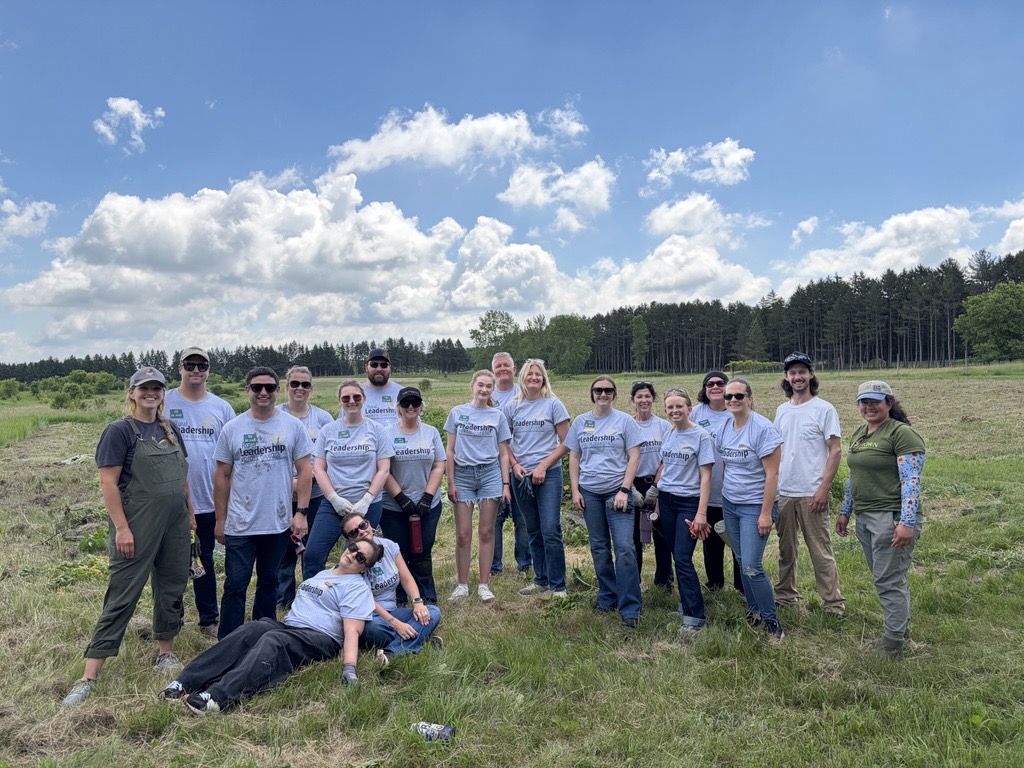
The morning began at Big River Farms, where Class XI worked alongside staff by weeding blueberry, raspberry, and strawberry fields before sharing a meal featuring locally sourced foods. Rather than simply touring the farm, class members experienced firsthand the partnerships and dedication required to strengthen local food systems. The experience demonstrated that leadership often begins by serving alongside others and investing time in work that benefits the broader community.
The afternoon shifted to the Phillips neighborhood of Minneapolis, where Class XI explored Indigenous leadership and community development through conversations with the Native American Community Development Institute, the Minneapolis American Indian Center, and Minneapolis Urban Indigenous Directors. These organizations demonstrated how collaboration among multiple partners creates stronger outcomes than any single organization could accomplish independently. Throughout the afternoon, class members repeatedly commented on the strong sense of community intentionally cultivated throughout the neighborhood.
These conversations reinforced that leadership is rooted in relationships, empathy, and ensuring people feel seen and valued. The experience reminded the class that strong communities do not happen by accident. They are intentionally built by leaders who invest in people, celebrate culture, and create places where everyone belongs.
The evening concluded with a Minnesota Twins game, providing class members another opportunity to strengthen relationships and continue conversations beyond the classroom. Throughout RLND, some of the most meaningful leadership lessons emerge not only during presentations but also through shared experiences and friendships developed along the journey.
Day Four: Seeing Communities Through New Eyes
Before departing Minneapolis, Class XI visited Crazy Fresh, an employee-owned company working to address fresh food access challenges in rural communities. Participants learned how the company supports small and rural grocers by providing fresh-cut fruits and vegetables, prepared foods, and popular items such as guacamole. The Crazy Fresh team also provided a behind-the-scenes tour of its colorful production facility as preparations ramped up for the Independence Day holiday, a period that doubles the company's operational output.
The class then returned to North Dakota and gathered at the Prairie Den, courtesy of Emerging Prairie, to begin the final portion of the seminar. There, participants heard from downtown Fargo leaders about the partnerships, investments, and vision that have helped shape the district's growth, visibility, and vibrancy.
Following the panel discussion, Class XI put on their "secret shopper" hats and explored downtown Fargo using the Community Impressions framework—an RLND-developed tool now utilized by NDSU Extension to help communities evaluate how they are perceived by visitors, newcomers, and potential residents.
The evening concluded with a collaborative dinner challenge, during which teams developed cooperative business concepts to be presented and judged the following day. After a full day of learning and innovation, participants settled in for the night at Brewhalla.
Day Five: Leadership Through Partnership, Community, and Service
The final day of Seminar 5 brought together many of the themes explored throughout the week. Although each stop focused on a different aspect of rural North Dakota—from agricultural innovation to community development and cooperative leadership—a common thread emerged: strong communities are built by people who are willing to invest in others. Throughout the day, Class XI was challenged to think about leadership not as a position, but as a commitment to serving people, building relationships, and creating opportunities for future generations.
The morning began with the Northern Crops Institute (NCI), where Director David Boehm shared how the organization connects producers, processors, researchers, and customers to expand markets for northern-grown crops across the region and around the world. During a tour of NCI's specialized food science facilities, class members saw firsthand how innovation happening in North Dakota influences food products far beyond our state. One memorable takeaway was learning that much of the pasta found on grocery store shelves has been developed or tested through NCI's facilities. David's enthusiasm was contagious, and his pride in North Dakota agriculture was evident throughout the tour. His presentation reinforced that leadership often means bringing people together, sharing knowledge, and continually looking for new ways to create value.
The afternoon shifted from agricultural leadership to community leadership with Lynette Flage, Associate Director of NDSU Extension and RLND Council Member. Through interactive discussion and a community assessment exercise, the class explored what creates a true sense of community and what it takes to help communities thrive. Conversations touched on topics such as childcare, housing, healthcare, recreation, and opportunities for connection, but the discussion extended beyond identifying challenges. Lynette encouraged the class to recognize the community champions already making a difference while reminding us that meaningful change begins when someone is willing to get involved. Whether attending a city council meeting, volunteering, or simply helping build connections, leadership starts with showing up.
The educational portion of the seminar concluded with RLND Class X alumnus and Valley United Cooperative Chief Strategy Officer A.J. Andresen, who shared his perspective on cooperative leadership. A.J. offered a thoughtful look at the cooperative model and the responsibility of serving member-owners. One of the things that resonated most was his authenticity. He spoke candidly about earning respect by leading from the front, never asking someone to do a job he wouldn't do himself, and staying grounded in the cooperative's purpose of serving farmers and rural communities. His message was a reminder that leadership is demonstrated through actions long before it is recognized through titles.
As the seminar concluded, Class XI revisited the leadership goals established at the beginning of the program and reflected on how those goals have evolved over the past year. It was a meaningful reminder that leadership development is an ongoing process. As perspectives grow and experiences shape us, our understanding of where we can make the greatest impact often grows as well.
Although each session approached leadership from a different perspective, they all pointed to the same conclusion: the future of rural North Dakota depends on people who are willing to build relationships, invest in their communities, and serve something larger than themselves. Seminar 5 concluded with a renewed appreciation for the partnerships, collaboration, and everyday leadership that continue to strengthen our rural communities.
Conclusion
Seminar Five demonstrated that leadership is built through relationships, collaboration, and service. Whether exploring global agricultural markets, serving alongside beginning farmers, strengthening Indigenous communities, examining food systems, or learning from cooperative leaders, Class XI experienced how businesses, nonprofits, communities, and government work together to create stronger regions.
The seminar reinforced that thriving rural communities depend on leaders who are willing to listen, build partnerships, embrace diverse perspectives, and invest in people. As Class XI continues its leadership journey, class members leave Seminar Five with a deeper appreciation for the interconnected relationships that strengthen North Dakota and a renewed commitment to helping their own communities thrive.
Thank You to Our Generous Sponsors
Leader Corps
Benefactor
($10,000+)
- CHS Foundation
Program Sponsors
($500+)
Turtle Mountain Band of Chippewa Indians, Lynn Gorneau
($200+)
- Valley United Cooperative
- Katie Tyler
