
Field to Fork: Brussels Sprouts
(FN2317 October 2026)Brussels sprouts were named after the city where they were grown as early as the 13th century — Brussels, Belgium. This vegetable belongs to the Brassicaceae family along with its larger counterpart, cabbage.
Recipes
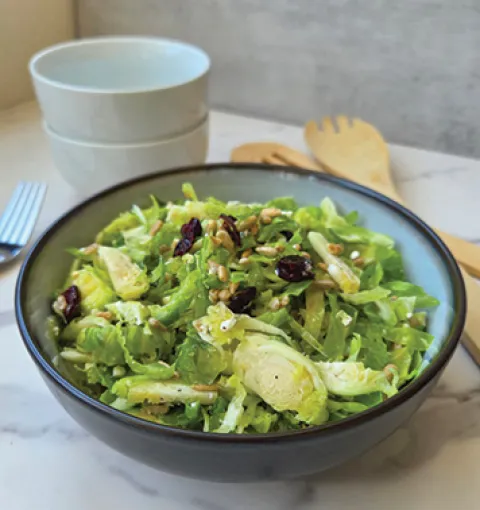
Shaved Brussels Sprout Salad
½ cup sunflower seeds
1 pound Brussels sprouts, shaved
¼ cup green onions, chopped
¼ cup olive oil, canola oil or sunflower oil
¼ cup lemon juice, freshly squeezed
1 teaspoon ground black pepper, or to taste
¼ cup feta cheese
¼ cup dried cranberries
Preheat oven to 350 F and spread sunflower seeds on a sheet pan to roast until golden brown, about 10 minutes. Make sure to check frequently to prevent burning. The same results can be achieved by roasting them in a pan at medium heat for 5 to 10 minutes, or until golden brown and fragrant. Thoroughly rinse Brussels sprouts and trim off tough ends or wilted leaves. At the same time, also rinse green onions, chop and let dry. Thinly slice Brussels sprouts with a mandolin or knife and place in a medium bowl. Drizzle the shaved Brussels sprouts with oil and lemon juice. Add the black pepper before tossing. Add feta cheese, green onions, cranberries and roasted sunflower seeds into the shaved Brussels sprouts and toss until combined. Serve on a chilled plate.
Makes eight servings. Each serving has 140 calories, 9 grams (g) fat, 3 g protein, 11 g carbohydrates, 3 g fiber and 60 milligrams sodium.
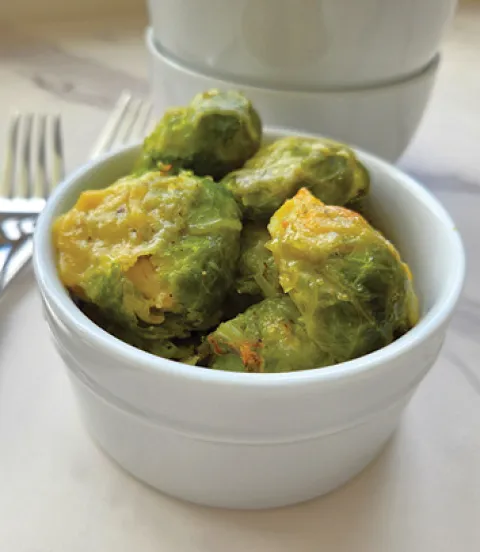
Crispy Smashed Brussels Sprouts
1 pound Brussels sprouts
2 tablespoons olive oil, canola oil or sunflower oil
1/8 teaspoon cayenne pepper
1 garlic clove, minced
½ cup grated Parmesan cheese, divided
Preheat oven to 425 F. Rinse and trim the Brussels sprouts. Bring a pot of water to a boil. Add the Brussels sprouts and cook for 8 to 10 minutes, or until fork-tender. Drain and immediately rinse under cold water to stop the cooking process. Once cooled, place the Brussels sprouts into a medium bowl along with oil, cayenne pepper, minced garlic and half of the Parmesan cheese. Mix until Brussels sprouts are evenly coated. Arrange Brussels sprouts evenly on a baking sheet, leaving 1 ½ to 2 inches apart. Smash the Brussels sprouts with a glass or jar, making sure to place a piece of parchment paper between the sprouts and jar. Sprinkle with the remaining Parmesan cheese and bake for 25 to 30 minutes, or until sprouts are crispy and cheese is golden brown.
Makes four servings. Each serving has 150 calories, 10 grams (g) fat, 7 g protein, 12 g carbohydrates, 4 g fiber and 210 milligrams sodium.
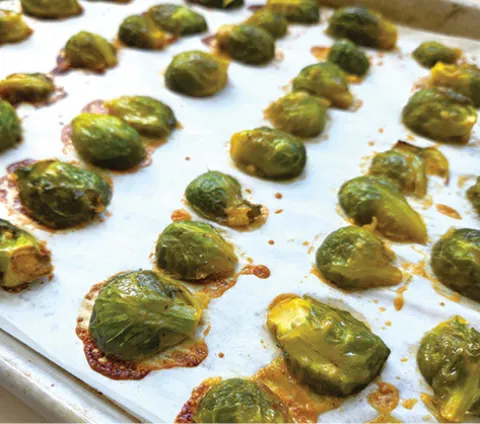
Roasted Maple Dijon Brussels Sprouts
3 tablespoons maple syrup
2 tablespoons Dijon mustard
1 tablespoon olive oil, canola oil or sunflower oil
1-2 garlic cloves, minced
¼ teaspoon salt
1/8 teaspoon ground black pepper, or to taste
1 pound Brussels sprouts
Preheat oven to 375 F and line a baking sheet with parchment paper. In a medium bowl, whisk together maple syrup, Dijon mustard, oil, minced garlic, salt and pepper. Rinse Brussels sprouts thoroughly and trim any hard ends and wilted leaves. Cut Brussels sprouts in half lengthwise before tossing them in the dressing. Arrange Brussels sprouts on a sheet pan, cut side down, and roast for 30 to 35 minutes until tender.
Makes five servings. Each serving has 100 calories, 3 grams (g) fat, 3 g protein, 17 g carbohydrates, 3.5 g fiber and 225 milligrams sodium.
This handout is made possible with funding from the North Dakota Department of Agriculture through the U.S. Department of Agriculture’s Specialty Crop Block Grant program.