
Field to Fork: Kohlrabi
(FN2316 October 2026)Kohlrabi (pronounced “kole-RAH-bee”) is part of the Brassica oleracea species along with cabbage, Brussels sprouts, broccoli and kale.
In German, kohl means “cabbage,” and rabi means “turnip.” Although it may look unusual with its bulbous, swollen stem and leafy stalks, kohlrabi is easy to grow and provides a crisp texture with a mild, slightly sweet flavor.
Recipes
Roasted Kohlrabi
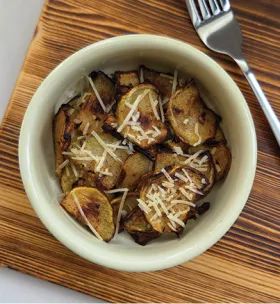
4 kohlrabi bulbs, peeled
2 tablespoons olive or other oil
2 garlic cloves, minced
2 teaspoons smoked paprika
Salt and black pepper to taste
1/3 cup Parmesan cheese, freshly grated
Preheat oven to 450 F. Spray a baking sheet with oil or line with parchment paper. Cut kohlrabi into ¼-inch slices, then halve each slice. Combine oil, garlic, paprika, salt and black pepper in a large bowl. Add kohlrabi; toss to coat. Spread in a single layer on a baking sheet. Bake in the oven until lightly brown and tender, stirring occasionally, 15 to 20 minutes. Sprinkle with Parmesan cheese. Roast until cheese is melted and golden, about 5 minutes. Serve immediately.
Makes four servings. Each serving has 140 calories, 9 grams (g) fat, 5 g protein, 12.5 g carbohydrate, 6.5 g fiber and 150 milligrams sodium.
Dill Roasted Kohlrabi
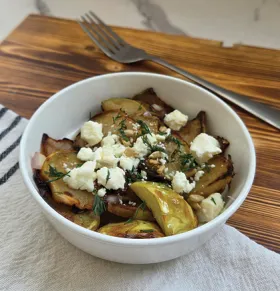
2 tablespoons extra virgin olive or other oil, divided
2-3 large kohlrabi, nubs sliced off and cut into rounds
1 tablespoon lemon juice
1 teaspoon honey
1 tablespoon shallots, minced
Salt and black pepper to taste
¼ cup feta cheese, crumbled
1 tablespoon fresh dill, chopped
2 tablespoons toasted sunflower seeds
Preheat oven to 400 F. Lightly grease a baking sheet or line with parchment paper. Heat 1 tablespoon of oil in a large skillet over medium-high heat on the stove top. Add the kohlrabi rounds and cook until golden brown, about 4 to 5 minutes per side. Transfer the browned kohlrabi to the prepared baking sheet. Roast for 10 to 12 minutes, or until tender. While the kohlrabi roasts, whisk together the remaining 1 tablespoon oil, lemon juice, honey, shallot, salt and black pepper in a small bowl. Arrange the roasted kohlrabi on a serving platter. Drizzle with the vinaigrette. Sprinkle with feta cheese, fresh dill and toasted sunflower seeds before serving.
Optional: add 1 cup sliced carrots to the baking sheet for extra color, flavor and nutrition.
Makes four servings. Each serving has 125 calories, 9.5 grams (g) fat, 3 g protein, 8.5 g carbohydrate, 3.5 g fiber and 100 milligrams sodium.
Kohlrabi and Apple Crunch Slaw
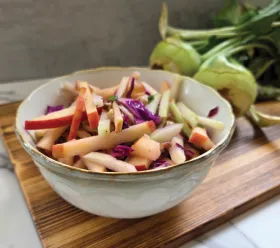
1 medium kohlrabi, peeled and cut into thin matchsticks
1 large Honeycrisp apple, cut into thin matchsticks
1 cup red cabbage, thinly sliced
1 tablespoon green onion, thinly sliced
¼ cup walnuts or pecans, chopped
1 tablespoon olive or other oil
1 tablespoon apple cider vinegar
1 tablespoon lemon juice
1 teaspoon honey
¼ teaspoon Dijon mustard
¼ teaspoon salt
Black pepper to taste
Combine kohlrabi, apple, cabbage, green onion and nuts in a large bowl. In a separate bowl, whisk together oil, vinegar, lemon juice, honey, mustard, salt and black pepper. Pour dressing over salad and toss to coat. Refrigerate for at least 15 minutes before serving.
Makes six servings. Each serving has 90 calories, 5.5 grams (g), 1 g protein, 10 g carbohydrate, 3 g fiber and 110 milligrams sodium.
This handout is made possible with funding from the North Dakota Department of Agriculture through the U.S. Department of Agriculture’s Specialty Crop Block Grant program.