
Field to Fork: Radishes
(FN2315 October 2026)Radishes are members of the mustard (Brassicaceae) family, and their name comes from radix, the Latin word for root. Cultivated for thousands of years across Asia and Europe.
Radishes are famous for their rapid growth, often going from seed to table in less than a month. While traditionally eaten raw in salads, they can also be roasted, pickled, sautéed or even grown strictly for their edible seed pods and leafy greens.
Recipes
Roasted Radish and White Bean Salad
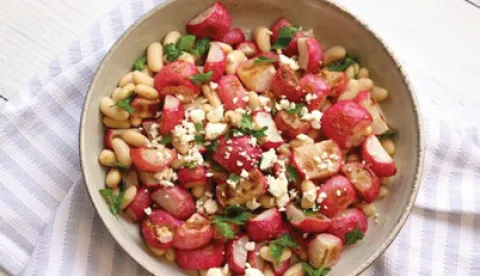
1 pound radishes, washed, stemmed and sliced in half
2 tablespoons olive oil (or your favorite cooking oil), divided
Salt and pepper (to taste)
1 (15-ounce) can cannellini beans, drained and rinsed
Juice of ½ lemon
1/8 teaspoon garlic powder (or to taste)
¼ cup fresh parsley, stemmed and chopped
2 ounces feta cheese, crumbled
Preheat the oven to 450 F. In a large mixing bowl, toss the radish halves with 1 tablespoon olive oil and season with salt and pepper to taste. Place the seasoned radishes on a baking pan or in a cast-iron skillet. Roast for 20 minutes, tossing occasionally, until tender and caramelized. While the radishes are roasting, place the cannellini beans in the same mixing bowl and add 1 tablespoon olive oil, lemon juice and garlic powder. Season with salt and pepper to taste. When the radishes are done roasting, add them to the bowl with the beans and add parsley. Sprinkle with feta cheese and adjust seasonings, as necessary. Serve warm.
Makes eight servings. Without added salt, each serving has 120 calories, 5 grams (g) fat, 6 g protein, 14 g carbohydrate, 4 g fiber and 190 milligrams sodium.
Rosemary and Thyme Roasted Radishes with Greek Yogurt

3 whole medium-sized radishes
Drizzle of extra virgin olive oil (about 2 teaspoons)
Sprinkle of thyme
Sprinkle of rosemary
Pinch of salt, optional
Serve with plain skyr or nonfat Greek yogurt and minced chives (about 2 tablespoons per serving)
On a sheet pan lined with parchment paper, toss radishes with a bit of extra virgin olive oil, thyme, chopped rosemary and a pinch of salt. Roast in the oven at 350 F for about 45 minutes. Serve with skyr and fresh chives.
Each serving (three radishes with 2 Tbsp. yogurt and no added salt) has 100 calories, 9 grams (g) fat, 3 g of protein, 11 g carbohydrate, 2 g fiber and 20 milligrams sodium.
Fresh Radish Slaw
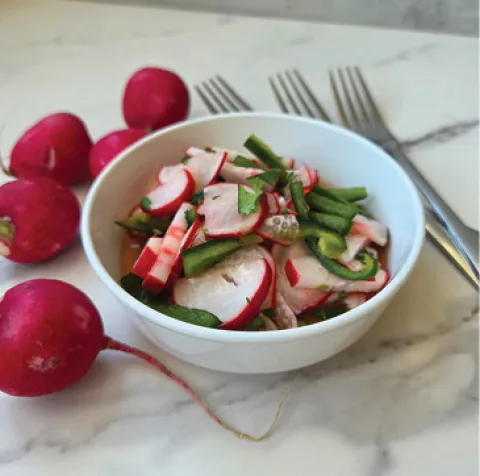
1 ½ cups radishes, thinly sliced
½ poblano pepper, thinly sliced
1-2 limes, juiced
¼ cup cilantro, chopped
3 green onions, chopped
2 tablespoons honey
Ground black pepper, to taste
Cut the radishes in half and thinly slice; do the same with the poblano pepper. Juice the limes into a bowl, add the cilantro, green onions, honey and ground black pepper and mix well. Add sliced radishes and poblano peppers and toss to coat evenly.
Makes four servings. Each serving has 40 calories, 3 grams (g) fat, 1 g protein, 28 g carbohydrates, 3 g fiber and 24 milligrams sodium.
This handout is made possible with funding from the North Dakota Department of Agriculture through the U.S. Department of Agriculture’s Specialty Crop Block Grant program.