
Managing Purchased Bulls
(AS2011, Revised September 2026)Purchasing a bull is an investment for a cow/calf operation. Proper management of purchased bulls from the day of sale until the following breeding season is critical to productivity and longevity.
Contact your county NDSU Extension office to request a printed copy.
NDSU staff can order copies online (login required).
Step-down Nutrition After the Sale
Most young bulls are developed on high-energy diets to meet genetic growth potential. The gradual transition of a purchased bull from a concentrate to a forage-based diet is critical. Bulls that are turned out on pasture or placed on hay immediately after the sale can have digestive issues and may lose large amounts of weight prior to and during the breeding season. This weight loss may result in body condition score losses of 1 to 3 points and decreases in fertility and stamina.
Having information about the ration that bulls consumed during development is important. If possible, a similar ration should be utilized after the sale, with gradual changes and reduction in energy content. An example step-down ration would be to start with 80% of previous concentrate intake, then decrease by 10% per week for several weeks until the diet is mostly forage. Aim to have a bull transitioned to a forage-based diet two to three weeks before the start of the breeding season.
Because spermatogenesis requires 61 days for completion, start to step down sire rations around 90 days prior to the breeding season. This will reduce potential negative impacts on sperm production due to over- or undernutrition.
Yearling bulls still should be gaining 1.5 to 2 pounds per day after the sale and prior to breeding. This will require a diet containing about 10% to 11% crude protein (CP) and 60% to 70% TDN, (total digestible nutrients, which is a measure of energy).
If the previous ration is not known, a good idea is to start with high-quality forage (grass or grass-legume blend) and 4 to 6 pounds of grain. Avoid feeding pure alfalfa hay to avoid digestive issues. Bulls also should be provided with a vitamin/mineral supplement.
All feeds and forages should be analyzed for nutrient content at a certified laboratory to make the best use of available feeds. Consult with your local Extension agent or nutritionist for assistance in developing a ration.
Avoid over- and underconditioning of herd sires as both impact spermatogenesis. Bulls should have a BCS of 5.5 to 6.5 prior to breeding, based on the BCS system for beef cattle from 1 (emaciated) to 9 (excessively fat). Once on pasture, monitor bulls for weight loss or injury that may impact their ability to breed females.
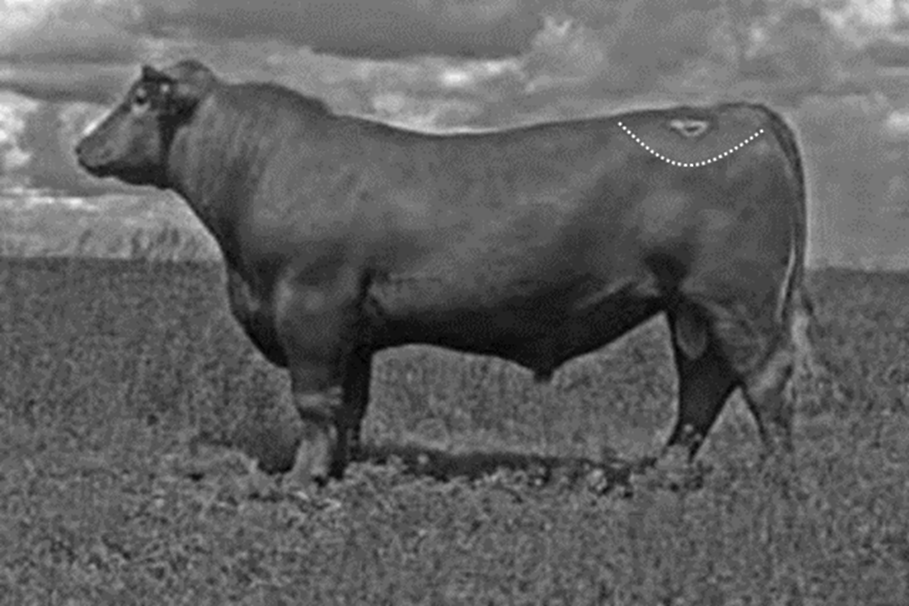
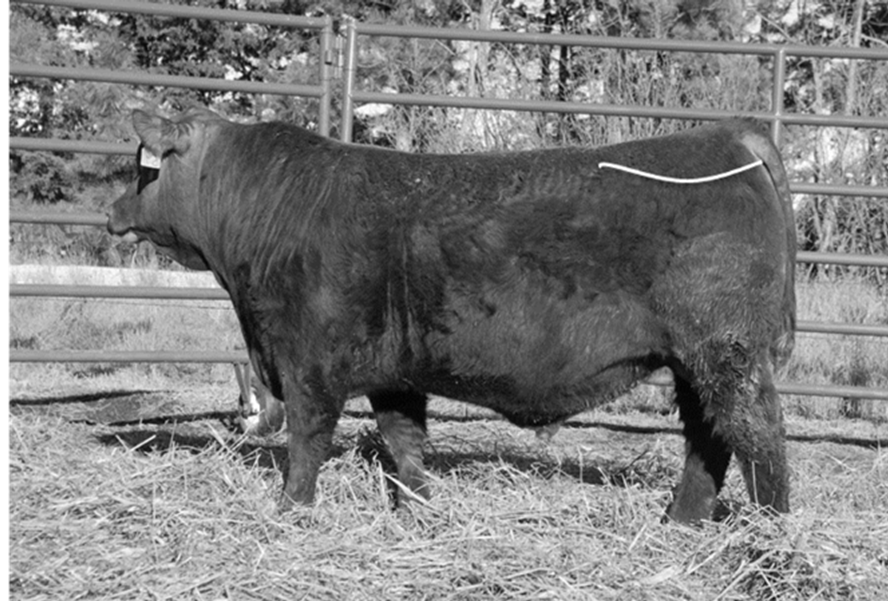
Body Condition Scoring
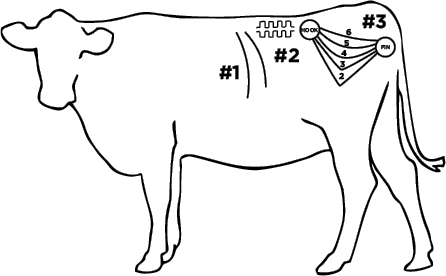
- Look at last two ribs
- Visible: <5
- Not visible: ≥ 5
- Spine
- Visible: ≤ 3
- Shape between hooks and pins (thurl)
- Shallow U: BCS 6
- Strong U: BCS 5
- V Shape: BCS 4
- Strong V: BCS 3
- Very Strong V: BCS 2
U.S. Beef Body Condition Scores: Range from 1-9
BCS 1: Emaciated, BCS 9: Obese
3-Step Body Condition Scoring (BCS) Guide for Range Cattle (B-1294), Scasta, et al, 2016, University of Wyoming Extension http://www.wyoextension.org/publications/html/B1294/
Contributors
NDSU Extension agriculture and natural resources agents:
Rachel Wald, McHenry County
Greg Benz, Dunn County
Craig Askim, Mercer County
NDSU Extension specialists:
Lisa Pederson, livestock specialist, Central Grasslands Research Extension Center
Travis Hoffman, sheep specialist
Gerald Stokka, veterinarian and livestock stewardship specialist
Janna Block, livestock systems specialist, Hettinger Research Extension Center
John Dhuyvetter, livestock systems specialist (retired), North Central Research Extension Center
Karl Hoppe, livestock systems specialist, Carrington Research Extension Center
For related publications on these topics, visit the NDSU website at www.ag.ndsu.edu/extension:
- “Site Visits: Biosecurity Practices for Professionals Working in Animal Agriculture” (NM1551) — https://www.ndsu.edu/agriculture/extension/publications/site-visits-bio…
- “Checklist for Beef Producers” (AS1731) — https://tinyurl.com/BeefChecklist