Title

Managing Rams and Bucks for Reproductive Success

(AS2295 May 2026)
Summary

Successful lambing and kidding seasons depend not only on managing females but also on properly preparing rams and bucks before breeding. Nutrition, body condition, and reproductive health all influence semen quality, fertility, and a sire’s ability to service females. Producers can improve reproductive success by evaluating body condition, providing targeted nutritional supplementation, and conducting breeding soundness exams 6–8 weeks before the breeding season. Proper health management and monitoring sire performance during breeding can further help identify fertility issues and improve overall flock productivity.

Lead Author
Lead Author:
Samantha Ekstrom, Graduate Research Associate, NDSU Department of Animal Sciences
Other Authors

Rachel Gibbs, Ph.D., Ruminant Systems Management Specialist, NDSU Extension

Reviewed by:
Lacey Quail, Ph.D., Livestock Management Specialist, NDSU Extension

Travis Hoffman, Ph.D., Extension Sheep Specialist, NDSU Extension

Jake Galbreath, DVM, Extension Veterinarian, NDSU Extension

Availability
Availability:
Web only
Publication Sections

Introduction

Figure
Photo Credit:
NDSU Photo

Reproductive success within any livestock operation is a crucial component of production efficiency and profitability. While there is significant emphasis on preparing ewes and does for the breeding season, managing sires prior to and during the breeding season is equally important in achieving reproductive success. In fact, research has shown sires may influence a large number of reproductive outcomes, including the establishment of pregnancy, embryo survival and number of lambs/kids born. Therefore, there are a number of management strategies producers should consider when selecting and preparing sires for the breeding season.

Nutritional Management

Reproductive efficiency is highly influenced by nutritional status and nutritional management of breeding stock prior to and during the breeding season. Nutritional supplementation of rams and bucks for as little as one week has been shown to stimulate key hormones (e.g., GnRH, LH and testosterone) responsible for sperm production, increasing ram/buck scrotal size and conception rates. Spermatogenesis, or the production of sperm, is an approximately 48-day biological process in sheep and goats; thus, preparing and conditioning rams and bucks for the breeding season should begin six to eight weeks before turnout to maximize reproductive capacity and efficiency.

Body Condition Scoring

Six to eight weeks prior to the breeding season, the nutritional status of rams and bucks should be evaluated to determine if any dietary adjustments are needed to achieve optimal body condition for the breeding season. Nutritional status in sheep and goats is traditionally evaluated by assigning a body condition score (BCS) based on visual and manual appraisal of muscle and fat cover across the spine over the lower lumbar region or loin (Figure 1). Body condition scoring in small ruminants is assessed on a five-point scale where a BCS of 1 represents extremely thin animals with a sharp touch to the spine and transverse process, whereas a BCS of 5 represents overly conditioned animals in which the spine and transverse process can no longer be felt through palpation. Outside of the breeding season, rams and bucks should be managed to maintain a minimum BCS of 2 to 2.5. As rams/bucks enter a more physically demanding production stage during the breeding season, nutrient requirements and target body condition scores increase. Ideally, rams and bucks should begin the breeding season in a positive energy balance with a BCS of 3 to 3.5 to achieve optimal reproductive performance and to avoid becoming too thin (BCS <2) during the breeding season. It is not uncommon for rams and bucks to lose 10 to 15% of their bodyweight (~1 BCS) during a 45- to 60-day breeding season. Under- and overconditioned rams and bucks often face challenges during the breeding season and are generally considered to have limited breeding capacity due to reduced semen quality and sperm production, diminished physical stamina and lack of libido. These challenges directly impact their ability to breed large numbers of females.
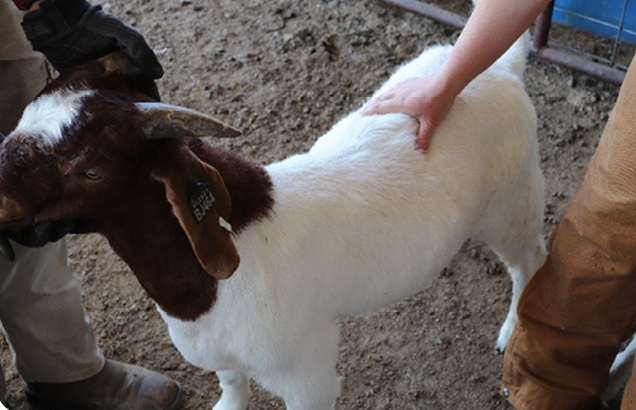
Figure 1
Photo Credit:
NDSU Photo
Body condition scoring rams and bucks – manual appraisal.

Prebreeding Conditioning

To achieve target BCS and optimal semen quality prior to the breeding season, rams and bucks in ideal maintenance condition (BCS 2 to 2.5) should be placed on an increasing plane of nutrition six to eight weeks before ram/buck turnout. This includes increasing dry matter intake, energy (TDN) and protein in the diet by 10 to 20%. Increasing dietary energy is commonly accomplished through cereal grain (e.g., corn, oats) supplementation at 0.5 to 1.5lb/head/day, depending on mature ram/buck size (Tables 1 and 2). Moreover, forage alone is generally insufficient in meeting the 18% increase in protein requirements of rams and bucks during the prebreeding stage of production. Protein supplements vary in crude protein levels but generally should contain between 10% and 16% crude protein. Care should be taken when supplementing rams and bucks already being fed high-protein forages or that are grazing high-protein legumes to avoid excessive dietary protein (>16% crude protein), which may increase the risk of pizzle rot, an infection of the penile sheath in rams and bucks caused by increased nitrogen secretion in the urine.

A balanced ration with vitamin and mineral supplementation is recommended year-round but is particularly important for preparing rams and bucks for the breeding season. In fact, multiple studies have shown that several vitamins and trace minerals, including vitamins A and E, selenium, zinc and cobalt, play crucial roles in biological processes that regulate semen production, sperm motility and survivability. Specifically, the antioxidant effects of vitamin E and selenium supplementation have been shown to improve semen quality by increasing motile sperm concentration and reducing morphological abnormalities. Likewise, zinc and cobalt have also been shown to improve semen quality through antioxidant pathways while also playing a role in proper testicular development in ram lambs. Thus, ensuring prebreeding rations and/or supplements meet the nutritional requirements of these key elements is critical to supporting the reproductive soundness of rams and bucks. Often, these vitamins and minerals can be combined with energy and/or protein as fortified supplements to ensure adequate intake.

Nutritional supplementation and/or management prior to the breeding season can be extended for rams and bucks that need to gain or lose more than half of a BCS. Ideally, overconditioned rams and bucks should be returned to maintenance condition (BCS 2 to 2.5) at least six weeks before breeding season. This allows them to begin the breeding season in a positive energy balance and capitalize on reproductive performance gained through prebreeding nutritional supplementation.

Table 1. Nutrient requirements for mature rams and ram lambs. (Adapted from NRC 2007)

BW
(lbs)
DMI
(% BW)
DMI
(lbs)
TDN
(lbs)
CP
(lbs)
Vit. A
(RE/d)
Vit. E
(IU/d)
Ca
(g/d)
P
(g/d)
Grain Diet
Se
(mg/d)
Forage Diet
Se
(mg/d)
Zn
(mg/d)
Co
(mg/d)
Mature Rams
Maintenance
2201.773.92.070.283,1405303.33.10.040.08510.18
2751.674.62.440.333,9256633.83.70.050.10630.21
3301.605.32.790.394,7107954.34.30.060.13760.24
Prebreeding
2201.954.32.270.334,5505603.63.40.080.16580.39
2751.845.12.680.395,6887004.24.10.100.20720.46
3301.765.83.080.456,8258404.74.70.120.23860.53
Ram Lambs (8mo)
Maturity: 0.8; Gaining: 0.88lb/d
1324.135.454.330.526,0006006.86.10.400.82810.50
1543.685.674.510.547,0007006.96.20.400.82830.52
1763.335.864.660.568,0008007.06.30.410.83870.53

Reproductive Soundness

In addition to preconditioning, rams and bucks should be evaluated for reproductive soundness six to eight weeks prior to the breeding season to ensure sires are fertile and free of structural and reproductive ailments. Research has indicated that 20 to 30% of tested rams (little to no research is currently available in bucks) across the western U.S. do not meet ideal fertility standards and are considered subfertile. Subfertile sires can plague breeding seasons by reducing the number of pregnant ewes and extending the breeding and subsequent lambing seasons. Identifying these sires prior to the breeding season and addressing fertility disorders is key to improving and/or maintaining reproductive performance.

Breeding Soundness Exams

Breeding soundness exams (BSE) include a physical appraisal, semen evaluation and scrotal circumference measurement to help producers identify fertile, unfit and/or subfertile rams. A breeding soundness exam should be conducted on a yearly basis for each sire, regardless of whether they have sired lambs or kids in a previous season. This should be conducted six to eight weeks prior to the breeding season to provide ample time to address health and/or fertility concerns before the breeding season begins. Veterinarians or trained professionals performing BSEs will begin with a physical appraisal of overall health, nutritional status and structural integrity. Rams/bucks should be free of any obvious health concerns, with a sound bite and little to no visual impairment. Moreover, sires should be free of structural ailments (e.g., lameness, footrot, pelvic/hoof/leg injuries) that may limit the necessary mobility required to track and cover females.

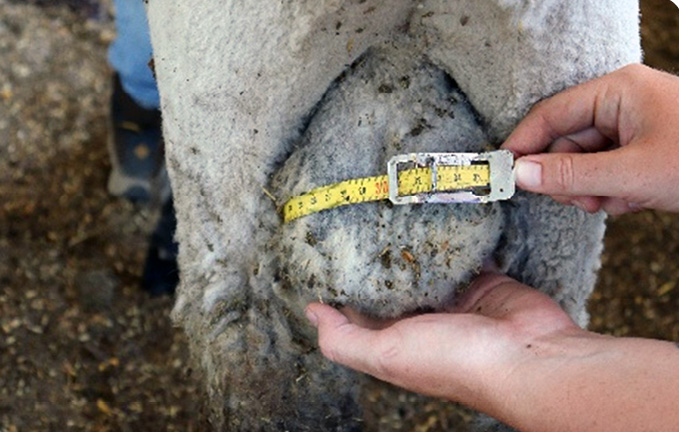
Physical appraisal of rams/bucks during a BSE will also include the palpation and evaluation of external genitalia to identify any reproductive tract abnormalities that may limit the male’s reproductive capacity. Testes should be freely movable within the scrotum, symmetrical in size, and relatively firm upon palpation. A lack of testis symmetry and/or inconsistent patterns of firmness (soft and/or hard areas) on the testes or epididymis may indicate reduced semen production or quality, subsequently affecting fertility. Special attention will be placed on palpation of the epididymis in rams to rule out a common cause of infertility known as epididymitis. Epididymitis is a common reproductive disorder in sheep caused by infection with the bacterium Brucella ovis. This venereal disease can be transmitted to both females and other males through contact with infected bodily fluids, resulting in reduced male fertility, lower conception rates and increased abortion rates. Additional observations of the penis and sheath will be made to rule out infection and injury that would impact copulation. Lastly, scrotal circumference will be measured to evaluate testes size (Figure 2). Scrotal circumference can vary by age, breed and season, but it has been directly correlated to sperm production capacity, with hormonal secretion and sperm production increasing as scrotal circumference increases. Requirements for scrotal circumference have been established to identify subfertile rams and ram lambs (Table 3). Sires with a larger scrotal circumference tend to have a greater concentration of live-motile sperm, potentially increasing the number of females serviced and lambs/kids born.

Table 2. Nutrient requirements for mature bucks and buck kids. (Adapted from NRC 2007)

BW
(lbs)
DMI
(% BW)
DMI
(lbs)
TDN
(lbs)
CP
(lbs)
Vit. A
(RE/d)
Vit. E
(IU/d)
Ca
(g/d)
P
(g/d)
Se
(mg/d)
Zn
(mg/d)
Co
(mg/d)
Mature Bucks (Non-Dairy)
Maintenance
1652.063.401.800.232,3553982.72.10.18230.20
2201.924.222.240.293,1405303.22.70.19300.24
2751.825.002.640.383,9256633.73.20.20380.29
Prebreeding
1602.273.631.980.253,1434202.92.40.36260.43
2202.114.642.460.314,5505603.43.00.38340.53
2752.005.502.900.375,6887004.03.50.40430.64
Buck Kids (Non-Dairy)
Gaining: 0.55lb/d
663.882.551.720.373,0003008.24.00.75240.13
773.552.731.830.383,5003508.34.10.75260.14
883.312.911.940.404,0004008.44.20.76270.15

The semen evaluation portion of a BSE involves collecting a semen sample and evaluating semen quality, including sperm motility and morphology. Semen is traditionally collected through electroejaculation or with the use of an artificial vagina when a female in estrus is available. Proper technique is critical to ensure a representative semen sample is collected and free of contaminants (e.g., urine, dirt, hair). Semen samples are then evaluated microscopically to determine sperm concentration, gross and individual sperm motility, morphological abnormalities, and the presence of white and/or red blood cells. The thresholds for evaluation are presented in Table 4. Gross motility, or the wave motion and speed of sperm movement in semen, is evaluated in undiluted semen and scored from 0 being questionable (no movement) to 5 being excellent (rapid, wave-like movement). Generally, gross motility scores should be ≥3 to be satisfactory, and sires with greater gross motility scores have been shown to have increased lambing/kidding rates. Individual motility is evaluated in a diluted semen sample and determines the percentage of progressively motile sperm, which are capable of navigating the female reproductive tract and fertilizing the oocyte. Individual progressive motility should be greater than 50% to be satisfactory, but for optimal breeding capacity, greater than 70% is ideal and considered excellent. Sperm morphology (size and shape) is evaluated with contrast staining to determine the percentage of morphological defects. Primary defects, or defects that impact the head of the sperm, indicate a developmental abnormality occurring early in spermatogenesis (45 to 60 days prior to semen testing), whereas secondary defects, or defects that impact the tail of the sperm, indicate a maturation abnormality occurring later in spermatogenesis (within 45 days of semen testing). Semen samples should have less than 20% abnormal sperm to be considered satisfactory. Lastly, the presence of white blood cells will be evaluated to identify subclinical infections that may impact sire fertility and be considered questionable. Often, rams with questionable semen quality will be retested within 30 days of the breeding season to reevaluate reproductive soundness and to avoid premature culling of rams with treatable fertility ailments.

Table 3. Ram/buck scrotal circumference thresholds. (Adapted from Purdue Extension & College of Vet Med, University of Illinois)

StatusRam LambsMature RamsMature
Meat Goat Bucks
Excellent>36cm>40cm
Satisfactory>29cm>32cm>26cm
Questionable26-29cm29-32cm<26cm
Poor<26cm<29cm

Table 4. Ram/buck semen evaluation thresholds.
(Adapted from Literature Review)

StatusGross
Motility
(0-5 scale)
Individual
Motility
Abnormal Sperm MorphologyWhite
Blood Cells
ExcellentRapid >4>70%<5%None present
SatisfactoryMild ≥3>50%<20%None present
QuestionableSlow <3<50%>20%Some present
Figure 2
Photo Credit:
NDSU Photo
Measuring scrotal circumference.

Additional Factors Impacting Fertility

Several internal and external factors influence semen quality and sire fertility. Much like female cyclicity, ram/buck semen production fluctuates in a seasonal pattern, peaking during the short-day season (fall months). Melatonin secretion during the short-day season stimulates the production of key hormones, leading to increased testosterone secretion, willingness to breed and enhanced sperm production. It is not uncommon for sires to have reduced libido and semen concentrations and a greater percentage of morphological defects outside of the short-day breeding season.

Environmental conditions can also impact semen quality and sire fertility. Heat stress is particularly detrimental to sperm production and the percentage of sperm capable of fertilization. The impact of heat stress on sire fertility is often exacerbated by nutritional deficiencies resulting from reduced feed intake during chronic periods of heat stress. During periods of freezing temperatures, scrotal thermoregulation generally protects the testes and subsequent sperm production when adequate bedding is available to prevent scrotal frostbite. Frostbite can impair scrotal and testicular function, leading to reduced thermoregulatory capacity and sperm production. The North Dakota Agricultural Weather Network (NDAWN) aids producers identify conditions that may put ruminant livestock at risk for environmental stress. The Cattle Comfort Index tool combines factors such as air temperature, humidity and wind speed to estimate the environmental conditions livestock are and will be exposed to. Sheep and goats tend to be less susceptible to environmental stress than cattle, but thin, freshly shorn sheep and goats are at an increased risk.

Health challenges, including those related to parasitic infections, have also been shown to impact sire fertility. Semen quality and sperm production are particularly impacted when sires experience health challenges that raise internal body temperature and reduce feed intake. Documenting health challenges prior to and during the breeding season will help identify causes of fertility issues and how to address them to restore semen quality and sire performance.

Preparing Sires and Considerations for the Breeding Season

Preparing Rams and Bucks

Prior to the breeding season, it is often recommended to implement general management strategies such as annual vaccinations, hoof trimming, shearing rams and commingling sire groups. Sires should be included in routine flock/herd vaccination programs, which typically include an annual Clostridium perfringens types C and D and tetanus vaccination. Producers are encouraged to work with their veterinarians on prebreeding and annual vaccinations.

Hoof trimming is an important yet often overlooked management tool to maintain structural integrity in sires. While hooves should be trimmed as needed, it is recommended to trim hooves a minimum of two to four weeks prior to the breeding season to provide enough time to treat any hoof infections and/or injuries prior to sire turnout.

Rams utilized during the early fall breeding season (July to August) and spring breeding season (April to June) are traditionally sheared six to eight weeks prior to the breeding season, whereas rams used in late fall and winter breeding seasons (September to January) are sheared no later than late fall (September to October).

Breeding programs that utilize more than one ram per pen/pasture should consider comingling sire groups in a small area one to two weeks prior to the breeding season to reduce behavioral distractions and injuries among sires upon sire turnout.

Biosecurity measures should be taken, and additional health/genetic screenings should be considered when introducing new rams/bucks into breeding programs. This may include testing for Brucella ovis, caprine arthritis encephalitis (CAE), ovine progressive pneumonia and Johne’s disease. Genetic screening is also recommended to identify disease resistance to specific diseases such as scrapie, dwarfism, hairy lamb syndrome and spider lamb syndrome. New sires should be isolated and quarantined for two to four weeks or until health and genetic screening findings are confirmed.

Sire-to-Female/Coverage Ratio

Generally speaking, reproductively sound rams and bucks can service three to five females per day; the overall average for North Dakota in 2024, for example, was 1:21. However, this number can vary due to a number of factors including, but not limited to the following: sire age, nutritional status, libido, breeding season (fall or spring), pasture or pen size, terrain, distance to water and the number of females in estrus. Synchronizing females is a common reproductive management technique used to shorten the breeding and subsequent lambing season. However, this also increases the sire power required to ensure females are adequately covered within the shorter breeding window. The recommended coverage ratios for rams and bucks are presented in Table 5.

Table 5. Recommended coverage ratios for rams and bucks utilized during a 45- to 60-day breeding season.

SpeciesMaturityBreeding SeasonFemale SynchronizationCoverage Ratio
(Sire: Female)
OvineMature RamFallNo1:50
Yes1:20-25
SpringNo1:30
Yes1:15-20
Ram LambFallNo1:25
Yes1:10-15
SpringNo1:15
Yes1:5-10
CaprineMature BuckFallNo1:40
Yes1:15-20
SpringNo1:20
Yes1:10-15
Buck KidFallNo1:20
Yes1:15
SpringNo1:10
Yes1:5

Tracking Sire Performance

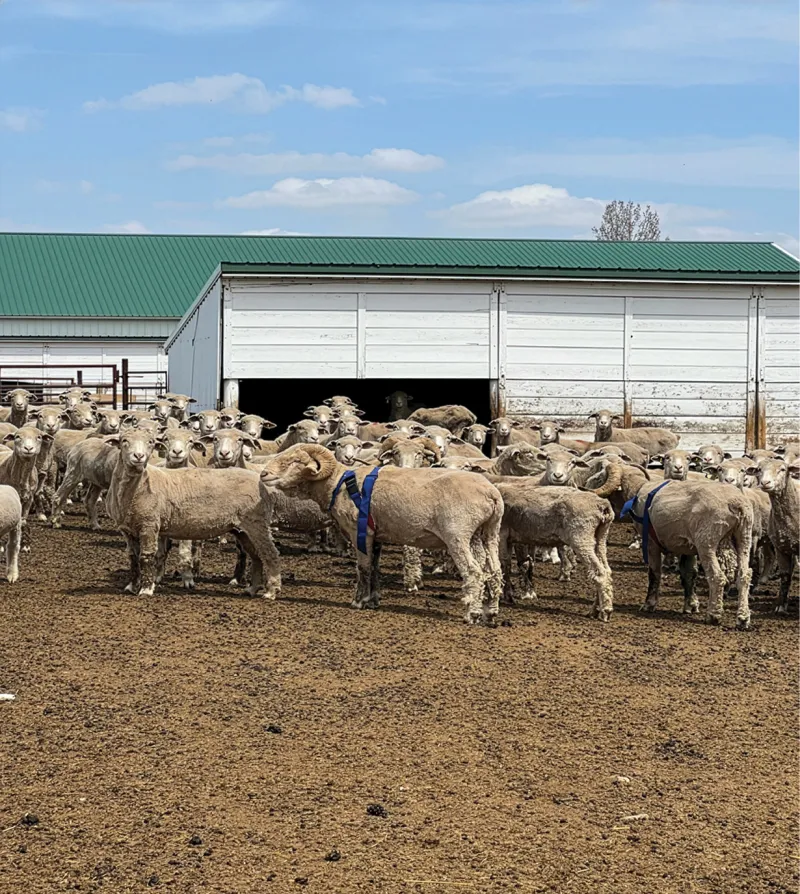
During the breeding season, producers should also consider tracking ram and buck performance/coverage rates to better pinpoint when females are serviced, how sires perform in specific sire groups and fertility issues that may arise during the breeding season. A common and effective method of tracking ram and buck performance during the breeding season is through the use of marking harnesses. Marking harnesses are fitted to each sire at turnout and replaced every 14 to 17 days with a different color marker. This allows producers to visually evaluate which females were serviced at each point of the breeding season to estimate lambing distribution and identify potential fertility issues if females recycle and remark.