
Orobanche cumana (Sunflower Broomrape) National Alert
(PP2307 September 2026)Orobanche cumana, also called Sunflower Broomrape, is a parasitic higher plant that causes extensive yield loss to sunflower in Europe. The parasitic plant was first found in North America in Washington state (and promptly eradicated) in 2025. This alert contains fundamental diagnostic information about Orobanche cumana and asks the sunflower community and sunflower enthusiasts to be on the lookout for the pest.
Contact your county NDSU Extension office to request a printed copy.
NDSU staff can order copies online (login required).
Why is Orobanche cumana a concern?
Broomrapes from the genus Orobanche, now reclassified to include the genera Aphyllon and Phelipanche, are noxious, holoparasitic weeds (entirely dependent on their host plants for nutrition). Orobanche plants have no chlorophyll and cannot manufacture their own nutrients. Consequently, all water and nutrients are taken from the roots of the parasitized plant, resulting in high yield loss to the host. Due to the potential yield threat to domestic plants, all non-native Orobanche species (including O. cumana) are on the U.S. Federal List of Noxious Weeds, making transport of their seeds illegal.
Orobanche cumana is a species that specifically parasitizes sunflowers and is thought to have originated in Russia and Eastern Europe. Spread of O. cumana followed the expansion of sunflower production across Ukraine, Moldova, Romania, Bulgaria and Hungary. It is now widespread in major sunflower-growing areas, including Spain, France, Italy, Romania, Hungary, Bulgaria and Ukraine. Orobanche cumana is also present in Israel, China and Tunisia but was not found in the Western Hemisphere until 2024.
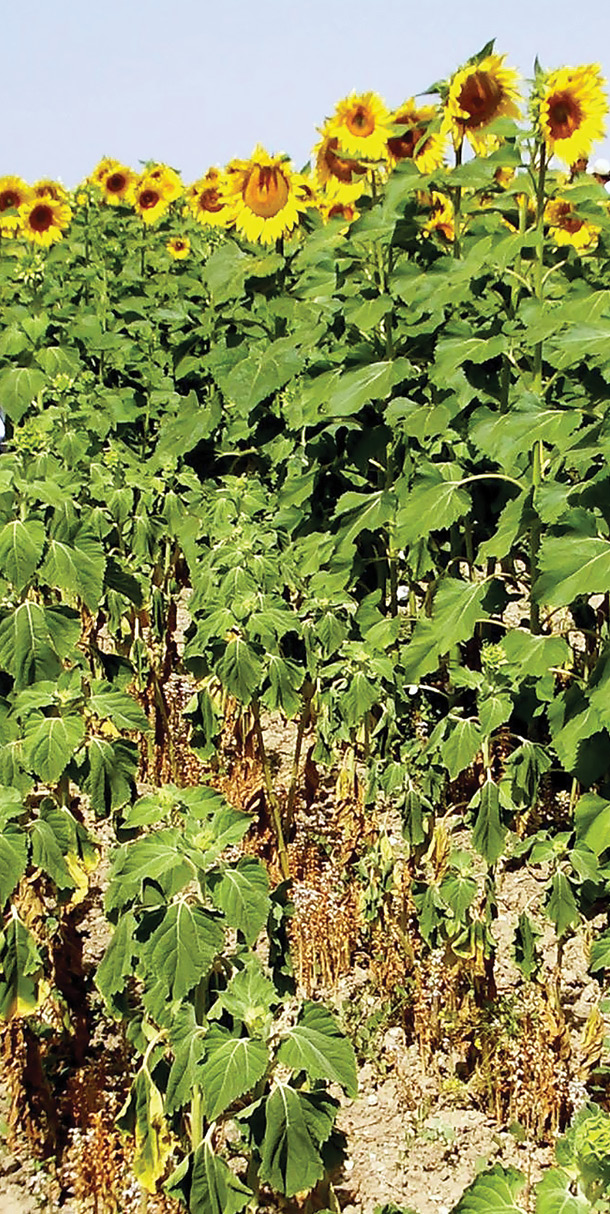
Parasitism by O. cumana can have devastating effects on sunflowers that result in high economic losses to the crop. Parasitism may cause yellowing (and eventual necrosis and death) of lower leaves, plant stunting and wilting (Figure 1). Surviving sunflowers may produce fewer seeds with reduced seed size, test weight and oil yields. Yield losses in severely infected fields in Europe and Russia have reached 50% or more.
How to identify Orobanche cumana
Orobanche cumana is commonly first observed as a plant (or cluster of plants) growing from the roots of a sunflower plant (Figure 2). A single parasitized sunflower plant may have one to several dozen Orobanche plants attached to the root system. Young Orobanche plants (prior to flowering) often appear similar to asparagus.
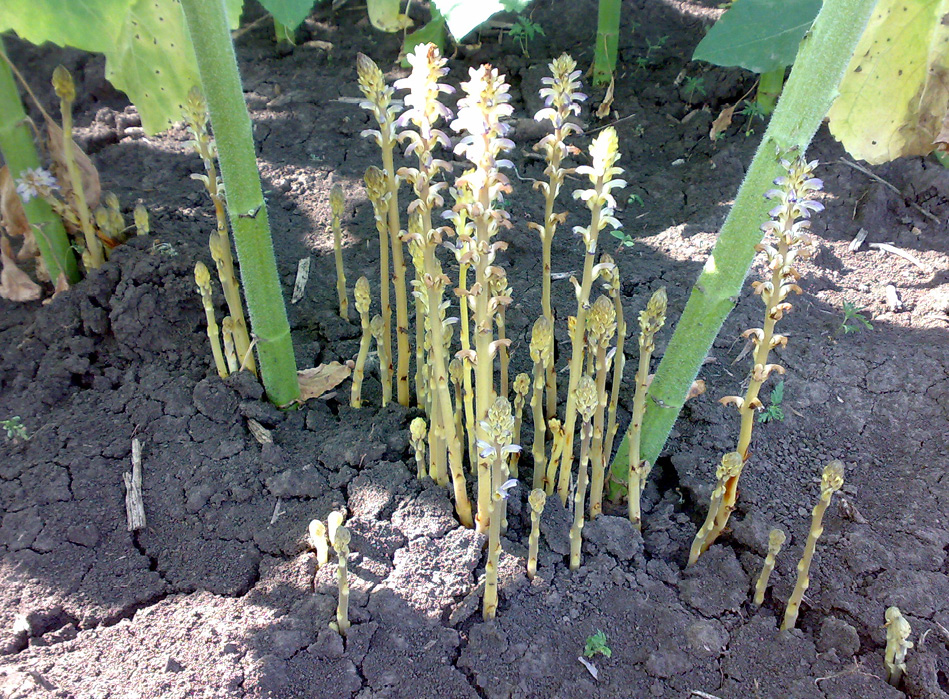
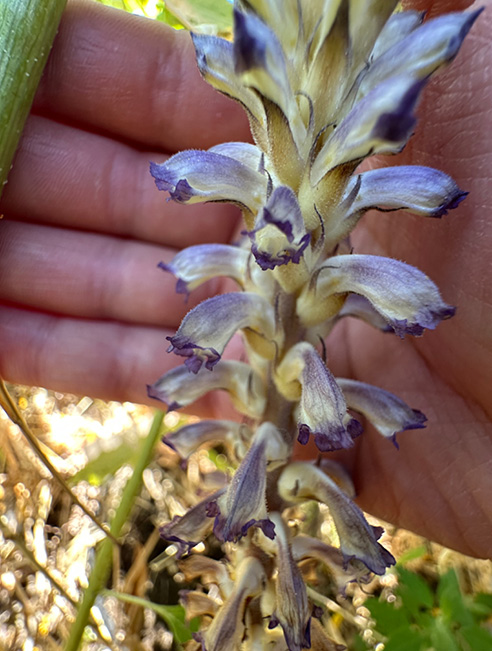
Each Orobanche cumana plant consists of a single, pale yellow-white to light brown stem, reaching 16-25 inches (40-60 cm) in height. The stem has small, white-to-pale-blue flowers, slightly resembling a snapdragon (Figure 3). The corollas of the flowers are purple-tinted and curve downward.
Orobanche plants produce multiple flowers, with up to 100 flowers on large plants. Each flower produces a capsule containing up to 1,000 minute seeds roughly measuring 1/100-1/64 inch x 1/250-1/125 inch (0.25-0.4 mm x 0.1-0.2 mm) that resemble finely ground pepper. Seeds are very lightweight, with 2-3 million seeds weighing just 1 ounce (approx. 28 grams). The dustlike seeds are very difficult to see and are easily dispersed, increasing the risk of inadvertent spread. Seeds remain viable in soil for up to two decades, creating a seedbank that may number in the millions from a single parasitized sunflower.
While Orobanche cumana is the focus of this alert, multiple Orobanche species exist on many different hosts, including those native to North America. Orobanche species may be distinguished by stem size and the mode of branching, as well as flower color, size and shape. However, DNA testing may be needed for precise species confirmation in some cases.\
Life Cycle
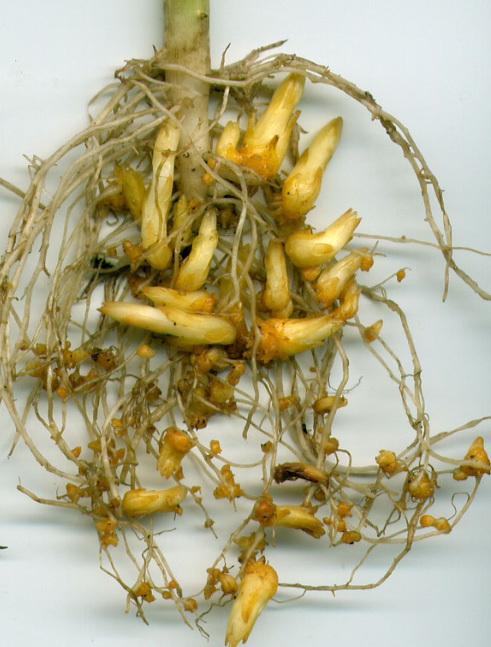
Broomrape plants are annuals, germinating from seeds each year. Orobanche cumana has a narrow host range that includes cultivated, ornamental, volunteer and wild sunflower. Seeds are stimulated to germinate in the presence of chemical root exudates of potential hosts and form germ tubes that penetrate sunflower roots. Inside the sunflower root, specialized structures (haustoria) are formed that extract nutrients from the parasitized sunflower plant. Tubercles, initially appearing as small nodules and later enlarging to shoots, develop on the parasitized root surface (Figure 4). Tubercles develop into Orobanche stems that emerge approximately 35 days after forming. Flowers of Orobanche produce seed quickly, approximately 18-20 days after emergence. Seeds are easily spread by wind, water, livestock and animals. Humans can inadvertently spread seed, particularly in contaminated soil on machinery, vehicles and boots.
For More Information
Block, C., Gulya, T., Harveson, R., Markell, S., Ryley, M., Thompson, S., Antonova, T. 2026. Sunflower broomrape (Orobanche cumana), a serious parasitic weed identified for the first time in the U. S. Proceedings of the 48th National Sunflower Association Research Forum, January 7-8, 2026.
Presentation with photos available at:
https://www.sunflowernsa.com/uploads/179/15_revised_Charles.Block_Orobanche.cumana_2026.Forum.pdf
Presentation summary and Q and A:
https://www.sunflowernsa.com/uploads/research/1468/NSAResearchsummaryonOrobanchecumana-2026.pdf
WSDA - Washington State Dept. of Agriculture. 2025. News Release: WSDA seeks help from sunflower growers after first North American detection of sunflower broomrape confirmed in Yakima.
https://agr.wa.gov/about-wsda/news-and-media-relations/news-releases?article=44833.