Title

Yearly Flock Management Calendar

(AS2309 October 2026)
Summary

The yearly flock management calendar is designed to inform readers on flock management details from prior to breeding through weaning, as well as provide a place for sheep producers to keep detailed and accurate records of their production season. This publication combines a simple lambing record book with the information necessary to make sound management decisions throughout the year.

Other Authors

Authors:

Rachel Gibbs, Ph.D., Extension Specialist - Small Ruminant Systems Management

Lacey Quail, Ph.D., Extension Specialist - Livestock Management

Reviewers:

Chris Schauer, Ph.D., Director - Hettinger REC

Travis Hoffman, Ph.D., former Extension Specialist - Sheep Management

Karl Hoppe, Ph.D., Extension Specialist - Livestock Systems

Availability
Availability:
Available in print from the NDSU Distribution Center.

Contact your county NDSU Extension office to request a printed copy.
NDSU staff can order copies online (login required).

Publication Sections

Prior to breeding (~30-60 days)

The 60 days leading up to the breeding season is a critical window to select and prepare breeding stock for a successful breeding season. During this time, ram and ewe nutritional status, reproductive soundness and overall health should be evaluated to determine necessary management strategies to improve production efficiency.

Nutritional Management

Reproductive efficiency is strongly influenced by nutritional status leading into the breeding season. Six to eight weeks prior to the breeding season, evaluate ram and ewe body condition scores (BCSs) to determine if any dietary adjustments are needed to achieve optimal body condition for the breeding season. Ideally, rams and ewes should enter the breeding season in a positive energy balance with a BCS of around 3 (on a scale of 1 to 5) to support optimal reproductive performance. Replacement ewe lambs should be maintained on a growing ration to ensure they reach pubertal size and condition prior to breeding.

“Flushing,” or short-term increases in energy intake, can further enhance reproductive capacity in both rams and ewes. In ewes, flushing involves increasing energy two to four weeks before the breeding season by moving ewes to high-quality pasture or supplementing with 0.5 to 1 pound of cereal grain per head per day, depending on body condition and forage quality. Ewes in moderate to thin conditions respond best, often showing improved ovulation rates and up to a 20% increase in lambing percentage. Overconditioned ewes typically show little response to flushing. Rams can also benefit from flushing, particularly if they are entering the breeding season in less-than-ideal body condition. Increasing energy intake six to eight weeks prior to breeding helps improve body condition, stamina, semen quality and overall breeding activity. Care should be taken when flushing breeding stock on high-quality legume pastures that may have increased phytoestrogens, a plant estrogen that can affect fertility. Maintaining improved nutrition through early breeding can also support embryo survival and placental development.

Reproductive Soundness and General Management

“Mouthing and bagging” is a foundational management practice that should be performed prior to the breeding season to identify and remove ewes unlikely to meet productivity standards. Broken- or gummy-mouthed ewes often struggle to maintain condition on range conditions and should be culled. Likewise, ewes with hard bags, palpable lumps or structurally unsound/non-functional teats should also be culled, as these problems rarely improve and are likely to limit lamb survivability and lifetime productivity.

Ram reproductive soundness is equally important. A breeding soundness exam (BSE) should also be conducted on a yearly basis for each ram, ideally six to eight weeks prior to ram turnout, regardless of prior performance. This timeline allows adequate opportunity to address health and/or fertility concerns before the breeding season begins. A complete BSE includes a physical evaluation, semen assessment and scrotal circumference measurement to identify fertile, subfertile or unsound rams. Breeding programs that utilize more than one ram per pen/pasture should also consider commingling sire groups one to two weeks before ram turnout to avoid behavioral distractions and injuries that may occur in unfamiliar, multisire breeding groups.

More broadly, the prebreeding period is an ideal time to establish or refine an annual flock/herd health and management plan in consultation with a local veterinarian that aligns with your specific production system and disease risk. Evaluating and planning for the prevention of reproductive diseases and complications ensures necessary supplies, protocols and interventions are in place ahead of the breeding season. Other core components include strategic vaccination programs, regular hoof trimming, shearing, and routine parasite monitoring and targeted deworming as needed.

  • Assess Body Condition Score and adjust nutritional management if needed.
  • Mouth and bag ewes to identify and cull less productive ewes.
  • Perform a Breeding Soundness Exam on ALL rams and comingle sire groups.
  • Flush ewes and rams for increased conception and reproductive capacity.
  • Keep your flock up to date on annual health, management and vaccination programs.

Breeding

Selecting a ram turnout date is a key management decision that determines the timing for the entire production year or season. Using projected lambing dates (based on a ~148-day gestation), work backward to align breeding, lambing and peak lactation with forage availability and environmental conditions. This approach helps ensure nutritional demands are met during the most critical production stages, supporting ewe condition, lamb survival and overall system efficiency.

The duration of sheep breeding seasons directly influences sire demand, lambing distribution and uniformity of lamb crops. In most production systems, it is recommended to confine sheep breeding seasons to two to three estrous cycles (~35 to 51 days). Shorter breeding periods support centralized lambing windows when ram power is adequate. In general, reproductively sound rams can service up to three to five ewes per day; however, this capacity is highly variable and influenced by factors such as sire age, nutritional status, libido, breeding season (fall or spring), pasture or pen size, terrain, distance to water and the proportion of females in estrus at a given time.
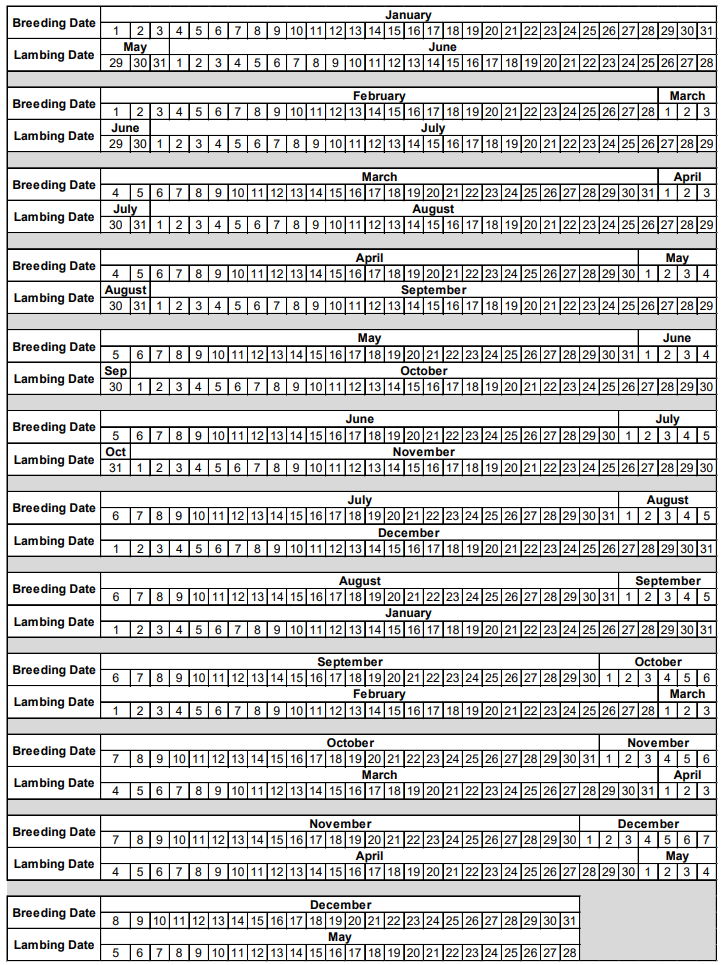
Calendar for keeping track of breeding and lambing dates

Recommended Coverage Ratios for Rams for a 45- to 60-day Breeding Season

SpeciesMaturityBreeding SeasonEwe
Synchronization
Coverage Ratio
(Ram : Ewe)
OvineMature Ram (>1 year)FallNo1:35 - 40
Yes1:20 - 25
SpringNo1:20
Yes1:15 - 20
Ram Lamb (≤1 year)FallNo1:25
Yes1:10 - 15
SpringNo1:15
Yes1:5 - 10

When ram power is available, synchronizing ewe estrus can be a valuable tool to further concentrate breeding activity. The use of vasectomized or “teaser” rams to induce the “ram effect” stimulates and synchronizes estrus activity, increases ovulation rates and increases the proportion of ewes that conceive early in the breeding season. Artificial estrous synchronization (e.g., CIDRs, prostaglandins, gonadotropins, etc.) protocols can also be used to precisely control the timing of estrus and further compress the breeding season as labor and management allow.

During the breeding season, tracking ram performance can provide valuable insight into mating activity, sire effectiveness within breeding groups and potential fertility issues. One of the most practical tools for monitoring breeding activity is the use of marking harnesses. These harnesses are fitted to each sire at turnout, and the crayon color is changed every 14 to 17 days. This system allows producers to identify when ewes are bred based on marking color, estimate lambing distribution, and detect females that return to estrus and are remarked. Repeated markings can signal potential fertility concerns in either the female or the servicing sire, enabling more timely management decisions.

  • Monitor Body Condition Score and adjust nutritional management as necessary.
  • Track and record breeding activity.
  • Schedule pregnancy scanning services.

During Gestation

First 100 days

Early identification of open ewes provides an opportunity for timely, cost-saving culling or rebreeding decisions, while sorting ewes by fetal count enables targeted nutritional management as gestation progresses and nutritional requirements change. Pregnancy status can be confirmed as early as 30 days after conception, utilizing commercially available blood pregnancy test kits or via pregnancy ultrasound, in which fetal count can also be determined around 40 to 65 days postconception.

During the first and second trimesters of gestation, priority is often placed on minimizing stress and maintaining, or modestly improving, ewe body condition to support early conceptus survival and maintenance through late gestation. Stressors such as intensive handling, transport and significant fluctuations in nutrient availability should be minimized, particularly during the breeding season and early gestation, when ewes are most susceptible to embryonic loss and restricted placenta development.

Feeding ewes at slightly above maintenance requirements in combination with a complete mineral supplement is typically sufficient during this period. However, additional attention should be given to ewes in poor condition and pregnant ewe lambs to ensure their nutritional needs are adequately met. It may be helpful to manage these groups separately from the rest of the flock to offer a higher-energy diet or to avoid competition at feeding. In many cases, early- to midgestation nutrient requirements can typically be met with average quality forages or grass-legume hays.

Last 50 days

The last trimester of gestation is marked by rapidly increasing nutrient demands driven by accelerated fetal growth. While key nutrient requirements more than double during this period, feed intake capacity is often reduced as the growing fetus limits rumen fill. Therefore, diet quality and strategic supplementation become critical to meet energy and protein demands.

Approximately four to six weeks before lambing, a gradual increase in dietary protein and energy is recommended and often achieved by including high-quality legume forages or 0.5 to 1 pound of corn per ewe per day (for ewes carrying multiple fetuses or with decreased BCS). Supplementation with high-quality feedstuffs should continue to gradually increase (~every two weeks) until lambing.

Ewes should also be sheared or crutched at least one month prior to lambing, weather permitting. It is also recommended to vaccinate ewes with a Clostridium perfringens type C & D and tetanus booster two to four weeks prior to lambing. This vaccination coincides with colostrum production, enhancing passive transfer of immunity to newborn lambs.

  • Diagnose pregnancy and manage accordingly.
  • Minimize stress and nutritional deficiencies.
  • Supplement late-gestation ewes with high-quality feedstuffs.
  • Shear/crutch ewes and vaccinate for passive immunity.

Lambing

In sheep, gestation can vary from 142 to 152 days. The average gestation length is 148 days. As lambing approaches, begin to watch ewes for udder development and signs of lambing. Lambing begins with subtle signs. Ewes may isolate, not come to feed, lie down and get up often, paw at the ground, or be overall restless. Once active labor and strong contractions begin, lambs typically appear quickly; however, malposition or large lambs may prolong labor and require assistance. Watch ewes in active labor to assist if needed.

Lambing Supplies

There are several items that can be helpful, though not required, during lambing season, depending on your production system. Work with your veterinarian to add items they may prefer you to have on hand.

ItemPurpose
Bottles, nipples, stomach tubeLamb feeding
Ear tags/EIDs/paint brandsIdentification
Elastrator and bandsCastration and tail docking
Eyelid staplesReverse inverted eyelids
Frozen or replacement colostrumNewborn lamb management
Heat lamp/hot boxWarming lamb
IodineDipping lamb navels
Lambing recordProduction management
LubricantDystocia assistance
Milk replacerLamb feeding
OB sleevesDystocia assistances
Retainers/“Spoons”Reverse prolapses
ScissorsTrimming navels
Rectal thermometerLamb/ewe assessment
TowelsDry and warm newborn lambs

Facilities

Ideally, pregnant ewes should be in the environment they will lamb in no later than two weeks prior to the expected lambing date. This allows the ewe to heighten an immune response against any new infectious agents and produce antibodies for colostrum.

Producers may decide to lamb ewes inside or outside. That decision is influenced by many factors, including, but not limited to, the production goal, the mothering ability of ewes, predator density/pressure, time of year, inclement weather and available feed resources. Those who lamb ewes inside should plan to move pregnant ewes to where they can be closely observed and easily moved into lambing pens (jugs). In this environment, each ewe in late gestation requires 16 to 20 square feet.

In lambing barns, it is common to bring a ewe and new lambs to a small pen (lambing jug) for a varying length of time based on factors such as lamb health, litter size and mothering ability. A lambing jug needs to be large enough to avoid trampling lambs, while being small enough to use space efficiently (typically 16 to 20 square feet). Plan to have two lambing jugs for every 10 ewes in the lambing group, as ewes and lambs will rotate through the lambing jugs.

Regardless of your production system, cleanliness of lambing facilities is of the utmost importance to keep ewes and lambs healthy as well as prevent the spread of disease. Ventilation is critical to remove moisture and ammonia from lambing facilities. Additionally, limestone can be especially helpful in keeping pens clean and dry during lambing.

  • Know your production goals and environment to decide what system works best for you. Both indoor and outdoor lambing facilities are successful.
  • Prioritize clean, dry and well-ventilated facilities

Lamb Processing

Newborn lamb processing serves several purposes: identifying new flock members, linking new flock members to existing flock members, taking preventative health measures and noting general management interests.

The timing of lamb processing varies from operation to operation. Those who lamb indoors routinely process lambs within the first 24 to 48 hours of life, while those who lamb on pasture may process lambs in batches every week or not until lambs are weaned. Depending on the production system, processing may include very few or several steps.

ProcedurePurpose
Weigh lambsManagement records
Trim and dip lamb’s navel with iodineDisinfect navel to prevent infection
Strip ewe teatsRemove wax plug to facilitate nursing
Tag, tattoo or notch ear/paint brandIdentification
Dock tailPrevent fly strike
CastrateRemove testicles
  • Lamb processing serves as a management tool for the identification and prevention of health issues.
  • While very dependent on the operation and their production goals, the most common lamb processing procedures include some form of identification and tail docking.

Colostrum

Ewes start to produce colostrum in the last ~seven days of gestation. Colostrum is very nutrient-dense and also contains antibodies that provide immunity to newborn lambs. The sheep placenta does not allow antibodies to cross from the dam to the offspring during gestation, like in other species, so taking in colostrum is critical for lamb survival. The quality of colostrum is dependent on ewe health, especially during late gestation; therefore, it is important that ewes are in adequate body condition and are vaccinated to provide both nutrients and immunity to lambs. Research in this area has shown that colostrum quantity and quality are similar when ewes are in a BCS of 2.5 to 3.5. Work with your veterinarian to establish a vaccination protocol to ensure proper ewe health.

After birth, it is important that lambs consume colostrum as soon as possible, ideally, within four hours of birth. Quick ingestion of colostrum after birth gives lambs energy to maintain body temperature. Additionally, the intestine of the newborn lamb only allows large antibodies to absorb into the bloodstream within the first ~24 hours of life. Not only does absorption become less efficient, but antibody concentration in colostrum also decreases with time.

Lambs should consume 10% of their body weight in colostrum. For example, a 10-pound lamb should consume 1 pound (16 ounces) of colostrum in total. If a ewe does not produce enough colostrum, colostrum from another ewe in the flock or from an outside flock is a great substitute. Freezing colostrum from ewes in the flock that may have a surplus (those with single lambs) can be helpful. Colostrum from dairy cows or goats may also be used if the situation requires. Additionally, commercial colostrum products are available as either replacements or supplements; however, supplements are lower in antibody concentration.

Diseases such as Johne’s and ovine progressive pneumonia (as well as caprine arthritis encephalitis from doe colostrum/milk) can be passed through colostrum and milk in general. Source replacement colostrum from reputable herds/flocks with a known health status.

  • Ensure newborn lambs receive colostrum as soon as possible, as they need colostrum by 24 hours after birth.
  • Thaw colostrum with warm water, never with direct heat or in a microwave. Colostrum is less effective if frozen and thawed multiple times.
  • Source replacement colostrum from within the flock first, if possible, then from an outside flock (with awareness of disease status), then from dairy cows/goats, then commercially.

Tube Feeding

Inevitably, there are times during lambing when a lamb is too weak to nurse or is rejected by the ewe. In these instances, tube feeding a lamb can be very beneficial for survival. When tube feeding, colostrum or milk should be warm, but not hot, and generally speaking, lambs should be fed 2 ounces at a time.

Tubing should be 14 to 18 inches long and flexible rubber, preferably detachable from a 60cc syringe with the plunger discarded. Tube feeding should be by gravity flow only. Because the trachea and esophagus run alongside one another, the main concern with tube feeding is placing the tube correctly so that fluid enters the stomach and not the lungs. Fluid in the lungs can lead to respiratory issues and death. To avoid introducing fluid into the lungs, the tube should be placed before it is attached to the syringe. Additionally, positioning the lamb with the head and neck extended forward can help the tube reach the stomach. If resistance is felt when placing the tube and it will not slide any further, slowly pull the tube out and try again. If cool air is felt coming out of the tube, it is likely the lungs have been reached. If the entire length of the tube is placed, it is likely that the stomach has been reached.

  • Tube feed lambs with 2 ounces of warm, not hot, colostrum or milk at a time.
  • Use a flexible rubber tube with a detachable 60cc syringe.
  • Be careful not to place fluid in the lungs. If the tube is only partially inserted or cool air is coming out of the tube, it is likely that it is misplaced. Slowly pull the tube out and try again.

Grafting Lambs

In instances of multiple lambs that cannot be supported by a single ewe, ewe death or ewes giving birth to dead lambs, grafting lambs onto another ewe is often the best choice. While grafting can be initially time-consuming, significant labor and resources are saved compared to artificially rearing every lamb.

There are several options that may be used to successfully graft lambs, depending on facilities and timing of the graft. Because ewes recognize their lambs by smell, most grafting methods work to mimic the scent of the original lamb on the graft lamb. Regardless of the method(s) used, grafting is most often successful when lambs are vigorous and eager to nurse. While not always feasible, it can be beneficial to find a graft lamb that is of similar size to the lamb it is replacing, or to the other lamb the ewe is raising. Grafting is not always successful, and close observation is important to notice if a ewe has rejected a lamb before the lamb starves.

Slime Graft:
Using this method, fetal fluid or the placenta from the ewe that will receive the graft is rubbed onto the graft lamb just before grafting. Additionally, if a ewe has delivered dead lambs, they can be placed with/on top of the graft lamb when introducing the graft. This method is often used on very young lambs, likely born on the same day that the ewe has delivered.

Lamb Coat Graft:
This method can be used when a ewe delivers dead lambs or has a lamb die after a few days. In either case, the pelt is skinned off the dead lamb and tied onto/around the lamb to be grafted. Keep in mind that if the dead lamb was older, the ewe may be less willing to accept a graft.

Stanchion:
This method is most often used with ewes that have not lambed recently, and it is the only option that can be successful when a ewe repeatedly rejects other grafting options. When using a stanchion, the ewe’s head and neck are restrained so that it is able to lie down, stand, eat and drink without head butting the lambs or turning to prevent them from nursing. Keep in mind that the ewe may still kick at lambs or move frequently, so aggressive lambs are most successful in this situation. Ewes may need to stay in a stanchion for several days before accepting graft lambs.

  • While not always successful, grafting lambs is a tool used to most efficiently use resources and to prevent having to artificially raise lambs.
  • Most grafting methods work to mimic the smell of the original lamb in the graft lamb.
  • The sooner a lamb is grafted after lambing, the more likely the graft will be successful.
  • Vigorous, eager to nurse lambs are often good candidates for grafting.

Artificial Rearing

When grafting is not feasible or efforts fail, the next option is to artificially raise lambs. In other instances, ewes are not always capable of raising all the lambs they deliver (i.e., triplets, quads, etc.), and artificially raising those lambs to weaning still allows an opportunity for income.

In large litters, there are often lambs that are obviously smaller or weaker. These lambs are good candidates to be raised artificially before struggling to compete with larger littermates for nursing. As mentioned previously, it is essential that all lambs receive colostrum as soon as possible after birth. In the case of artificially raised lambs, lambs may nurse their own dam and get colostrum, but it is common for these lambs to be given additional colostrum after they are removed from the ewe. See Colostrum section for recommendations on replacement.

Lambs being raised artificially should ideally have their own area (unique from lambs being left with the ewe and supplemented for a short time) so that they cannot be easily heard or seen by their dam. This is often a designated lambing jug or small pen, depending on the number of lambs. This area should be warm, dry and clean without drafts. Heat lamps are often used in lamb pens; however, they present their own risk, and measures should be taken to prevent fire hazards.

Artificially reared lambs can be fed commercial milk replacer from bottles, a bucket fitted with multiple rubber teats, commercially made milk machines or a combination of these options. The first few days of a lamb’s life may require bottle feeding so lambs can be fed warm milk more frequently until they learn how to nurse from a rubber teat. After the initial transition period, milk is often offered free-choice from a bucket or milk machine and should be fed (and kept) cold to avoid spoilage, digestive issues and overeating. Regardless of the system used, cleanliness is very important to prevent disease in artificially reared lambs. Additionally, offering smaller batches of fresh milk multiple times a day encourages lambs to continue to nurse. As the lambing season progresses, older lambs may need to be phased out to an additional pen to avoid out-competing younger, less aggressive lambs. Thriving lambs of at least 30 days of age may be weaned.

In the first 24 hours of life, it is recommended that lambs are fed 4 ounces of milk replacer (depending on the specific commercial milk replacer) every 4 hours. From day 1 through day 7, the quantity of milk per feeding should increase and frequency of feeding should decrease. Week-old and older lambs may be fed two to three times a day

Due to the expense of commercial milk replacer and the labor involved in artificially rearing lambs, it is often advantageous to consider early weaning. Providing lambs with access to creep feed or commercial pelleted feed prior to weaning encourages less reliance on milk and facilitates the weaning transition. Before artificially reared lambs are weaned, they should be regularly consuming dry feed and water so that weight gain is not interrupted during the transition away from milk replacer. Caution should be taken when providing hay to young lambs to prevent bloat. Early weaning is often considered weaning at four to six weeks of age.

  • Choose obvious outlier lambs (smaller, weaker, etc.) to be artificially reared.
  • Ensure all lambs receive colostrum within the first 24 hours of life.
  • Separate artificially reared lambs into a warm, dry, clean area.
  • After lambs are adapted to rubber teats, offer cold, fresh milk replacer to artificially reared lambs.
  • Consider early weaning artificially reared lambs to minimize expense and labor.

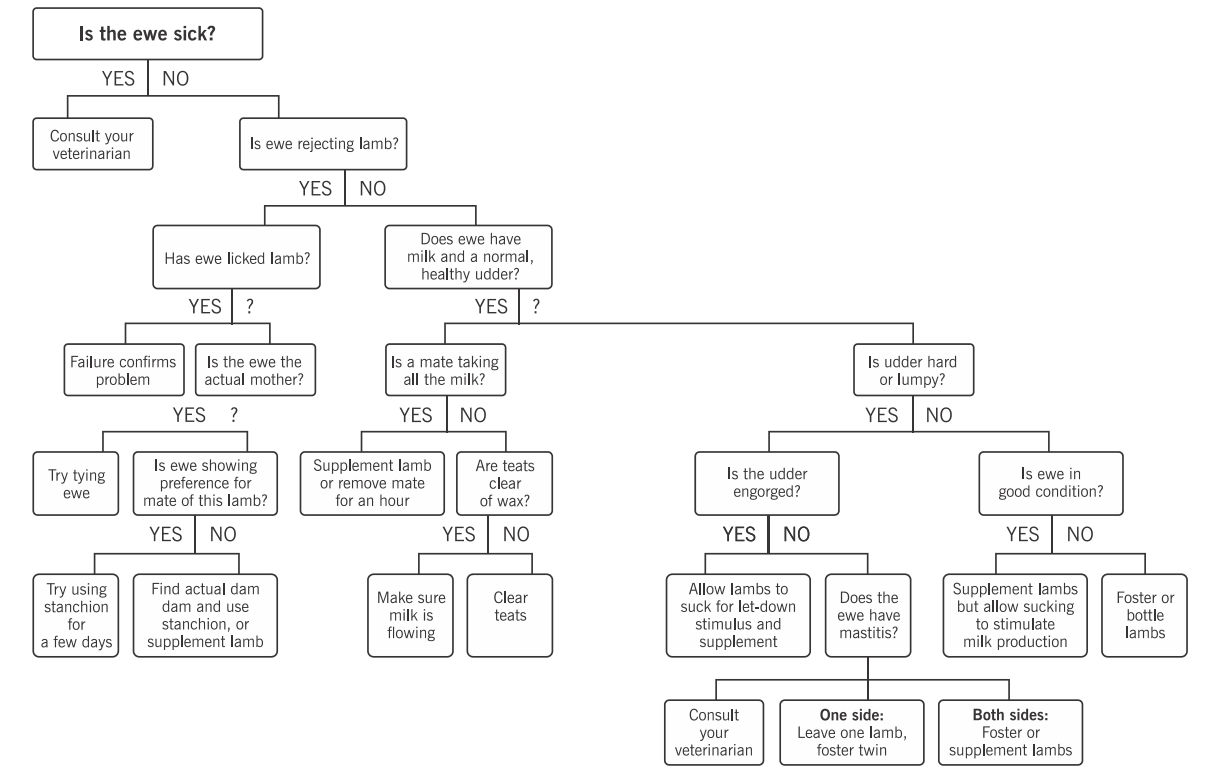
Starving Lamb Chart

Chart for determining how to get lamb to nurse

Weaning

Effective weaning management is essential to maintaining growth performance and minimizing stress on both the ewe and lamb(s). Weaning decisions should be based on a combination of lamb age, health, size and overall readiness, as well as resource availability, ewe condition and target market goals. In most systems, lambs are weaned between eight to 12 weeks of age; however, early weaning may be implemented around six weeks when management, nutrition and marketing strategies justify it. Lambs should generally reach 2.5 to three times their birth weight (approximately 35 to 50 pounds) and be healthy and actively consuming solid feed prior to weaning. Developing a vaccination protocol with your veterinarian is crucial to weaned lamb health.

A successful weaning program begins well before separation. Introducing creep feed no later than four weeks of age, especially if weaning earlier than 90 days of age, allows lambs to adapt to solid feed, with a target intake of roughly 0.5 pound per day of a 14%-16% crude protein, energy-dense ration. This gradual acclimation reduces weaning stress and supports continued growth following separation. Implementing low-stress weaning strategies, such as fenceline weaning or gradual separation, can further reduce behavioral and nutritional disruptions. These approaches allow lambs to maintain visual and auditory contact with ewes while adjusting to independence, improving feed intake and reducing shrink. If possible, removing ewes from the lambs and allowing lambs to stay in a familiar environment will support a low-stress weaning experience.

Ewe management during weaning is equally important. Gradually reducing nutritional plane at least one week prior to weaning by transitioning to lower-quality forage helps decrease milk production and supports a smoother dry-off period, reducing the risk of udder health issues such as mastitis. In high-milk-producing ewes in particular, reducing energy in the ration may need to occur earlier, such as two weeks prior to weaning. Monitoring udder condition and Body Condition Score during this transition allows for timely culling and management decisions.

Following weaning, lambs often experience a temporary reduction in body weight (5%-10% shrink); therefore, maintaining a high-quality diet and consistent intake is critical to support continued growth. Lambs should target a dry matter intake of approximately 2.5%-3% of body weight, with access to clean water and a complete mineral supplement balanced for calcium and phosphorus to prevent urinary calculi. Monitoring performance and adjusting nutrition accordingly will help ensure optimal postweaning growth and efficiency.

  • Provide creep feed and vaccinate lambs.
  • Reduce ewe nutritional plane, dry off ewes and return ewes to maintenance condition.
  • Utilize low-stress weaning strategies.
  • Monitor ewe and lamb health and performance.

Identification

Having an identification (ID) system is crucial to progressing the flock. Whether the focus is on avoiding issues such as inverted eyelids, spider lamb syndrome and prolapses or on improving weaning weight, wool production and conception rate or a combination of each, progress is first made by identifying individual members of the flock.

First, it is necessary to choose an identification system. A numeric or alphanumeric system is very common, while others, such as ear notching, are less common. Numeric and alphanumeric ID systems may be a few to several digits long, with each digit representing informative records about an individual. Records such as birth year, birth type (single, twin, triplet, etc.), birth order, and sire or dam may all be included in an individual ID with a unique coding system. For example, the ID 53012 may reference the birth year (5 = 2025), the birth type (3 = triplet) and birth order (012 = lamb #12 born). Regardless of the system chosen, make it relevant and helpful for the operation and specific flock goals.

  • Use unique identification for each animal to select for or against changes.
  • Include premise ID in the identification system.
  • Use an identification system that is relevant and helpful for the specific flock.

Premise Identification

The National Scrapie Eradication Program is coordinated by USDA APHIS and requires official identification for sheep. A National Premise Identification Number (PIN) is unique to a physical location where sheep are housed and permanently corresponds to that location. This number is used to identify exactly where sheep were raised or originated from in the event of an animal health or food safety emergency. A scrapie premise identification number is federally assigned and may serve as a PIN. To request official premise identification, call 1-866-USDA-TAG (1-866-873-2824).

Paint Branding

Paint branding is typically used as a temporary ID system during management seasons such as drafting, breeding or lambing. Branding irons are dipped in paint to uniquely identify ewes and/or lambs. Prior to lambing, this is typically used to assign each ewe an individual number, which is then added to her lambs during lamb processing, thereby linking a dam and her lambs in group housing. Only use paint that is made for paint branding sheep to ensure further wool processing quality. Wool branding paint is scourable, whereas other paints are not and will decrease the value of the fleece.

  • Temporary
  • Easy to read
  • Possibly labor intensive and may decreases wool value

Ear Notching

This is an obvious, permanent type of ID often used to mark individuals to be culled from the flock. For example, if all ram/wether lambs will be marketed, an ear notch is an obvious identifier to easily sort.

  • Permanent and obvious
  • Often used to identify animals to be culled or marketed

Ear Tags

Likely the most common form of ID, ear tags come in many shapes, sizes, styles and colors, and they are typically either metal or plastic. Electronic Identification, or EID, tags are also available to be paired with EID readers, record management software and/or Bluetooth scales. Ear tags (non-EID tags) can be purchased blank to use with a personal ID system, or with a generic or custom ID printed on the tag. While more permanent than paint branding, ear tags can be removed and/or replaced as needed.

  • Fastened into the ear for a relatively permanent, but removable/replaceable option
  • Many options available to meet the needs of your operation
  • Typically placed in lambs during processing

Tattoos

A tattoo is a permanent form of ID that is often paired with another more visible form of ID, such as ear tags or paint branding. In most cases, the tattoo and ear tag ID will match. Tattoos are typically numerical and placed in the lip or ear. A tattoo applicator is used to place a set of punctures in the shape of the ID in the lip or ear before applying and rubbing ink into the punctures. Take care to apply and rub in the ink aggressively to ensure the tattoo will not fade over time.

  • Permanent, but not readily visible form of ID
  • Typically paired with ear tagging or paint branding
  • May be required for registration in some breed associations

Record Management

Implementing an ID system serves a greater purpose: to uniquely identify individual lambs that exceed or fail to meet expectations and to make informed decisions that will improve production. Records can be managed in several ways, each with its own level of expense, required detail and ability to analyze. Before gathering production records, identify which records are most important to the production goals and the collection timeline.

Production RecordPurpose
Carcass ultrasoundTerminal
Dystocia/lambing easeMaternal Health
EntropionHealth
Ewe ageMaternal
Fecal egg countHealth
FecundityMaternal
Feed efficiencyTerminal
Fleece parameters – weight, micronWool Production
Milk productionMaternal
Mothering abilityMaternal
Out-of-season breedingGeneral Management
Parentage/PedigreeGeneral Management
Pasture groupsGeneral Management
Health
ProlapsesMaternal Health
Ram Breeding Soundness ExamGeneral Management
Ram turn-in dateGeneral Management
Udder scoreMaternal
Ultrasound/litter sizeMaternal
Vaccination datesHealth
Weaning weightTerminal
Average pounds of lamb weanedMaternal
Average daily gainTerminal
Finished weightTerminal
Lifetime lambs producedMaternal

Paper Record

This method involves simply recording each ewe at lambing and/or each lamb at weaning on paper, while potentially re-recording those records into an online spreadsheet or software program for long-term use and analysis. This record may include date and ID along with birth type, lamb sex, birth weight, fecundity, lambing ease, mothering ability, lamb vigor, weaning weight, etc.

ProsCons
  • Little expense, no special equipment
  • May want to transfer to digital
  • Easy to use
  • Easy pedigree linking not available
  • Buildable to basic or more advanced needs
  • Need to know how to summarize/analyze spreadsheet

Record Management Software

This method involves purchasing specific record management software designed for recording, storing and analyzing production records. This can also be paired with a Paper Record, with re-recording into the software platform.

ProsCons
  • Very detailed
  • Expense
  • Automatic summaries/analysis
  • Learning curve
  • Pedigree linking available
  • May not use it to full ability
  • Pairs well with EID tags
  • Field and online platform communicate well together

Production Season Summary

Year–––––––––––––––
Breeding Season (Fall or Spring)–––––––––––––––

Pre-Breeding Summary

Average BCS of Base Ewe Flock (1: thin, to 5: fat)–––––––––––––––
Range of BCS in Base Ewe Flock–––––––––––––––
% Culled = # Ewes Culled / # Ewes in Base Flock * 100–––––––––––––––
% Replaced = # Ewe Additions / # Ewes in Base Flock * 100–––––––––––––––

Breeding Season Summary

Ram Turnout Date–––––––––––––––
# of Ewes Exposed–––––––––––––––
# of Rams Used / Coverage Ratio–––––––––––––––
Ram Removal Date–––––––––––––––
Projected Lambing Window (148-day Gestation)–––––––––––––––
% Pregnancy Rate = # Pregnant Ewes / # Ewes Exposed * 100–––––––––––––––

Lambing Season Summary

Actual Lambing Window–––––––––––––––
# of Lambs Born–––––––––––––––
% Lamb Crop = # Lambs Born / # Pregnant Ewes * 100–––––––––––––––
% Pregnancy Loss =
# Pregnant Ewes Not Lambing / # Pregnant Ewes * 100
–––––––––––––––

Weaning Season Summary

# of Lambs Weaned–––––––––––––––
% Lamb Survival = # Lambs Weaned / # Lambs Born–––––––––––––––
Average Weaning Weight–––––––––––––––
Total Pounds of Lamb Weaned–––––––––––––––

Market Lamb Summary

# of Lambs Sold–––––––––––––––
Average Sale Weight–––––––––––––––
Market Price (per pound)–––––––––––––––
Total Revenue = Total Pounds * Market Price (per pound)–––––––––––––––

Replacement Summary

# Ewe Lambs Kept–––––––––––––––
# Ram Lambs Kept–––––––––––––––
Total Replacements Kept–––––––––––––––

Lambing Records

Birth DateEwe ID/ Paint BrandLamb IDBorn AsRear AsSexBirth WtLambing Ease
NDSU Extension logo