Title

Managing Purchased Bulls

(AS2011, Revised September 2026)
File
Summary

Purchasing a bull is an investment for a cow/calf operation. Proper management of purchased bulls from the day of sale until the following breeding season is critical to productivity and longevity.

Other Authors

Lacey Quail, Extension Livestock Management Specialist, NDSU North Central Research Extension Center

James Rogers, Extension Forage Crops Production Specialist, NDSU North Central Research Extension Center

Jake Galbreath, Extension Veterinarian and Livestock Stewardship Specialist, NDSU Department of Animal Sciences

Lisa Pederson, Extension Beef Quality and Livestock Specialist, NDSU Central Grasslands Research Extension Center

Availability
Availability:
Available in print from the NDSU Distribution Center.

Contact your county NDSU Extension office to request a printed copy.
NDSU staff can order copies online (login required).

Publication Sections

Biosecurity

Consider Biosecurity Measures Carefully

Biosecurity and livestock stewardship remain important as the pressures of efficient production, food safety and quality, and international trade concerns increase. The first step in a biosecurity program is knowing where your seedstock comes from and what they have been exposed to. If purchasing bulls from an unknown source, increased biosecurity measures will be necessary.

The cost-effectiveness of biosecurity measures should be considered carefully and discussed with a veterinarian. The risk of introducing disease and/or pests, the cost once introduced into a herd, the cost of biosecurity measures and the amount of risk producers are willing to live with will determine the biosecurity measures utilized for their operation.

4 Components: Quarantining, Testing, Vaccination, Sanitation

Quarantining incoming cattle is one management practice that decreases the likelihood of certain diseases and/or pests being introduced to the herd. Quarantining means keeping a distance barrier between incoming cattle and the established herd for a period of time.

The quarantine area should be set up so that new arrivals are at least 6 feet apart from other animals and do not share feed or water with the established herd. Ideally, new bulls should be quarantined for 30 days, with two weeks being the minimum.

Examination and testing of purchased cattle help decrease the risk of introducing disease and/or pests into a herd. The two most common tests for sires are for Trichomoniasis and BVDV. Remember that disease testing is not 100% effective, and the sensitivity and specificity of the test should be considered when testing potential herd additions.

Vaccination of the resident herd and purchased animals is another way to manage the risk of mixing cattle. Vaccination is an important and common tool in biosecurity. Typical vaccine protocols include protection against IBR, BRSV, P13, BVDV, Leptospirosisand Campylobacteriosis (vibriosis).

Vaccination alone does not guarantee protection. Even under optimal conditions, not all cattle will respond to vaccination, nor will all that respond to vaccination be protected from infection. Producers should work with their herd veterinarians to develop a comprehensive heard health plan.

Sanitation involves protecting herds year-round from exposure to infectious agents. Sanitation practices may involve requiring all visitors, including veterinarians, sale attendees, nutritionists and other service personnel, to wear clean boots and coveralls. Shared equipment must be thoroughly cleaned and sanitized from one herd to the next and, ideally, from one animal to another as well.

Breeding Season Checklist

Body Condition and Breeding Soundness

  • Bulls should have a body condition score (BCS) of 5.5 to 6.5 prior to breeding
    • BCS on a scale from 1 to 9:
      • Score 5 - moderate
      • Score 6 - high moderate
  • Examine bull 60 days prior to turnout:
    • Soundness – check feet and legs, and vision in both eyes
    • Reproductive soundness
      • Breeding soundness and physical exam should be conducted by a veterinarian
        • Semen testing
        • Scrotal circumference
        • Visual exam of reproductive anatomy
        • Rectal palpation of accessory sex glands
        • Visual examination of feet, legs and eyes

Parasite and Infectious Disease Management

  • Deworming for internal and treatment for external parasites
  • Vaccinations
    • Consult your veterinarian for vaccine recommendations

Records

  • Keep up-to-date records on all bulls to allow for quick evaluation of potential issues that may occur
    • Records to obtain for purchased bulls:
      • Test results: BSE, Trichomoniasis, BVDV, Johnes
      • Vaccination
      • EID, if any
      • Antiparasite and fly control products used
      • Pedigree or registration number
      • Expected progeny differences (EPDs)
      • DNA (if available) including genetic defect carrier status, parentage (if applicable)
      • Feed records
        • Type of diet
        • Nutritional analysis

Step-down Nutrition After the Sale

Most young bulls are developed on high-energy diets to meet genetic growth potential. The gradual transition of a purchased bull from a concentrate to a forage-based diet is critical. Bulls that are turned out on pasture or placed on hay immediately after the sale can have digestive issues and may lose large amounts of weight prior to and during the breeding season. This weight loss may result in body condition score losses of 1 to 3 points and decreases in fertility and stamina.

Having information about the ration that bulls consumed during development is important. If possible, a similar ration should be utilized after the sale, with gradual changes and reduction in energy content. An example step-down ration would be to start with 80% of previous concentrate intake, then decrease by 10% per week for several weeks until the diet is mostly forage. Aim to have a bull transitioned to a forage-based diet two to three weeks before the start of the breeding season.

Because spermatogenesis requires 61 days for completion, start to step down sire rations around 90 days prior to the breeding season. This will reduce potential negative impacts on sperm production due to over- or undernutrition.

Yearling bulls still should be gaining 1.5 to 2 pounds per day after the sale and prior to breeding. This will require a diet containing about 10% to 11% crude protein (CP) and 60% to 70% TDN, (total digestible nutrients, which is a measure of energy).

If the previous ration is not known, a good idea is to start with high-quality forage (grass or grass-legume blend) and 4 to 6 pounds of grain. Avoid feeding pure alfalfa hay to avoid digestive issues. Bulls also should be provided with a vitamin/mineral supplement.

All feeds and forages should be analyzed for nutrient content at a certified laboratory to make the best use of available feeds. Consult with your local Extension agent or nutritionist for assistance in developing a ration.

Avoid over- and underconditioning of herd sires as both impact spermatogenesis. Bulls should have a BCS of 5.5 to 6.5 prior to breeding, based on the BCS system for beef cattle from 1 (emaciated) to 9 (excessively fat). Once on pasture, monitor bulls for weight loss or injury that may impact their ability to breed females.
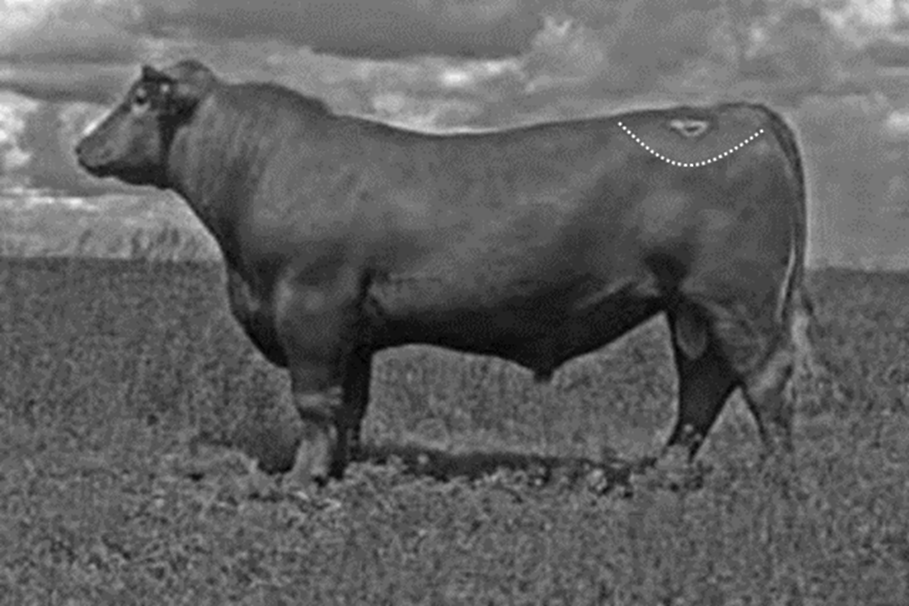
Bull standing to observe body condition score
BCS 5: The 12th and 13th ribs are not visible to the eye unless the animal has been shrunk. The transverse spinous processes can be felt only with firm pressure, and they should feel rounded but not be noticeable to the eye. Spaces between the processes are not visible and are distinguishable only with firm pressure. Areas on each side of the tailhead are starting to fill.
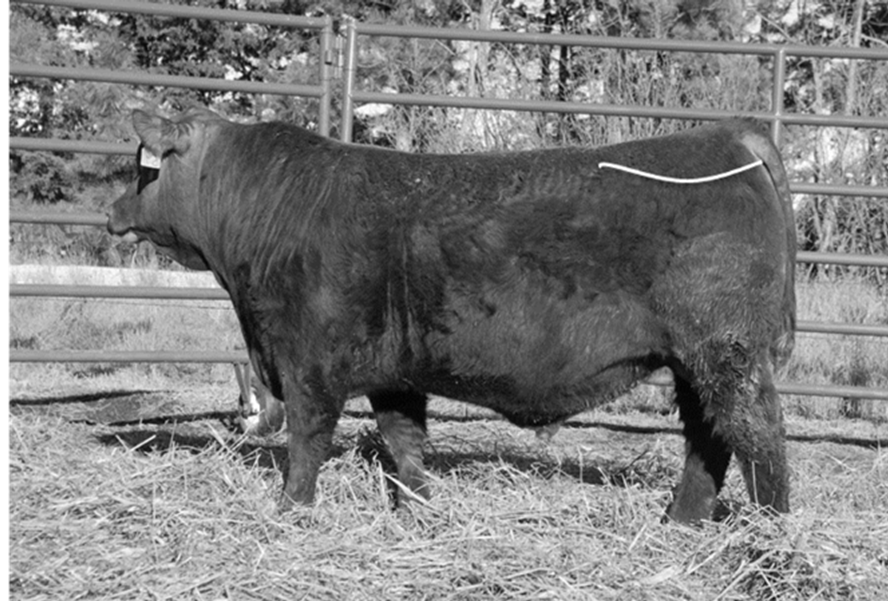
Bull standing to observe body condition score
BCS 6: Ribs are fully covered and are not noticeable to the eye. Hindquarters are plump and full. Springiness is noticeable over the foreribs and on each side of the tailhead. Firm pressure is required to feel the transverse processes. The brisket has some fat.

Body Condition Scoring

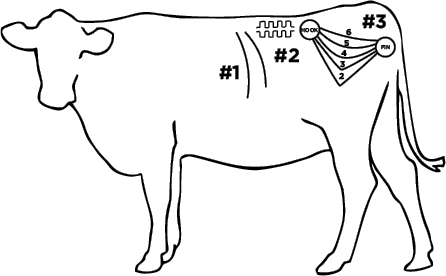
Illustration showing the areas of the bull that one would look at to score the body condition of the particular bull
  1. Look at last two ribs
    • Visible: <5
    • Not visible: ≥ 5
  2. Spine
    • Visible: ≤ 3
  3. Shape between hooks and pins (thurl)
    • Shallow U: BCS 6
    • Strong U: BCS 5
    • V Shape: BCS 4
    • Strong V: BCS 3
    • Very Strong V: BCS 2

U.S. Beef Body Condition Scores: Range from 1-9

BCS 1: Emaciated, BCS 9: Obese

3-Step Body Condition Scoring (BCS) Guide for Range Cattle (B-1294), Scasta, et al, 2016, University of Wyoming Extension http://www.wyoextension.org/publications/html/B1294/

Contributors

NDSU Extension agriculture and natural resources agents:

Rachel Wald, McHenry County
Greg Benz, Dunn County
Craig Askim, Mercer County

NDSU Extension specialists:

Lisa Pederson, livestock specialist, Central Grasslands Research Extension Center
Travis Hoffman, sheep specialist
Gerald Stokka, veterinarian and livestock stewardship specialist
Janna Block, livestock systems specialist, Hettinger Research Extension Center
John Dhuyvetter, livestock systems specialist (retired), North Central Research Extension Center
Karl Hoppe, livestock systems specialist, Carrington Research Extension Center

For related publications on these topics, visit the NDSU website at www.ag.ndsu.edu/extension:

NDSU Extension logo