Phomopsis Stem Canker of Sunflower
(PP2300, July 2026)Phomopsis is one of the most damaging sunflower diseases in North Dakota. We provide the grower-consultant audience with fundamental information (identification and management) and high quality pictures.
Contact your county NDSU Extension office to request a printed copy.
NDSU staff can order copies online (login required).
Phomopsis stem canker is one of the most economically important diseases impacting global sunflower production. In the United States, the disease is most common in the Dakotas and Minnesota, where, in some years, the disease has been found in 50% of fields. In badly affected fields, yields can be reduced by as much as 40% as plants wilt, lodge and/or die prematurely, and sunflower heads remain small, shriveled and/or underdeveloped. The disease can also lower the oil content and quality of the seed, increasing economic losses for sunflower growers.
Symptoms
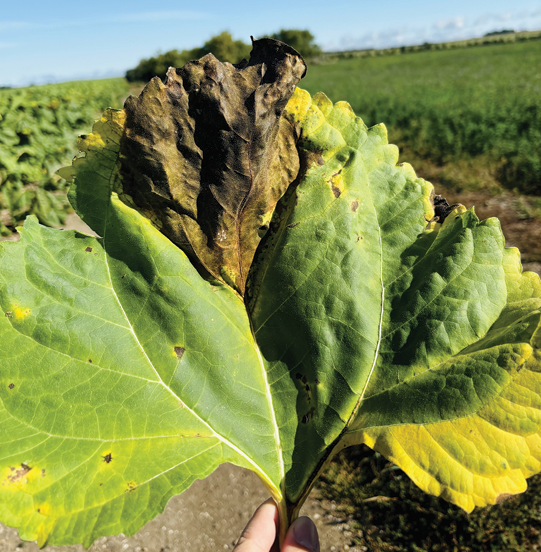
The first visible symptoms of Phomopsis stem canker appear as small, uneven brown spots at the leaf margins. These spots enlarge along the leaf veins, often causing a pie-shaped brown lesion before the leaf wilts and dies (Fig. 1). The pathogen spreads through the leaf and petiole, causing both to eventually darken and wilt before entering the stem at the leaf axil.
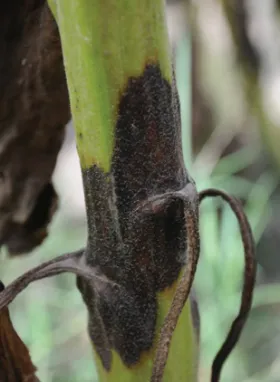
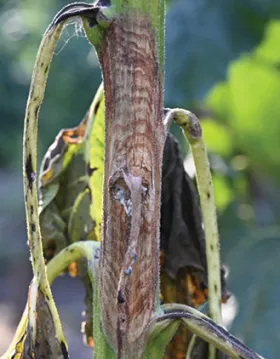
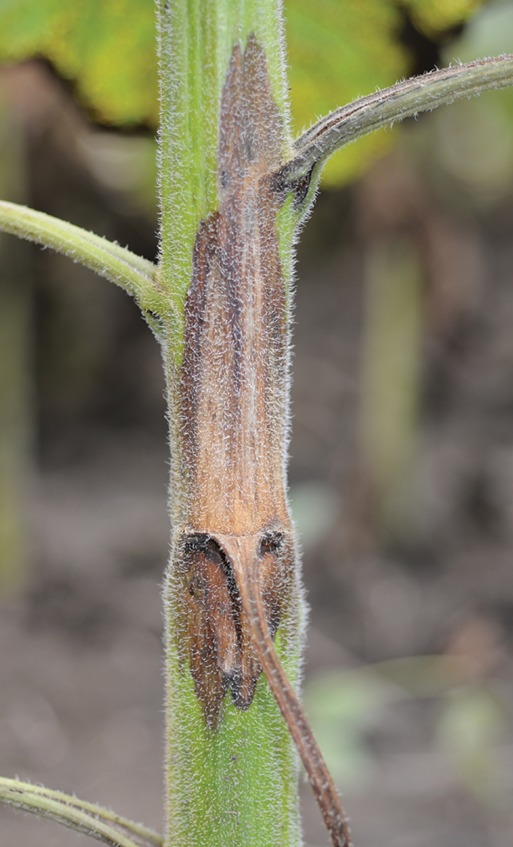
Once in the stem, a large (6 inches or more) brown lesion will develop as it expands up and down the stem (Fig. 2 and 3). In some cases, the lesion may girdle (surround) the stem. Beneath the lesion, the pathogen breaks down stem tissue, causing a hollowing of the stem (Fig. 4). Infections that develop early in the season can result in plant wilting and shriveled heads, while Infections that develop later in season can result in severe lodging, as weakened stems can no longer can support the weight of the developing head (Fig. 5). Wilting and lodging may occur in the same field, and result in high yield loss (Fig. 6).
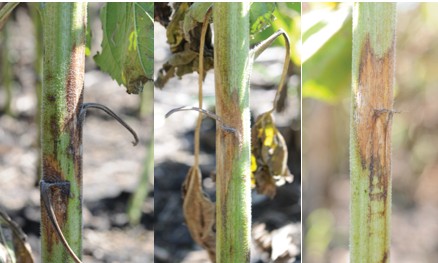
Lesion size, color and stem integrity help distinguish Phomopsis stem canker from other sunflower stem diseases that infect from the leaves. Phoma black stem causes small (1- to 2-inch), black lesions (Fig. 7a) that usually do not hollow out or weaken the stem. Sclerotinia stem rot causes large (over 6 inches), white to tan lesions (Fig. 7b) that eventually shred stem tissue and may produce a white mold and/or black sclerotia inside and/or outside the stem.
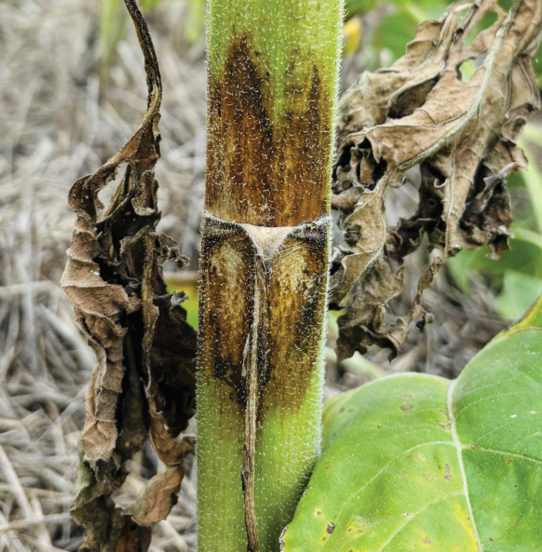
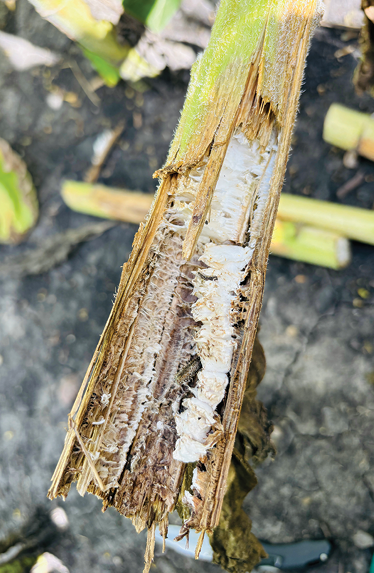
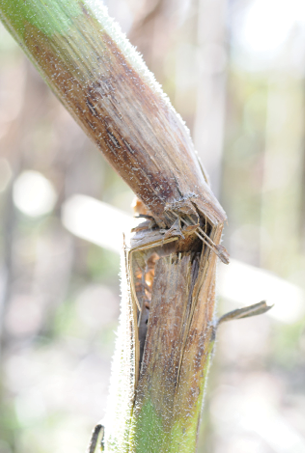
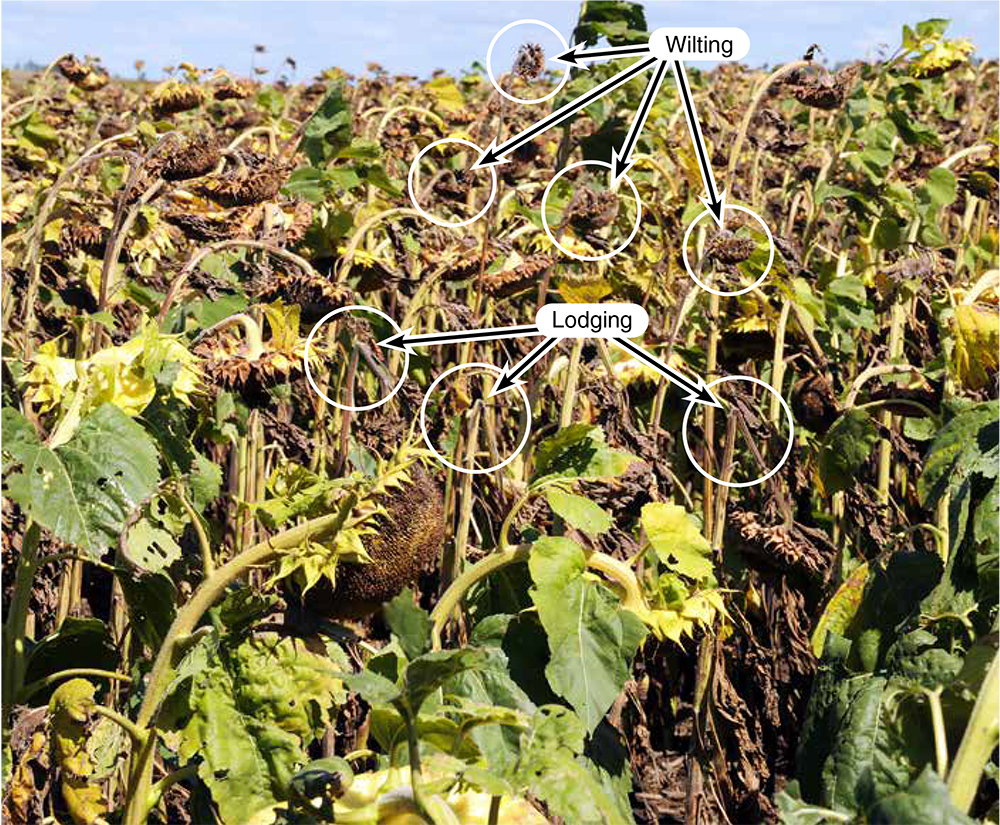
lodging.
NOT Phomopsis stem canker! Other sunflower stem diseases commonly confused with Phomopsis stem canker: