
Starting a Community Orchard in North Dakota
(H1558, Revised September 2026)This publication is a guide to help North Dakotans start community orchards. We discuss the basics of establishing the orchard and selecting cultivars. We describe organizational structures, financial considerations, and highlight the activities of other orchards.
Contact your county NDSU Extension office to request a printed copy.
NDSU staff can order copies online (login required).
Starting Your Orchard
Selecting Your Site
The first step for success in a community orchard is to select the proper place. No spot in North Dakota is perfect. We all know this is a tough place to live for us and our plants. Use the information below to find the best spot for your community orchard and make adjustments as needed.
Fruit trees and shrubs demand full sun (at least eight hours per day) to flourish.
Fruit trees and shrubs need good drainage. Plants that sit in water for extended periods will suffer from root rot.
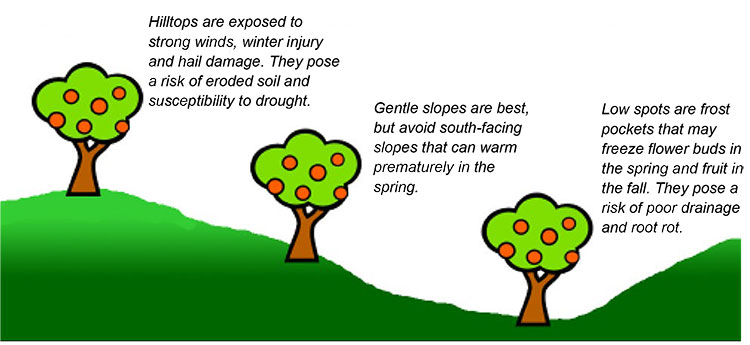
Orchards often are planted on slopes not suited for row crops. Avoiding low spots where frost accumulates is critical. A killing frost (28 degrees) in late spring can kill flower buds, which will eliminate your crop for that year. A killing frost early in fall will damage fruit before it is ripe.
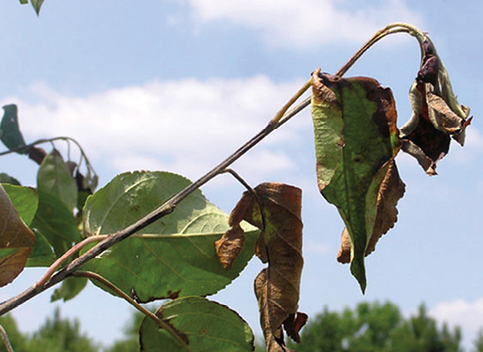
Avoid the top of a hill because the plants will be fully exposed to strong winds. Plants on top of a hill may be subject to more hail damage and fire blight disease.
The exposure of the slope is important, too. A south-facing exposure experiences more temperature fluctuation than a north-facing exposure. Trees in a south-facing orchard are more likely to break their dormancy during a warm spell in late winter; then, when cold weather returns, these buds will be killed. Trees in a south-facing orchard are more likely to suffer sunscalding and cracking of their trunks in winter.
North- and west-facing slopes will be more subject to harsh winds. Winds can injure trees and cause ripening fruits to fall before harvest. A shelterbelt would be especially helpful in this situation.
As stated earlier, trees on a north-facing slope will be slower to bud out in the spring and thereby be less affected by late-spring frosts. This is beneficial, but trees on a north-facing slope may not get enough heat during the growing season to ripen the crop before the first killing frost in the fall. In this case, early ripening cultivars would be advised.
A community orchard should be easily accessible to the community it serves.
A community orchard is a major investment of time and money. A nearby source of water is required for at least the first two years.
Clean, cultivated areas away from brush favored by deer and other wildlife are preferred.
Now that we have found the ideal spot, we have to make sure the site is available and stays available. A common problem of community garden projects is their land is taken away from the project after a couple of years, often after the project has made significant improvements to the site. The long-term availability of the land with an orchard is even more critical because the fruit trees may not bear decent crops for a few years. A long-term agreement must be in place with the landowner (see Sample Contract for Land Use) to ensure the work involved in establishing the community orchard bears fruit (literally) and does not go to waste.
Buying Plants
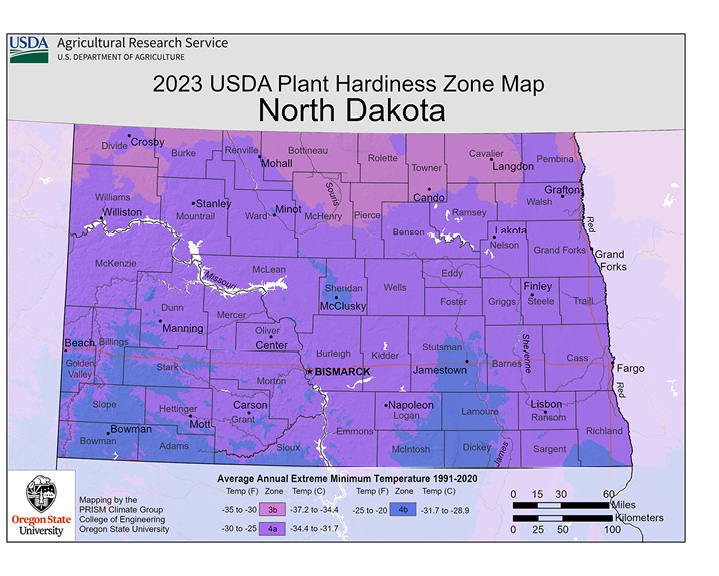
Learn your hardiness zone (see Figure 2) and select good-quality plants from a reputable nursery (see Sources of Plants and Supplies). If possible, purchase trees that were grown at a northern nursery.
Soil conservation districts can provide inexpensive plants. In some cases, these are seedlings of plant species and not cultivars. For example, a seedling of hardy plum may be available, but not a ‘Waneta’ plum, a cultivar that was selected for superior hardiness, productivity, ease of care, resistance to disease, and/or flavor qualities.
If the goal of the community orchard program is to plant some fruit trees and share the fruit with wildlife, soil conservation districts can be an economical source of plants. On the other hand, if you are aiming to have a productive orchard with high-quality fruit, you will be better off in the long run to grow cultivars from commercial fruit nurseries.
Bare-root plants are less expensive than containerized plants but are available only in the spring and must be planted soon upon arrival. If the orchard is not prepared, the stock can be planted in a temporary trench in the garden. Bare-root stock is soaked two to four hours in water before planting.
Bare-root plants are highly recommended for strawberries, raspberries and other small fruits due to their affordability and ease of planting.
Managing Wildlife
Wildlife can destroy an orchard planting quickly. In North Dakota, we are most worried about voles, rabbits, deer and birds.
A good way to minimize problems with voles and rabbits is to reduce brushy areas near the orchard. Keep the lawn mowed regularly.
The trunks of the trees can be protected with a ring of hardware cloth wrapped around them. The cloth should be at least 2 feet tall with a mesh of 1/4 inch. Bury it an inch in the ground. Ideally, we should protect the trees up to at least the first branch.
Birds usually are controlled with nylon netting. Cherries and Juneberries are especially at risk. Place the netting before the fruit begins to change color. Scare devices such as one-eye plastic balls and plastic owls may work for a day or two, but the birds soon will learn these devices are harmless.
Chemical repellents that repel rabbits and deer temporarily are available. These will work when wildlife pressure is light. If wildlife pressure is aggressive, the only solution is fencing.
For deer, an 8-foot-tall fence is recommended. Fencing made with nylon is relatively affordable and will work for several years. Metal fencing is more costly but is a wise investment for an orchard with a long life expectancy. The first few years are most critical to help the orchard get established. Electrical fences are most reliable but usually not appropriate for a public orchard.
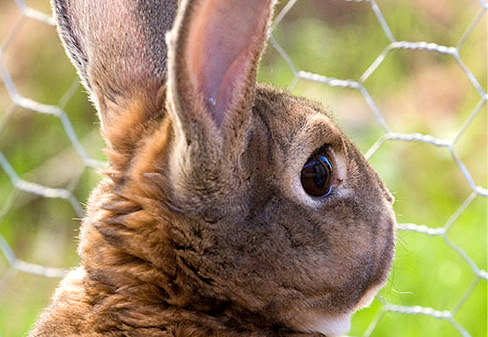
For rabbits, a 4-foot-high fence, buried a few inches in the ground, is recommended. The mesh should be 1/4 inch.
Spraying
This can be a touchy issue in a community orchard. Nobody likes to use pesticides, but fruits are susceptible to insect pests and diseases. Have a policy in place before the planting is established. This policy needs to address whether chemical control is allowed in the orchard and whether this control must be exclusively organic.
In a public orchard, the minimal use of toxic chemicals is strongly encouraged. Whenever pesticides are sprayed, signs should be posted to alert the public.
An integrated approach is needed:
- Keep the plants in good health. Healthy plants are more likely to tolerate pests.
- Prune on a regular basis to open the plants to good air circulation and sunlight. Sterilize pruning shears between trees if diseases such as fire blight or black knot are in the orchard.
- Remove any rotting or fallen fruits in the orchard.
- Remove weeds, which harbor insect pests.
- Avoid overhead watering, which creates a humid environment for diseases.
- Select disease-resistant cultivars, if possible.
- Monitor your plants closely to detect the first signs of problems and then take action quickly.
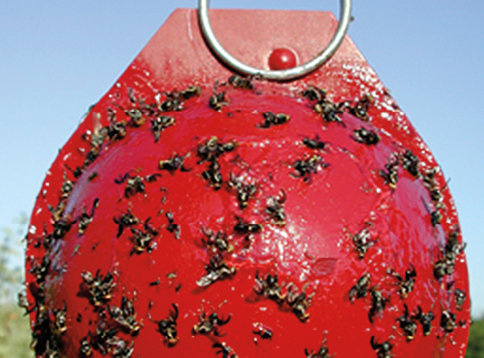
- Use insect traps. Apple maggot traps, for example, can be hung in apple trees to monitor for the presence of the pest. If the pest is not there, you don’t need to spray.
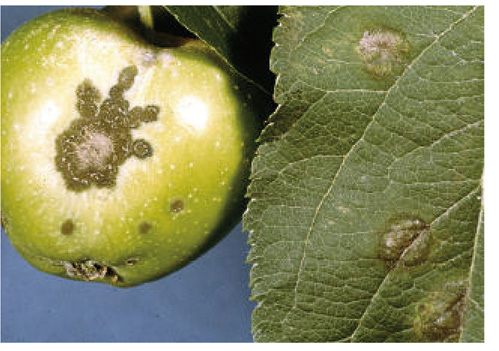
- Monitor the weather. Foliar diseases, such as apple scab, are most likely to occur when the spring season is wet.
Relatively safe products are becoming more commonly available. Copper sprays, including copper sulfate (Bordeaux mix), will control most diseases. Neem (azadirachtin), spinosads and pyrethrins are organic products that control many insect pests and are relatively safe. Products containing Bacillus thuringiensis (Bt) can control some types of insects safely and effectively. Some organic apple growers dust their trees with Kaolin clay to reduce feeding damage from insects.
Organic products are not necessarily safer than synthetic products. For example, malathion, a popular insecticide in fruit production, is less toxic than organic products such as rotenone or nicotine. Contact your local Extension office and/or local fruit growers for advice on controlling pests.
Pruning and Training Young Trees
All fruit trees need to be pruned, and the best time is late winter (March through April). The tree is dormant and the wounds will heal quickly in the spring. Also, the tree is leafless and we can see the branches and their structure easily.
Pruning is needed to keep a tree healthy. This will bring more sunlight and air movement into the canopy, thereby reducing disease problems.
Pruning will keep a tree stronger. Remove the weak branches that cannot support fruit. This will create a structure that can stand up to the winds and blizzards of North Dakota.
Pruning will improve fruit quality. The increased sunlight in the canopy will brighten the fruit. The increased air movement will reduce pest problems, too.
Pruning helps us manage the tree. By keeping the tree low, we can spray (if needed) and harvest the fruit more easily.
On the other hand, unpruned apple trees produce low-quality fruit. Unpruned trees are more susceptible to diseases and storm damage. Unpruned trees are more likely to be attacked by insect pests; no one likes wormy fruit.
The major goal when pruning is to maximize the amount of sunlight and air movement in the canopy.
The most popular structure for fruit trees is the modified central leader. This structure has one major branch in the center and the widest part of the tree at the bottom, with the branches working their way up in a “Christmas tree” shape. To maximize the amount of high-quality fruit, the tree should not be taller than 16 feet.
Pruning a fruit tree is not hard, but you have to take your time, constantly stepping back to make sure you see all of the angles.
Start by taking out the suckers that develop at the base of the trunk.
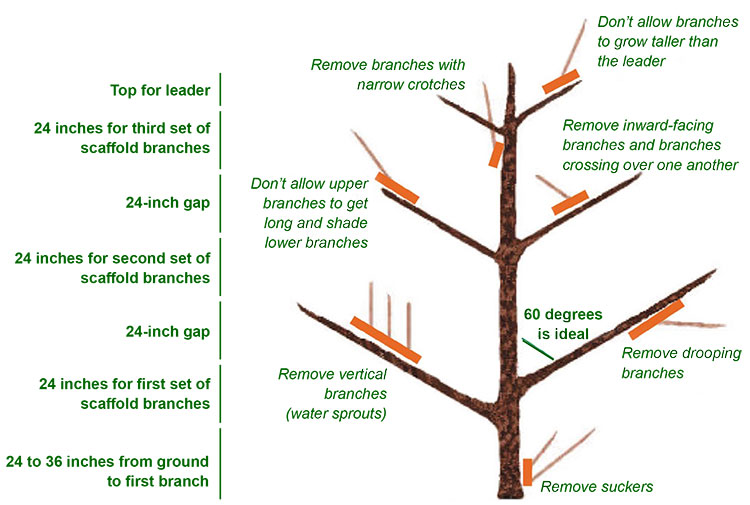
Fruit trees, especially apples and pears, have a tendency to develop vertical branches (we call them water sprouts). Water sprouts clutter the tree and do not produce fruit. Remove all the water sprouts.
That was the easy part. Now we have to think a bit. If the tree is 5 years old or younger, it still has time to develop the structure we like to see in healthy fruit trees. Be patient; this may take several years.
If possible, the first branch should begin about 30 inches from the ground. Ideally this branch will face the west or south to shade the trunk from the scalding rays of the winter sun.
In the next 24 inches, we will develop our first series of major “scaffold” branches. Four branches, each facing a different direction (north, south, east and west), would be ideal. Imagine viewing the tree from above. The branches coming out of the trunk should resemble spokes coming out of the hub of a wagon wheel.
Then develop a gap of about 24 inches between the sets of scaffold branches to maximize sunlight and wind movement.
Next, develop the second set of scaffold branches. As the tree grows, you may allow for another 24-inch gap and then a third and final set of scaffold branches. Allow a foot for the leader and you have a perfect tree.
Of course, nothing in nature is that perfect. These are principles only. Maybe you cannot have a gap between the sets of scaffolds; in many cases, you will have more of a steady progression of branches up the tree (keep adjacent branches going in different directions so they do not shade each other).
Look for branches with sturdy angles. Sixty degrees is best (some growers call these 10 o’clock and 2 o’clock branches). Branches with narrower crotches are less fruitful and subject to splitting.
Vertical branches do not produce fruit. Horizontal branches produce fruit but will droop from the weight of the crop. Also, horizontal branches will not generate the vegetative growth we need.
Remember to maximize air movement and sunlight in the canopy. Remove any inward- or downward-facing branches, which create shade pockets.
Remove the weaker of branches that cross over one another. They can rub against one another and create wounds. Remove any broken branches.
Try not to remove more than 25 percent of the tree’s wood during any single year. If your tree has been neglected for a long time, a lot of wood needs to be removed, and getting it in shape will take a few years.
Most fruit growers use a lopping shears and hand pruning shears when pruning. A bypass shears will make cleaner cuts than anvil shears. A pruning saw sometimes is used after the tree is well established to remove large branches.
Never use wound dressings when pruning fruit trees. The wounds will heal faster if you leave them alone.
After the major branch structure is in place, we can develop the secondary branches.
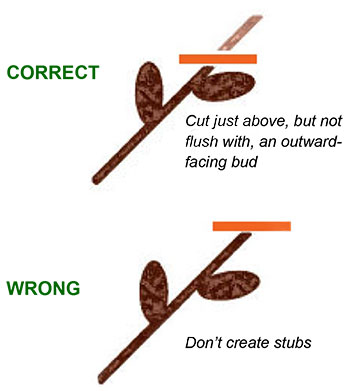
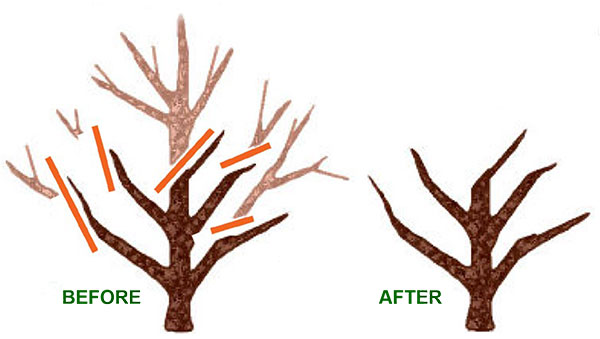
We will make the cuts with our hand pruners, making the cuts just above a bud, allowing for a collar (see Figure 4). This will encourage healing and lead to more outward growth (less cluttering of the canopy). Prune to a bud that faces where you want the branch to grow; usually this is an outward-facing bud.
Don’t leave stubs when pruning. These do not heal well and often lead to disease.
If you are not sure you are done pruning, keep pruning. Open the tree up. Create lots of windows for air and sun. Open up the tree and you will be rewarded with high-quality fruit.
Rejuvenating Old Apple Trees
North Dakota has lots of old apple trees. These trees are tall, rarely pruned and never sprayed. The trees provide some flowers in the spring, shade in the summer and a few decent fruits in the fall. It’s nice, but we can do better.
If you prune the tree, you could have a healthier tree with more blossoms in the spring and fruits of higher quality in the fall.
To get better apples, you need to get more sunlight into the canopy. You also need to bring the tree down to size so you can manage and harvest the fruits more easily.
The ideal “Christmas tree” shape described earlier is going to be more difficult to develop in an already mature tree. After all, the leader may have grown 30 feet tall. In most cases, it’s wise to go for an umbrella shape now, with branches cascading in all directions from the main trunk(s).
The tree has been neglected for years, and getting the tree into decent shape will take years. This first year, focus on reducing the height of the tree. The ultimate goal is to bring the tree down to about 12 feet tall.
The principles of pruning are the same as described earlier. Establish a network of sturdy branches, preferably at 60-degree angles from the trunk. Search for sturdy branches about 3 to 4 inches thick within the old canopy. Look for young, strong branches; these branches have glossy bark while old branches are scaly.
Once you identify a strong, young branch, trim above it to bring the tree down to size (Figure 5). To avoid sunscalding and shocking the tree, try not to remove more than 25 percent of the tree’s wood at any one time. Giving yourself at least two years to reshape the tree is best.
Remove the clutter within the tree. Remove suckers, water sprouts, broken branches, and inward- and downward-facing branches.
This mature tree has an extensive root system and it will keep pumping a lot of nutrients and water to the branches. Expect lots of new shoots to appear this year. Aggressively trim out the vertical shoots the following spring. Also, take advantage of any new 60-degree branches that emerge and use them as future scaffold branches.
After about four years, you will see a big difference in the health of the tree and fruit production. But to be honest, you still have an old tree, and the best days of this tree are long gone.
Unless the tree is a special heirloom type or has historical value, the best long-term solution may be to remove the old tree. In the place of the overgrown tree, you could plant two apple trees (or perhaps add a cherry or plum), which will be properly trained. After six years, you will have superior yields of superior fruit, and the best days of your young, vigorous trees will be ahead of them — not behind them. The trees will be an attractive feature in your landscape, not a curious eyesore.
Some of us feel cutting down a tree in a prairie state such as North Dakota is a sin, but trees are renewable resources. Cutting down one tree and planting two in its place is OK. We can chip up the old tree to use as mulch for the new tree(s). Plus, we will have more fruits to share with our families. It’s a win-win situation.
Tree Fruits
Apple

Apple is the favorite fruit grown in the backyards of North Dakota. Look for cultivars that are hardy, mature early and produce high-quality fruit. The earliest cultivars are generally good for fresh eating but do not store well. Later-ripening varieties store better, but they run the risk of never maturing before the snow flies.
Apple growers in Zone 4 should strongly consider a tree with dwarfing rootstocks, especially if snow cover is present during the winter. Trees with dwarfing rootstocks are easier to manage, bear earlier and are more productive. Staking is generally recommended to prevent dwarf trees from breaking at their graft unions.
Look for the hardiest rootstock available. Among the hardiest are Ottawa 3 and Bud 9, but these are not as commonly available as others. G30 from Cornell University is hardy and resists fire blight.
The introductions from Malling are most common in the marketplace, and M26 is the hardiest of this group. M7 has been widely planted in Midwest orchards for decades; it produces a freestanding tree. These rootstocks will create trees about 12 to 16 feet tall under normal growing conditions.
Dwarfing rootstocks are not hardy in Zone 3. These gardeners should grow “standard” trees often with rootstocks of ‘Dolgo’ or ‘Antonovka’ and then prune aggressively to keep the trees 16 feet or lower in height.
Apples are susceptible to many diseases and insect pests. Prevent diseases by pruning every year to open the tree to more sunlight and better air movement. Pick up fallen apples in fall. Use traps to monitor for insects such as codling moth and apple maggot.
The following are some of the best cultivars for North Dakota. All are hardy in Zone 3 unless noted otherwise:
| CULTIVAR | FEATURES |
|---|---|
| Yellow Transparent | Early ripening yellow apple. Good for cooking. Precocious and productive tree. Resists scab. Heirloom from Russia. |
| Norkent | Orangish fruit with apple-pear taste similar to ‘Golden Delicious’. From Canada. |
| State Fair | ‘Mantet’ x ‘Oriole’. Bright red apple with crisp, juicy white flesh. Fresh eating. From Minnesota. |
| Zestar! | Excellent early apple. Crisper and better storage life than other early apples. Striped red skin. Marginally hardy in Zone 3. From Minnesota. |
| SweeTango | ‘Honeycrisp’ x ‘Zestar!’. Crisp, juicy flesh. Complex, sweet flavor with hints of spicy apple cider. Deep-red skin. Available to gardeners in 2028. |
| Hazen | Large, dark red fruit. ‘Duchess’ × ‘Starking Delicious’ parentage. Relatively short (15 foot) tree. Mild flavor. Short storage life. From North Dakota. |
| Duchess | Popular apple from Russia. Medium to large size; mildly tart taste good for pies and sauce. Shows resistance to scab, rust and fire blight. Ripens in early September. |
| Wealthy | Striped red apple with tart flavor. Precocious bearer. Ripens mid-September. Stores well. Heirloom from Minnesota. |
| Goodland | Medium-large apple; creamy yellow with blush of red. Ripens in late September and stores well. Flesh is crisp, juicy and aromatic. For fresh eating and especially good in pies. From Manitoba. |
| Red Baron | Medium-sized apple. Productive tree bears at a young age and tolerates fire blight. From Minnesota. |
| Prairie Magic | Yellow with red blush. ‘Goodland’ x Mantet’ parentage. Medium-large fruit is sweet and crisp. Vigorous tree. From Manitoba. |
| Wolf River | Very large apple. Yellow with red stripes. Used for cooking. Zone 4 only. |
| Sweet Sixteen | Medium-size, red apple with spicy-sweet, crisp, aromatic taste. Creamy yellow flesh. Good for fresh eating. Takes a long time to bear fruit after planting. |
| Honeycrisp | Most popular apple in Midwest. Sweet and balanced taste; very crisp texture. Exceptional for fresh eating. Large fruits ripen in late September to early October and store very well. Marginally hardy in Zone 3. From Minnesota. |
| Frostbite | Small fruits with very sweet, intense flavor. Juicy flesh is great for making cider and for cooking. Very hardy. From Minnesota. |
| SnowSweet | Bright white flesh that resists browning when sliced. Ideal for snacks. Shows some resistance to scab and fire blight. Zone 4. |
| Haralson | The standard for cooking apples in the Upper Midwest. Pleasantly tart flavor. Some resistance to fire blight. Easy to grow and stores well. From Minnesota. |
| Wodarz | Green, knobby apple is very sweet and stores well. Shows some tolerance to fire blight. |
Apricot

Apricots are loved as much for their delicate blossoms in the spring as their golden fruits in the summer. Apricots bloom very early so keep out of frost pockets and plant in a protected site. A north- or east-facing location will delay spring blooms and reduce the risk of frost injury. These cultivars are naturally dwarf and can be planted 10 to 15 feet apart. The Canadian cultivars are self-fruitful but produce better yields when more than one cultivar is planted. They are hardy to Zone 3. The Minnesota cultivars ‘Moongold’ and ‘Sungold’ should be planted together and are hardy to Zone 4.
| CULTIVAR | FEATURES |
|---|---|
| Moongold | Large, light orange fruits. Sweet, sprightly flavor. Good quality. Blooms in late April and ripens in late July. Use ‘Sungold’ as pollinator. From Minnesota. Zone 4. |
| Debbie’s Gold | Yellowish-orange fruit with firm texture and less sweet flavor. Freestone. For canning and fresh eating. From Alberta. |
| Scout | Gold fruit blushed with red. Flesh is tender, sweet and juicy. Freestone type. Good for desserts, canning and drying. Blooms in early May. From Manitoba. |
| Westcot | Large, freestone fruits. Mild, sweet flavor. From Manitoba. |
| Brookcot | Yellowish-orange with a red blush. Flesh is juicy with good flavor for fresh eating or canning. Semi-freestone type. From Alberta. |
| Sungold | Golden fruits with orange flesh. Freestone. Sweet, mild flavor. Blooms in late April and ripens in August. Use ‘Moongold’ as pollinator. From Minnesota. Zone 4. |
Cherry
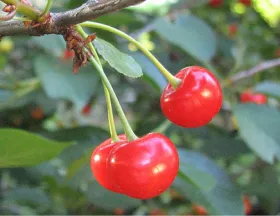
Tart cherries are easy to grow and very hardy. Also called “pie” or “sour” cherries, they are used for pies, sauces, jams and breads. Ripe cherries are delicious to eat right off the tree, too.
Late-spring frosts can kill blossoms, so plant them out of frost pockets. Bird netting may be needed.
Pie cherry cultivars are self-fruitful. They are naturally dwarf and can be planted 10 to 15 feet apart. These tart cherries are hardy to Zone 3 unless noted otherwise. Sweet cherries are not hardy in North Dakota.
| CULTIVAR | FEATURES |
|---|---|
| Evans Bali | Hardiest tart cherry (Zone 2). Bright red cherries. Precocious and extremely productive. Introduced from Alberta. |
| Sweet Cherry Pie | Sweetest tasting sour cherry. Ripens in mid-July. Zone 4. |
| North Star | Deep red fruits with red flesh. Ripens in late July. Resists leaf spot disease. Introduced from Minnesota in 1950. |
| Meteor | Large, bright red fruit with yellow flesh and small pits. Vigorous tree is hardy. Fruit ripens 10 days after ‘North Star’. Resists leaf spot disease. Introduced from Minnesota. |
Cherry Plum

Cherry plums were developed to survive the extreme weather of the northern Great Plains. They are extremely hardy (Zone 3), resist drought, and will bear fruit after one to two years. They grow as small trees 6 to 8 feet tall and can be spaced 4 to 8 feet apart.
They are self-unfruitful. Plant at least two cultivars for fruit set. The fruit is not as big or as delicious as most other plums. Fruits begin to ripen in mid- to late August.
| CULTIVAR | FEATURES |
|---|---|
| Deep Purple | Skin and flesh are dark purple. Sweet flesh and small pits. Prostrate growth habit. |
| Sapalta | Dull purple skin and flesh. Nearly freestone. Very productive. |
| Compass | Dark purple fruit with yellow flesh. Juicy flesh with sour skin. Good for jams and sauces. |
Crabapple

The tart flavor of crabapple makes it popular for canning and in making jellies. This fruit is grown just like apples.
A crabapple will pollinate an apple tree and vice versa. Most crabapples are partially self-fruitful but will produce higher yields in the presence of another apple or crabapple cultivar. These cultivars are hardy to Zone 3.
| CULTIVAR | FEATURES |
|---|---|
| Dolgo | Russian variety popular for its bright white flowers and brilliant red fruits. The 1-inch fruits make good jelly. Tree resists scab and fire blight. Fruit ripens in late August. |
| Centennial | A progeny of ‘Dolgo’ and ‘Wealthy’. Large (1.75 to 2 inches) fruit is one of the best for fresh eating. Red blush over orange skin. Short storage life. |
| Whitney | Large, yellow fruits with red stripes. The juicy, slightly yellow flesh is good for preserving and pickling. |
| Chestnut | Prized for its mildly tart, nut-like flavor. Fruits have a reddish-bronze skin and average more than 2 inches in diameter. The yellowish flesh is good for fresh use and desserts. Ripens in mid to late September. |
Peach

The flavor of a tree-ripened peach, bursting with juices all over your face, is one of the greatest taste experiences you ever could have. Peaches are not reliably hardy in North Dakota. Limit plantings to Zone 4 and in sheltered areas only (and have very low expectations). Keep the tree short and consider shielding it from winter winds by wrapping the branches with cord and burlap. Keep trees out of frost pockets to protect the blossoms in the spring. Space trees 12 to 15 feet apart.
| CULTIVAR | FEATURES |
|---|---|
| Reliance | Its hardiness makes it the most widely grown variety in the north. Bright yellow flesh is fairly soft and juicy. Fair flavor. Matures in early August. Self-fruitful. Grows 18 feet. |
| Contender | Freestone type with bright yellow, very juicy flesh. Outstanding flavor. Ripens in mid- to late August. Self-fruitful. Grows 12 to 15 feet tall. |
Pear
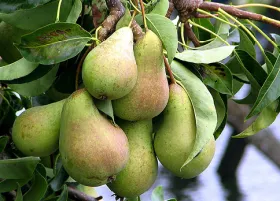
The bright white blooms of pears in the spring are spectacular, but they are sensitive to frost. Pears are especially sensitive to fire blight disease, which is often introduced into a tree after hail (a common problem in North Dakota). Upright growth habit requires diligence in pruning. Cultivars below are hardy in Zone 4 unless noted otherwise. Two cultivars are needed for good yields.
| CULTIVAR | FEATURES |
|---|---|
| Early Gold | A seedling of Ure displaying superior vigor and earliness. Matures in early to mid-August. Hardy in Zone 3. Use ‘Ure’ as pollinator. |
| Golden Spice | Small fruits have a tart, spicy flavor. Good for canning. Vigorous trees are very hardy (Zone 3). Excellent choice as a pollinator. From Minnesota. |
| Ure | Small, greenish-yellow fruit. Very juicy and sweet. Hardy (Zone 3). From Manitoba. |
| Juicy Jewel | ‘Summercrisp’ x Asian ‘Shinseiki’. Flesh is crisp and sweet with a hint of tropical flavors. Ripens early. |
| Summercrisp | Fruits should be eaten green when they have a crisp texture like an Asian pear. Ripe fruit is sweet. Some resistance to fire blight. Pollinate with ‘Parker’. From Minnesota. |
| Parker | Seedling of a Manchurian pear. Large, bronze fruit with good eating quality. Fine grained, tender and juicy flesh. From Minnesota. |
| Luscious | Medium to small, bright yellow fruits. Dessert quality. Tree resists fire blight. Cannot pollinate other cultivars. Pollinate with ‘Parker’. From South Dakota. |
Plum

Most plums are hardy but bloom very early in the spring, making the blossoms at risk of frost injury.
Blue (European or prune) plums are self-fruitful. Only one cultivar is needed and ‘Mount Royal’ is the hardiest. It is hardy only in Zone 4 and may experience dieback.
Other cultivars mentioned here are “red” or hybrid plums. These plums are self-unfruitful so plant at least two of these cultivars for good fruit set. ‘Toka’ is often used as a pollinator. Cultivars described here are hardy in Zone 3 unless otherwise noted.
Plums require little pruning and naturally grow 12 to 15 feet tall. Space them 10 to 15 feet apart.
| CULTIVAR | FEATURES |
|---|---|
| Black Ice | Cross between cherry plum and Japanese dessert plum. Large, dark blue fruits with sweet, reddish-purple flesh. Compact growth habit. Zone 4. |
| Underwood | Red skin with golden yellow flesh. Clingstone type. Ripens early (mid to late August) and harvest continues throughout a long season. Very reliable. |
| Waneta | Very large fruit has yellow skin with a red blush. Clingstone type with sweet and juicy, yellow flesh. Very reliable. |
| LaCrescent | Small, yellow fruit with a red blush. Freestone type is very sweet and aromatic; excellent for eating fresh and for making jam. Does not store well. Vigorous tree. Zone 4. |
| Toka | Small-medium fruit with dark red skin. Flavor is rich and spicy. Clingstone type. Outstanding pollinator. Developed in South Dakota. Matures in late August. |
| Pipestone | Very large, red fruits. Tough skin will peel easily. Clingstone type with sweet, yellow flesh. Matures in late August. |
| Alderman | Large, burgundy-red skin. Clingstone type with sweet, golden flesh. Precocious tree is vigorous with a heavy bloom. Zone 4. |
| Pembina | Large, oval plum with red skin. Flesh is yellow and delicious; especially good for fresh eating. |
| Superior | Dark red fruits are large. Clingstone type with firm yellow flesh of outstanding quality. Tree has a somewhat weeping habit. Matures in early September. Zone 4. |
| Mount Royal | The most popular blue European cultivar. Juicy fruits are good for fresh eating. Clingstone type. Matures in early September. Hardier than other blue plums but less hardy than red plums. Self-fruitful. Will not pollinate red plums. Tree is a natural semidwarf. Zone 4. |
Small Fruits
Aronia

Very productive and easy to grow. Also called black chokeberry, the fruits have a sharp, dry flavor and are usually not eaten raw. Europeans prize this American fruit for its nutrition (high in anthocyanins) and use it to make juice, syrups and preserves. Almost pest free, this fruit is popular among organic growers. Aronia is a beautiful ornamental shrub with white blossoms in the spring, showy dark purple berries in the summer, and brilliant red fall foliage. The multi-stemmed shrub grows 4 to 8 feet tall and is hardy to Zone 3. Space 4 to 6 feet apart. Tolerant to salt.
| CULTIVAR | FEATURES |
|---|---|
| Nero | Compact, 4-foot shrub from Russia. Very productive. |
| Viking | Popular commercial variety in Europe. Vigorous, upright, 6-foot shrub bred in Sweden. Very productive. |
| McKenzie | Seedling strain from Bismarck. Grows 5 to 8 feet. Very productive. |
Blueberry
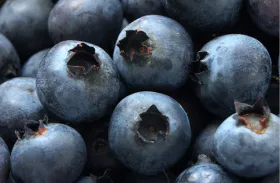
North Dakota is a terrible place to grow blueberries. Our soils are too alkaline, we do not get adequate snow cover, our winters are too cold, and our climate is too dry. Grow haskaps or Juneberries instead.
To grow blueberries, start with a soil test to know your soil pH. If your soil pH is 7.5 or lower, add sulfur to drop the pH down to 4.5 to 5.5. Spread peat moss over the site, building a 4- to 6-inch mound. Mix the peat moss and sulfur into the soil bed. Expect to add sulfur every few years.
If soil pH is 7.5 or higher, reducing the pH will be very difficult. You will need to grow blueberries in raised beds or containers using purchased topsoil and peat moss.
The following blueberries are hardy to Zone 4 and grow low (18 to 30 inches). Plant two cultivars for fruit set.
| CULTIVAR | FEATURES |
|---|---|
| Northcountry | Sky blue berries are half-inch in size with a sweet, mild flavor. From Minnesota. |
| Northblue | Dark blue, large berries with good flavor. Good yields. From Minnesota. |
| Northland | Small, dark blue berries. Wild berry flavor. A hybrid from Northern Michigan. |
Currants

Currants are one of the world’s most nutritious fruits. Black currants, in particular, have a tremendous following in Europe. Currants have a unique tart flavor and are usually used in wines, breads and jellies. Some cultivars serve as a host to white pine blister rust, but white pines are not common on our wind-swept prairies. Cultivars listed below show resistance to the rust. The multi-stemmed shrub grows 4 to 5 feet tall and is hardy to Zone 3. Space 3 to 4 feet apart in rows 6 to 8 feet apart. Among the most shade-tolerant fruits. Self-fruitful.
| CULTIVAR | FEATURES |
|---|---|
| Red Lake | Its bright red berries make a beautiful jelly. Very hardy, vigorous bushes. |
| Rovada | Very large, glistening red fruits borne on long clusters. High yields. Blooms late to avoid spring frosts and ripens in late July. |
| Titania | Very large, black berries with milder flavor. Vigorous plants are hardy and resist mildew. |
| Consort | Its strong black currant flavor is good for jellies, juices and wine. Heavy bearing and precocious. Hardy Canadian cultivar. Susceptible to powdery mildew. |
| Crandall | Also known as clove or golden currant. Clove-scented flowers with mild fruit, good for fresh eating. Ripens in September. |
Dwarf Sour Cherry
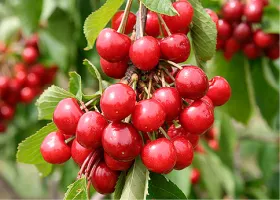
Prairie cherries from Saskatchewan show great promise. They are extremely hardy (Zone 2) and self-fruitful, and they can be trained into trees or shrubs (minimal suckering). Fruits are large (nickel-size), dark maroon and flavorful. Very productive. Shrubs grows 6 to 10 feet tall. Space 5 to 10 feet apart. Protect fruit from birds when ripening. Rabbit damage can occur during the winter. Plant 4 inches deeper than previously grown.
| CULTIVAR | FEATURES |
|---|---|
| Carmine Jewel | Easy to grow. Good quality for cooking, juice and fresh eating. Most tart. Suckering. |
| Juliet | Extremely sweet. More tender fruit. Productive, reliable yields. |
| Romeo | Sweet, large fruit. Balanced sweet/tart flavor. Productive but inconsistent yields. |
| Wowza! | Huge, bright red, oval fruits for fresh eating. Elongated pits may be difficult for cherry pitters. Less productive. |
| Nanking | Fast-growing, short-lived shrub from Asia. Dark red fruits have a sharp flavor suited for pies and jellies. Grows 6 to 10 feet tall and wide. Tolerates drought and alkaline soil. Plant at least two shrubs for pollination. Zone 2. |
Elderberry
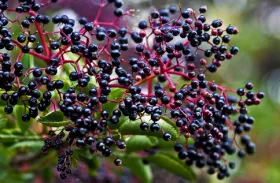
This American native is hardy (Zone 4) and easy to grow. The creamy white flowers can be used in cordials. The dark purple fruits are processed into wines and jellies.
Cultivars have larger and sweeter fruits than wild elderberries but may not ripen in northern or central North Dakota. Plants from local soil conservation districts may be better suited to your local climate.
Elderberry prefers a rich, moist soil and grows
6 to 10 feet tall. Space 7 to 8 feet apart in rows 10 to 12 feet apart. Two cultivars are required for good yields. Canes are unproductive after three years; remove in the winter. Late ripening.
| CULTIVAR | FEATURES |
|---|---|
| Adams #1, #2 | Large fruits. Earliest to ripen (mid-August). |
| Nova | Large, sweet fruits. Plants grow 6 feet tall and are productive. |
| York | Largest fruits. The jet black fruits are juicy and sweet. |
Gooseberry
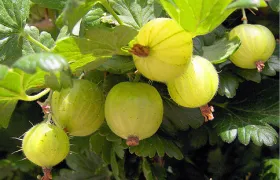
Native to the north, gooseberries are hardy and fairly productive. The thorniness of the bushes and their susceptibility to powdery mildew and other foliar diseases are concerns. This multi-stemmed shrub grows 3 feet tall. Space 4 feet apart in rows 6 to 8 feet apart. Hardy to Zone 3. Self-fruitful. Remove old canes to maintain vigor and productivity.
| CULTIVAR | FEATURES |
|---|---|
| Poorman | Large green berries turn pink when mature. Productive, less thorny plants. |
| Pixwell | Productive variety from North Dakota. Pale green fruits become pink when mature. Mild flavor. Stems have short spines, but hanging fruits are easy to pick. |
| Captivator | Good yields of sweet, red fruit. Semi-thornless stems. Berries hang longer for easy picking. Resists mildew. |
| Hinnomaki Red | Beautiful, dark red fruits are delicious. Outer skin is tangy and flesh is sweet. Upright plants resist mildew. Very impressive and productive introduction from Finland. |
Grape

Grape growing in our state has been limited due to our frigid winters and short growing season. Select cultivars that ripen early and are hardy enough to survive winter without protection. Expect fruit to be tart most years. Cultivars are self-fruitful. Space 8 feet apart in rows 10 to 12 feet apart. Pruning and trellising required for optimal production. Hardy in Zone 4 unless noted otherwise. State growers’ associations in North Dakota and Minnesota have helpful advice.
| CULTIVAR | FEATURES |
|---|---|
| Brianna | Early, white wine grape with tropical fruit flavors. Zone 3. From Wisconsin. |
| Somerset | The hardiest seedless grape. Delicious, rose-colored fruits. From Wisconsin. |
| King of the North | Vigorous, productive vines. Sweet, blue ‘Concord’-type grapes for juices, jams and wines. From Wisconsin. |
| Marquette | Disease-resistant vines produce a red wine with cherry, berry and spice flavors. |
| Frontenac | Small, blue-black grapes make a full-bodied red wine. From Minnesota. |
| Frontenac Gris | Peach-colored fruits have apricot, peach and tropical fruit fragrances. |
| LaCrescent | Yellow-pink, wine grape with apricot and honey aromas. From Minnesota. |
Hazelnut
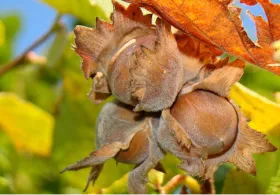
Several organizations are developing superior cultivars and production strategies. Hybrid hazelnuts combine the hardiness and disease resistance of our native hazelnuts with the large size and superior flavor of European types.
Hybrid hazelnuts are hardy to at least Zone 4 and show tolerance to marginal soils and drought. The multistemmed shrubs grow up to 12 feet high and wide, and they are spaced about 4 feet apart in rows. Their growth habit is similar to lilacs. At least two shrubs are needed for production.
Hybrid hazelnuts have shown no major insect or disease problems, but steps may be needed to exclude squirrels and crows. Shrubs start producing in four years and reach their peak after eight years. Yields of 1–2 pounds per bush can be expected. Plants and production tips are available from Riverbend Hazelnuts, Upper Midwest Hazelnut Development Initiative and Hybrid Hazelnut Consortium.
| CULTIVAR | FEATURES |
|---|---|
| Seedlings | Cultivars are not widely available. Seedlings will show some genetic variation. |
Honeyberry
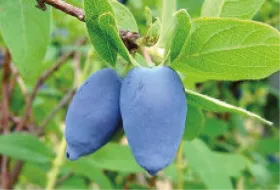
Honeyberries can be called the blueberries of the northern Great Plains. New Canadian cultivars (called haskaps) are larger, sweeter and fleshier than blueberries or other honeyberries. This nonsuckering shrub grows 4 to 6 feet tall and is hardy to Zone 2. Widely adaptable to soils in North Dakota. Space 4 feet apart in rows 8 to 10 feet apart. Two different cultivars are required for fruit production.
| CULTIVAR | FEATURES |
|---|---|
| Berry Blue | Tall, vigorous plant. Produces good crops of tasty berries. Excellent pollinator. From Russia. |
| Indigo Gem | Canadian haskap preferred for fresh eating. Tasty berries. |
| Tundra | Fruit is firm and does not bleed when harvested. Fruit may drop under windy conditions. From Canada. |
| Aurora | Good fruit. Often used to pollinize the Canadian cultivars listed. |
| Borealis | Very large, good tasting fruit. Popular for home gardens. From Canada. |
| Boreal Blizzard | Very large, elongated, soft fruits with excellent flavor. Good yields. |
Juneberry

Native to North Dakota, Juneberries are hardy and tolerate slightly alkaline soil. The delicious fruits are prized by gardeners and birds alike; use netting to protect the ripening fruits. Blossoms are sensitive to late frosts in the spring; avoid frost pockets and south-facing slopes. Shrubs grow 4 to 18 feet tall and may spread 12 feet across. Plant more than one cultivar for better fruit set. Flower thrips, root aphids and fungal diseases are concerns.
| CULTIVAR | FEATURES |
|---|---|
| Martin | A selection of ‘Thiessen’ with larger fruit size and more uniform ripening. Grows 12 feet. |
| Thiessen | Large fruit with mild, pleasant flavor. Grows 12 to 14 feet. |
| Honeywood | Slightly longer ripening period. A more flavorful berry. Compact, productive, 6-foot bushes. |
| Smoky | A standard cultivar in Canada, but its performance has been disappointing in North Dakota. Good yields. Well-branched plants grow 6 feet or taller. From Alberta. |
| Northline | Large fruits of superior quality. Productive plants grow 12 feet. |
Raspberry
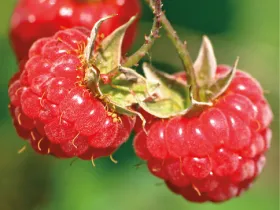
Raspberry is a popular fruit that is easy to grow in North Dakota. Plant both summer- and fall-bearing types to extend your harvest.
Fall-bearing types bear fruit on their first-year canes. Select early-ripening cultivars only. You can mow the canes in April for a strong fall crop or allow the canes to develop and bear fruit during the summer. Summer-bearing types bear fruit on second-year canes, which are pruned out after harvest.
Raspberries are established to grow in hedgerows or hills. If hedgerows, set canes 2 feet apart in rows spaced 6 to 8 feet apart. Prune every winter to thin canes to stand 3 to 4 inches apart. If hills, set hills 4 to 6 feet apart in each direction. Prune in the winter to allow six to eight canes per hill.
Purple raspberry canes are pinched when 30 inches tall to encourage lateral branches and these lateral branches are trimmed back to 18 inches long in the winter.
Trellising will make plantings easier to manage, especially the more vigorous purple types. The following cultivars are hardy to Zone 3 unless noted otherwise.
| CULTIVAR | FEATURES |
|---|---|
| Prelude | Earliest raspberry. Good-quality fruits. Also bears a few berries in fall. Zone 4 only. |
| Boyne | Productive and very winter hardy. Medium-sweet berries good for freezing and desserts. Ripens in mid-July. From Manitoba. |
| Killarney | Large, bright red fruit. Excellent flavor and aroma. Good yields. Sturdy canes. |
| Latham | The standard red raspberry. Very reliable producer of bright red fruits. Good quality. Very hardy. |
| Nova | Good yields of firm, bright red fruits. Canes are vigorous, upright and nearly thornless. Heat tolerant. From Nova Scotia. |
| Encore | Late-season berry. Large, cohesive fruits with good flavor. Sturdy, upright canes are almost thornless. Zone 4 only. |
| Royalty | Thorny canes produce excellent yields of large, purple berries in late summer. Excellent for freezing and jams. Use trellis. Zone 4 only. From New York. |
| Polana | Earliest fall-bearing type. Canes are very hardy and produce impressive yields of glossy red berries. Ripens in August. From Poland. |
| Autumn Britten | Improved fall-bearing type. Good yields of firm, large berries. Bright red. Good flavor. Canes are vigorous with few spines. Ripens in early September. Zone 4 only. |
| Caroline | Fall-bearing type with vigorous, productive canes. Large, firm raspberries with rich flavor. Zone 4 only. |
| Anne | Large, flavorful yellow raspberry. Large, pale yellow berries ripen late in fall. Very sweet. Zone 4 only. |
Rhubarb

Although not a fruit, rhubarb is used like fruit in pies, sauces, jams and breads. It is a perennial crop more suited to a community orchard rather than a community vegetable garden, which is usually tilled every year. Rhubarb is very easy to grow and thrives in the cool temperatures of North Dakota. Prepare a sunny spot with a rich, well-drained soil. Space crowns 3 feet apart. Harvest stalks in the spring. These selections are especially hardy, at least to Zone 3.
| CULTIVAR | FEATURES |
|---|---|
| Canada Red | Productive and sweeter than most. Smallish stalks with long, thick petioles. Dark red with light red interior. |
| Crimson Red | Plump, tender stalks. Balanced sweet/tart profile; excellent flavor. |
| Valentine | Thick, fleshy stalks that hold their rich red color when cooked. |
Seaberry

Bright orange clusters of berries adorn thorny branches with silvery foliage. Used in floral arrangements. The fruits are extremely nutritious and have an intense, citrus flavor. Most often is sweetened and diluted for use in juices. Very hardy (Zone 3) and tolerates salt, alkaline soil, sandy soil and drought. The shrub grows 6 to 10 feet tall. Space plants 6 to 9 feet apart. Fruit-bearing female plants need a male pollinator (one male for up to eight female) and is pollinated by wind. This plant requires minimal pruning. Plant carefully as seaberry may be invasive.
| CULTIVAR | FEATURES |
|---|---|
| Frugana | Upright shrubs produce large yields of flavorful fruits early in the season. |
| Sirola | Abundant crops of reddish-orange, large fruits. Sweeter than other varieties. A hybrid with parents from Germany and Siberia. |
| Orange Delight | Reddish-orange fruits are very nutritious and have tropical fruit flavors. From Russia. |
| Titan | Russian cultivar produces large (blueberry-size) fruits, making them easier for hand harvesting. Bright orange, less tart fruit. Reliable and productive. |
| Leikora | Standard German variety valued for its intense tart flavor and ornamental beauty. Ripens in late September. |
| Orange Energy | Incredible yields turn the entire shrub bright orange in September. A newer variety from Germany. |
Strawberry
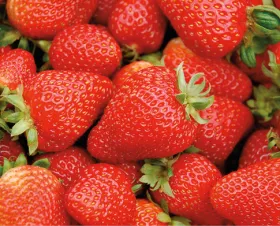
June-bearing types are the easiest to grow. Choose an array of cultivars to spread your harvest from mid-June into mid-July. Space plants about 24 inches apart in rows spaced 36 to 42 inches apart. Remove the flowers the first year to help plants focus on establishment instead of using their energy to produce a few berries. The following year and for a few years thereafter, you will have buckets of berries with minimal work.
Ever-bearing types send out a small summer crop and then one or two more flushes of fruits later. Day-neutral types produce a few berries all summer long. Neither of these types produces many runners, so space them closer, about 12 inches apart. Remove blossoms for the first six to eight weeks. These are less vigorous plants, and new plantings are established every two years. No matter the strawberry type, mulch with a blanket of straw after the ground freezes. Cultivars listed below are hardy to Zone 3 unless noted otherwise.
| CULTIVAR | FEATURES |
|---|---|
| AC Wendy | Very early. Large, bright red, delicious fruits. Risk of frost injury to blossoms. |
| Earliglow | Small, firm fruits with exceptional quality. Vigorous plants. Zone 4 only. |
| Annapolis | Large, attractive berries. Fair taste. Productive. |
| Cavendish | Dark red, firm, very large berries. Excellent taste. Extended harvest season. Good disease resistance. |
| Honeyoye | Very hardy and productive. Easy to grow and very popular. Attractive fruit is good for fresh eating and excellent for freezing. Tolerates leaf diseases. |
| Jewel | Very large berries of excellent quality. Less hardy. Zone 4 only. |
| Cabot | Huge berries late in the season. Firm and flavorful. Zone 4 only. |
| Sparkle | Fruit is smaller but has excellent quality for fresh use and freezing. Very hardy. |
| Ogallala | Early ever-bearer. Rich flavor. Resists diseases and tolerates drought. |
| Ozark Beauty | Popular ever-bearer. Vigorous plants. Good berries for fresh use and freezing. |
| Mara Des Bois | Day-neutral type for containers. Berries are small but have exceptional gourmet flavor and fragrance. Zone 4 only. |
| Albion | Day-neutral type with very large, flavorful, firm berries. Productive, disease-resistant plants. Zone 4 only. |
| Seascape | Productive day-neutral type; especially good for containers. Large, firm berries have good flavor. Zone 4 only. |
Featured North Dakota Orchards
Aneta Community Orchard
The Aneta Community Orchard is a good example of a community rallying around a great idea and finding the local resources and talent needed to turn an idea on paper into a thriving orchard.
The orchard began with a $7,000 grant from the North Dakota Department of Agriculture in 2012. The orchard’s organizers realized the community had many resources to make the orchard a reality. An NDSU Master Gardener assisted in fruit cultivar selection and planting. Local farmers had equipment capable of breaking up ground that had been grass for many years. Farmers and local business owners with equipment, tools and skills in a variety of areas eagerly donated their time, directly involving the community in the orchard.
Key projects were completed early to ensure the sustainability of the orchard for years to come. Soil samples were taken to support optimum tree growth. Water lines were installed to make watering easier. Gravel was added to create a road to make it more accessible for workers, growers and the public. Most of the work was donated or completed at cost.
The 1.3-acre orchard is held in partnership with the Aneta City Council and Aneta Specialty Crop Group. The orchard is divided into two parts. A 0.3-acre sampling orchard offers more than 20 varieties of fruits identified and available to eat as a visitor walks the path. If visitors like what they eat in the sampling orchard, they can go to the larger orchard and find that variety and pick more. The large 1-acre orchard consists of a dozen apple trees, two apricot trees, two pear trees and two plum trees. Also as part of the orchard are 24 40-foot rows of small fruits and nuts. Most of the small fruits and nuts were planted by the local soil conservation district and have landscape fabric laid down. The entire orchard is surrounded by a large wildlife fence.
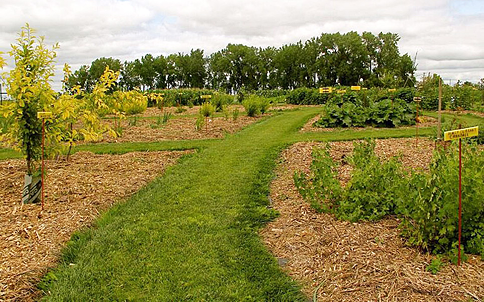
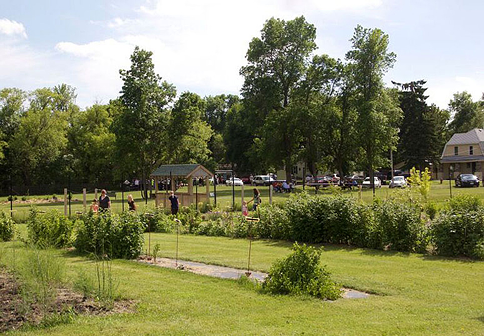
The community has embraced the project, and donations for the upkeep come from a variety of local sources. The local newspaper regularly writes stories about the orchard, which has allowed the community to follow its progress and hear of any needs the orchard may have. A Facebook page for the orchard was created to enhance communication. Community members have left money to the orchard as a memorial.
There were five keys to success for this project:
- Strong vision
- Prioritizing tasks
- Efficient use of local resources
- Communication with public
- Having a long-term plan.
Grafton Orchard
Located in Lizakowski Park in Grafton, the Grafton Orchard is a 1.1-acre educational and community-centered project that blends agriculture, environmental stewardship and youth leadership.
The orchard features a diverse range of fruit-bearing plants including honeyberries, Juneberries, grapes, raspberries, apples, apricots, pears, plums and cherries. Plants were carefully selected through student-led research focused on identifying fruits best suited for the region’s climate and growing conditions.
The orchard was made possible through funding from the North Dakota Department of Agriculture and the Erlendson Foundation. These financial resources laid the foundation for the physical development of the orchard, while strong community partnerships with Grafton Parks and Recreation and Grafton Floral have provided essential support in site access, maintenance and plant health.
A unique feature of the Grafton Orchard is its student-driven development. Agriculture students have played a central role from the very beginning. They researched viable plants, used digital design software to create orchard layouts and presented their plans to their peers. Afterward, students collaborated to merge their designs into a final, functional layout. Their hands-on involvement instilled a sense of ownership and pride, making the orchard more than a planting space — it became a learning laboratory and a legacy project.
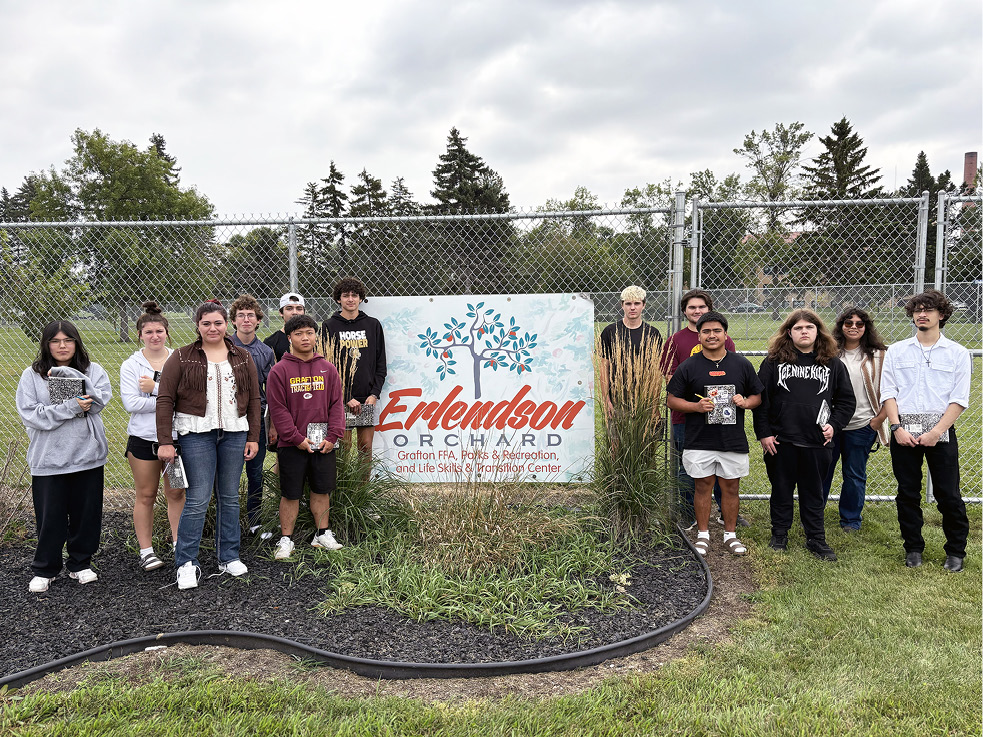
Plans for the use of harvested fruit, community outreach and expanded learning are focused on keeping the orchard relevant and purposeful.
There were five keys to success for this project:
- Investment from youth
- Research-based planning
- Ongoing maintenance planning
- Patience and long-term commitment
- Goals focused on the future.
Pembina County Community Orchard
The Pembina County Community Orchard was established by the Pembina County Historical Society in 2016 using funds from the North Dakota Specialty Crop Block Grant Program. The Society works with the Pembina County Historical Museum to preserve the history of the region as well as enriching its present.
Within the elk-proof gates of the orchard is planted approximately 40 apple and plum trees, Nanking cherries, American hazelnuts, cold-hardy grapes, chokecherries, rhubarb and numerous types of berries.
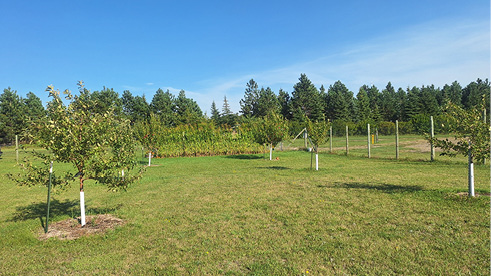
The Pembina County Community Orchard provide a space for hands-on learning that integrates many facets of human health and thriving. The educational programs promote self-sufficiency, enriching health, preserving history, integrating the community and enjoying the arts.
The orchard serves as a testing ground to determine which fruit varieties can survive the extreme cold and wind of the region. The orchard provides a public space where classes are held to demonstrate gardening and forestry techniques.
Access to fresh, nutritional food is a concern in the region. The orchard provides a place for free, fresh produce for county residents. Excess produce is donated to local food pantries.
The growing season is short-lived in the north. This orchard provides classes on canning, drying and proper handling of produce for freezing.
The vision of the orchard continues to expand. In partnership with the North Dakota Council on the Arts, the orchard is developing curriculum units that can be used in a community orchard or garden. These lessons are aligned with Department of Public Instruction standards so they can be used as resources in classrooms, with the elderly or with homeschool families. History, science, art, language arts and social/emotional health are integrated in these lessons.
A colonial-style apple cider press was built and installed in the orchard using funds from the North Dakota Historical Society and Strengthen ND. The North Dakota Council on the Arts funded the artistic modification and placement of several boulders in the orchard. This included a low, flat stone with bowls carved into it that can be used to grind chokecherries into traditional Native American pemmican. All of these new additions to the orchard bring more opportunities for community gathering and celebrations.
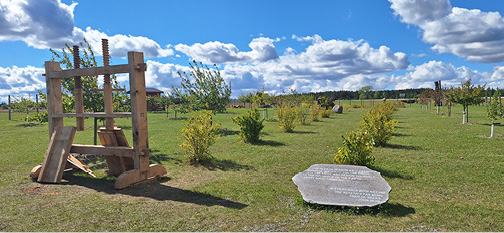
There were five keys to success for this project:
- Preserving local history
- Hands-on educational opportunities
- Food security in rural areas
- Healthy lifestyle
- Community integration
Prairie Dawn Community Orchard
Making the best out of a bad situation, the city of Sheyenne converted the grounds of the closed school into a community orchard using grant funds from the North Dakota Department of Agriculture (NDDA). Over the years as the orchard has grown, the once-barren land has again become a gathering space for the community.
The project first received funding from the NDDA in 2012 and again in 2015. The orchard has grown to more than 90 trees since its start in 2011. The orchard consists of several varieties of apples, apricot, cherry, pear and plum trees. The orchard measures 210-by-120 feet. A large perimeter fence was installed to help keep wild animals out and allow the trees to get established without disturbance. Water lines and spigots were installed at various spots inside the orchard to make watering easier. Benches were added to the orchard to create a park-like atmosphere.
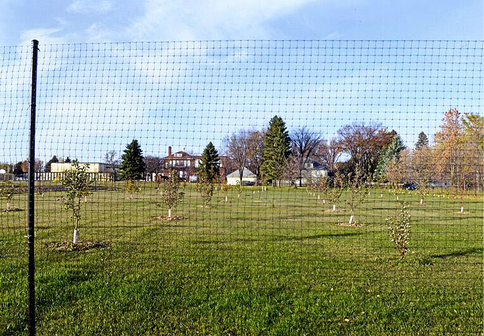
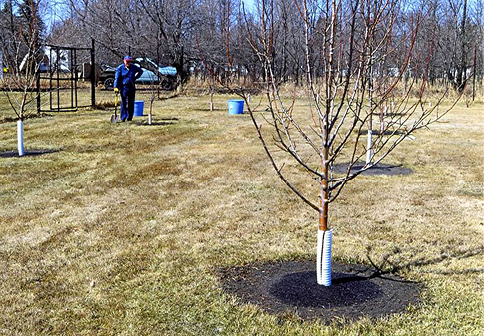
One of the keys to success for the orchard was the committee clearly defining its goals and objectives. The city of Sheyenne, like many small North Dakota towns, was changing. The school closed in 2007, and the grocery store followed in 2008. The first objective was to repurpose the school grounds. The second objective was to provide the community with a local source of fresh produce now that the grocery store was gone. Adjacent to the orchard, more unused public land was repurposed for the creation of a community garden. Unlike some communities, the Sheyenne garden is one large garden, and everyone shares both the work and produce that is harvested. This was a separate project, and orchard grant funds were not used in the creation of the garden. A long-range goal is to utilize the orchard to provide fruit for the New Rockford-Sheyenne School.
The Sheyenne community orchard is a great example of a well-executed project. A strong group of community organizers developed a plan based on sound goals and objectives, and followed through with their vision. The community supported the project by funding items not covered by the grant, and they volunteered their time. The community understands the need to constantly maintain the orchard with tasks like mulching, mowing and pruning to ensure the trees continue to do well. The city is looking forward and is prepared to continually invest in the orchard and find ways to make it even better for future generations.
There were five keys to success for this project:
- Strong leadership
- Long-term commitment
- Community involvement and support
- Clearly defined goals and objectives
- Looking forward not back.
Velva FFA Community Orchard
The Velva FFA Community Orchard began through a $20,000 grant from the North Dakota Department of Agriculture. The plantings started in the summer of 2020 during the height of the COVID-19 pandemic.
Students in the Velva FFA Chapter initiated the project due to their desire to become more involved in the community. The orchard is utilized as an educational resource for Velva agriculture education students and FFA members.
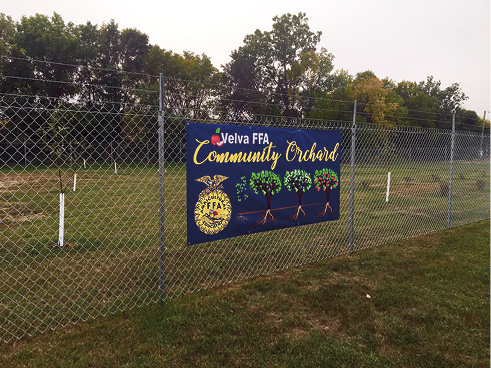
A 25-year free land lease was given by the City of Velva for the orchard. A 200-by-100-foot area was dedicated for the orchard. Dakota Fence installed a 6-foot-high fence around the perimeter of the orchard to protect from pests. Lowe’s Garden Center designed the layout for the orchard, and the plants were purchased from this business. Plantings include six varieties of apple, four varieties of grape, three varieties of plum and two varieties each of honeyberry and cherry.
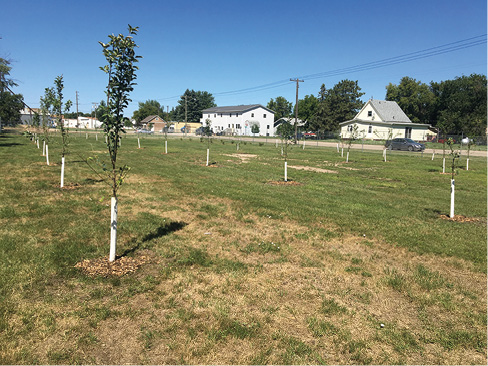
After plant installation, steps were taken to increase the sustainability of the community project. A shed was donated by a farmer for storing orchard supplies. A water tank was donated by another farmer to store water for the orchard. Local firefighters have donated their time to make sure the water tank stays full for irrigating the orchard throughout the summer.
The orchard was initially irrigated using hoses and buckets carried by FFA members. In the summer of 2021, a dripline irrigation system was installed. The irrigation system is powered by a small pump donated by a community member. The irrigation system has streamlined the watering process, making it much more efficient for the plants to get the water they need.
The orchard is mowed and maintained by the Velva FFA. Evenings are dedicated to orchard weeding and upkeep as needed.
Grapes and apples have been the most successfully grown produce from the orchard. Grapes have been used by community members to make jellies and jams, and apples have been harvested for fresh eating.
As produce from the orchard continues to increase, a goal of the FFA chapter is to host community picking nights where members of the Velva community can harvest produce to take home. Donations to the local food pantry and school lunch program are also aspirations for the project. As the orchard matures, the Velva FFA plans to place signs along the trees and shrubs for identification.
There were five keys to success for this project:
- Community member involvement
- Velva FFA Chapter member commitment
- Desire to give back to the community
- Educational opportunities
- Continuous growth and improvement.
Hunger Free North Dakota Garden Project
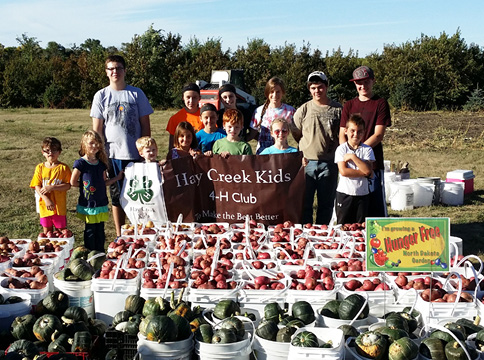
It may take several years for an orchard to reach full production. What is your plan once it does? One great way to give back to your community is to consider donating some of the extra produce grown to a charitable feeding organization in your area through the Hunger Free North Dakota Garden Project administered by the North Dakota Department of Agriculture.
Many people do not realize that food pantries will accept fresh fruits and vegetables. More and more, pantries are seeing an increased demand for perishable foods by their clients. These pantries are answering the call by installing refrigerators to properly store any perishable food items they may receive.
If you are considering donating fresh fruits and vegetables to a local food pantry, call ahead to make sure your donation does not go to waste. Three good questions to ask are:
- When will someone be available to accept the donation? In some cities, food pantries may only be open certain days or hours of the week. Leaving perishable food “on the dock” to be picked up later can jeopardize the quality and is a food safety concern.
- How much can you use at one time? Donating perishable food may require you to stagger harvesting and making more trips to the food bank, but this will ensure less food spoils and gets wasted.
- Are there certain types of produce that are in demand? This is extremely helpful in the beginning of the season if you are planting extra produce intended for future donation. As a grower, you can anticipate and plant what is needed most.
Helping your neighbor in need is something good you can do for yourself and your community. Calling ahead helps to ensure quality food gets from the orchard, field or garden to those who need it the most, in the most efficient and safe way possible.
To learn more about the Hunger Free North Dakota Garden Project, and to find participating organizations in your area, visit www.ndda.nd.gov and search Hunger Free North Dakota Garden Project.
Sources and Credits
This resource is made possible through collaboration of NDSU Extension, NDSU North Dakota Agricultural Experiment Station and North Dakota Department of Agriculture.
The authors are grateful to Chuck Fleming and Jenna Nieters of North Dakota Department of Agriculture, and Kathy Wiederholt and Harlene Hatterman-Valenti of North Dakota State University Extension for their assistance in preparing this publication.
We thank Jamie Good of North Dakota Department of Agriculture, Lillian Stegman of Pembina County Historical Society, Callanhan Lemar of North Valley Career and Technology Center, and Christine Fannik of Velva Future Farmers of America for submitting reports on orchards featured in this publication.
This publication was developed by North Dakota State University with funding from the USDA Specialty Crop Block Grant Program, administered by the North Dakota Department of Agriculture (Project No. 25SCBPND1330).
Sources
American Community Gardening Association. 2016.
Ten steps to starting a community garden.
https://communitygarden.org/resources/10-steps-to-starting-a-community-garden/.
Common Ground. 2011. Apple Day: Community orchards. www.commonground.org.uk/apple-day/.
Hoover, E., E.S. Tepe, A. Klodd, M. Schuh, and D. Foulk. 2024. Growing apples in the home garden. University of Minnesota Extension. Twin Cities, MN.
Lange, S.J., L.V. Moore, D.M. Harris, C.L. Merlo, S.L. Lee, Z. Demissie, and D.A. Galuska. 2021. Percentage of Adolescents Meeting Federal Fruit and Vegetable Intake Recommendations — Youth Risk Behavior Surveillance System, United States, 2017. MMWR Morb Mortal Wkly Rep 2021; 70:69–74.
Lee, S.H., L.V. Moore, S. Park, D.M. Harris, and H.M. Blanck. 2022. Adults meeting fruit and vegetable intake recommendations — United States, 2019. MMWR Morb. Mortal Wkly Rep 2022; 71:1–9.
Roper, T.R. and G.G. Frank. 2004. Planning and establishing commercial apple orchards in Wisconsin. University of Wisconsin-Extension. Madison, WI.
Roper, T.R., D.L. Mahr, and P.S. McManus. 2010. Growing apples in Wisconsin. University of Wisconsin-Extension. Madison, WI.
Smith, B.R., D.L. Mahr, P.S. McManus, and T.R. Roper. 2010. Growing raspberries in Wisconsin. University of Wisconsin-Extension. Madison, WI.
Smith, B.R. and T.R. Roper. 2010. Home fruit cultivars for northern Wisconsin. University of Wisconsin-Extension. Madison, WI.
U.S. Department of Agriculture. 2024. 2022 Census of Agriculture Report. North Dakota State and County Data. Washington D.C.
Photo Credits
The following are adapted from photos made available under Creative Commons licenses specified by the photographers, all allowing for adaptation, modification or building upon. Prefixes of photo URLs are “www.flickr.com/photos” unless noted otherwise:
COVER photos: left side, top, middle and bottom photos – Kathy Wiederholt, CREC; remaining photos – iStock.com; TABLE OF CONTENTS: Sergiu Bacioiu, .../sergiu_bacioiu/4381745986/; PAGE 2: London Permaculture,./naturewise/4552716168/; 7: David~O, .../8106459@N07/5153638100/; 8: blogs.cornell.edu/jentsch/scouting-reports/; Clemson University - USDA Cooperative Extension Slide Series, Bugwood.org; Tom Kalb, North Dakota State University; 12: Janet Hudson, .../veganfeast/4086510397/; 14: Max Westby,.../max_westby/4341437/; Kit, .../kitpfish/562254367/; 15: donkeycart, .../donkeycart/3144738323/; Larry Krause, .../clickclique/905971805/; 16: Bryan Costin, .../bcostin/28109150/; Boris Mann, .../boris/407687/;17: fishyfish_arcade, .../fishyfish/423065357/; 18: outdoorPDK, .../21202718@N00/4076481649/; BlueRidgeKitties, .../blueridgekitties/4792274594/; 19: Monika, .../17989497@N00/619721775/; soundingblue, .../klam/304135034/; 20: Mark Robinson,.../66176388@N00/3861843057/; John Haslam,.../foxypar4/704162819/; 21: picdrops, .../picdrop/2807676/; Hybrid Hazelnut Consortium, hybridhazelnutconsortium.blogspot.com; 22: Morigen at the Japanese language Wikipedia; Meggar at the English language Wikipedia; 23: Marko Kivelä, .../marko_k/217468630/; 24: Cory Doctorow, .../doctorow/2318431953/; Beentree, commons.wikimedia.org/wiki/File:Hippophae_rhamnoides1_beentree_bialowieza.jpg; 25: Estelle Pizer, .../estellephotos/3192063729/; 26: Sustainable Flatbush,.../sustainableflatbush/3639392468/; 27: iStock.com; 28: soundingblue, .../klam/304135034/; 30, 31: North Dakota Department of Agriculture; 32: Lillian Stegman; 33, 34: North Dakota Department of Agriculture; 35: Lucy, .../intial-t/2303531705/; 41: Morigen at the Japanese language Wikipedia; 42: Jeff Ellingson; BACK COVER photos: iStock.com.