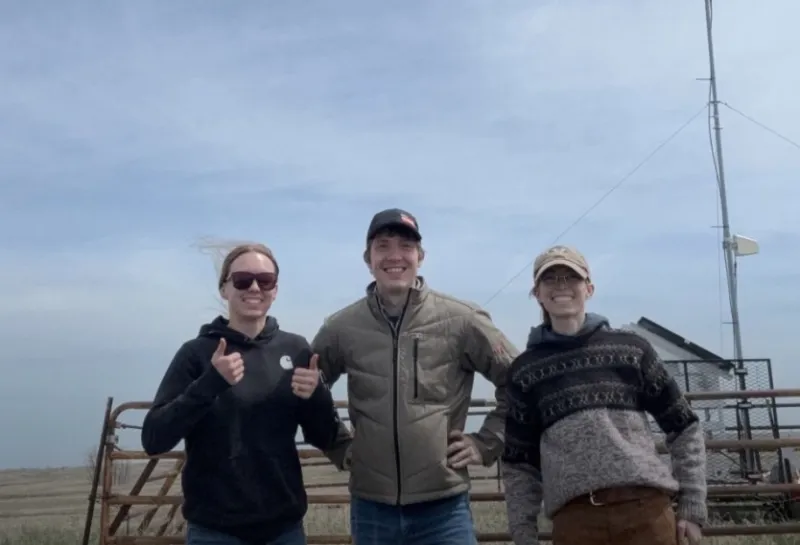
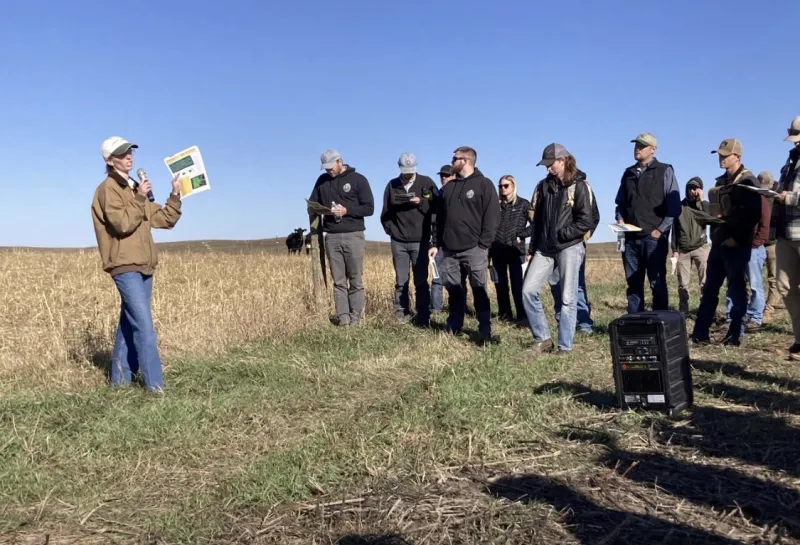
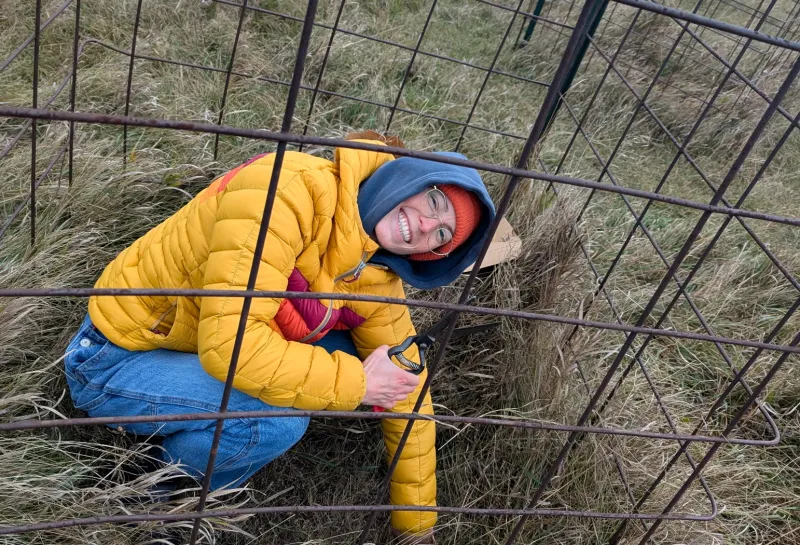
NDSU College of Agriculture, Food Systems, and Natural Resources grad students present at Central Grasslands Research Extension Center Field Day
Taleigh Adrian, Ph.D. in Rangeland Ecology and Wildlife Management
What research will you present at the field day?
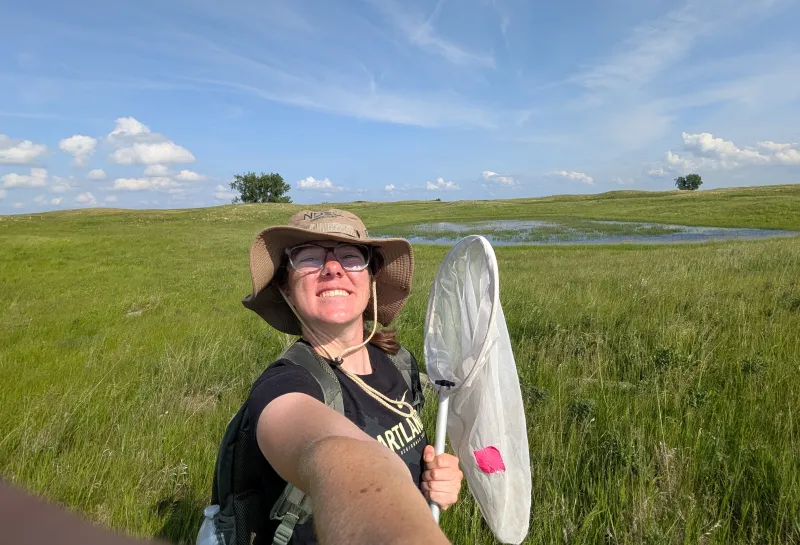
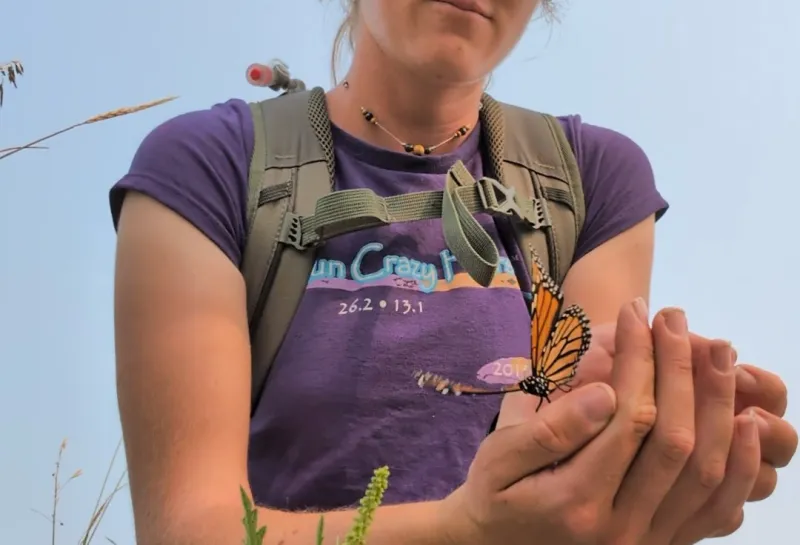
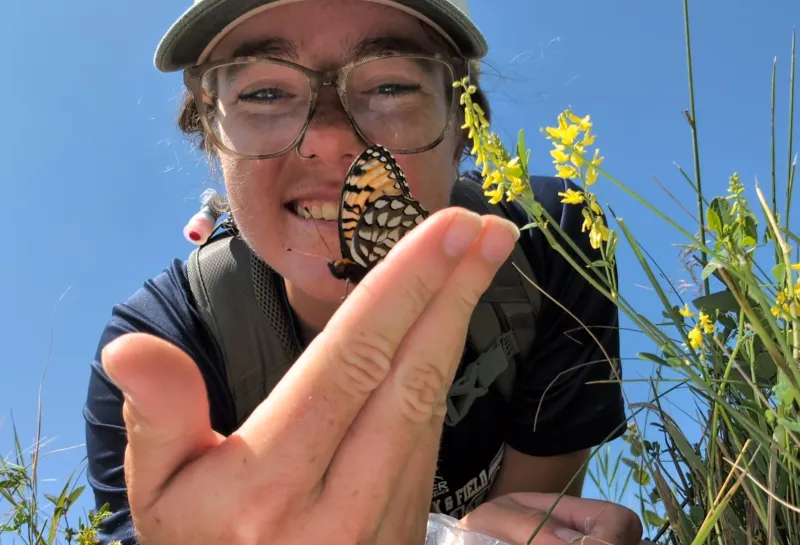
During NDSU’s Central Grasslands Research Extension Center Field Day, I will present research that investigates the influence of three grazing management strategies on bee and butterfly populations. My work evaluates how this ultimately influences bee and butterfly abundance, species richness and community compositions.
Bees and butterflies provide important pollination services to both natural and agricultural systems. However, these pollinators are experiencing large declines. The simplification and degradation of rangelands are major drivers of these declines, often due to a lack of landscape disturbances that reduce the complexity of vegetation composition and structure.
My research aims to demonstrate how this increased complexity benefits pollinator populations. In the face of pollinator population declines, it is increasingly important that we understand how to utilize management strategies, including new technology, to benefit pollinator populations.
Why is this work important for attendees to hear?
I hope attendees will take away from my presentation that pollinator conservation can go hand in hand with production. I also hope to show that grazing strategies can benefit pollinators, and feasibility can be increased through new technologies.
How has NDSU helped you explore research you’re passionate about?
NDSU has given me the freedom and resources to ask meaningful questions while keeping my work grounded in applicability. Answering one question always opens the door to more questions, and NDSU hasn't just supported my current passions and interests — it has expanded them.
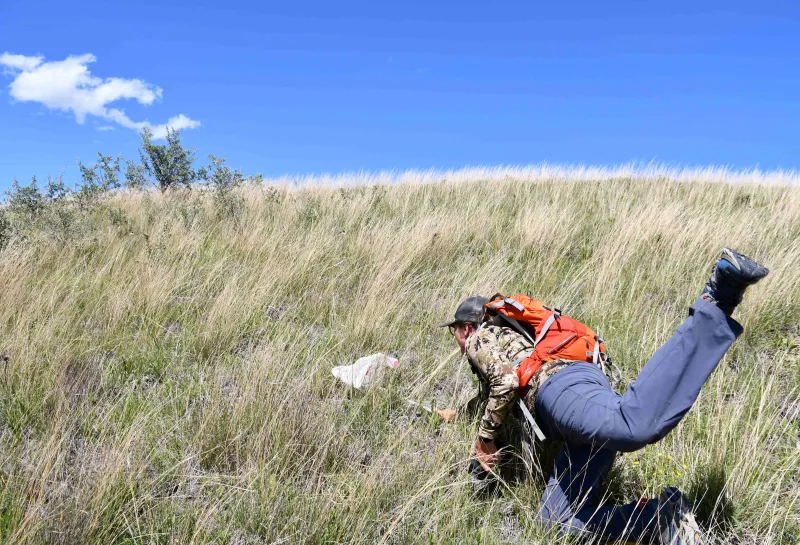
Sallie Sherman, Ph.D. in Natural Resource Sciences
What research will you present at the field day?
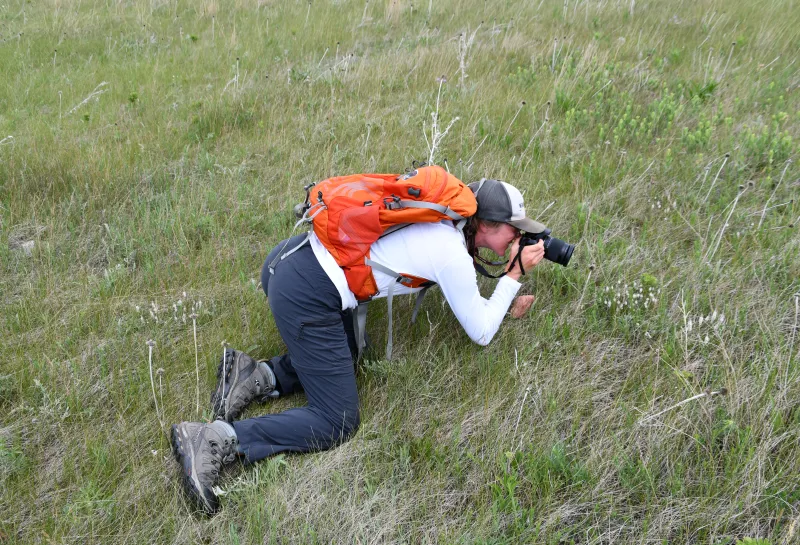
The project I’ll be sharing at NDSU’s North Central Research Extension Center Field Day focuses on the efficacy of virtual fence to implement patch grazing with cow-calf pairs on rangelands and the subsequent impacts to livestock performance and forage production and utilization. It is part of a larger project examining how heterogeneity-based grazing systems can impact the biodiversity of plants, pollinators and birds.
Why is this work important for attendees to hear?
We often hear agricultural and conservation talked about as opposing systems, but what gets me really excited about this work is that we are capitalizing on an already-present agricultural innovation that provides an opportunity for ranchers and land stewards to improve their livestock outcomes to also improve biodiversity outcomes and overall ecosystem resilience.
How does this work influence your career plans after graduating?
NDSU has provided me with a great opportunity to learn and work at the nexus of agricultural production and conservation to achieve dual gains. I am excited to apply the skills I am acquiring at NDSU to continue to support farmers and ranchers in their stewardship of healthier ecosystems.