

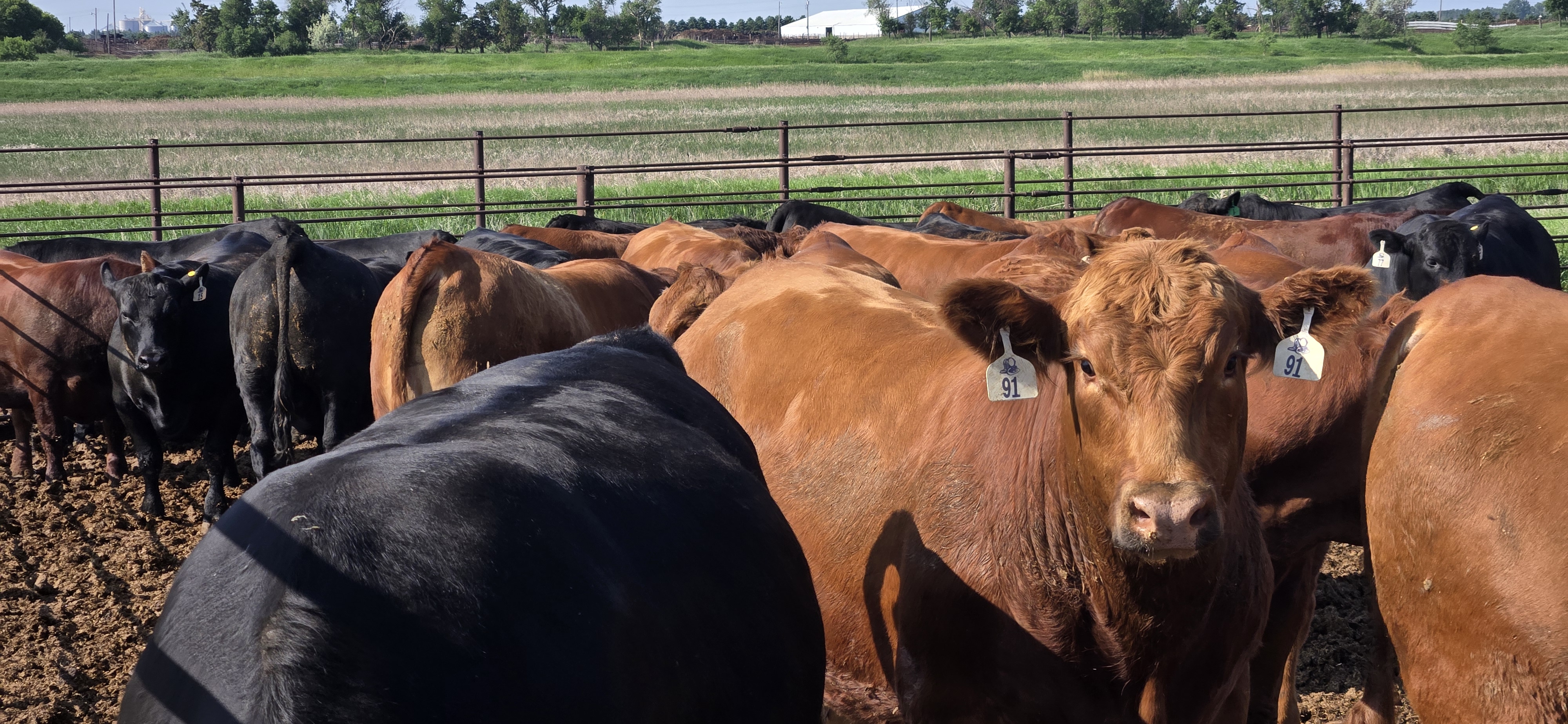
27th Annual Dakota Feeder Calf Show and Feedout set
The 27th Annual Dakota Feeder Calf Show and Feedout is set for October 18 in Turtle Lake, ND.
Interested consignors will deliver 500- to 700-pound steer calves before 10 a.m. CST on the day of the show. Each producer can consign one or two pens containing three or four calves. Local businesses and individuals have the opportunity to purchase calves at the show. The calves are exhibited and evaluated that afternoon and then shipped to the NDSU Carrington Research Extension Center feedlot to be fed to finished market weight.
After 27 years of comparing calf performance, North Dakota cattle ranchers are finding superior growth and carcass characteristics. Since cow herd genetics can change over time via bull and heifer selection, sending cattle to the Dakota Feeder Calf Show and Feedout gives ranchers information on how their selections are advancing their herd.
NDSU Extension and Carrington Research Extension Center partner with the Dakota Feeder Calf Show to provide producers an opportunity to experience retained ownership of calves beyond the cow-calf segment of cattle production.
During the 2024-25 feedout, the calves gained an average of 830 pounds in 242 days, with a total feeding cost (excluding interest) of $0.90 per pound of gain. The average sale weight was 1,460 pounds. The calves were fed with a market weight break-even point of $175.88 per hundredweight.
In the 2024-25 feedout, the spread in net return per head between the average of the top and bottom five herds was $376.95. The spread between the top and bottom herd is more noticeable ($660.65 per head). Average daily weight gain in the feedlot was 3.95 pounds for the top-profiting herd and 3.34 pounds for the bottom herd. Small differences in production have a huge impact on profit.
Feedout project staff will gather data on the rate of gain, feeding costs and other characteristics during the trial. After the calves are marketed, the staff will collect and provide information to the entrants on carcass weight, meat quality, feeding expenses and value. Calves should be pre-vaccinated for BVD, PI3, IBR and BRSV, Mannheimia, Clostridials and histophilus somni. Booster vaccinations will be administered upon delivery to the show.
Producers will be assessed an entry fee of $20 per calf. Dakota Feeder Calf Show officials will present awards to producers at the end of the trial.
For more information or to preregister calves, contact Darwin Chesrown for the Dakota Feeder Calf Show Committee at 701-448-9286.
Karl Hoppe, Ph. D.
Karl.Hoppe@ndsu.edu
Extension Livestock Systems Specialist
