


After the rains, the harvest arrives
This growing season at the Carrington Research Extension Center hasn’t been a typical one. A wet spring followed by consistent summer rains caused delays in crop development across the region. The persistent moisture made it difficult to stay on schedule with planting and other fieldwork.
Looking at the precipitation records from April through August, 2025 was indeed a rainy season, though the totals are not drastically higher than in past years. For example, May and June showed above-average rainfall compared to the 30-year averages, while July and August were closer to historical norms. When compared with 2023 and especially 2022, this season does not appear as extreme as 2022, when everyone should remember the over nine inches of rain in May 2022 alone. This perspective highlights that while 2025 felt wet and challenging, rainfall variability of this kind is not unusual in Carrington.
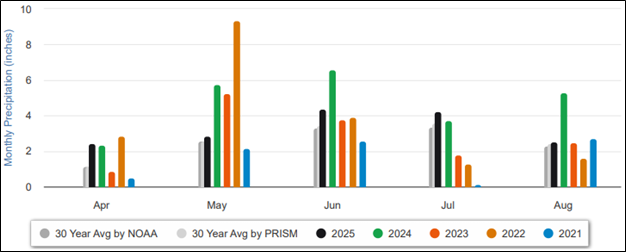
Chart 1: Monthly precipitation from April to August, Carrington, ND.
As of early September, we have harvested all of our early-planted and winter crops: barley, canola, durum, field peas, wheat, rye, pennycress, winter camelina, and oats. Although these crops are out of the field, they faced several challenges during the season. Wet conditions encouraged fungal diseases, especially in small grains and pulse crops, which required close monitoring and treatment when possible. Many fields were too wet for timely herbicide applications, and weed emergence continued through much of the season. This made weed control efforts more difficult and often less effective.
We are now moving into the second phase of harvest. The focus has shifted to corn, soybeans, dry beans, lupin, flax, and sunflower, which are still in the field. These row crops were also delayed early in the season due to cool temperatures. However, the later-season rains helped provide needed moisture during critical growth stages.
While the rain created many challenges this year, it also improved soil moisture levels across much of the region. This should benefit winter crop seeding in the coming weeks and a stronger stand establishment. With early crops out and row crops progressing, the Carrington area is continuing harvest with a cautious but steady outlook.
On a more personal note, this was my first growing season in North Dakota, and it has been a fascinating experience. In central Chile the Mediterranean climate has rainy winters and dry summers. Any rainfall in summer would severely damage agriculture back home. Here, however, rains are not only expected but essential for crop success. Adjusting to this new reality, where rain can both challenge and support production, has been one of the most interesting and demanding lessons of the year. It will certainly require me to change my mindset for the upcoming seasons.
Agustin San Pedro
Agustin.SanPedro@ndsu.edu
Agronomy Research Specialist
