

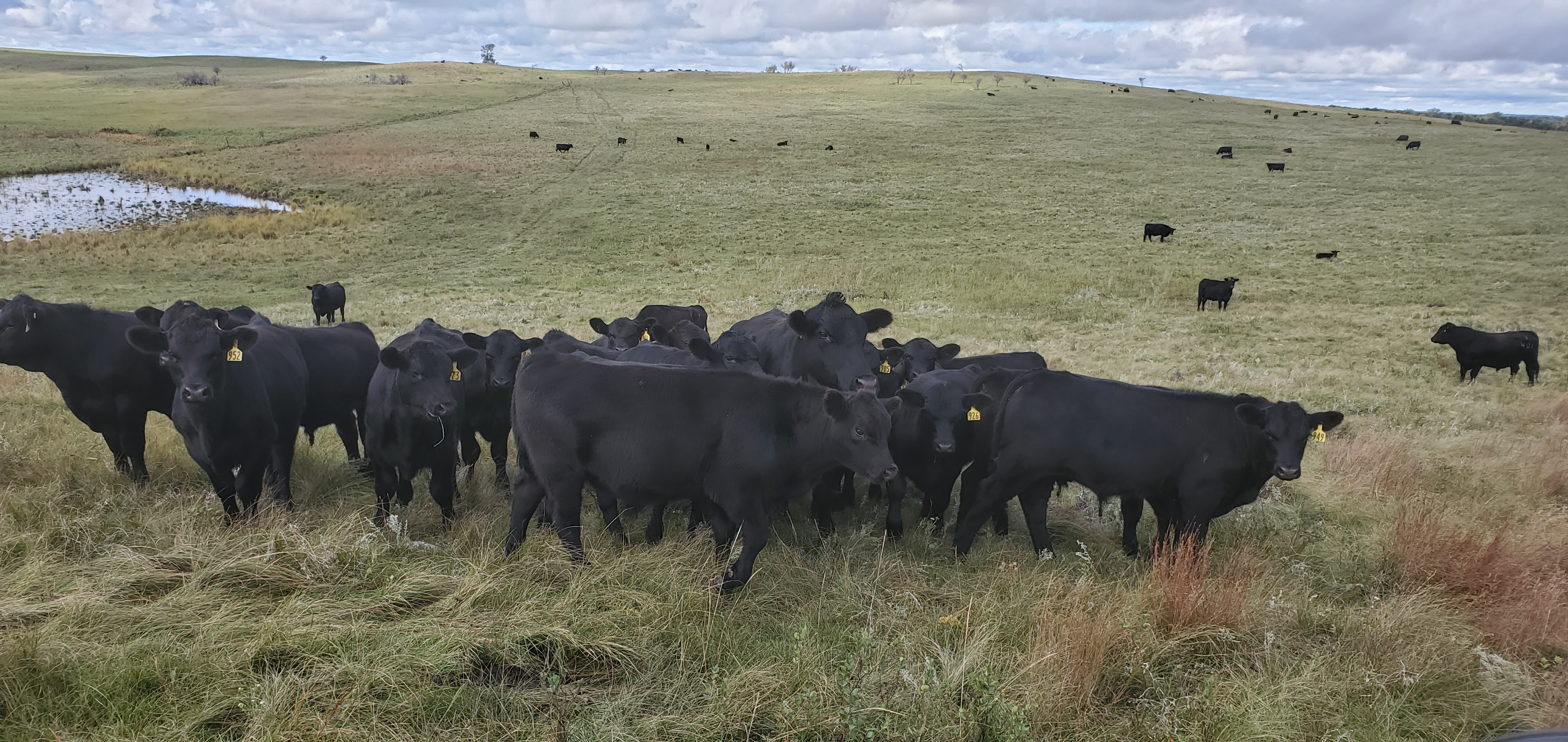
Cattle and flies
Cattle and flies are like steak and potatoes – they just seem to go together … but they don’t have to be together! Steak alone is pretty tasty!
Flies are a pesky insect for cattle. Face flies just feed on secretions – like watery eyes. Horn flies bite the skin and feed on blood. Flies feeding around the eyes can lead to pinkeye and blindness while biting flies irritate and steal nutrients, reducing calf weaning weight.
When the number of flies per cow is greater than 100 flies per side or 200 flies per animal, calf weaning weight can be reduced by 10 to 25 pounds. Counting flies with binoculars was done during the 1980’s in North Dakota to research impacts of flies on cow herd performance.
Cows fight flies by standing in water, grouping together, stomping the ground, pawing dirt, and standing in a windy location.
Reducing fly populations is a strategic effort. You can kill all the flies with a spray or fogger of insecticide today, but in less than three weeks a new batch of flies will hatch and reach adult stage. Fly control needs to be a summer-long effort.
Insecticide ear tags, pour-ons, sprays, dusters, oilers, and walk-though fly traps are all tools for controlling flies.
Another method for fly control is adding larvicide or insect growth regulator to feed. These products stop flies from reaching adult stages in the manure, but they must be used before fly season starts and throughout the summer for best effectiveness. Feeding after the fly season will help control next year’s fly populations.
Feed-based fly control can be added to a free-choice mineral mix or fed in granular feeders or lick tubs. Feed-based fly control can also be put in supplements to help control flies in feedlots. Clarify/Justify, Altosid (IGR), and Rabon are trade names for feed-based insect control products.
Bulls seem to attract more flies than cows. Providing extra or several fly control methods will help keep the bull comfortable so he can focus on settling cows instead of fighting flies.
NDSU Extension does not endorse commercial products or companies even though reference may be made to trade names, trademarks or service names.
Karl Hoppe, Ph. D.
Karl.Hoppe@ndsu.edu
Extension Livestock Systems Specialist
