

Cool-season perennial grasses for saline soils
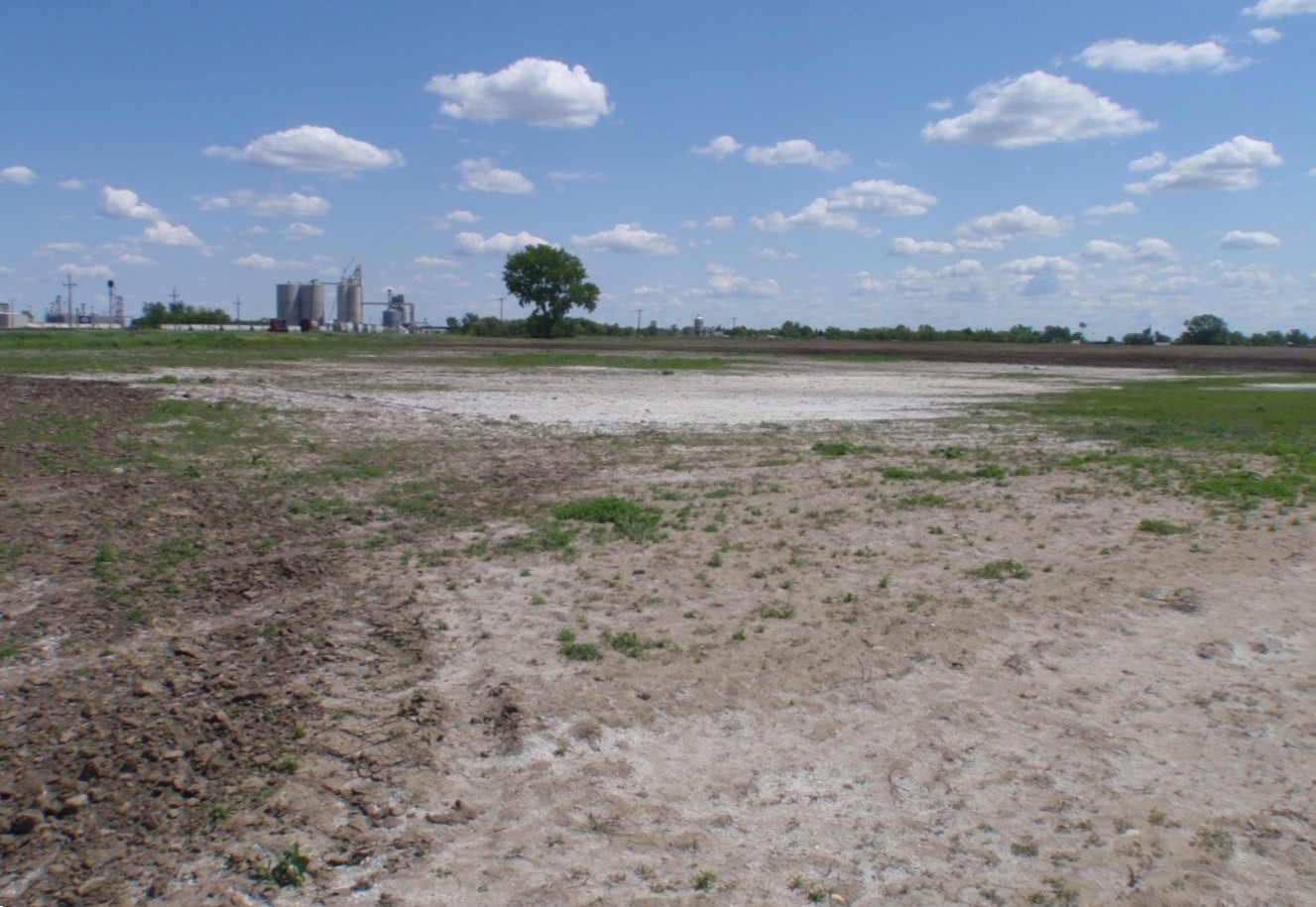
In North Dakota, approximately 13% of soils are considered saline, with an EC=4 dS/m or more.
Soil EC (Electrical conductivity) is a measure of the concentration of ions from water-soluble salts in soils. EC is the ability of a material to conduct an electrical current and it commonly is expressed as dS/m (deciSiemens per meter).
Many of the annual crops grown in our area are affected at salinity levels well below the 4 dS/m saline threshold, so saline soils pose a challenge for many producers.
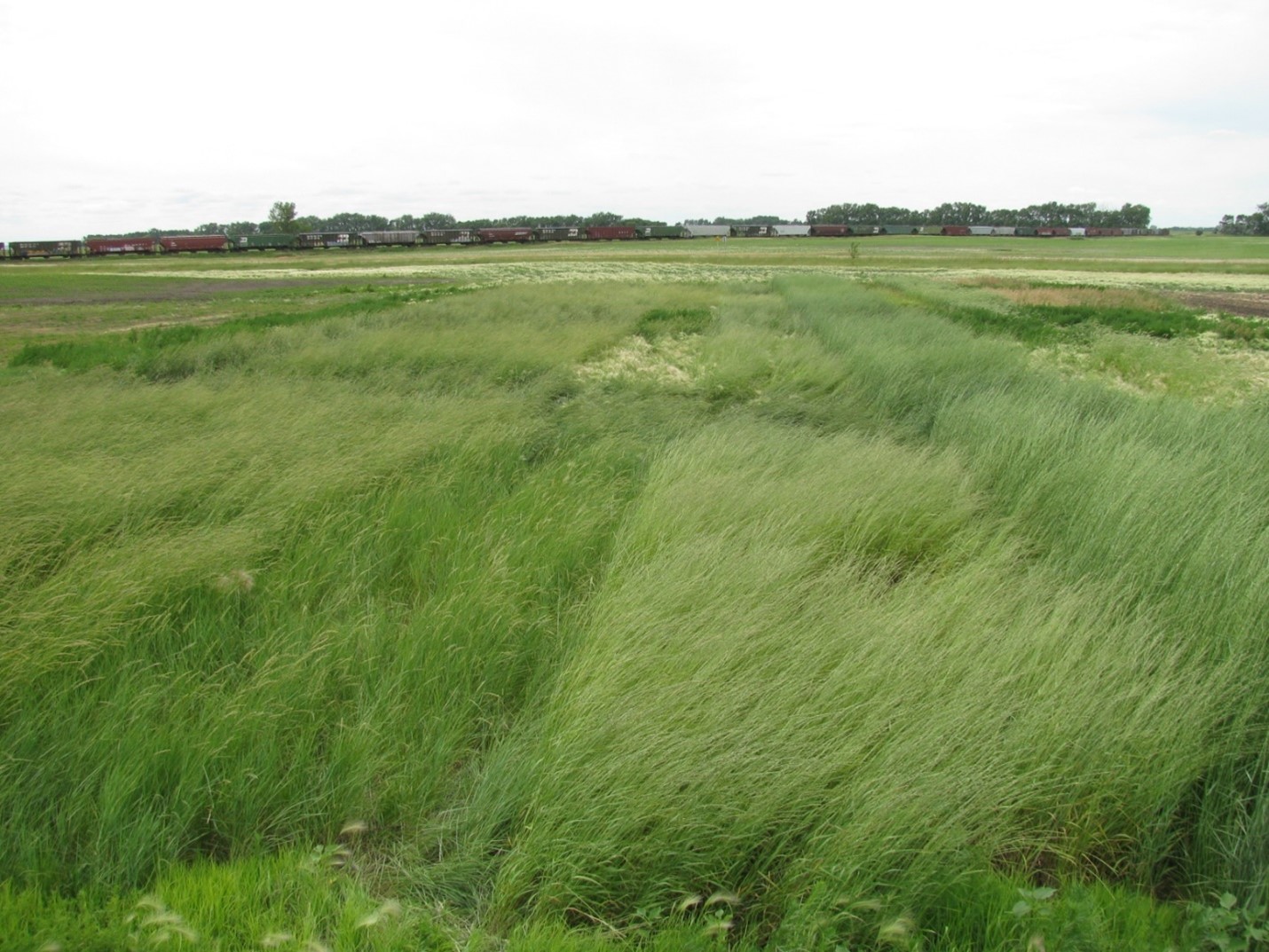
To address this issue, the Carrington REC, in collaboration with USDA-NRCS Bismarck Plant, conducted a study evaluating the performance of 11 cool-season grass species on saline soils near Carrington and Buchanan, ND. The study identified grass species that could thrive in saline conditions, offering alternatives to annual crops for these saline-affected areas of fields.
Annual forage harvests in mid‑July captured biomass and forage quality data. Highlights include:
- Lincoln smooth bromegrass, Fleet meadow bromegrass, and Garrison creeping foxtail delivered strong performance on soils with EC up to 6.5–7.0 dS/m.
- Mandan Canada wildrye maintained respectable forage production at around EC=7 dS/m.
- Shoshone manystem wildrye produced consistently high-quality yields at EC up to 10 dS/m.
- Common wheatgrass types—tall, slender, and western—proved easy to establish and sustained fair yields even at EC=12 dS/m; tall wheatgrass offered high biomass but low forage quality.
- Notably, AC Saltlander green wheatgrass and NewHy hybrid wheatgrass maintained high-quality forage and very good biomass production at EC up to 14 dS/m.
Ezra Aberle
Ezra.Aberle@ndsu.edu
Agronomy Research Specialist
