

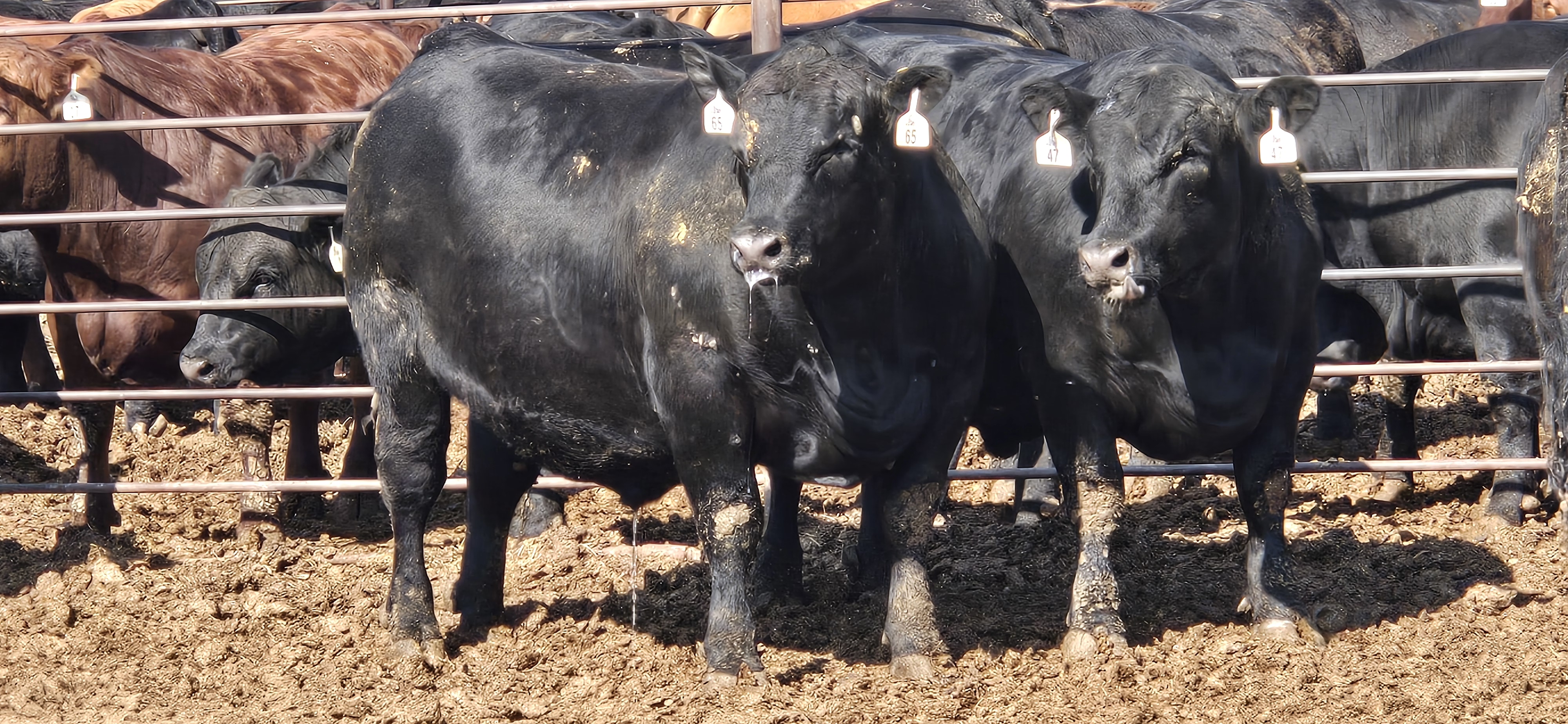
North Dakota Angus University Feedout
The North Dakota Angus University Feedout program is a summer, retained-ownership project where cattle producers raising spring-born black Angus cattle can learn more about the feeding performance, carcass characteristics and profitability of their yearling steers.
Through involvement in this calf value discovery program, cow-calf producers raising Black Angus calves can benchmark performance and identify superior genetics when fed with common feedlot management.
The Carrington REC is partnering with the North Dakota Angus Association (NDAA) to sponsor the North Dakota Angus University Feed-out. This is the 15th year of the program.
Ranchers can consign steers to the program by contacting the CREC or the North Dakota Angus Association. Consigned Angus sired steers must be at least 50% Angus genetics and weigh between 800 and 1,100 pounds at the time of delivery. Consigned cattle will be delivered to the CREC feedlot on May 26-29, 2026.
Ranchers who consign cattle pay the feeding costs based on the average cost of gain plus veterinary costs and a modest yardage charge. The CREC will carry the feed, veterinary and yardage costs until the cattle are marketed. After the cattle are marketed, costs and all applicable fees are deducted from the sale price without an interest charge. Consigners of the program must also be NDAA members.
Participants in the North Dakota Angus University will receive periodic progress reports on their calves’ performance, as well as a final report on overall performance, efficiency and carcass traits of their calves.
In the previous Angus feedout, calf performance was measured during a 133-day feeding study. Steers had an average daily gain of 4.14 pounds per day. Shrunk live weight at harvest averaged 1,484 pounds, and carcass weight averaged 932 pounds. The cattle graded 97% USDA Choice or better with 51% meeting Certified Angus Beef (CAB) specifications and 19% Prime quality grade. When the data was sorted by owner, differences in carcass quality between herds was substantial. Feeding results from the calves by owner are listed in Table 1.
| herd | Average Out weight, lbs | Average Daily Gain, lbs | Average Backfat, inch | Average Ribeye Area, square inch | Average Marbling Score | Quality Grade Prime carcass | Quality Grade CAB carcass |
|---|---|---|---|---|---|---|---|
| 1 | 1488.6 | 4.69 | 0.67 | 13.4 | 608.2 | 23.1% | 56.4% |
| 2 | 1531.8 | 4.49 | 0.59 | 14.6 | 584.2 | 11.1% | 77.7% |
| 3 | 1462.4 | 4.30 | 0.60 | 13.5 | 488.0 | 0.0% | 40.0% |
| 4 | 1512.1 | 4.32 | 0.63 | 13.7 | 637.4 | 43.7% | 37.5% |
| 5 | 1448.1 | 4.89 | 0.65 | 13.4 | 543.1 | 4.7% | 42.8% |
| 6 | 1469.5 | 4.61 | 0.51 | 13.7 | 422.0 | 0.0% | 0.0% |
| 7 | 1391.8 | 4.44 | 0.55 | 13.6 | 566.0 | 0.0% | 66.6% |
| overall | 1472.0 | 4.53 | 0.60 | 13.7 | 549.8 | 11.8% | 45.9% |
To consign a group of cattle or for more information, contact Karl Hoppe, NDSU Extension livestock systems specialist, at 701‐652‐2951 or karl.hoppe@ndsu.edu; or Sydney Glasoe Caraballo, North Dakota Angus Association Feed-out program chair at 678-989-7189.
Karl Hoppe, Ph. D.
Karl.Hoppe@ndsu.edu
Extension Livestock Systems Specialist
