Facility is home to a multitude of research projects
by Darla White
Administrative Secretary
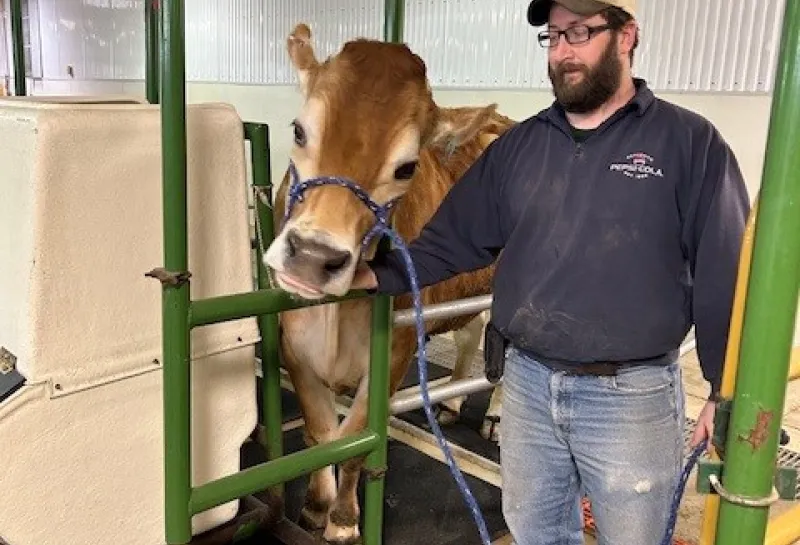
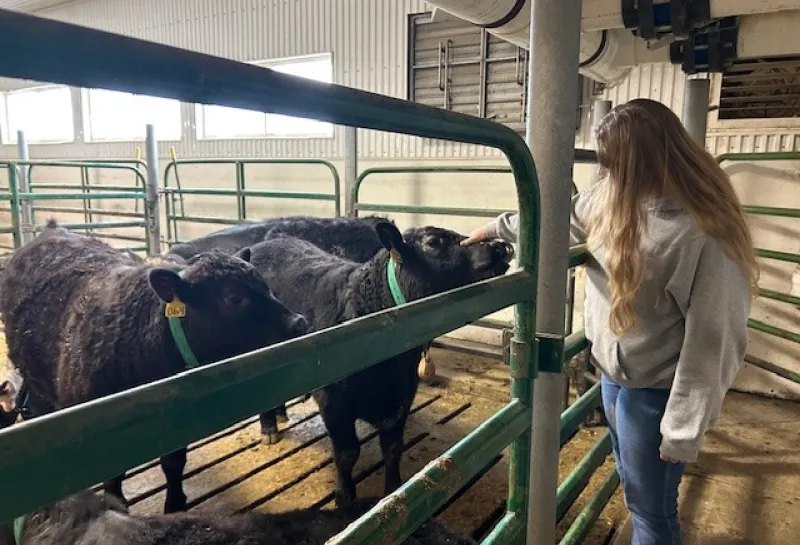
Where at NDSU can you find steers, bulls, pigs, mice and blackbirds under the same roof? This spring you could find all those species at the Animal Nutrition and Physiology Center, or ANPC. It is home to a wide array of animals, and some strange bedfellows, as professors conduct research there, primarily in the areas of growth, nutrition and reproduction.
The ANPC is celebrating its 25th anniversary this year. It opened in 2001 after extensive remodeling and additions transformed it from a poultry center with 1,800 turkeys to a facility that can house any and all sorts of livestock. Besides having space for sheep, cattle and swine, it has small-animal rooms for rodents, rabbits, or, as the occasion warrants, blackbirds. It also has a classroom, surgery rooms and laboratories.
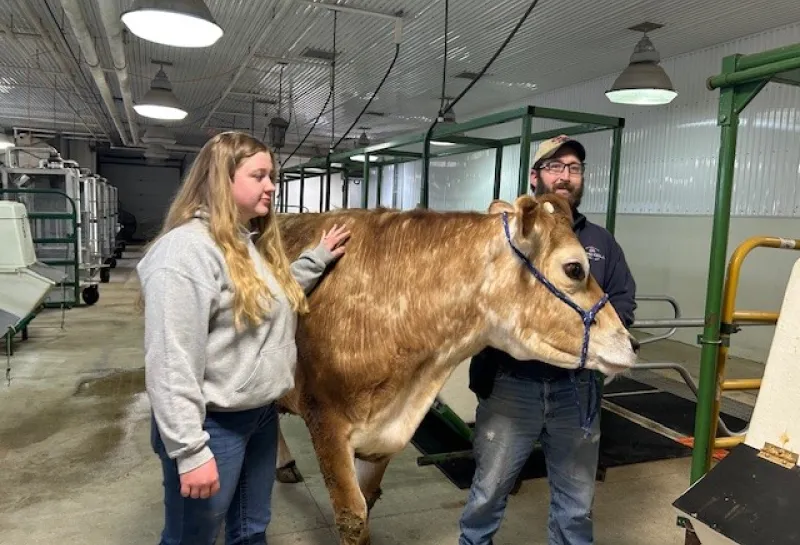
The 46,000-square-foot facility looks nondescript from the outside, but inside it can be transformed into spaces tailor-made for the animals being studied. Manager Justin Gilbertson’s goal is to make it as easy as possible for the researchers and animals to get what they need out of the facility.
“A lot of times we have to build or retrofit things to make projects work,” he says, and he’s become an expert at making accommodating penning. For instance, one research project required that 140 sheep be individually penned, so Justin got his fill of building pens that year.
Justin has been the manager for two years, and prior to that he was the assistant manager for 14 years. Helping him with the feeding, cleaning, fixing and planning are his assistant manager, Ashley Ressler, and six student workers. Graduate students and undergrads working on the research projects are also familiar faces around the facility.
The ANPC hosts a number of classes and labs each semester, including Introduction to Animal Sciences, Livestock Production, Equine Anatomy and Physiology, and Physiology of Reproduction. Vet tech students also take advantage of the lab space to practice skills they’ve learned in class.
One of the research advantages of the ANPC is the ability to get individual data. In the cattle area, each animal has its own bunk, or feeding trough. It’s easy to see what the steers or bulls prefer in their feed based on what parts they don’t eat. The researchers can also easily determine how much each one is eating. When the animals have to share bunks, that level of clarity is lost.
Another unique feature of the ANPC is the fact that it has no bedding in the pens. All the animal waste drops through slits in the concrete, and every morning flush tanks blast water that carries the waste into a 20-feetdeep pit. As Ashley says, “It’s one huge toilet.” A machine then separates the liquids from the solid material, which goes into a manure pile and is later used as fertilizer. The liquids end up in the city’s sewer system.
The ANPC has room for 1,600 animals, and Justin and Ashley love it when the facility is full. “We would love to get a lot more research out here,” Justin says. He proudly recalls one year when the ANPC had 13 projects going on at once. “It’s not in our control, but we want more research,” said Ashley.
Sounds like someone is ready to build more pens….