NDSU research links maternal gut health and microbiome to stronger, more sustainable cattle production
Beef production is a key cog in North Dakota’s agricultural economy, generating about $1.48 billion in cash receipts annually. Samat Amat, North Dakota State University assistant professor of animal science, works to keep that industry strong while also establishing NDSU as a leader in maternal microbiome-focused research in large animal systems.
Amat was hired in August 2020 under the state’s Agribiome Initiative, which investigates microbial communities in soil, plants and livestock to improve agricultural productivity, sustainability and profitability. Amat’s research team focuses on cattle.
“This research introduces maternal microbiome targeting as a new biological lever — alongside genetics and traditional nutrition — to improve productivity and sustainability in North Dakota cattle systems,” says Amat. “This work positions NDSU at the forefront of maternal microbiome-targeted research in large animals.”
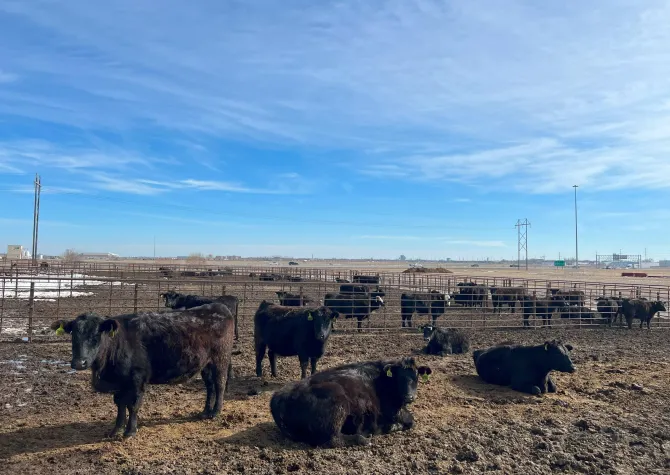
The research is collaborative and involves several faculty and graduate students at NDSU, the NDSU livestock research facilities, the Central Grasslands Research Extension Center and the Veterinary Diagnostic Laboratory. Research funding has come from USDA NIFA, North Dakota Corn Council and SBARE. It complements the maternal and paternal nutrition and developmental programming research led by NDSU faculty Carl Dahlen and Joel Caton.
The research comes at a time when cattle ranchers face challenges — rising costs, diseases and weather extremes being among them.
“My mission is to develop livestock microbiome-based strategies to mitigate key challenges facing North Dakota and U.S. livestock production — including improving feed efficiency, reducing infectious disease risk amid rising antimicrobial resistance, and addressing concerns over the carbon footprint of livestock systems,” says Amat.
Amat initiated research in three primary focus areas: exploring the role of the maternal gut microbiome during pregnancy in developmental programming in livestock, manipulating the ruminal microbiome to improve feed efficiency and reduce enteric methane emissions, and exploring the respiratory microbiome to enhance respiratory health and mitigate bovine respiratory disease (BRD) in feedlot cattle.
Amat studies how the maternal gut and reproductive microbiome affect offspring health and growth; explores male and female reproductive microbiomes to improve fertility; develops microbiome-based solutions, such as eye probiotics to prevent pinkeye in cattle; and seeks alternatives to antibiotics for controlling bacterial infections, such as respiratory disease and liver abscesses.
“These research areas aim to harness the microbiome to promote livestock health, efficiency and sustainability, and they directly align with the vision of the Agribiome Initiative,” says Amat. “We integrate basic microbiology with advanced molecular biology and bioinformatics to understand how microbial ecosystems influence cattle health, fertility and productivity.”
The research has shown that the ruminal microbiome, in Amat’s words, “is highly complex, dynamic and capable of lasting biological effects.” One key discovery: microbiome programming may begin earlier than previously thought. The findings suggest that pioneer microbial exposure of the calf intestine may occur before birth, indicating that microbiome establishment is not solely a postnatal event.
“Observing differences in calf microbiome based solely on what their dams were fed during pregnancy was both exciting, novel and humbling,” says NDSU doctoral research assistant Godson Aryee, who works with Amat on the research. “It made me realize that the microbiome is not just something that responds to management; it can be shaped early in life in ways that may influence efficiency, resilience and even environmental impact. Being part of a longitudinal project that connects maternal nutrition, microbiome and sustainability has been rewarding, and it has strengthened my passion for pursuing research that bridges basic science with real-world impact for cattle producers.”
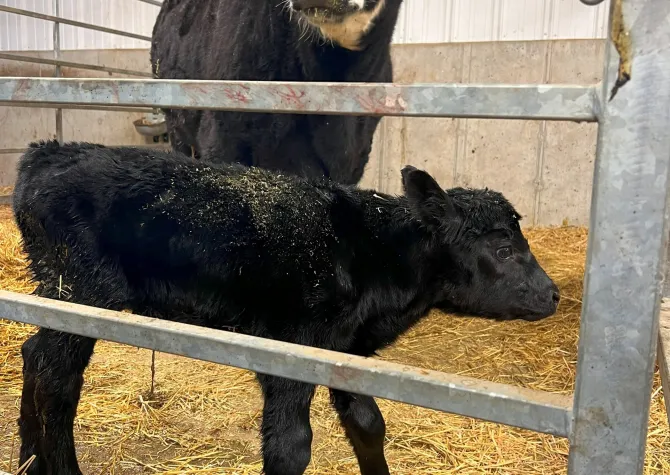
Amat’s team has recently completed a three-year USDA AFRI-funded cattle study to evaluate how altering the maternal gut microbiome during pregnancy — using high-forage versus high-concentrate diets — influences offspring development. Calves born to dams fed different diets exhibited significantly different gut microbiomes, and those differences persisted to at least 120 days of age. These findings indicate that maternal microbiome alterations during gestation contribute to postnatal microbiome programming, according to Amat.
“We observed that maternal diet altered not only the gut microbiome, but also the reproductive and respiratory microbiomes during pregnancy — areas that have been minimally studied in livestock,” says Amat.
The next phase of Amat’s research moves from describing microbial changes to understanding their function and predicting their behavior.
Amat sees the research as helping the beef economy and making NDSU a leader in microbiome research.
“Even modest improvements in feed efficiency or disease resilience can generate meaningful economic benefits at the herd level, helping producers meet evolving sustainability expectations,” says Amat. “Beyond direct producer impact, this work positions NDSU at the forefront of maternal microbiome — targeted research in large animals.”