Beef Cattle Research Center helps producers find answers
BCRC Unit can customize, monitor individual feed consumption
By Darla White
Administrative Secretary
It’s summertime, but 71 steers at the Beef Cattle Research Center think it’s Thanksgiving. They are part of a nutrition study, and at this point in the research the goal is for them to gain weight. These lucky steers get to eat as much as they want whenever they feel the urge. They are helping NDSU researchers determine the effects of dry rolled corn vs. whole corn diets with a 5 or 15 percent inclusion rate of forage on efficiency and carcass characteristics in finishing cattle.
Carcass data from Tyson will be used to calculate the differences the four diets had on yield grade and quality grade. This knowledge could be very beneficial to producers, as the input cost of using dry rolled corn is higher than using whole corn. If the whole corn diet yields the same results as the more expensive diet … well, you can see why that would be of interest to cattle owners.
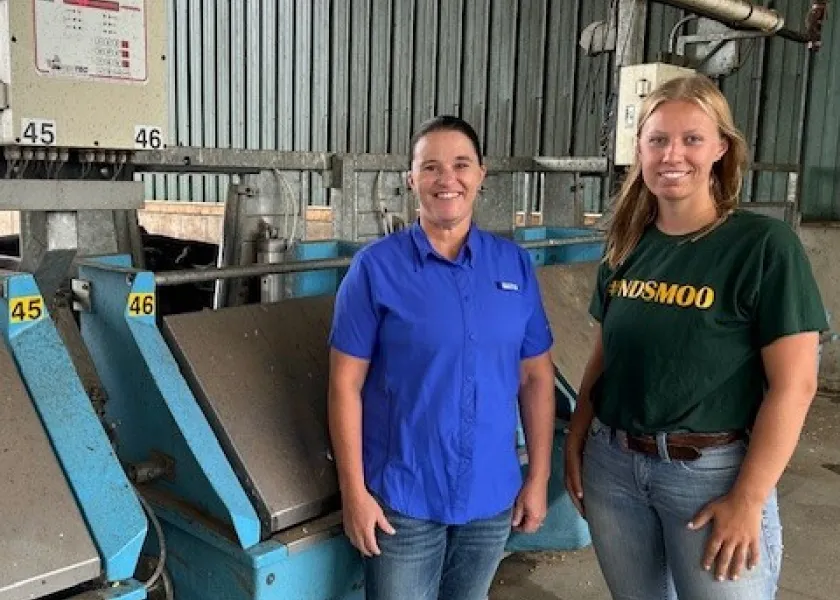
This is just the latest (specifically the 44th) research project that has been conducted at the BCRC since it opened in the spring of 2011. Sarah Underdahl (left) started as the assistant manager in 2013 and moved up to manager in 2019. She says the goal of all the research is to help beef producers.
“I like when we do producer-driven research,” Sarah says, “just coming up with ways we can help our producers.” Studies can focus on a wide array of topics, such as genetics, meat quality, heifer development, nutrition and more. Sarah and assistant manager Danielle Jensen (right) are already gearing up for the next project that will start in the fall.
The BCRC uses Insentec technology that allows researchers to customize and monitor individual feed intake in cattle. In fact, the BCRC was just the third site in North America to get that system. A recent acquisition is the new feed truck, which lets the driver fill the feeding stations without stepping foot out of the vehicle. Sarah says feeding the cattle the correct diets and correct amounts is job No. 1 every day, so anything that helps in that endeavor is much appreciated.
Like the other animal units in the department, the BCRC gives quite a few tours. Guests can be daycare centers wanting to see the animals or international groups hoping to get ideas to take back with them. In June, the North Dakota Stockmen’s Association included the BCRC on its feedlot tour. About 100 people visited and were able to learn about the BCRC’s research capabilities. “It was great to get producers on site, and a lot of them were interested in the facilities and asking about our results,” Sarah said.
Despite its emphasis on research, the BCRC also contributes to the teaching mission of NDSU. A few Animal Science course labs regularly visit the site, as do vet tech students.
Sarah says the biggest change she’s seen over the years is the variety of research done at the BCRC. What hasn’t changed is the biggest challenge: the winter weather. Feeding the cattle is necessary whether the snow is piling up or the wind is gusting 50 mph. That makes things difficult, but no matter the conditions, Sarah, Danielle and their handful of student workers make sure the feeding stations get filled. And that’s something all the animals at the BCRC are grateful for, whether it’s Thanksgiving or not.