Title

Jerky: A Native American-inspired snack we all can enjoy today

(FN2266, June 2025)
Summary

Though there have been many forms of dried meat throughout history and across the globe, jerky as we are used to seeing it today, originates from the Native peoples of North and South America. In North America, Native Americans were often on the move and made use of large animals, such as buffalo, elk and deer. This publication provides step-by-step directions about how to create delicious jerky.

Lead Author
Lead Author:
Julie Garden-Robinson, Ph.D., R.D., L.R.D., food and nutrition specialist
Other Authors

Azalea Greene, program assistant
Nicole Neumiller, program assistant

Produced in collaboration with Cankeska Cikana Community College – Spirit Lake Tribe (https://www.littlehoop.edu/)

Availability
Availability:
Web only
Publication Sections

From Its Beginnings to Now

Though there have been many forms of dried meat throughout history and across the globe, jerky as we are used to seeing it today originates from the Native peoples of North and South America. In North America, Native Americans were often on the move and made use of large animals, such as buffalo, elk and deer.

When groups could not eat all the meat of the buffalo and other large animals at once, or when they were preparing for winter and traveling, it needed to be preserved. Before the invention of canning, refrigeration and freezing, drying was the only way to preserve meat.
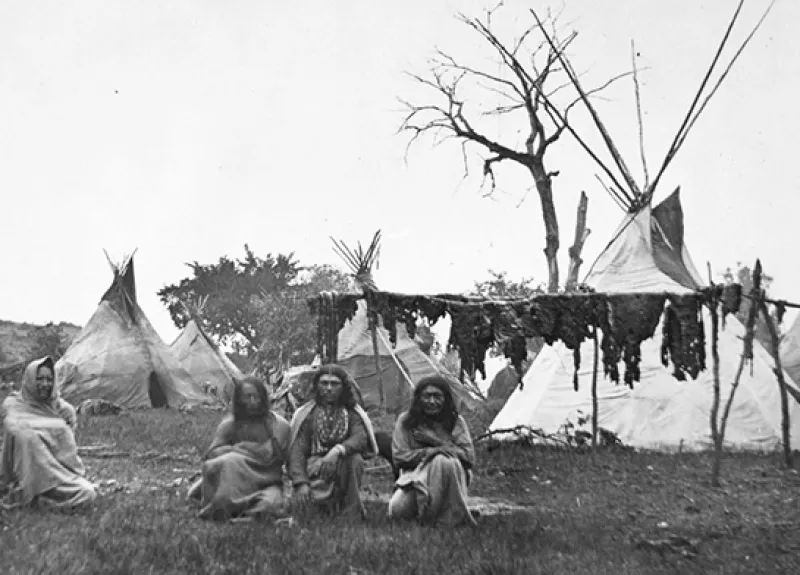
Arapaho
Photo Credit:
William S. Soule Photographs of Arapaho, Cheyenna, Kiowa, Comanche, and Apache Indians, between 1868–1875. (National Archives Catalog)
Arapaho camp with buffalo meat drying near Fort Dodge, Kansas.

Meat was sliced into thin pieces and hung on high racks to dry in the sun. Sometimes they hung the slices over smoke to keep the flies away and to add a smoky flavor. Each family had their own unique recipes for how they dried and flavored meat.

Once dried, Native Americans ate jerky two main ways: as pemmican (peh-mih-can) or as part of a stew boiled with potatoes, wild turnips or other vegetables.

The name pemmican comes from the Cree language; pimîhkân means “manufactured grease.” Pieces of jerky, frequently buffalo, were pounded into a powder, then placed in bison hides with marrow fat poured over them. The traditional Lakota version, called wasna, included berries, such as chokecherries.

This mixture was formed into patties or balls and stored in bags made from animal skins called parfleche (parflesh). Pemmican was stored and eaten during the winter months when fresh game was scarce. Like plain jerky, pemmican could be boiled into a soup or stew, or it could be eaten while traveling as an energy-dense snack. Pemmican also held ceremonial significance or was given as gifts.

The modern word ‘jerky’ comes from the Quechua word “ch’arki,” which was interpreted by the Spanish as “charqui” (char-key). Quechua is a language that was spoken by many tribes, including the Inca. Traditionally, ch’arki was made from strips of llama or beef that were dried in the hot sun and frozen during cold nights. Salt was rare before Spanish influence, so it is unlikely it was used for preservation or flavor.

Today, jerky is widely consumed across the world, though methods of preparation have changed with technology and evolving understanding of food safety. Many flavor combinations are used to produce jerky commercially and at home. It remains a staple for many as the portable protein snack of choice.

Ingredients

Meat

Most types of meat can be used to make jerky, but beef round roasts or pork loin are most common. Jerky can be made using whole muscles or ground meats, though whole muscle is recommended for home processing because it makes a product that is safer and more traditional. Leaner cuts of meat are the best choice because fat pieces can become rancid quickly during storage and cause off flavors.

Bear meat should not be used for home jerky because it must be cooked to an internal temperature of 185 degrees Fahrenheit for all parasites and disease-causing organisms to be killed (University of Alaska Fairbanks, 2015).

Salt

Salt was not always a component of traditional Native American preparation of jerky meat. Salt is now the most common ingredient added to jerky to enhance flavor, and more importantly, it plays a crucial role in the preservation process. Salt helps to pull moisture from the meat, aiding in the drying process. This is important because excess moisture contributes to food spoilage and the growth of disease-causing microorganisms.

Spices and Flavorings

Native Americans have had unique family recipes to flavor their dried meats, as do many Native American families and home jerky makers today. Virtually any spice can be added to flavor jerky. Pepper, garlic, chili powder, soy, barbecue or teriyaki sauces, along with sugar and smoke flavorings, are some common choices. Use research-tested recipes available at your local Extension office, but feel free to experiment with spices and flavors.

Cure

A cure is a specific food-safe chemical (often sodium nitrite) that can be added to your seasoning or marinade in very small amounts. Cures are a modern addition used to prevent spoilage, enhance the color of the meat and add to the flavor.

The purpose of a meat cure is to enhance the preservation and quality of the finished product (jerky) by acting as an antioxidant that prevents the oxidation of fat. Fat oxidation happens when the meat is exposed to the air and results in rancidity and off-flavors. Adding a cure, in addition to salt, can also enhance the destruction of disease-causing microorganisms when heating the meat to 160 degrees F or 165 degrees F.

  • Use commercially available curing mixes and follow consumer instructions carefully to avoid nitrite toxicity. Prague Powder #1, Insta Cure and Modern Cure are common brands

Processing and Food Safety

Drying meat has been around for centuries, but many cases of foodborne illness have been reported from eating jerky. Salmonellosis and E. coli O157:H7 infections are the most common. The U.S. Department of Agriculture (USDA) recommends heating raw meat to 160 degrees F and raw poultry to 165 degrees F before dehydrating to destroy pathogenic (diseasecausing) microorganisms and prevent foodborne illness.

Take additional precautions with wild game such as venison because the meat is at higher risk of contamination. Avoid damaging the intestine when butchering your own animal, and cool meat as quickly as possible to 40 degrees F or below in the refrigerator. Wild game may also contain the Trichinella parasite, so additional steps are required to ensure the safety of the meat. Refer to Wild Side of the Menu No. 2: Field to Freezer under Wild Game at https://www.ndsu.edu/agriculture/extension/ publications/wild-side-menu-no-2-field-freezer for more detailed information on using wild game.

After the meat has been heated to 160-165 degrees F, it is ready to be dried. When drying, ensure that your oven or dehydrator is maintaining a constant temperature of at least 130-140 degrees F. A proper temperature for drying helps make sure moisture is removed fast enough to prevent spoilage or growth of bacteria. Check the temperature with a calibrated thermometer because dial settings can be inaccurate.

Jerky Marinade

¼ cup soy sauce
1 tablespoon Worcestershire sauce
¼ teaspoon black pepper
¼ teaspoon garlic powder
½ teaspoon onion powder
1 teaspoon hickory smoke-flavored salt
*for 1½ to 2 pounds of lean meat such as beef, pork or venison

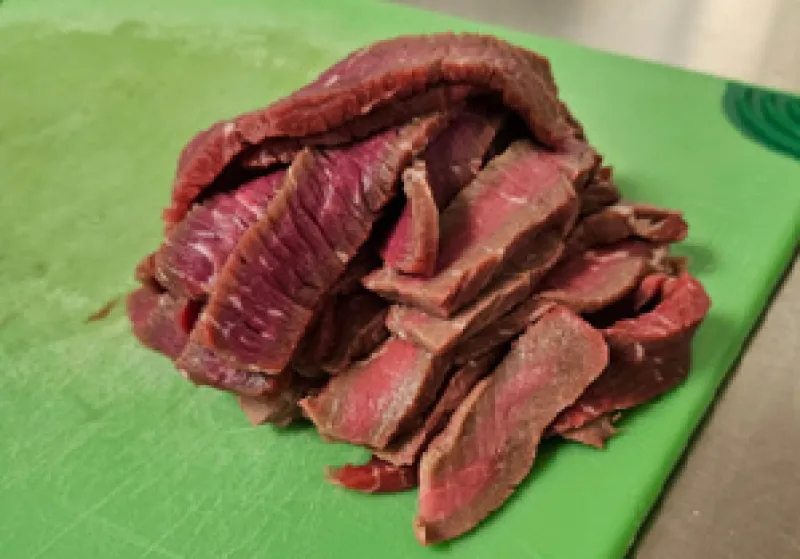
1. Prefreeze meat to be made into jerky so it will be easier to slice.

2. Cut partially thawed meat into long slices no more than ¼ inch thick. For chewy jerky, slice along the grain. For tender jerky, cut the meat at right angles to long muscles (across the grain). Remove as much visible fat as possible to help prevent off flavors.

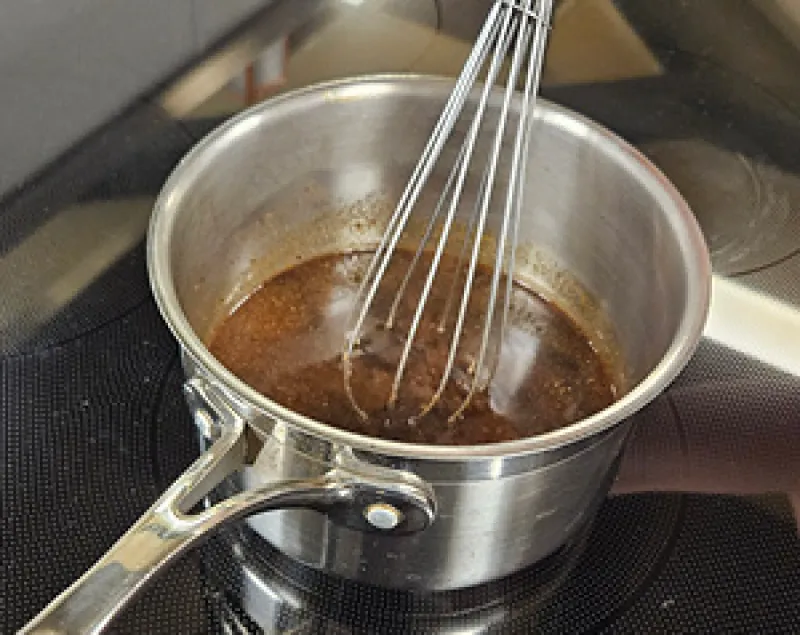
3. Prepare 2 to 3 cups of marinade of your choice in a large saucepan.

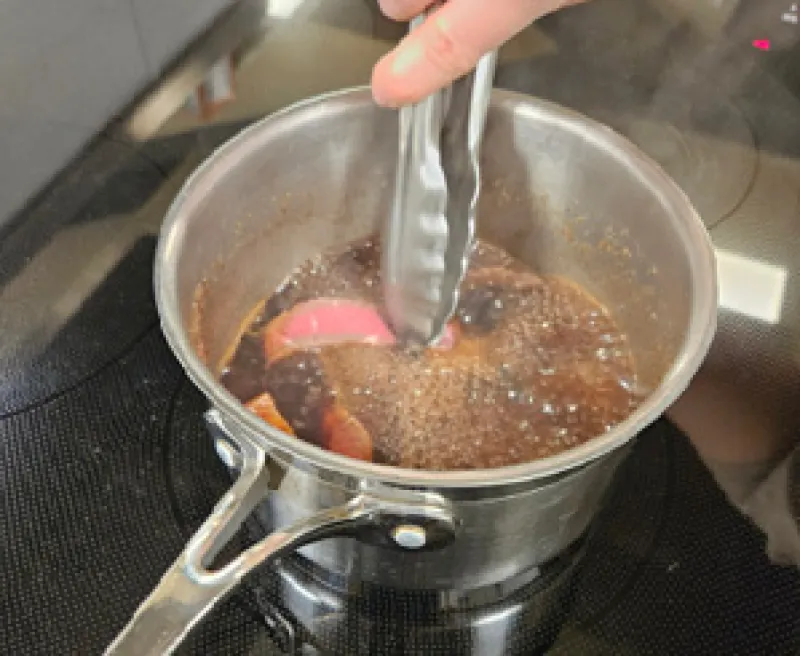
4. Bring the marinade to a full rolling boil over medium heat. Add a few meat strips, making sure they are covered by the marinade. Reheat to full boil. Note: this step is essential to get the meat up to an internal temperature of 160 F to kill disease-causing microorganisms. *Due to thinness of meat, an instant-read digital thermometer is recommended.

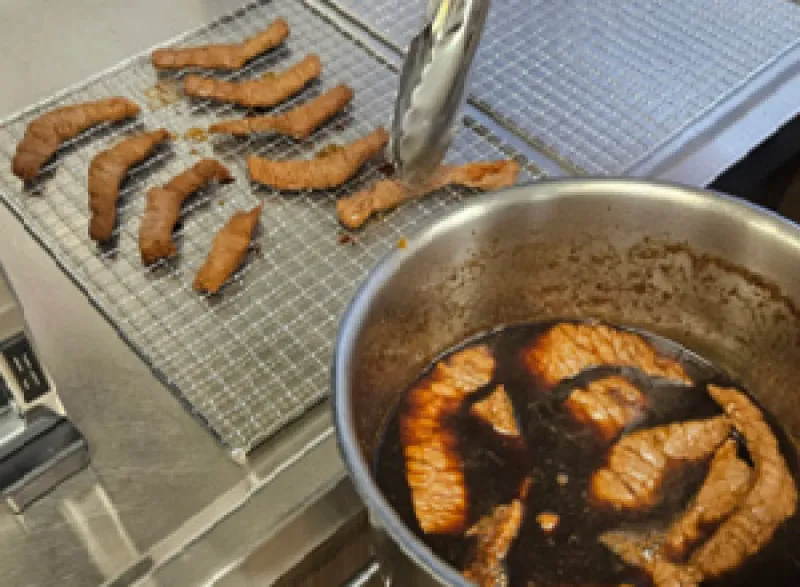
5. Remove pan from range. Using tongs, remove strips from hot marinade (work quickly to prevent overcooking) and place in single, nonoverlapping layers on drying racks. (Repeat steps 4 and 5 until all the meat has been precooked.) Add more marinade if needed.

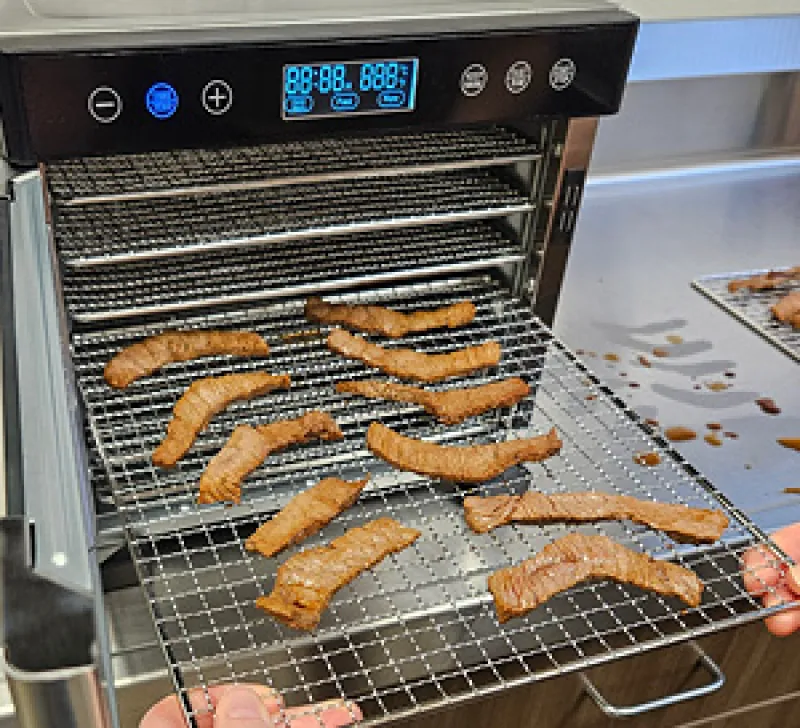
6. Dry at 140 to 150 F in a dehydrator, oven* or smoker. Test for doneness by letting a piece cool. When cool, it should crack but not break when bent. The meat should not have any moist or underdone spots. *Many conventional home ovens do not have a temperature setting this low.

7. Refrigerate the jerky overnight in plastic freezer bags, then check again for doneness. If necessary, dry further.

Putting unmarinated strips directly into the boiling marinade minimizes a cooked flavor and maintains the safety of the marinade.

Yield: 5 pounds of fresh meat should weigh approximately 2 pounds after drying or smoking. Use home-dried jerky within 2 months.

This recipe was published in “So Easy to Preserve”, 6th ed. 2014. Bulletin 989, Cooperative Extension Service, The University of Georgia, Athens. Revised by Elizabeth L. Andress. Ph.D. and Judy A. Harrison, Ph.D., Extension Foods Specialists.
jerky
Photo Credit:
NDSU Photo
Step 2
step 3
Photo Credit:
NDSU Photo
Step 3
Step 4
Photo Credit:
NDSU Photo
Step 4
Step 5
Photo Credit:
NDSU Photo
Step 5
Step 6
Photo Credit:
NDSU Photo
Step 6

Jerky Safety Tips

❏ Use a recipe that is researchtested and/or provided by your local Extension office for best results and product safety.

❏ Thaw frozen meat in the refrigerator, not on the kitchen counter.

❏ Ground meats can be used, but whole muscle meats sliced in strips produces a safer and more traditional final product.

❏ While marinating adds flavor, cooking to the proper internal temperature kills disease-causing microorganisms (160 degrees F for meats and 165 degrees F for poultry).

❏ Marinate meat in the refrigerator, and do not save and reuse marinade.

❏ Adding a cure and salt to your jerky can help destroy diseasecausing microorganisms during cooking while also improving the quality and flavor.

❏ For best quality, store homemade jerky in the refrigerator to maintain freshness and extend shelf life.

More Information

Visit www.ag.ndsu.edu/food for additional information on jerky making, food preservation and other food and nutrition topics. Go to Food Preservation and Wild Game.

Food Preservation 101 is a free course delivered through self-paced, narrated online modules. This was a joint effort of NDSU Extension and Cankdeska Cikana Community College. See www.ndsu.edu/agriculture/extension/food-preservation-101 for the dates it is offered.

References

Cajete, G. (2000). Animals in native myth and reality. In Native science: Natural laws of interdependence (pp. 149–175). (2021, October) Clear Light Publishers.

Cooperative Extension Service. (2021, October). Making jerky. University of Alaska Fairbanks. https://www.nifa.usda.gov/sites/default/files/resource/Making%20Jerky.pdf

Cox, B., & Jacobs, M. (2004). North America: Plains. In Body, mind & spirit: Native cooking of the Americas (pp. 34–41). Native Peoples Magazine.

Divina, F., Divina, M., & Smithsonian National Museum of the American Indian. (2004). Meats and wild game. In Foods of the Americas: Native recipes and traditions (pp. 72–99). Ten Speed Press.

Hirst, K. K. (2019, May 30). Ch’arki, the Original Beef Jerky. ThoughtCo. https://www.thoughtco.com/charki-preserving-meat-method-170334

MacDonald, J. (2019, November 15). Ch’arki: The First Jerky. JSTOR Daily. https://daily.jstor.org/charki-the-first-jerky/

Mediani, A., Hamezah, H. S., Jam, F. A., Mahadi, N. F., Chan, S. X. Y., Rohani, E. R., Che Lah, N. H., Azlan, U. K., Khairul Annuar, N. A., Azman, N. A. F., Bunawan, H., Sarian, M. N., Kamal, N., & Abas, F. (2022). A comprehensive review of drying meat products and the associated effects and changes. Frontiers in Nutrition, 9, 1057366. https://doi.org/10.3389/fnut.2022.1057366

Mihesuah, D. A. (2005). Foods of the Western Hemisphere peoples. In Recovering our ancestors’ gardens: Indigenous recipes and guide to diet and fitness (pp. 32–37). Thomas-Shore.

NDSU Extension. (2022, May). Jerky making: Producing a traditional food with modern processes. NDSU Agriculture. https://www.ndsu.edu/agriculture/extension/publications/jerky-making-producing-traditional-food-modern-processes

Shakil, M. H., Trisha, A. T., Rahman, M., Talukdar, S., Kobun, R., Huda, N., & Zzaman, W. (2022). Nitrites in cured meats, health risk issues, alternatives to nitrites: A review. Foods, 11(21), 3355. https://doi.org/10.3390/foods11213355

University of Georgia. (2025). National Center for Home Food Preservation. Retrieved April 4, 2025, from https://nchfp.uga.edu

U.S. Department of Agriculture. (2016, November 3). Jerky and food safety. Food Safety and Inspection Service. http://www.fsis.usda.gov/food-safety/safe-food-handling-and-preparation/meat-fish/jerky

https://pmc.ncbi.nlm.nih.gov/articles/PMC9742493/pdf/fnut-09-1057366.pdf

Made possible with funding from the U.S. Department of Agriculture National Institute of Food and Agriculture Food Safety Outreach Program (2022-70020-37999).

Arapaho camp with buffalo meat drying near Fort Dodge, Kansas.

William S. Soule Photographs of Arapaho, Cheyenna, Kiowa, Comanche, and Apache Indians, between 1868–1875. (National Archives Catalog)

c