

Home composting: turning waste into garden gold
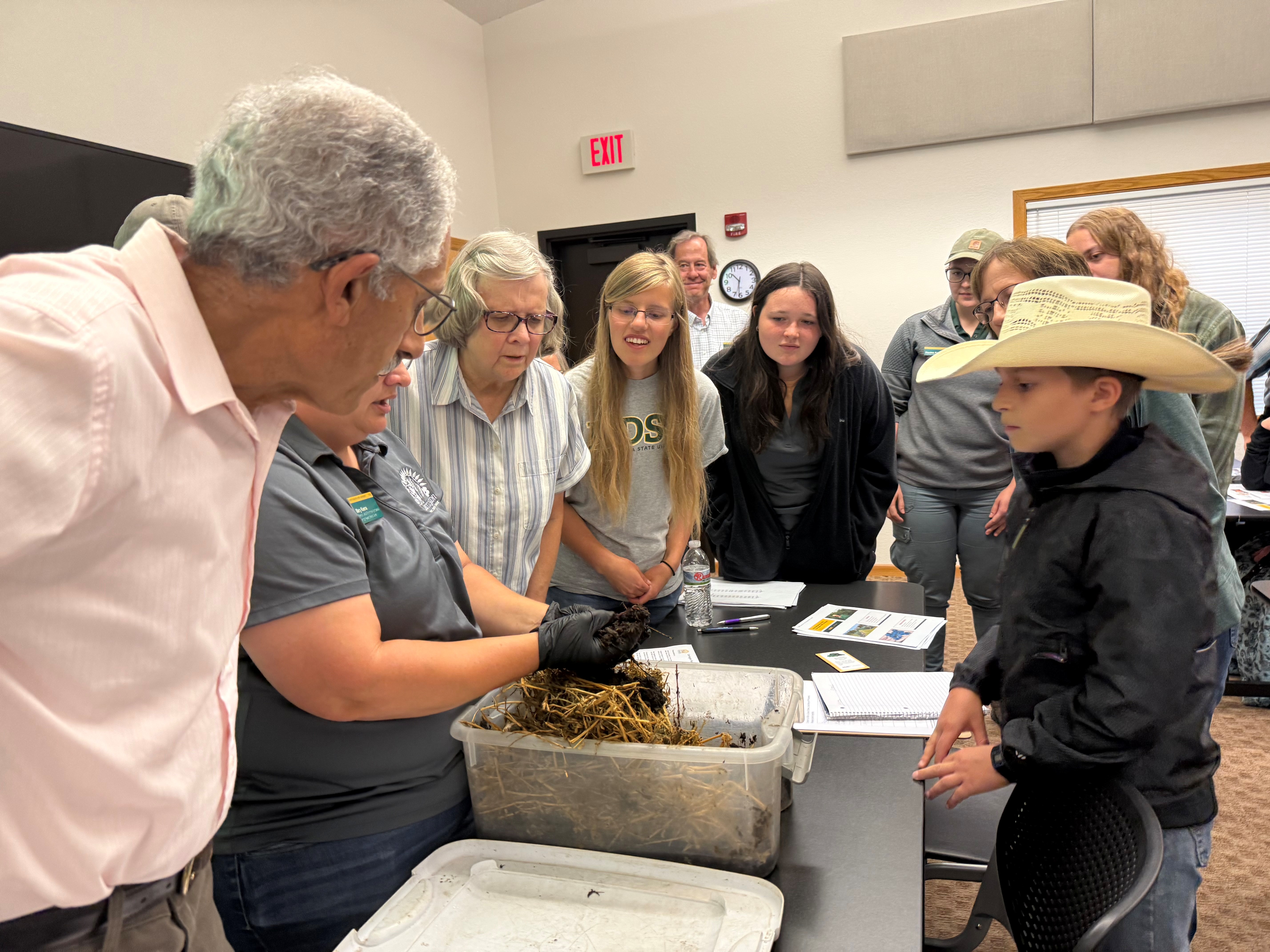
I had the privilege to speak about composting at three of the four morning tours at Carrington REC’s annual Field Day event. Each discussion was tailored to how that specific group could apply the information to their production system or project.
Generally speaking, composting is the process of decomposition. Piling, moistening and aeration are required in the process to stimulate heat. Larney and Blackshaw (2003) are credited with saying, “Composting requires routine introduction of oxygen, which stimulates aerobic microorganisms that feed on the organic components and convert the piled organic material to a fairly stable nutrient-rich soil amendment.” The result is often called “black gold,” which is a nutrient-rich soil amendment. Backyard composting allows for reduced household and yard waste sent to landfills by approximately 20–30%.
I discussed composting animal mortalities, backyard composting and using composted beef manure in a cropping system. While all of the composting scenarios are intriguing, backyard composting is something most people can try!
Key Process Steps
- Site & pile size: Choose a well-drained spot where water will not accumulate; aim for a pile size of 3’x3’x3’ to 5′x5’x5’ for kitchen/yard compost. You can also use an enclosed vessel, such as a compost tumbler.
- Mixing: Layer greens/browns (see below) or manure to hit approximately 30:1 carbon (C) to nitrogen (N) ratio.
- Moisture: Keep it like a wrung-out sponge (40–65% moisture); use the “wet rag test” at the pile.
- Aeration/turning: Turn every 10-14 days; maintain aerobic (oxygen rich) conditions
- Temperature: High heat composting (>131 °F for ≥3 days) kills pathogens (E. coli, Salmonella, Listeria), weed seeds, parasites and reduces volume. Apply mitigation techniques if the pile exceeds 160 °F.
What to Compost
- Greens (N–rich): Veggie scraps, fresh grass clippings, green weeds, manure
- Browns (C–rich): Leaves, straw, shredded paper, wood chips
✗ Avoid: Meat, dairy, fats, pet waste, diseased plants, noxious weeds
Using Your Compost
- Garden beds: Apply 2–3″ and mix into topsoil annually
- Containers: Blend 1 part compost with 3 parts potting mix
Quick Troubleshooting
- Smelly or pests: Add dry browns & turn more often
- Too dry: Add moisture
- Too hot (>160°F): Add browns, reduce pile size, aerate
- Pile not heating? Adjust C, moisture, or increase pile size
This is an art and a science. It should be fun! Add some composting worms to the mix for added breakdown. This is fun for both youth and the young at heart, and they provide additional breakdown of the compost pile.
For more information, check out these NDSU Extension publications or contact your county NDSU Extension agent at ndsu.ag/countyoffice.
- How to Compost
- Common Manure Composting Problems and Their Solutions
- Composting Animal Manures: A guide to the process and management of animal manure compost
- Solid Manure Sampling for Nutrient Management Planning
- Manure Composting Quick Guide
Reference
- Larney, F.J., and R.E. Blackshaw. 2003. Weed seed viability in composted beef cattle feedlot manure. J. Environ. Qual. 32:1105-1113.
Mary Keena
Mary.Keena@ndsu.edu
Extension Livestock Environmental Management Specialist
