

Forage and Silage Performance Highlights from 2025 Trials
The 2025 growing season provided another great opportunity to evaluate both silage hybrids and winter cereals for forage use under North Dakota conditions. Results from irrigated and dryland silage trials, along with winter rye forage data, assist producers in identify high-performing varieties that balance yield and nutritional quality.
Irrigated and Dryland Silage Performance
Under irrigation, three Integra hybrids (STP4723, STP5191, and STP5203) averaged 25.4 tons per acre (dry matter basis), with harvest moisture near 61%. Yields ranged from 23.6 to 25.4 tons per acre, reflecting consistent performance across hybrids. STP5191 showed the highest yield, suggesting strong silage potential under irrigated conditions.
Dryland trials included seven hybrids from Integra, Proseed, and Golden Harvest. Yields ranged from 23.9 to 29.8 tons per acre, with an overall mean of 27.3 tons per acre. The Integra STP5191 again led the group, producing 29.8 tons per acre, followed closely by Proseed LFY101 and STS105GT. Despite slightly lower plant height under dryland conditions, yield stability across entries was excellent, demonstrating the resilience of modern silage hybrids even under limited moisture.
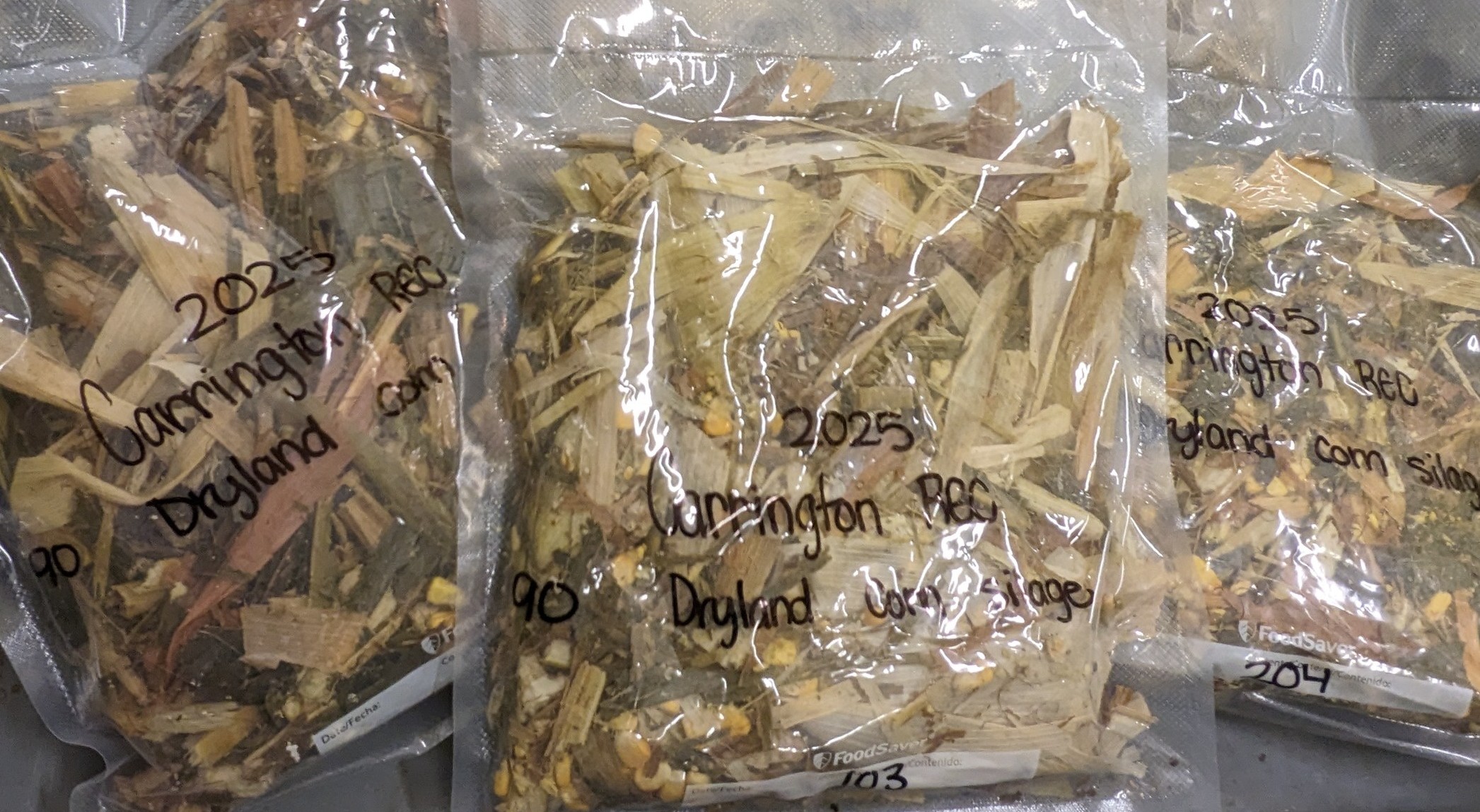
Silage samples are currently undergoing fermentation, and detailed nutritional analyses will be available late December after the 60-day ensiling period (Figure 1). These data will provide insight into fiber digestibility, energy values, and overall feed quality. https://vt.ag.ndsu.edu/list/corn-silage
Winter Rye Forage Results
Fifteen winter rye varieties were harvested in late May and early June. Yields ranged from 1.7 to 4.2 tons of dry matter per acre, averaging 2.6 tons. Aroostook produced the highest quality forage, with a crude protein of 13.9%, low fiber levels (ADF 29.1%, NDF 52.9%), and the highest relative forage quality (RFQ 193). ND Gardner also performed well, combining solid yield (4.17 tons) with good digestibility and energy content.
Across varieties, average crude protein was 14.7%, ADF 34.0%, and NDF 57.2%, supporting the role of winter rye as a reliable early-spring forage option. https://vt.ag.ndsu.edu/list/forages
Looking Ahead
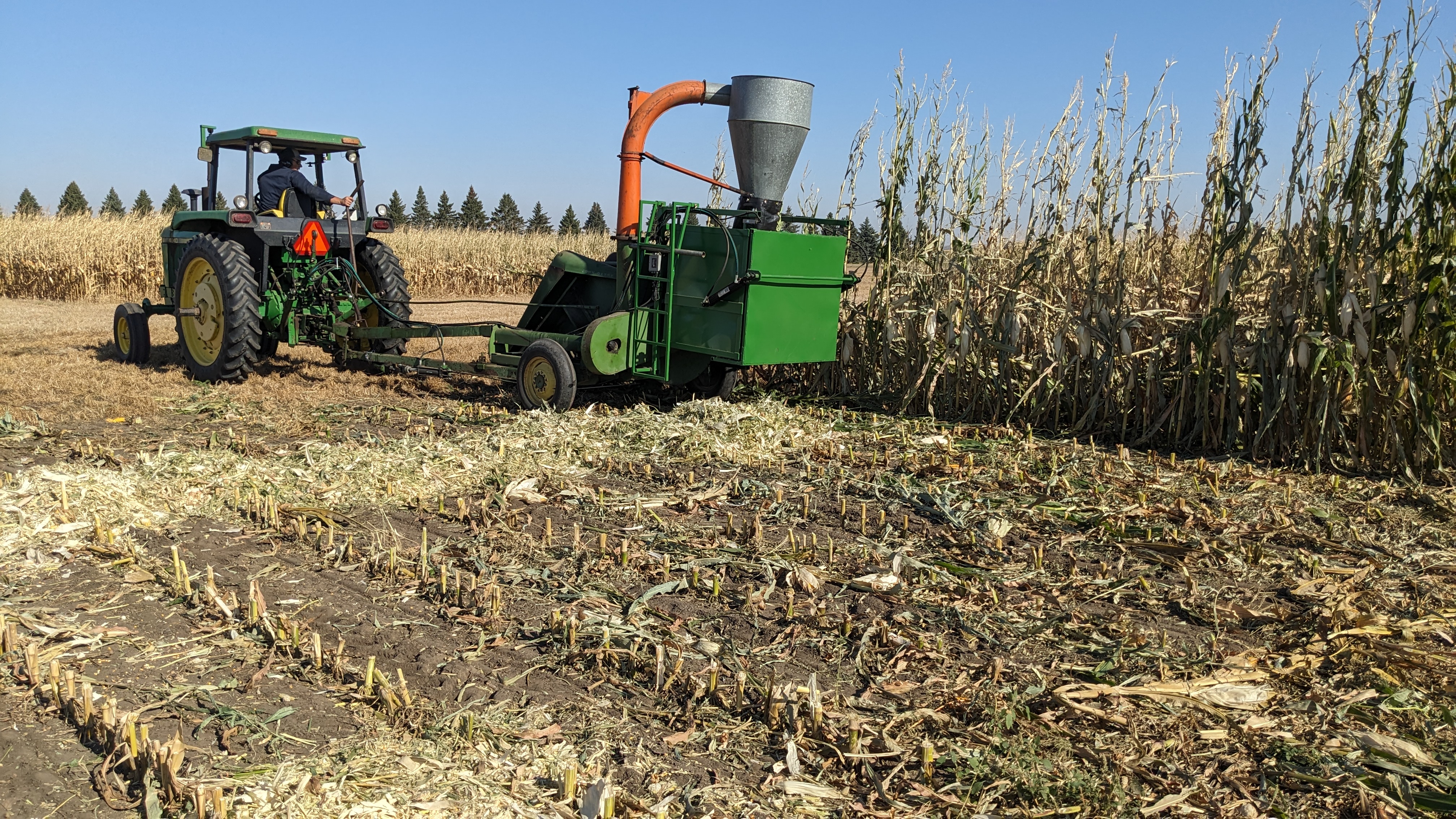
Exciting news! This fall we upgraded our one-row forage harvester to a two row. After not being able to get parts for our vintage 1950’s chopper (Figure 2), it was a necessary upgrade. With the upgrade we now have a pickup head and a silage head. This winter we will add a cyclone and make modifications to the scale to attach it to the new harvester. Look for further forage research expansion in the coming years.
Kristin Simons, Ph. D.
Kristin.Simons@ndsu.edu
Research Agronomist
