

Strengthening North Dakota’s readiness for livestock disasters
When livestock disasters strike—whether through foreign animal disease outbreaks or mass mortality events—communities rely on a quick, coordinated, and informed response. In North Dakota, the 2022 Highly Pathogenic Avian Influenza (HPAI) outbreak made it clear just how critical that readiness is. Many frontline responders, including 62% of Extension agents, were facing a foreign animal disease emergency for the first time. The result was a scramble to determine who was responsible for what, which agencies to notify, and how to keep people and animals safe.
Recognizing these gaps, NDSU Extension set out to build a stronger, more confident response network across the state.
Building Skills Through Applied, Research-Based Training
Supported by a USDA Animal and Plant Health Inspection Service National Animal Disease Preparedness and Response Program grant, NDSU Extension developed a comprehensive training curriculum designed to prepare Extension agents, veterinary professionals, emergency managers, and other responders for the realities of livestock disasters.
Over 18 months, the project team created a suite of practical, accessible resources, including:
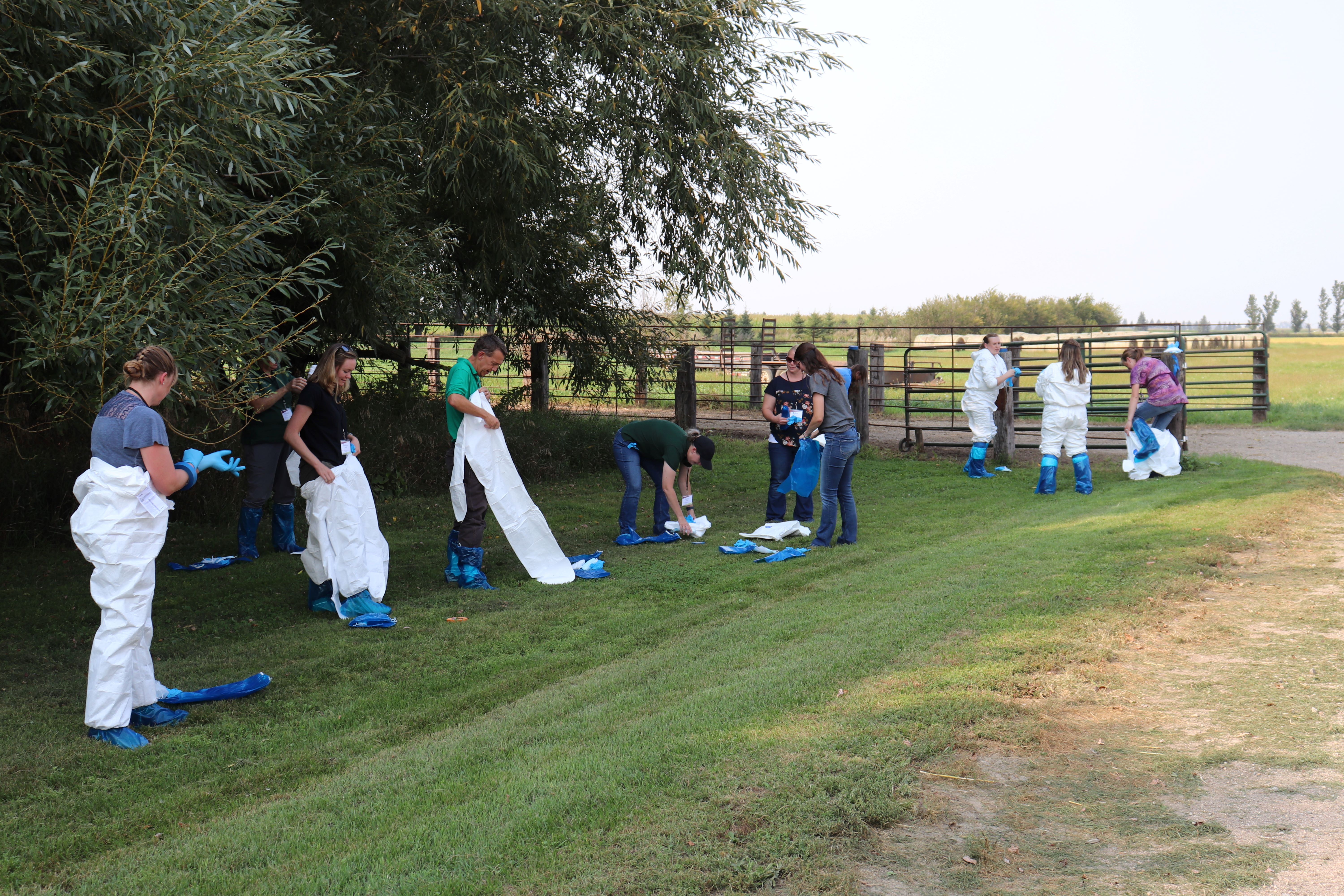
- Two in-person, hands-on training events hosted at the NDSU Carrington Research Extension Center
- Nine presentations covering foreign animal disease response and livestock mortality management.
- Two hands-on response simulations, one focused on HPAI and another on anthrax.
- 22 Extension publications, with 14 translated into Spanish to ensure broader accessibility.
- 130 kits stocked with personal protective equipment (PPE).
- A centralized resource hub for continued learning and reference.
By the end of the training cycle, 65 professionals had gained the knowledge and tools needed to safely and effectively respond to animal disease outbreaks or mass mortality situations.
Real-World Impact Across North Dakota
The training is already making a measurable difference.
Immediately after completing the program, 100% of participants reported increased confidence in their ability to respond to livestock disasters, and 96% planned to make changes to be better prepared.
Six months later, follow-up evaluations confirmed lasting impact:
- 92% felt their communities were better prepared for an animal disease or livestock mortality event.
62% had already taken preparedness actions, such as updating plans, improving biosecurity, or strengthening local communication networks.
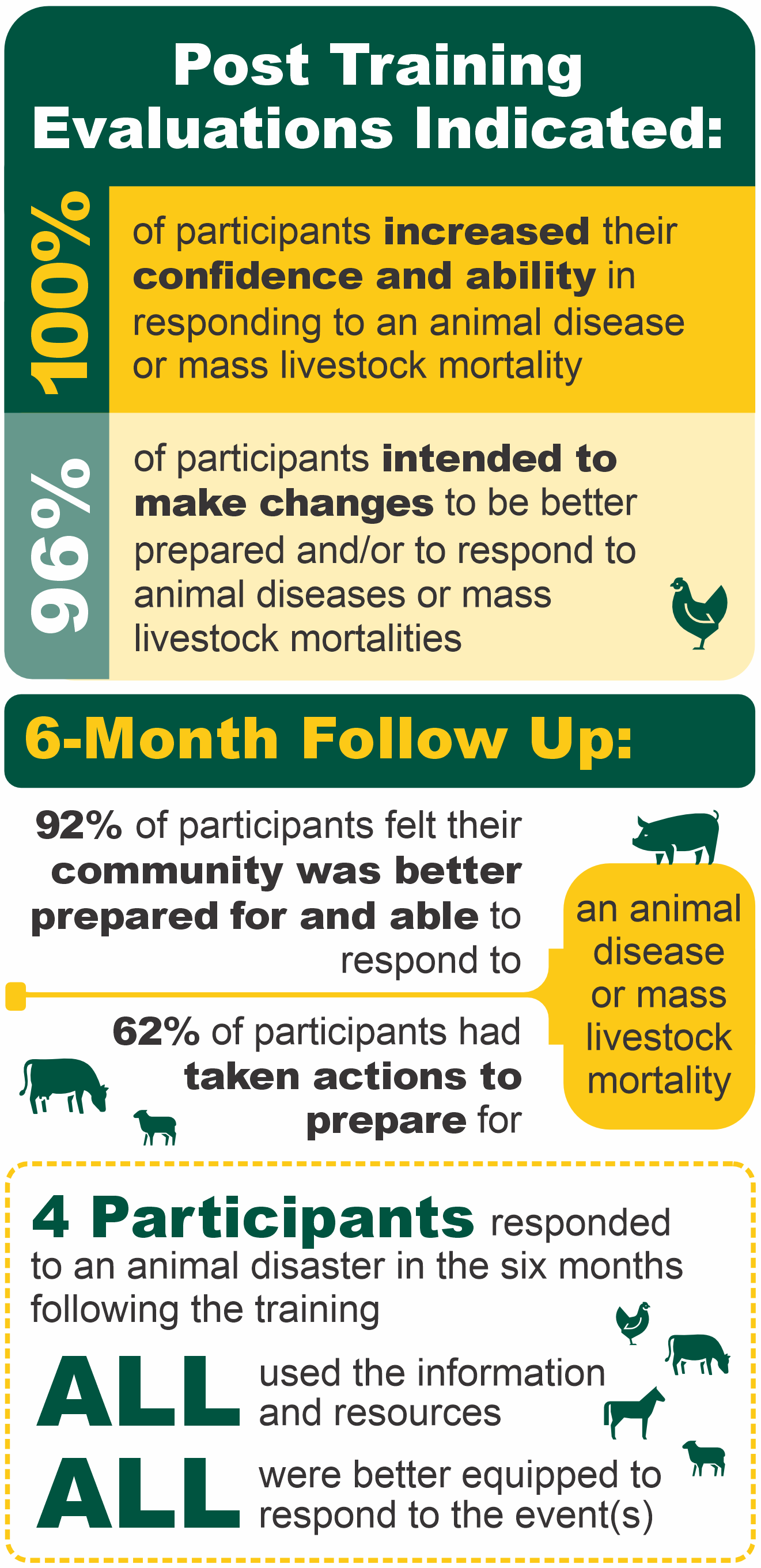 Photo Credit:NDSU photo
Even more compelling, four participants responded to real animal disaster events within six months of the training. All four reported that they used the provided resources—and that the training significantly improved their ability to manage the situation.
Local Leadership Taking Action
The ripple effect of the training is evident across counties. One Extension agent shared that the program prompted her team to review and revise outdated county response plans for zoonotic livestock diseases. The updates drew in the Local Emergency Planning Committee and spurred ongoing tabletop exercises with local emergency responders. This kind of proactive planning represents precisely the type of resilience the program aimed to build.
Another participant summed up the value simply: “It was a great learning experience… Overall, it was great to network with others and have more tools in the toolbox for when the situation occurs.”
Protecting the Future of North Dakota’s Livestock Industry
This training program does more than build individual skills—it strengthens the resilience of communities, safeguards animal and public health, and protects an essential sector of North Dakota’s economy. By equipping responders with research-based knowledge and the confidence to act, NDSU Extension is helping ensure the state is ready for whatever challenges arise.
Mary Keena
Mary.Keena@ndsu.edu
Extension Specialist, livestock environmental management
Miranda Meehan
Miranda.Meehan@ndsu.edu
Associate Professor and Extension Specialist, livestock environmental stewardship
NDSU Extension Disaster Education Coordinator
