

2025: Hessian Fly Pheromone Trapping Report
(Research Report, Langdon REC, December 2025)Contributors:
Megan Vig- Extension Agent, Steele County
Scott Knoke- Extension Agent, Benson County
Jeff Stachler- Extension Cropping Systems Specialist, Carrington Research Extension Center
Victor Gomes- Extension Cropping Systems Specialist, Dickinson Research Extension Center
Introduction:
Hessian fly, Mayetiola destructor (Say), is one of the most significant insect pests affecting wheat in North Dakota. This insect pest was introduced into North America during the late 1770s in Long Island, New York by straw-bedding of Hessian soldiers during the American Revolution. Its populations have spread across the wheat-growing regions of the country. While wheat is the main preferable host, it also infests barley, rye and several species of grass as alternative hosts. Historically, Hessian fly has been a sporadic pest in ND, with notable outbreaks occurring in 1991, 2003 and 2015 (Knodel, 2015). A study conducted by Anderson et al. (2012) used pheromone traps to monitor the distribution and spread of this insect in the state, but the study is now over a decade old. In recent years, renewed Hessian fly activity, especially in northeast ND has renewed concern among growers. To improve our understanding of Hessian fly population dynamics, including spatial distribution and peak adult emergence, a statewide trapping program using sex pheromone–baited sticky traps was initiated in 2023 (Fig. 1). This year marks the third year of the project.
Materials and Methods:
Sex pheromone lures were obtained from Pherobank, Netherlands. These lures were deployed in delta sticky traps positioned on poles at the edges of the wheat fields (Fig. 2). Trap liners were changed weekly and stored in Ziploc bags in the freezer until the number of flies could be counted (Fig. 3). The lures were replaced every four weeks. Traps were established at the beginning of the season, immediately following wheat emergence, and remained in place until harvest. Monitoring dates varied by trapping sites. A total of 28 traps were placed in 25 counties.

Figure 1: Season count of 2025 Hessian fly trapping network.
Results:
Distribution
Third-year trapping results indicate a substantial and growing presence of Hessian fly across the state. In 2025, a total of 16,357 Hessian flies were captured on sticky traps monitored by IPM insect trappers from early June through early September (Fig. 1 and Table 1). This total represents a 31% increase over 2024, when 12,530 flies were captured at 26 traps placed across 21 counties. For comparison, in 2023 only 1,527 Hessian flies were recorded at 37 trapping sites, underscoring the rapid rise in population levels over the past three years.
In 2025, trap catches of Hessian flies were highest in the northeast region of North Dakota, with more than 1,000 Hessian flies per trap recorded at sites in Walsh, Rolette, Cavalier, and Steele counties. These four sites accounted for approximately 14% of the 28 trap locations statewide. This pattern closely resembled the distribution observed in 2024.
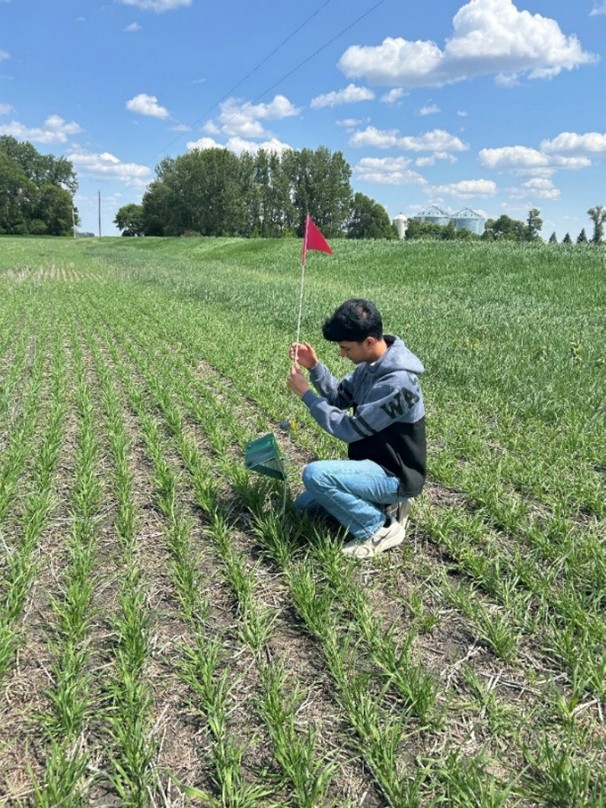
Figure 2: Hessian fly pheromone trap set in a wheat field by IPM trapper.
Photo: Anitha Chirumamilla
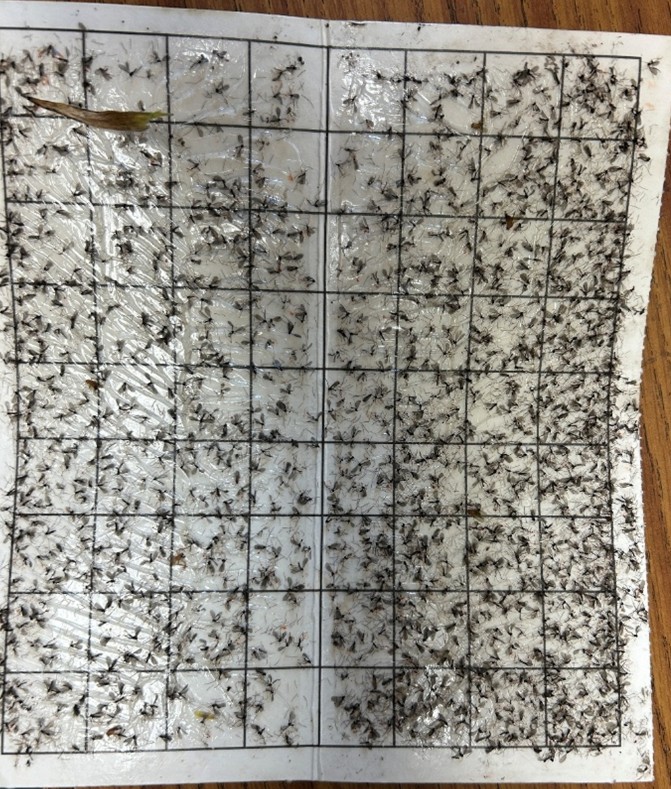
Figure 3: Pheromone trap sticky bottom with Hessian flies.
Photo: Anitha Chirumamilla
However, notable shift in Hessian fly population dynamics were observed across Walsh, Pembina, and Cavalier counties. In Pembina County, total trap counts dropped sharply from 2,805 in 2024 to just 291 in 2025. In contrast, Walsh County experienced a substantial increase, with counts rising from 300 to 1,261 flies over the same period. Cavalier County also showed significant growth: the Cavalier County LREC site increased from 169 flies in 2024 to 2,900 in 2025, while the second Cavalier County trap site rose from 164 to 904 flies. Across the remaining 23 trap sites, counts remained lower, with fewer than 500 flies recorded (Table 1).
Table 1. Summary of Hessian fly trapping in North Dakota, 2024 and 2025 | |||
|---|---|---|---|
| County | Total No. of Hessian fly 2024 | Total No. of Hessian fly 2025 |
1 | Stark | 3 | 4 |
2 | Dunn 2 | 0 | 14 |
3 | Barnes | - | 14 |
4 | McKenzie | - | 53 |
5 | Richland | 231 | 59 |
6 | Foster CREC | 310 | 74 |
7 | Benson | 112 | 76 |
8 | Nelson | 764 | 76 |
9 | Cass | 252 | 79 |
10 | Griggs | 100 | 116 |
11 | Ward | 183 | 117 |
12 | Dunn 1 | 156 | 126 |
13 | Pierce | - | 130 |
14 | Foster | - | 141 |
15 | Williams | 0 | 149 |
16 | Wells | - | 226 |
17 | Mountrail | 63 | 243 |
18 | Towner | 278 | 260 |
19 | Grand Forks | 155 | 262 |
20 | Pembina | 2805 | 291 |
21 | Eddy | - | 297 |
22 | Ramsey | 410 | 324 |
23 | Stutsman | - | 386 |
24 | Cavalier | 164 | 904 |
25 | Walsh | 300 | 1261 |
26 | Steele | 1254 | 1360 |
27 | Cavalier LREC | 169 | 2900 |
28 | Rolette | 2403 | 6415 |
| Total | 12530 | 16357 |
Peak Emergence:
Hessian fly has two generations in ND. The first-generation flies emerge in early spring and the second-generation flies appear in late summer, particularly in August and September (Anderson et al., 2012). To better understand these emergence patterns, we analyzed weekly fly-count data from both eastern and western counties of ND during the trapping period (Figs. 4 and 5).
The Weekly trap count data indicate that first-generation Hessian flies emerged from their overwintering pre-pupal stage in spring, coinciding with the emergence of spring wheat. Population levels were initially low across all trapping sites. Notably, there was no clear separation between first- and second-generation adults, as fly emergence continued throughout the season. The highest trap catches in ND occurred during July and August in both eastern and western regions. Based on the interval between the initial trap captures and these peaks, the increased fly counts during midsummer likely reflect the emergence of the second generation (Figures 4 and 5).
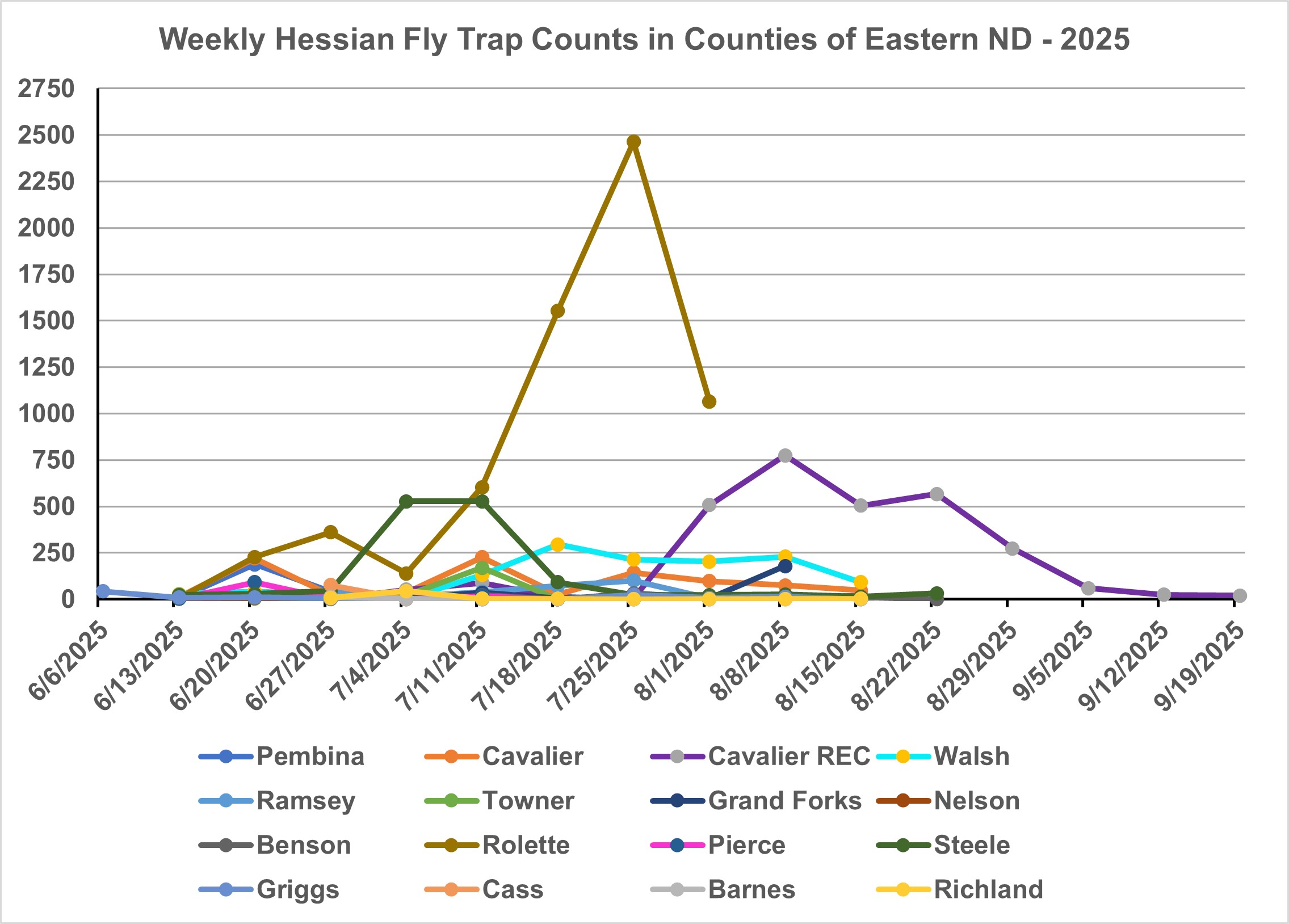
Figure 4: Weekly trap catch data of Hessian flies in eastern counties of ND.
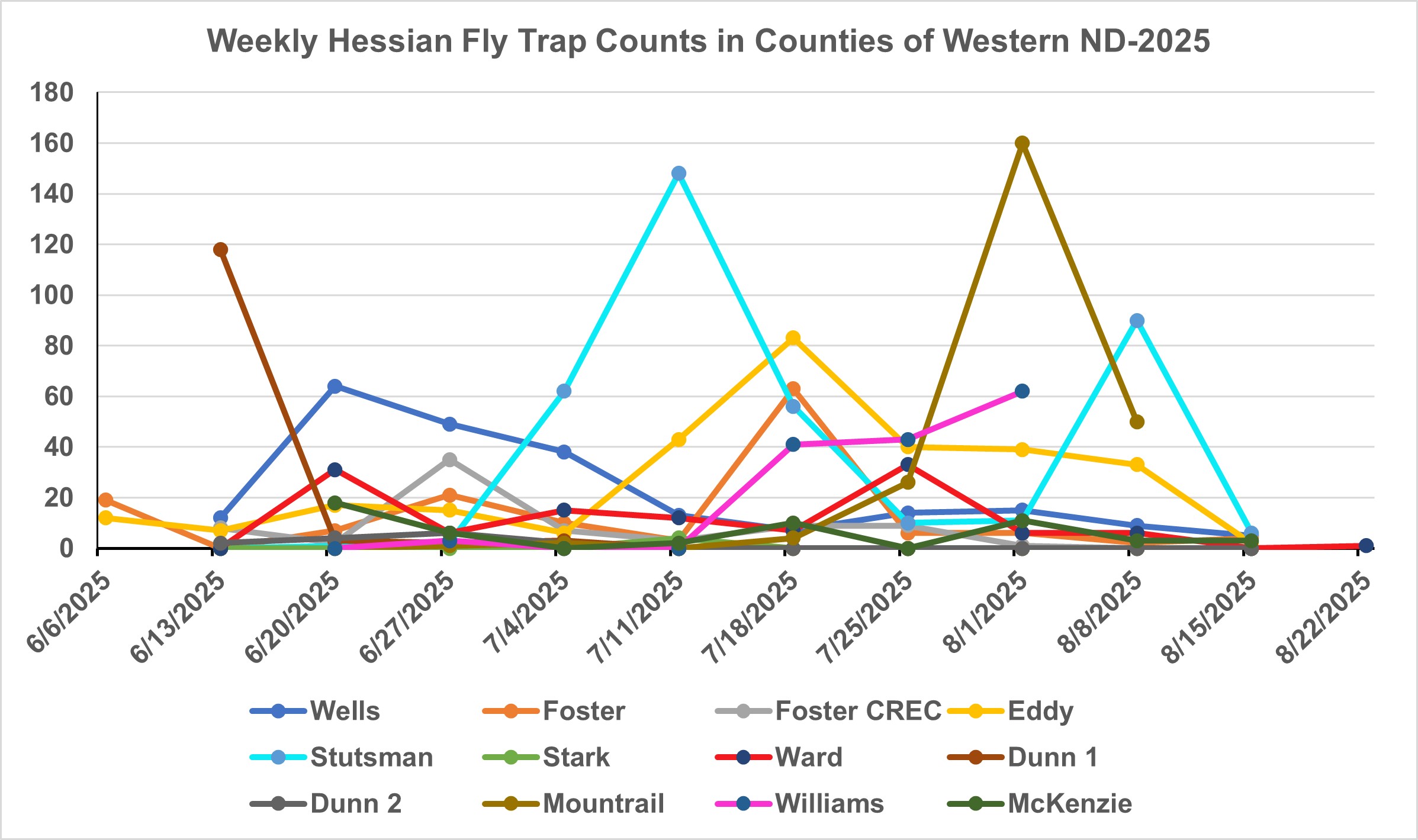
Figure 5: Weekly trap catch data of Hessian flies in western counties of ND.
